Episode Transcript
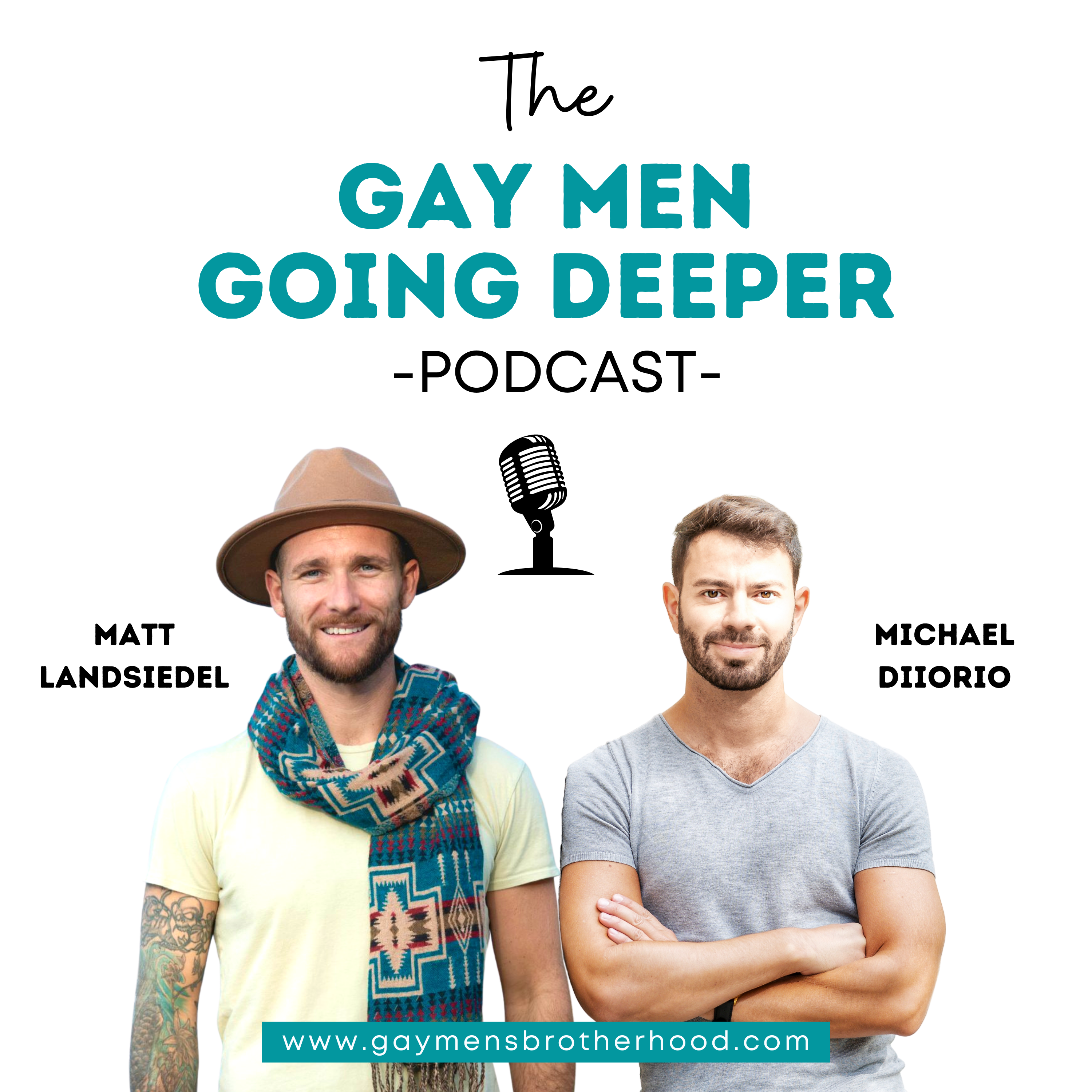
[00:00:04] Speaker A: Welcome to the Gay Men Going Deeper podcast. I'm your host today, Matt Lansadel. The Gay Men Going Deeper podcast is a podcast by the Gay Men's brotherhood where we talk about everything, personal development, spirituality and mental health. Today we are going to be talking about demisexuality. We are joined by Carlos, Ron and Andre.
Welcome guys.
[00:00:25] Speaker B: Thank you for having me.
[00:00:27] Speaker A: Really good to have you guys here.
So as I said, the topic today is about demisexuality.
All four of us identify self identify as demisexuals. And today we want to share with you guys what that means to us.
Defining what demisexuality means.
We're going to be talking about what it means to us.
In what ways do we find it difficult to fit into the gay community being demisexual?
How has it been communicating with non demisexual men when we desire to develop intimacy prior to having sex?
The looking at the benefits of dating a demisexual. And what do you think is important for the audience to know about demisexuality to help them understand us better? These are some of the things we're gonna be unpacking with you guys today. So we're really looking forward to having you guys here to share this journey with us. So yeah, I want to pose the question to the group and feel free just to kind of share your experience or whatever, but what does, what does demisexuality mean to you?
[00:01:39] Speaker B: Okay, so I'll share.
So for me, I discovered I always felt different, unique in terms of the way in which I saw sex and saw the rest of the world participate.
So, you know, growing up in the 90s, it would be like MTV Spring Break and everybody was wild and loose and I'd be like, ooh, I don't want to have nothing to do with that. Or, you know, Mardi Gras wild and ooh, I don't want to have anything to do with that. And I thought, you know, real world would come on and people would just have sex. And I'm like, what is going on?
And I thought at first because of my religious upbringing, that maybe religion played such a deep factor in how sexual I was that I almost felt like maybe I was traumatized.
So I went through an experience where I said, you know what? I'm going to try this whole, you know, sexually liberating, free spirited way of being.
I had tried it, you know, maybe once or twice before and it just, something just wasn't working. I just couldn't get into the experience.
And I said, you know what, I want to be like Everybody else.
So I met a guy on. It was Grindr. It was on Grindr. And we created this sexual experience, and it was just not very good for me.
And I thought, you know, something must be wrong with me, especially because I think gay men are viewed as being very sexual or hypersexual.
And I don't think what I discovered was it wasn't that I wasn't sexual, because I'm very much a sexual person.
I realized that I needed one of two things in order to be able to have sex and be fully present, and that's either love or trust, a connection of love or trust.
So I would always see myself in a sexual relationship where either I was in love with the person or we had an intimate connection. Like, you know, the term that we use I think nowadays is like, a friends with benefit situation, where I had such a deep, profound connection with this particular friend that we had an understanding that we had a shared intimacy, a sexual intimacy together, and it was okay.
And I started observing how I actually view people. I realized that in order for me to even sometimes really like a guy is, I have to go into my imagination and create who he is. Like, I make up a whole narrative of the kind of person he is, and I find myself falling in love with the narrative and not necessarily the person.
So I had to learn, like, Andre, like, you really be making stuff up. Like, this is crazy.
And the last thing I'm going to say what it created for me was I am extremely, like, extremely attracted to a nice guy.
When I found out a guy is just a sweet, kind person, it, like, drives me crazy. And it really drives me crazy. If the initial meeting, I thought this person was mean. And then I found out, oh, my God, he's such a nice guy.
And I really discovered one time, I was watching television, a friend, and this guy's telling the story. And at the end of the story, he starts crying.
And I turned to my friend, I said, that turns me on so bad.
She goes, what? I said, oh, my God, he's so sensitive. He's so vulnerable.
And, you know, I'd always see other people, like, dating the bad boys. And I'm like, what's wrong?
What's wrong? Something wrong with y'.
[00:06:06] Speaker A: All.
[00:06:06] Speaker B: There's something wrong with me.
So as a result, like, I never experienced being cheated on, like, 38 years old, that I've never been cheated on because I just.
I date nice guys. The nicer they are, the more I go after them. So that's my experience.
[00:06:28] Speaker A: Thank you, Andre. So much. I relate to so much of what you just said. And I just realized that I probably should have given the definition before we started. So the listener knows.
So I'll read it here. So demisexual people only feel sexually attracted to someone when they have an emotional bond with the person. The prefix demi means half, which can refer to being halfway between sexual and asexual.
That's just a definition that I pulled off of the.
[00:06:56] Speaker C: Off the web.
[00:06:57] Speaker A: And we're here to either agree with that or disrew that we can kind of obviously share our own personal experiences. So thank you, Andre, for sharing.
[00:07:04] Speaker B: You're welcome.
[00:07:07] Speaker A: Who would like to share next?
[00:07:11] Speaker B: Oh, go.
[00:07:14] Speaker D: So my name is Carlos and being demisexual can be kind of heavy at times for me if I'm living in my truth.
And I think that's because I'm a very sexual being.
I look for relationships and I don't look for anything in between either friendship or relationship.
And being demisexual is very emotional for me. And that's what I look for. You know, Andre looks for the nice guy. I look for the nice guy because that is a huge turn on to me as well.
It's just something about niceness that getting that off the bat you can't get anywhere else because most of the time I have found that men lead with sex.
And that is an instant turn off to me.
Ever since I was in high school having sex, it's only been with a partner. So I've never had sex outside of a relationship.
And long term, my longest relationship was nine years.
And once I'm in a relationship, I'm actually hypersexual.
But for me it's like a light switch. When I'm not in a relationship, the light switches off to sex.
And then when I'm in a relationship, that thing is super glued on because I'm having. I want to have sex all the time.
So it's really weird.
But that's just the way my brain is wired and it works for me. And there's no right or wrong, it's just how I live my life.
And I find that being demisexual, I may have some biases about it as well on my own part, but I also receive that from the community as well because it's very sexually driven. And the minute I say I'm demisexual, they assume that means I don't want to have sex.
But it's not. I just want to get to know you more on an intimate level to where I can have a connection, a bond Besides, show me how big or small or, you know, your body parts are, and can we go to a. An alley somewhere or a car and have sex?
It just never worked for me. So that is my relationship with demisexuality.
[00:09:41] Speaker E: Yeah.
[00:09:43] Speaker A: Thank you, Carlos.
What about you, Ron?
[00:09:49] Speaker E: Okay.
I always hearing other people's stories or hearing other people talk about stuff. For me, I lived the straight life. I got married. I met Sherry at 19 years old, and I was faithful and married to her Till I was 63 when I finally came out.
And so this is relatively new to me.
And, you know, I started on apps. I don't have the experience that everyone else has as far as that's concerned, right? Because I know that I'm a monogamous person, but all of a sudden I've got my get out of jail car, so to speak. And, you know, I wanted to hurt myself. I wanted to be.
So that's what I did. And I discovered really quickly that I needed a connection. I needed some emotional attachment in order to have sex or enjoy it or participate because I can remember a few times where I just was like, oh, my God, what have I done? I want out of here so bad. I don't like. It was awful.
And also, in hearing and listening to this, I create a narrative in my head because I came out of the gate really wanting a partner, right? Like, wanting someone in my life. So everybody that I was attracted to became right. I created a narrative. I went ABC and I created this fantasy, and I'm going like, what the heck? I'm actually now finally dealing with that, right? And letting that go. And this group has helped me immensely discover really who I am and what I want and accepting me for me, right? Like, anyways, and so I. I'm demisexual. If demisexual means that I need emotional connection with someone before I.
Before I feel comfortable, before I trust. I too, like the nice guy and the kindness, the. All that stuff. And so I find that really turns me on. So this idea around having anonymous sex for the sake of sex, it means nothing. It does not.
I don't, you know, enjoy it. I don't like it. And I'm off all the apps because.
And yet it's interesting. I have to add this.
This last week Covid safety part, but I met with three different people for a meal that I met on scruff that at one point I was dating, and it was an emotional connection and they're still in my life. And I realized it was me that. You know what I mean? I used an app that a lot of other people talk about as hookups. But I found because of the conversation and because of the way I was, valuable people there. Because if I'm there, hello. I consider myself of value. Like I might. The potential is there to meet somebody. And I've met some really nice people because usually when you're demisexual, the other people don't really want to have much to do with you. Delete, swipe, whatever you want to say. So, yeah, so that's been my experience and that's how I see myself.
A work in progress. Evolving.
[00:13:44] Speaker C: Yeah.
[00:13:45] Speaker E: Amen. Amen.
[00:13:48] Speaker A: Thanks, Ron.
You know, so for me, demisexuality has been a progression. I've morphed into a demisexual. I wasn't always a demisexual and I think in the last. Well, I'll kind of go back a bit further. So in my 20s I was very highly sexual, definitely hypersexual. Um, and I think for me, I was very ego driven. Like everything was mind. I was, I was very hyper masculine, hyper yang in my mind a lot. And I was, you know, watching porn, creating fantasies and all those sorts of things. So it was easy for me to get off when I was in that energy. And just in the last few years, I've done a lot of spiritual work and kind of been working with my feminine, my yin energy, my slowed down yin energy. And um, it's completely changed my sexuality completely. Like a 180 complete difference in who I was two years ago to now. Um, so for me, demisexuality means yes, that I do require emotional connection in order for sex to be.
In order for sexual arousal. Yeah, I'll say that. Because I think in order for my body to function, it needs to be aroused. And what gets me aroused is exactly what you guys are saying. I just love. It's so nice being in the presence of other people because it's like, yeah, like as soon as I learn that a guy sensitive, like, it's like, like immediately skyrocket. I'm like, wow, like something happens. Like, it's like for some people, it's like they get the same experience watching porn. I get that same experience when I learn about a guy being sensitive or that he's emotionally in touch with himself or that he knows how to be intimate. These are things that I really value.
Um, and I think for so long I carried so much shame around that because I think, you know, we often attribute slowed down, frigid, PG sexual energy as feminine energy. The woman is always the one Slowing down. And the guy's the one that's got to be like, hawking in. And I'm. I've been reconciling a lot of shame in myself lately around that because I'm like, I do embody more of that slowed down energy. And I don't even like to gender prefix it because it's at the end of the day. Like, why do we gender prefix it? Is because of our conditioning.
[00:16:06] Speaker D: Right.
[00:16:07] Speaker A: Men can be slow, women can be slow, men can be fast, women can be fast. It doesn't really matter of your gender. I'm just conceptualizing it in the way that will help people understand it a little bit easier.
So, yeah, I've been working through some of the shame around what that means, and I've come up against a lot of interesting energies, a lot of interesting opinions around being demisexual. And there's a lot of impulsivity and hypersexuality in the gay community.
[00:16:34] Speaker C: And
[00:16:36] Speaker A: it's weeding through that can be very frustrating. It can be very challenging. And I also have attracted the experience of, you know, I. I require emotional connection in order to be sexual. But I find that a lot of men, not just gay men, but a lot of men have a real hard time being vulnerable and being intimate and being emotionally in touch with themselves. So it's like I kind of have always felt like I'm up against the odds and.
But I do feel that changing. And that's why I was really inclined to put this podcast together, because I think we're starting to see this more and more as a few of us come out like, yeah, I'm demisexual. More people are like, oh, wait, that's me too. And then we're starting to see like, you know, we have now a support group of 12 guys that we're working, you know, and people are just coming out being like, yeah, I'm more demisexual, so it's really cool to have that experience.
So anyway, that's a little bit of a story about me in regards to my. My demisexuality.
Yeah. So why don't we share a little bit about some of the difficulties? I just kind of segued us into that. What are some of the difficulties that you've experienced being demisexual in the gay community?
[00:17:53] Speaker B: I think for me, I often occur to people as naive in the sense that I don't necessarily understand indirect signals or indirect language.
So I remember one time going on a date with a guy and he was kind of like, well, if the vibe Is right. I don't remember his exact words, but I calling up a friend and she was like, andre, he wants to have sex.
And I was like, he wants to have sex.
And she was like, yeah, it was obvious. And I'm like really trying to break it down. What part of what he's saying is I want to have sex? Because I'm thinking if he wants to have sex, he would say I want to have sex.
But he was alluding to the fact that he wants to have sex. And as a demisexual person, that's not initially where I go.
So I kind of miss those social cues.
I don't really understand the concept of flirting.
I don't. I'm not really good at it.
I'm not intentional. I will be accused of flirting. And I'm like, I'm just being nice or I'm just talking.
You know, why do you think I like this person? Or why do you think I'm doing this?
So in a lot of ways, I feel very aloof in the way in which people communicate their intentions. The way that people date, the way that people connect is different from the way that I connect.
[00:19:51] Speaker A: How has that brought up difficulties for you in the gay community specifically?
[00:19:59] Speaker B: Well, specifically in the gay community because we try to express our intentions in a certain way and I think there's a lot of mixed signals.
So I often feel that the options that we have mostly in the gay community is like clubs or dating app.
You don't often have the, we met at the grocery store and we fell in love years later and got married. That's not that it can't happen.
It's just not a common story that I hear amongst me and my friends.
So when you go to an app and it asks you to create a profile.
Right.
So even though the app may be known for people hooking up on there, but it will give the option of seeking a long term relationship, seeking such and such, such and such.
So I often feel like I'm being lied to or I'm being accused of being naive because I go by what people say.
And I guess the struggle is it takes, I feel it takes longer for me to find a relationship. Yeah, yeah, that's what's there for me.
Did I answer your question, Matt? Did I give you the world of it?
[00:21:36] Speaker A: Darrel is very satisfied with your answer.
Daryl's also demisexual, just so y' all know.
Cool. Thank you, Andre.
[00:21:49] Speaker B: You're welcome.
[00:21:52] Speaker A: And for people listening to the podcast, I just put my cat up on the screen and his name is Daryl.
So who else wants to share a little bit about some of their difficulties navigating being demisexual in the gay community?
[00:22:11] Speaker D: I find that initial conversation is led by sex.
There's not even a high.
It's more so top, bottom, do you want to fuck?
Do you want to do this? Do you want to meet me here?
And for a demisexual person, that's not the way we calibrate, that's not the way we function.
So for me, it's an immediate turn off.
And I'm just. I'm done at that point. It's like shut off mode.
[00:22:45] Speaker B: Yeah.
[00:22:46] Speaker D: And I think people should treat people the way you treat them in the streets and not differently behind a keyboard.
Because I don't think you would talk to somebody like that in the streets that you're just meeting for the first time. Yeah.
So those are some of the difficulties that I find.
And I'm not even on apps catered to sex like Grindr and Scruff. And as I feel like I'm very intentional and I know that's not my intention, so.
But the other apps get turned into that very quickly because it's a numbers game and somebody's gonna take the bait eventually.
So those are some of the difficulties that I deal with. And also people assuming that I don't have sex or like sex. And that is very, very opposite. That's not the truth at all. At least in my case.
[00:23:49] Speaker C: Yeah.
[00:23:49] Speaker D: Because I know some demis are more towards the asexual spectrum, but mine is not. So it's the assumption that demi people don't like sex.
[00:24:07] Speaker C: Thank you, Carlos.
[00:24:10] Speaker E: Okay.
There's two things that have happened to me, and that is that I agree with you, Matt, in that a lot of men aren't emotionally available.
Right. Like they say they are.
Right. But.
And I have found that the thing for me is like, it was interesting when you were talking about friends with benefits. I tried that with actually someone that I had dated for a while. And we thought, well, I can't because I become more emotionally attached.
I. It just doesn't work for me. Like, it just. I can't. I start. I fall for that person. Like if I'm. If I'm going to be sleeping and being intimate with that person like that and exposing myself and being that vulnerable because I am very emotionally available. I too really like sex. And so therefore it's not a good place for me to go.
I've.
I just realized that. And sometimes I've made it to. Anyway, so this explains it perfectly. Like, I met this right at the very beginning, this guy on the app, and he brought me chocolates, he brought me flowers. It was just like, oh, my God.
[00:25:30] Speaker B: Oh, my God.
[00:25:31] Speaker E: I mean, I maybe been out for eight months.
I was just beside myself. And I just thought that was so sweet and that was so nice.
Yeah, he has a ship in every port. After, like, I was just shocked. And I met him about. Or he messaged me about two years later and he said, are you married yet?
And that's the problem, because automatically they think that I'm one of those people that just like anybody will do, or I want to know I haven't met the right person yet. And I just want more than I want some emotional connection. Second thing is, I've been catfished three times, and by the third time, I kind of knew because that person was too bang on for what I wanted out of a relationship and how they connected with me. But I had this hope. I had this hope that it wasn't a lie.
But it turned out it was.
And I'm glad that I am at the stage that I am. I'm gonna get emotional about this because it was really hurtful.
Right? Like, I.
I poured, like the first time, I just like poured myself into that.
And it was mostly messaging and what have you, back and forth. And to find out that that person was all a lie. They wanted something else. Money.
But I'm glad that I'm at a stage in my life where I'm strong enough, I have enough self worth, that something like that does not destroy me. Because as a younger man, that would have been. That would have been very difficult. And so I found that part difficult. Like, I've had to learn. And thank goodness I'm at the stage in my life that I'm at, that I'm able to handle it, that I'm comfortable enough on myself. I believe in myself. I've done all that kind of work.
But it, you know, it's not for the faint of heart.
[00:27:39] Speaker C: Anyways.
[00:27:40] Speaker E: That's been my experience.
[00:27:43] Speaker C: Yeah.
[00:27:44] Speaker A: Thank you for sharing.
[00:27:48] Speaker C: Yeah.
Heaviness. And that catfishing is not. Not pleasant. It's happened to me several times, and it sucks.
So I feel you, man.
[00:27:59] Speaker E: I feel.
[00:28:05] Speaker A: Yeah. Okay.
[00:28:06] Speaker C: So navigating the difficulties, I would say, obviously the obvious one is emotional unavailability. And the video that I posted almost two years now that ended up led me to meeting Callan. We, you know, the whole brotherhood ended up forming from this one YouTube video that I posted. It was. I was in that Place of being so frustrated and so lonely and disconnected because I was learning how to open my heart. And it's felt like no one around me knew how to do that. And I felt very alone. And I was like, I'm just. I'm a very emotionally available person to begin with. Like, I speak my truth. I share what's on my heart. I'm very sensitive. I have these qualities innately as a human being. And feeling alone in those qualities was. Was the birthplace of the brotherhood. And I wanted to create a place where we could heal shame because I think shame is the reason why we're emotionally unavailable. Because in order to be emotionally available, you have to be vulnerable. And shame tells us, don't be vulnerable, because it is the opposite of what shame wants is to be exposed. Right. So I wanted to create a space where we could heal shame,
[00:29:12] Speaker A: but that's
[00:29:13] Speaker C: kind of a different conversation. But moving back over to the difficulties that I found is a big thing
[00:29:21] Speaker A: for me lately, specifically is because I move at a slower pace and because I require something called an energetic assimilation in order for my body to feel safe and to feel comfortable and to feel aroused. It needs energetic assimilation with your body. So my energetic field needs to actually become in harmony with your energetic field, or else there's not going to be resonance in order for sex to take place.
And through that, it can happen many different ways. It can happen by touch, it can happen by conversation, intellectual stimulation. All different. Bunch of different ways.
But what I find is that because I move at that slower pace, a lot of guys don't. They get to a certain point where it becomes too vulnerable, and then they just shut down so they can't get to that place. So it's like they shut down before we can have that energetic assimilation, because again, it requires being seen, being visible, making yourself emotionally visible.
So that's been my biggest frustration, is I just wish more people felt more safe to be more emotionally available because it would allow me to have a lot more. More connections. And I think another reason that a lot of men hold back is because they think that I want to put a ring on it just because I, you know, and that's not the case, like, at all. Like, I can have four guys on the go where we're all having this beautiful connection, and it could end up turning to be a friend with benefit situation. I don't want to put a ring on it, okay? Like, I just want to take it slow so I can get my needs met. And I think that's been a big barrier because they think, well, because I need emotional connection, that suddenly I want to be in like a monogamous relationship with them.
Do not make that assumption about demisexuals, because demisexual people can also be fluid and practice flow, exploration and move in and out of connections and not have to label themselves as monogamous.
[00:31:13] Speaker B: Right.
[00:31:14] Speaker A: We're very, very adaptive and chameleon like. As demisexuals, we can move and play with different.
Different type of relationship structures as well.
[00:31:25] Speaker B: So, yeah, I think something very interesting that you're saying that I think really hits on the head that is important to this conversation is the word men demisexual.
Regardless of what sexual orientation you have, I do think as men we are socialized to not be sensitive.
So when you are sensitive and you're a man, there's a struggle. I think it may even impact you even worse when you're gay, because sometimes people look at it as like, well, he's gay, so he must be sensitive.
And that has nothing to do with sensitivity. It's just a personality trait.
So I think often what's hard, you know, in addition to being demisexual, is when you're a demisexual male.
Because I think society, our culture, created that men, we're not supposed to be sensitive.
And the conversation of wanting connection coming from a guy, that's odd. That's not the norm.
So I think because we navigate and we date men, it's like we're dealing with the fact that we're all socialized to not be sensitive.
And we're trying to, like, now learn how to be sensitive and now be sensitive with each other and create connection. And there was. There's no teachers of that, especially for our community.
You know, we just. In the United States, we just legalized gay marriage a couple years ago. And you can just see that a lot of people don't know what to do with that. Like, okay, now what do we do? Like, we can get married. Like, what do we do?
[00:33:32] Speaker E: I want to say something because something's resonated with me. And that is all along.
I joined this group almost at the beginning, Gay Men's Brotherhood. And I heard, I read, so much hurt and so much trauma.
And I didn't experience that. Right. Like, I was from the age of 19 till I was 63, I didn't experience that. And so I learned how to love myself, all that stuff. I'm very sensitive. I was always a sensitive boy. I could never hide the. If you want to call it the feminine side ever. It didn't ever work for me and being a hairstylist I'm allowed, so it's okay.
But so now I come out and I'm excited to meet and I started with the men's. I've mentioned this before, a men's walking group. I have never met such bitchy, mean.
I was like, are you kidding? And they wanted to paint this horrible picture of what it was like. But that is because they've been hurt so much that they've shut down emotionally. I think that human, human beings want that connection and.
Right. But I think our community, because there's so many people that have had, you know, for whatever reason, whether it be where they are from and religion and everything non acceptance guys being mean to them, cheating on them, all kinds of stuff that they don't want to be vulnerable. They don't want to be because they're just. It's easier to protect yourself.
And so I run out with an open heart because that's what I said to these guys. I'm going for a walk with them. I think I said something like, you know, just out. I'm so excited and I'm going to go forward with an open heart because a heart's meant to be used. It's a muscle. And I know that I could be hurt, but I'm willing. It's a little hard, but honestly it's a little harder now because that muscle has been like I've been using it and.
But I'm learning about myself and it's a good thing. And I haven't changed, I'm still that open. But I believe that there's more sensitive men out there that don't feel they can be sensitive or that have been hurt so badly that they close.
They don't want that again.
Matter of fact, last night I had dinner with someone. He's 70, 47 years old and I've known him for 25 years in our, in the family. And he's gay. He's had three difficult relationships. He has been single for a very long time and he's not putting himself out there because of that. I know it because he, he doesn't want that trauma again and he doesn't trust himself that he'll not meet that same type of person.
[00:36:30] Speaker B: Right.
[00:36:31] Speaker E: So he.
[00:36:33] Speaker B: I would agree that trauma is definitely there. People will even put it on their bio of their dating profile and not realize it's like a turn off. Like I don't want to see a profile that says if you're not serious, pass me by. I'm like, you sound angry, like I'm demisexual. I need you to come at me real nice.
Like, you know, there is definitely, you know, and, you know, I think what I do love about the group is that being within a group, it gives you the space to not feel alone.
Because the media and my perception created that something is wrong with me. Like, I'm the only person experiencing certain things.
And then it's like, oh, my God, the gay story is I'm pissed off.
Yeah.
[00:37:37] Speaker A: Oh, my God, you guys crack me up. I love it. I love it. I'm on Tinder right now, and I.
To be completely honest, I always swipe left for those people that have like, all that loaded charge stuff on their. On their bio. If you're this swipe left at me, or, you know, if me swipe left. And it's just like, whoa, like, you're coming at me and you don't even know me.
[00:37:57] Speaker C: Right?
[00:37:58] Speaker A: So it's. Yeah. A lot of. A lot of gay men lead with trauma. And in the dating world, specifically relational trauma.
And boy do I know that very well. In and out relational trauma has been a big part of my journey. And, you know, I love how you bring up this whole topic about sensitivity, because I just think that that is so huge.
Most demisexuals would probably fall into the category of a highly sensitive person. Being a highly sensitive person, which for people that don't understand what that means, it's an actual trait where people score higher on something called sensory processing sensitivity. So it's not about being like, oh, poor me. I'm like, I'm sensitive. It's about. We actually have different nervous systems. Our nervous systems are a lot more sensitive to things like energy and sounds and smells and things that we see, and we become overstimulated very easily. So that's what I mean by sensitivity.
And that also plays into empathy and emotional reactivity, both positive and negatively.
So, yeah, and I'm going to be probably doing a podcast on. On HSP as well, so I won't divulge too much information here. But in relationship to demisexuality, it's like being sensitive, is it almost like it makes us pickier because we know what we need in order for us to feel good. Our body. We need certain things in order to feel good. And when you are sensitive, you have a lot more awareness about your body. Awareness about. Awareness of relational dynamic and what you need in order to feel good. I think that's huge.
So, yeah, I just want to say sensitive men are sexy as Fuck.
[00:39:50] Speaker B: You know, and it's funny because when I work with couples, you know, what's so interesting is my heterosexual counterparts, I often find the women, their number one complaint is he's not sensitive enough. He's not sensitive.
So I guess we just, you know, I guess we just think because society accepts something, it doesn't mean it's not dysfunctional.
And, you know, we accept this dysfunctional way of being that men are not supposed to be sensitive.
[00:40:26] Speaker E: I just want to say something. I've noticed something about myself in the years that I've worked behind the chair.
A client comes into that space, I know how they feel. Like, I know if it's a good day, I know if it's a bad day. So for me, it has really been a benefit in my career is that connection. Because I work on a one to one, right? And I have like, when you consider I have the average client I've had for 35 years, I guess women definitely, I have very few men. Women are attracted to that energy, to that sensitivity that somebody that cares, that's open to how they feel. That's.
And it's not easy to find. You're right. Like, I guess.
Anyways, sorry, I'm digressing here. Going through my talking thing, I'm just thinking. And I can go every which direction, but yeah, for sure.
But I mean, Brene Brown did. Her first talk was mostly about women. It was the second talk that she opened up about men because she realized that we were socialized so totally different, that a guy is suppressed and isn't allowed, isn't supposed to be. Like, that was impossible for me. Yeah, right.
[00:41:42] Speaker B: You know what's really funny about what you're saying, Ron, is that I do think demisexuals can thrive in a career where they're helping people.
Because in my career it's like, oh, bring it on, bring on all this sensitivity.
Everybody loves it. And then it's like, okay, now romance, crickets.
[00:42:17] Speaker D: What's funny that you say that? Because, you know, as men, we love sex so much that if you really led with your head in your heart, you'd be having a fuck ton of more sex.
You really would. Instead of leading with your dick, you really would.
[00:42:35] Speaker B: Agreed.
[00:42:39] Speaker A: Yeah. And I think we also, I want to be mindful that not everybody thinks the way that we do. As there's gonna be people that watch this that aren't demisexual and their. Their calling in this life is to just have a bunch of great sex and be hypersexual. And there's Absolutely nothing wrong with that. That's not a judgment at all. It's just about advocating for your own needs. What are your needs?
[00:42:59] Speaker B: I actually am a big advocate for people who are not demisexual because I feel like sometimes people collapse sex with morality.
And I feel like those that are not demisexual, if they owned that they are sexually adventurous or sexually free, then it wouldn't occur as a manipulation when our two worlds collide.
[00:43:26] Speaker A: Yeah.
[00:43:28] Speaker B: You know what I mean? Like, if you owned that you are this sexual person and you and I met and you're like, look, this is what it is for me. One, you're giving me choice.
You're giving me choice to.
You know. Because even being demisexual, I think you have to discover it. Like, for some, I think you have to experience what doesn't work in order to know what works. Right.
So if you give me choice and you say I am sexually adventurous and sexually free, then I can say, you know what? I'm really not the one for you.
You know, believe it or not, being with me would mess you up because you would feel like you'd start giving me all these negative stereotypes, like, he's clingy or like somebody made the statement like, are you married yet? Or whatever. Like, you wouldn't experience me in that way if you were honest about who you are.
So I could be honest about who I am. So we can make a decision to, like, let's not do this, or if I do it, I know what I'm getting myself into.
[00:44:39] Speaker C: Yeah.
[00:44:41] Speaker A: Yeah. Amen to that. And also, demisexuals can be sexually liberated and free as well. It just takes us time. We want to have that connection for.
So I think what differentiates a demisexual and a non demisexual who are both sexually liberated is the depth of connection required in order to have that sexual connection.
[00:45:00] Speaker C: Right.
[00:45:00] Speaker A: So for me, it might take me eight months to develop a group of four guys where we can. Where I can have that with each one. Where. Whereas someone can do that in a weekend. You know what I mean? That's the difference.
And is one better or worse? Absolutely not. It's all based off of what is what your. Your soul is and is being called to. Right. In this life. And obviously my path was meant to be both. I was meant to have the experience of being hypersexual for the first half of my life, and then the second half of my life, I'm obviously morphing into stepping into this other energy which is equally as beautiful.
[00:45:36] Speaker C: Yeah,
[00:45:38] Speaker B: yeah.
[00:45:39] Speaker A: A Little bit tougher to navigate. I'll say for sure.
[00:45:44] Speaker B: Maybe there's hope for me. That means that maybe the second half of my life I won't be demisexual.
[00:45:53] Speaker A: Yeah, yeah, yeah.
[00:45:55] Speaker C: Who knows?
[00:45:56] Speaker A: Who knows?
[00:46:00] Speaker C: Yeah.
[00:46:03] Speaker A: So our fourth question is, how has it been communicating with non demisexual men? Your desire to develop intimacy prior to having sex?
[00:46:14] Speaker B: I try to create a boundary and just let you know right up front.
I try to let you know immediately because if I didn't, I see it as inauthentic and maybe my way of manipulation.
I think sometimes we experience, especially me, I can be very controlling.
We have to learn the hard way that you can't control people.
You can't change people.
So sometimes I would withhold information with the mindset of once he gets with me, he'll change.
I can kind of change them, you know, learn that the hard way.
So if you're listening to this podcast, listen up.
I can save you a lot of trouble.
So I think you just want to create boundaries and just. And not be in the space of concern of am I going to lose this person or what they're going to think. You know, I don't think there are any rules when it comes to love. There isn't. You know, there's so many different versions of people that have fallen in love in different ways.
So, you know, if you are a person that wants to get married, let's say, I don't see anything wrong with stating that early on.
And if you're withholding because you're afraid that you'll chase the person off, I think you're just setting yourself up for disappointment because, you know, it's just, it's not an appropriate boundary to just hold that information then springing on a person, you know, a few weeks in that, oh, by the way, now that we like each other, I think you should know that this is what I want.
So for me it's just about being authentic and honest and very upfront because. And just finding the appropriate language because there's not a lot of people who know what demisexual is. I wouldn't say, hi, my name is Andre.
I'm a Virgo. I like long walks on the beach and I'm demisexual. What about you?
I just, I put it out there like, this is what I'm looking for. This is what I need. What about you?
So that's how I approach it.
What about you guys?
[00:48:49] Speaker D: I found some guys to be inquisitive about it.
You know, once I put the brakes on, you know, that's not what I'm looking for is a sexual nature right off the bat.
And then they realize it might be too much work and then they move on.
And that's fine because in the end we're saving each other time and probably heartache as well.
And our journeys can just lead to other people, you know, that will fit better.
So that's what I have to say about it.
[00:49:31] Speaker E: It's been.
I'm sitting here, so much is going through my mind, but also there's my age, right? So I'm going to meet different people. Like, I. I find it interesting that the people that want, that are attracted to me are.
I'm getting all these young guys from other countries or that like, really. Anyways, a lot of the guys I've dated or that I went out with are similar to myself.
They've come out, you know, 55 years old and I'm gay. What I find difficult there is.
You see, I always knew, like before I got like, I made a choice, right?
And I felt that I had no options and I made that choice and I was committed because I had a child and I wasn't going to have somebody else raise my kid. And anyways, so what I found is there's a lot of guys that don't.
It took them that long to finally come out. They didn't identify younger, they identified older. And while I'm interested in them, they're discovering themselves and they change like what they need, what they want, what they think they want. At the beginning, like, it's just like, wow.
But being the counselor that I am, I'm a good person to talk to and that kind of worked out there, but it's.
I found it. I feel like I'm in. In one way, very naive and at the beginning of my journey and in another way, I have a lot of wisdom and a lot of experience to life and I'm trying to navigate that, figure out myself.
I know that now that I'm. I now know that I'm demisexual. I always was, but I didn't know that to begin with. You're right. I had to sort of experience to know, to find out, because how else are you going to know?
And I'm open to that journey and I'm open to open to find out. And like, I love this group. I love being part of it because of that, because we have such great conversation. I learned so much about myself anyways, so through others, right?
People's experience.
I like connection.
I like, right.
[00:52:02] Speaker C: Navigating.
[00:52:07] Speaker A: I think I go back and forth.
Like I was chatting on Instagram with some guy and he just sent me like a naked picture and was like, you horny? Question mark?
[00:52:18] Speaker E: And I'm like.
[00:52:20] Speaker A: I was like, emotion. I responded, emotional connection makes me horny.
And he said, that's not, that's not me with an exclamation mark. And I was like, cool, we're in. We're in agreements. Have a, have a nice one. You know, like. And I just think that's so indicative of like, again, impulsivity pace.
Like I'm now at a place in my life where I'm leading with these things. I'm leading with my sensitivity, I'm leading with my demisexuality. Because before I used to be closeted or ashamed of these qualities. And I'm like, no more. And I just think that it's so important to lead with it. And again, it's like, what is attractive in other people? It's not so much the conditioning that we think of what is attractive, it's how that person owns that thing. You know what I mean? Like a guy with a smaller penis that owns it and is confident about his smaller penis is like attractive, right? These things, these qualities that we find in other people that we think should carry shame, they become attractive when we own them, right? So I think for me, it's like when I communicate with guys that are non demisexual, I just truly own it. I'm like, this is who I am and this is what I require in order for my needs to get met. And it took me a long time to develop that because there's a lot of self worth stuff that's rooted in that. You know, if you're not rooted in a strong sense of self worth, then it's hard to be in the resonance of about leading people into who you are and owning that as opposed to kind of like, you know, kind of letting people in as if you're confident. And I just think that for me that's been a game changer and it's been pretty, pretty good for the most part. But it does weed out the people that aren't willing to put the effort in.
And again, it's like, I want to just also preface too that it's like it's not about time really for me. It's not like, oh, like I need two months before I can have sexual arousal with you. It's all about connection. And there's some guys that I meet and I'm like, right away I know that I could fucking have sex with you because, like, I feel it. I feel that strong, energetic connection.
So it's not just necessarily about time. So.
And that's been a big part of my journey, too, is honoring my authenticity in each given moment and not listening to the stories that my mind create of how I think I need to be. Because I can easily get caught up in that story too, where it's like, oh, like, it's. This worked in the past so that, therefore, this is how it has to be. Always moving forward, it's like, no, that's not the case. Because if I honor my authenticity, maybe in this moment, my body's saying, yes, let's do it. Let's have really good primal sex right now. But that's not always going to be the case.
[00:54:52] Speaker C: Right.
[00:54:53] Speaker A: So it's always just honoring my authenticity on a case by case time. And I think that's usually.
It's worked out well for me.
[00:55:03] Speaker B: So, Matt, I don't know if we have time, but I actually have a question for you guys.
[00:55:08] Speaker D: Sure.
[00:55:08] Speaker A: Of course we have time.
[00:55:10] Speaker B: Okay, awesome. So this is such a demisexual question to ask, but I think it will give the audience an understanding also of what it means to us to be demisexual.
Okay. Have you guys ever been in love?
And what was that like?
[00:55:42] Speaker A: I'm gonna answer it because I have an answer, because I thought about this this morning. It's funny that you asked that. And I'll let the other two come up with their. Their response.
I'm gonna say, no, I have not been in love, But I'm going to go a little meta on you guys, because I'm learning a lot about love, and I'm learning a lot about attachment. And I have been in attachment. I've never been in love, because love, for me, is another synonym for freedom. And when I'm in love with somebody, based off of the concept of love that I'm moving towards, I can truly say, I am free. You are free.
I've been too insecure and possessive in my past relationships to the point where I wasn't actually in love. I was holding on and gripping on with attachment. Did I love them? Sure, I loved them, but I can't say that I was in love with them.
And I think part of me is that because I feel so deeply and I had. I led with a lot of my unhealed relational trauma. And because I've been doing a lot of this healing in this area of love and relationships, I'm now learning how to be in love because I am in love with myself and I have a sense of safety that I never had before. And it's really hard to be in love when you don't feel safe because you'll want to control, you'll want to grab on, you'll want to possess, you'll want to attach to try and create the experience that your lack of safety needs in order to feel safe. And when we're leading from that place, I don't think we can actually be in love.
That's a little bit meta, I realize, but it's. That's.
[00:57:15] Speaker B: I appreciate that. No, it makes sense because I do think that being demisexual, I think you'll attract a lot of people that are broken and create attachments because I think we as demisexual people do genuinely want to help people and we can confuse sensitivity and vulnerability with neediness and attachment.
And I've had some experiences where I have dated men that needed me.
And I'm in a space where I don't want to be with someone that needs me. I want to be with somebody that wants me.
So I'm choosing differently.
So I got that.
What about you, Carlos? Ron? Been in love?
[00:58:07] Speaker D: I think the fact that I paused for so long is my answer.
I mean, I've been in long term relationships and I think I love them and I love the thought of being in love.
And the fact that you were, Andre, were talking about, you know, we attract people that are broken.
You know, the bird with the broken wing, we want to fix it.
And the attachment styles, Matt, that you were talking about. I think that all played factors in my previous relationships and probably unfinished trauma within my own self that there was a lot of insecurities in it, that they needed me, I needed them, and let's just go with it.
And so grateful for that because it's getting me to where I'm supposed to be and it's teaching me a lot about myself and going through the work of healing and just standing in my truth will just make it that much better moving forward.
[00:59:22] Speaker E: Interesting.
[00:59:27] Speaker B: Come on, Rod. What you got, Rod?
[00:59:32] Speaker E: What have I got?
Have I been in love? Well, that's a tricky one, isn't it?
I was married for 43 years.
I thought I was in love with Sherry. But again, one of the things that I've learned by going to counseling is that I.
If somebody's got a broken wing, if somebody really needs me, then I feel needed, then I'm there and I form an attachment and I want to break that pattern. I feel exactly the same, Andre, exactly. I am tired of.
Because I've seen since I've come out that that's the nature of the beast. That's who I am. It's the same pattern. It's the same.
I attract that. That same energy, and I'm trying to go in a different direction. And when you've fired your brain, when you've. For all these years, it's not easy to go over here. When you've been always going this way. The minute I find out that someone needs something or they got a broken wing, or they. I'm there, like, instant like that. And so I love the idea of being in love. Like, since I've come out, Like, I love that idea.
I would want that. I obviously haven't found it, or I would in a relationship of some sort by now, right? I.
I've had a strong love for the. For some of the guys that I've been with.
But parts, not the whole.
Like, there's parts of the relationship that I love.
And sometimes I've been in a place where I think, is that enough?
Can I go through life with just that? Like, can you really have everything?
Is that good enough? Because particularly when it comes to having a great connected sex life, right? Or intimacy, that is huge for me because I waited a long time for that. And so it's a really strong draw if that part of the relationship is amazing.
The other parts.
And I've struggled with that. And so. But love, I'm surrounded by it.
I mean, I have a child, I have grandchildren. I have unconditional love.
Like, amazing, right? So I'm really fortunate that way. But as far as me being. I mean. I mean, I love them, I'm in love with them. But as far as me having someone that I'm in love with, I thought I was in love with my wife, right, but how. And yeah, but again, I was in a codependent relationship.
I mean, she had. She was broken, right? She didn't think she was. But.
And yeah, and you see, I reached a point where I thought it was too old to come up.
Like, by the time I was ready to come out, I was 55. And I was thinking, oh, my God. I thought of myself. I thought, oh, my God, I'll be an old queen. Like, nobody will want me. My cousin took me to London and we went to this club and we go to this gay club, and there's all these older guys with young guys. It's called the Elephant's Graveyard, the nickname. I was just, like, depressed. It Took me a long time to feel good enough about myself. And you're right, Matt. It's all about confidence and own it. Because the minute I owned myself and the minute I did that, everything changed. You become attractive.
Like, it changed for me. And so I realized that too. So.
Boy, I just. This conversation, I just. I feel drained.
[01:03:22] Speaker C: So much.
[01:03:23] Speaker E: It's like, oh, my God.
[01:03:26] Speaker C: Energy is moving.
[01:03:28] Speaker B: Yeah.
[01:03:28] Speaker E: But a lot of people don't emotionally get involved with stuff. I can't. Not everything.
I approach life that way. Yeah, it's not.
Yeah, it's. Anyways, I can keep talking. I'll quit now.
[01:03:49] Speaker B: All right, so I'm gonna give it to you, right? I'm gonna answer the question.
[01:03:53] Speaker C: Question, Yeah.
[01:03:56] Speaker B: I will only know if I wasn't in love if I find a deeper and more profound love than the one that I had.
And the interesting thing about it is, I would say we were both broken.
So we were both in a position
[01:04:16] Speaker E: of,
[01:04:19] Speaker B: you know, being a support for each other.
Now, why this is an interesting story, especially for demisexuality, is because we met online.
And it wouldn't have happened if we didn't meet online, because he lived literally an hour and a half away from me. Okay, so we met online, and I ignored him at first. He had a terrible profile picture.
And then I just got frustrated, and I said, you know what? I'm going to show him. Because I couldn't get men to call me on the phone. They'd want to text.
I said, I know how to get rid of this guy. I'm going to tell him to call me.
And then he called me, and I was like, whoa.
And then we started talking on the phone that day, and the conversation was about two and a half hours long.
And we continued talking every day that week, hours and hours, hours of conversation. And for me, I felt connected.
And I had never experienced, you know, having a conversation with someone like that. I really was worried every day when we talk on the phone, like, eventually he's going to get bored and we're going to have nothing to talk about.
And that didn't happen.
So I told him, since he lived so far away, I said, hey, why don't you come to my house on Saturday?
Right?
So demisexual. I had a whole romantic atmosphere, picked that up. Like, we're gonna have dinner. I cooked and candles, everything. I said, come to my house, and you could spend the night and leave on Sunday. I think I said, right. So he came on Saturday.
No, he came on a Friday. It was a Friday.
And we Were just so connected that when it was time for him to leave on Sunday, I said, oh, I got to hit this, because I don't know if this will ever happen to me again.
It was such a connection and such romance. We had sex that Sunday, and then I thought to myself, what have I done? Like, what have I done?
And ever since that day, he was at my house every weekend for nine months. He would come Friday, and he would leave Monday morning.
So the amount of contact hours we had was amazing. And I was head over heels in love.
After nine months of us being together, we then moved in together.
And that's when I discovered, especially as a demisexual, that love is my power.
I completely moved the world for love.
I was not living in my own place at the time. I got a house that year just so I could create a space for him and I to be in and be comfortable and be able to express ourselves.
I was working on my master's degree.
I was doing so much.
And I realized that the trick for me is I got to figure out how to love everybody so I could be powerful all the time.
And I think what is really hard for people to understand about my demisexuality Is that you get with me and we make a connection, and I promise you, your life will never be the same.
You know what I'm saying? Like, you will.
Go ahead, Ron.
[01:08:01] Speaker E: I know exactly what you're saying.
[01:08:03] Speaker B: Yeah. Like, in some ways, there is a bit of arrogance in me in the sense of who wouldn't want to be with me? Like, do you understand what you're getting, Even in terms of sex?
Like, that's what I'm my most confident. Like, there's no insecurities.
And I love the fact that I'm gay, Because I don't have to guess that you're attracted to me. You know, the male body is very simple, so whatever that is that's pointed at me, boom. I know you want me. Let's get it popping.
And I was like.
I was that guy that's like, pull over to the side.
He'd be like, right here at daylight, I'm like, pull over. Pull over to the side of the road right here. And he would laugh at me. He'd be like, audrey, all you do is eat, sleep, watch tv, and have sex. That's all you do.
That's who I turned into.
So I don't. I really would like for people to understand also that you are unlocking Pandora's box with a demisexual.
[01:09:12] Speaker D: Agreed.
[01:09:13] Speaker B: Like, you are really Getting the best of what I think a human being can offer. Because it's not just about the sex.
It's about, I trust you enough that now I'm going to take care of you.
I got you.
Like, I really have your back.
And being on my team in that way is a very powerful place to be, regardless of whether it's just a relationship, like intimate.
Family members would say the same thing about me. Friends would say the same thing about me. They would be like, look, we ain't trying to lose Andre because Andre takes really good care of us.
And I think that is the missing. Is that when you get to that point of connection with a demisexual, it'll rock your world.
You'll never be the same. And at least you can say what, you know, what it's like to be connected, even if you never have that connection ever again in your lifetime.
You know, that's what's just there for me.
[01:10:35] Speaker D: Amen.
[01:10:36] Speaker B: Yeah.
Viewers, if you're listening,
[01:10:43] Speaker A: that was his personal ad, y'.
[01:10:44] Speaker B: All.
[01:10:51] Speaker D: That was your billboard.
[01:10:56] Speaker A: That was a really good.
[01:10:59] Speaker C: You're a wonderful storyteller.
[01:11:01] Speaker B: I appreciate that. Thank you.
[01:11:06] Speaker A: And that was a beautiful segue because
[01:11:07] Speaker C: the next question, and probably the last question, just for time's sake, the benefits of dating a demisexual.
Let's own that shit. So I would like to hear from the other two of just some of the benefits that you think being demisexual.
[01:11:26] Speaker D: I mean, literally, what Andre said, you know, it's opening up Pandora's box.
It really is. Because if we're waiting on that emotional connection for X amount of time and it's finally. We get it.
Hold on. It's gonna be a fun ride because we've been waiting a while, you know, and we will take care of you. We will definitely put our. Everything into it, you know, our heart, our mind, our body and soul, to have that connection with you in every way.
So it's as Andre was saying, you know, experience it because you may never go back. That's for sure.
[01:12:14] Speaker E: Well, it's obvious.
I agree. I totally agree. And I think that's actually why I had those people here last week for this last week for dinner, was because they experienced part of that, right? Because I was with them and we were dating, and they still have feelings towards me as a friend, and they still want me in my. In their life, but not in. In that way.
And I'm kind of proud of that. Like, I feel really good about, like, that I've made those connections. And now stepping back, I realized that not really, not any one of those people were right for me, but at the time, they were right.
Right?
And I'm exactly that same way. Like, everything, like, it means it's everything to me.
I give it my heart, soul, everything. And I have that person's back. And I'm kind of like Andrea. It's like I thrive. Like I blossom. Right. Like, I describe for myself, okay. I describe being. Being on the lone is too for me. Like, I really enjoy it. Like, I enjoy spending time with someone else that I love and I care about and I love to do things for, and I love it.
And, you know, I think that's why I have such a connection with my family, because I'm that guy. I love them. I'm like the nurturing, the mother energy, if you want to, you know, cooking and doing all this stuff and taking care of them and having my brood around me, that's me. And so if I have a partner or a lover or someone, I've really been there. They're the same.
You either like that or you don't.
Because I'm. Oh, my God, dinners. Like, I'm an entertainer. Like, I have.
And I'm a good cook. And so I didn't. So when I was dating some guy, I would invite the person over and I.
I started doing the table up on Monday and they were coming on Friday night. I planned the meal, I did the research. I had everything set. Sometimes not quite so formal because I didn't want to scare them off too badly. But I just. I love doing that. I did that for myself as well. Like, I didn't do that.
I cared about them.
Why wouldn't I do that about somebody that's special?
Like, come on.
Anyways. Create a sense of occasion.
I always thought of that as.
Anyways, never mind.
[01:15:06] Speaker A: Do you feel complete, Ron?
[01:15:08] Speaker E: Pardon me?
[01:15:09] Speaker A: Do you feel complete?
[01:15:11] Speaker E: Yes.
[01:15:15] Speaker A: I think for me, the benefits of dating a demisexual.
Well, I think one of the. One of the benefits would be
[01:15:31] Speaker D: growth.
Right? Growth.
[01:15:34] Speaker A: If dating me is going to give you a lot of insight and emotional intelligence. Because you can't date a demisexual without owning your own stuff.
[01:15:47] Speaker D: Right.
[01:15:47] Speaker A: And showing up and being that vulnerable, emotionally mature person.
[01:15:54] Speaker D: Right.
[01:15:55] Speaker A: And I don't expect people to be perfect when they date me, but it definitely. I expect people to be working on showing up and being authentic. And I think that that's. When you date somebody that's constantly living that truth and being that truth, it's. It's infectious, Right?
So, yeah, I think that's Definitely an advantage. And then obviously, the main thing would be connection.
Just deep, deep, meaningful connection.
So therapeutic, so healing.
I think that's why we're brought onto this earth.
You know, you talk about the meaning of life. I really think one of the meanings of life is to. To share in connection with other people and just feel connected to.
It's a beautiful thing.
Any final thoughts before we wrap up?
[01:16:53] Speaker B: Once you go, Demi, you won't go back.
[01:16:59] Speaker A: We got to come up with a jingle that sounds.
Yeah, that's funny.
Cool. Well, I do want to thank you guys for dedicating an hour and a half of your time to come in and just share your experience. I know how vulnerable it is to come in and share and put yourself out there, so I definitely want to honor that within each of you. So thank you for that.
It's like paying homage to the true definition of community. And in the gay men's brotherhood, that's what we're talking about is community next month. So it's all about community. And I think this is gonna. This will be a really nice way to kind of celebrate that we have our own little community within our community of being demisexual.
[01:17:49] Speaker C: I think it's pretty cool. So.
[01:17:52] Speaker A: And for the listeners, thank you guys for tuning in. It's always really awesome to. To have you guys here absorbing all this beautiful sharing that we are offering. And if you are watching this on YouTube, please subscribe to our channel. And if you're watching this on your favorite podcast network, subscribe and give us a five star rating. If you enjoyed what you heard. And for those of you who are listening and you're not part of the gay men's brotherhood, this is a group of 3,200 now gay men who are on the path of personal development, spirituality, mental health, and we're all just supporting each other. So please come and join us. It's a free Facebook group and we would love to have you join us. And yeah, with that said, again, so nice to have you guys here.
Have a beautiful night.
[01:18:41] Speaker E: Everybody will do.