Episode Transcript
[00:00:00] Speaker A: Today's episode is sponsored by the Silva ultramind system, which is a highly optimized framework for awakening your mind's fullest potential by giving you a reliable access to altered states of mind. That's based on the Silva Method, a pioneering mind empowerment methodology founded in 1960.
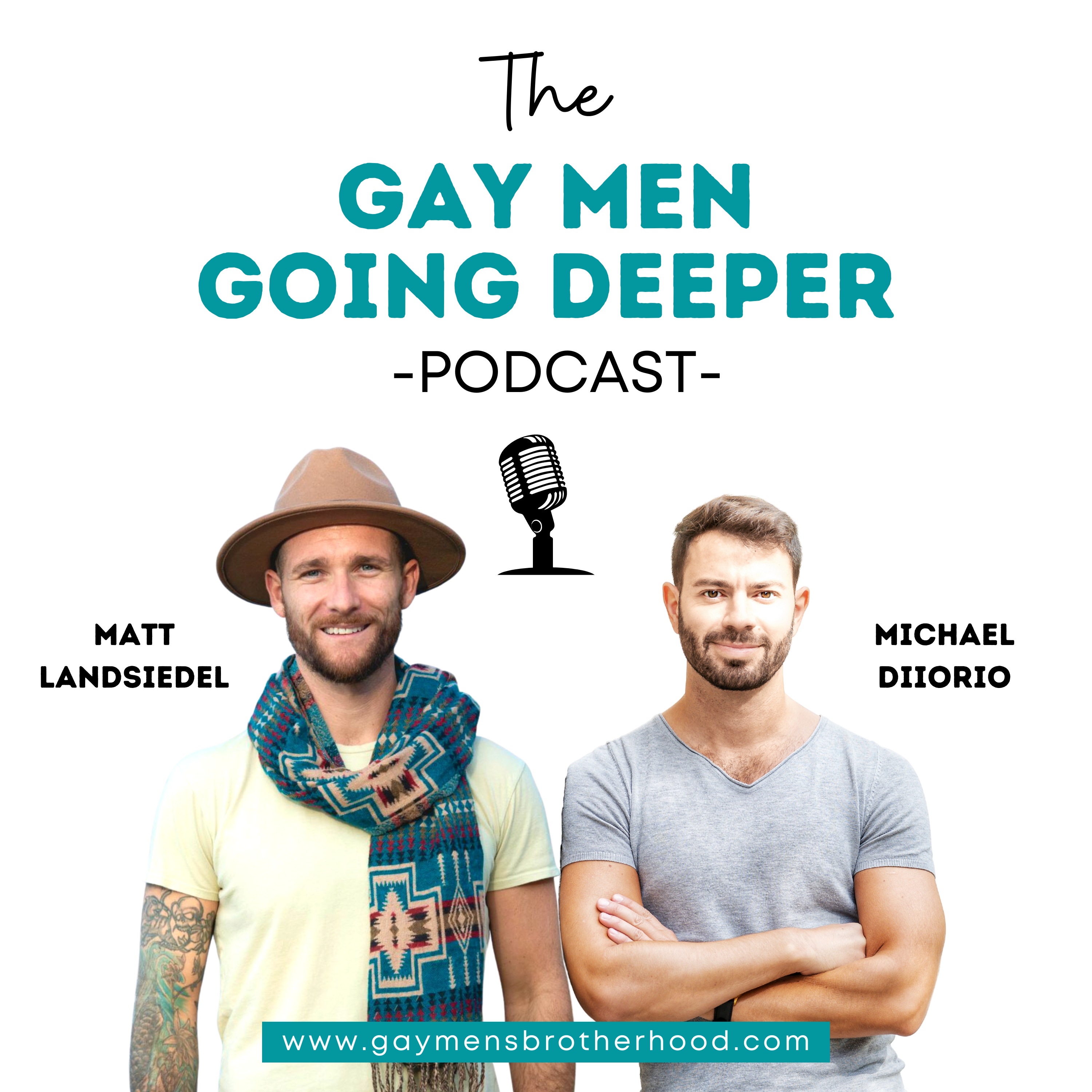
Basically, it's a long way of saying it's a meditation style that I started using recently and it has changed my life. It's more of an active type of meditation, so it's not any of that like clear your mind stuff, get super quiet. It's more of an act of like doing something with your mind. You're actively thinking and I can say I've seen measurable difference in my life since implementing it. They also have a super easy to use app, so you can use it on any smart device that you want. So if you're interested, you can head on over to our show Notes and look at the Silva ultramind system link that we have there. Now, let's get on with today's episode. Welcome to Gaming Going Deeper, a podcast series by the Gaiman's Brotherhood where we talk about personal development, mental health, sexuality. I am your host, Matt Lansdell. I'm a transformative life coach, empathic healer and spiritual teacher. I specialize in teaching people how to heal shame and trauma and embody their authentic self so they can enjoy more meaningful connections in their lives. My area of is my areas of expertise are working with highly sensitive people, empaths and gay men to develop a stronger sense of self worth.
Today's topic is Healing from Sexual trauma and we are joined by Terrell Cherry.
Welcome, Terrell.
[00:01:37] Speaker B: Thanks. How are you?
[00:01:39] Speaker A: I'm doing well. Yeah. It's good to have you here. This is going to be a heavier topic for sure. We're going to be kind of diving into some, some unchartered territories that people don't often talk about. So we're going to be beautifully holding space for each other to kind of navigate this, this terrain.
But I do want to formally introduce you to the audience and then I'll give you an opportunity to kind of share or add anything in that you want.
So Terrell is a certified hypnotic hypno, hypnotist and mindset coach on a mission to help people process trauma so that they can start to move away from self doubt, shame or guilt and towards confidence, clarity and peace. Rewiring the subconscious mind and being able to view past behaviors or experiences through a compassionate lens is what he helps his clients with.
A bit of a spiritual nomad Terrell has lived all over the world and loves meditation, breath, work, and Buddhist philosophy because these have helped him create a deeper connection with self during his own personal development journey. He also geeks out over the law of attraction and manifestation, Tarot, astrology, or anything having to do with mysticism and metaphysics. Terrell believes that the most attractive energy is authenticity. And when you allow yourself to be who you're meant to be, when you show up for your dreams, you can create so much happiness for yourself.
Yeah, that's amazing. I'm like, it's like, am I reading my own bio? That's kind of what I feel like. We're so similar.
So I'm really, really excited to have you here today because.
And actually, before, before I hand it off to you, I want to just tell a little story of how we connected because I was setting an intention of. Of the. The topics because it was about September, I was like, okay, I want to start picking my topics for my podcast coming up in the fall. So I started writing down things I wanted to talk about, and sexual trauma was one of them. And I literally, the night before I was creating this, the next morning woke up and in the Gay Men's Brotherhood Instagram message was Terrell. And he has short shared a bit of his story and how sexual trauma was part of your story.
And I was like, no way. Like, this is unbelievable. So I was like, I reached out and we had a kind of a connect connection call and we felt pretty strong resonance. And so, so here we are. So we're wanting to. To bring that resonance to you guys, the audience, so you can experience whatever we create today. So I'm looking forward to this.
[00:04:08] Speaker B: Yeah, yeah, yeah. I think that's like one of the most affirming things that can happen in an experience is literally when you put it out there and then it shows up.
Obviously not all things are going to happen in sync like that. But this also lets me know that if there are two people having a similar thought form or wave, there are more people out there who are maybe looking for support in this or experience have experienced this. Right. Like, it really just lets me know that they're. That if there are two people that can really be in that same spot, there's more, you know, when we think about the collective and mindset and stuff like that. But yeah, yeah, yeah, yeah, yeah, yeah.
[00:05:02] Speaker A: I fully agree. And I think, I think there's a lot of people in silence on this topic and a lot of people not willing to come forward and share their story. And that's where the healing happens, because there's a lot of shame around sexual trauma. So I'm really.
I'm putting myself out there in a really big way by doing this, and I know you are, too. So we're doing this for the greater good of our community and hopefully it creates a dialog for people to be able to start to heal.
So, anyway, yeah, anything.
[00:05:33] Speaker B: Absolutely.
Yeah. And I think that when I think about my own experience with sexual trauma, it really did, like, set roots in the silence, you know, and not only from inception, but, like, as I got older and maneuvered and then it turned into a whole different animal or, you know, and I think the more you speak about it, the less it has a hold on you and it doesn't become quite the lens that you look through anymore.
[00:06:16] Speaker A: Exactly.
Yeah. Yeah. Thanks for sharing that.
I want to just kind of give the audience a bit of an idea. Like, again, we're going to be leading with a lot of curiosity today, and we're going to be kind of riffing where we don't have a lot of structure because we felt like this was better to be intuitively guided. But we have a bit of a structure I wanted to share with you guys so you kind of know what to expect from today.
So we're going to explore why we chose to talk about this, and then we're each going to take some time to share our stories of sexual abuse and trauma and what that has meant to us and the impact that it had on our.
[00:06:51] Speaker B: On.
[00:06:51] Speaker A: On us.
And then, you know, obviously this. This show is about healing, healing from this and developing personally.
So we're going to be talking about how you can heal, how we have been healing from our own sexual trauma, so our own anecdotes. And then also how what we suggest to you as, obviously we're professionals in these fields of healing trauma and shame, so we want to be able to share some of our professional tips with you guys as well. And then Terrell will have an opportunity closer to the end to talk about how he can support you and the work that he does.
So, yeah, that's kind of how it goes. So, yeah, like I said, this is going to be a little less of a educational, more of like us letting you into an intimate conversation.
[00:07:40] Speaker B: Right.
[00:07:40] Speaker A: So I kind of like that. So we're going to hold space for each other, let our curiosity lead the way. And. And yeah, and I want to preface too, before I share my story, is that this is my first time actually sharing this publicly. I've Never actually disclosed this to anybody.
[00:07:55] Speaker B: I've.
[00:07:55] Speaker A: I've shared it in a men's group in passing and I just, I basically just said like the words, like I had this experience. I never actually was able to process it. So I've processed it personally like myself, but I've never actually shared it publicly. So there's some nervousness around that. I want to just bring voice to the nerves and.
Yeah, without any further ado, why don't we start with, with you, Terrell, if you want to maybe. Do you want to introduce yourself in any way that maybe wasn't in that introduction or if you want to just go right into sharing, feel free.
[00:08:26] Speaker B: Yeah, yeah, yeah, yeah, absolutely.
You know, again, my name is Terrell and I have been working with trauma and individuals for a few years now.
And how I got into this work was through my own unlayering and exploration and curiosity, looking at my trauma. And one of the things that I was first alerted to, and maybe this will help people, was the friction and the frustration in my relationships.
Relationship to myself and relationship to others. And so I always was aware that there was a, you know, a lack of confidence and self esteem and self love.
And I really wanted to work that out because I felt like it was blocking success and finding a partner and doing what I wanted to do. I was a fitness instructor for a while and that I needed to really, I wanted to really be myself and attract the clientele that I wanted to attract. And so that's just kind of how I got into my space. And it's always been just a curiosity and turning one stone over and saying like, okay, cool, that's there.
Let's like figure that out. So to take it back in, I'm like, I don't even know actually like the words to start this. But so my sexual trauma happened when I was somewhere around five or six years old.
And this was a time in my life when I was beginning to understand that there was something different about me and in, in the way of liking boys. And so I, I have a very visceral memory of, of realizing that I had a crush on my best friend who lived, I lived on it like a hilltop, which is kind of weird. And like three houses were on this little hilltop and my best friend was one side of the. One side of the hill and I was on the other side and there was a house in between and we would always play together and he had an older brother now.
Memory is actually really crazy. And I think at this point, at this age, when I think about it now as an adult, it does all kind of seem a little hazy. So ages and time frames and things like that are going to be off. But I'm going to have to assume he was maybe 15 or 16 to my 5 or 6 year old self. And it started off as super simple. He was like babysitting us once and took me aside and wanted to play.
And that play was of a sexual nature. And the, the preface was to show me like how my mom and dad loved each other and stuff like that. Now I think where it gets really complicated for me was because I was internalizing this as something that I liked maybe or was not afraid of or curious about even at this very young age. And again wanting to really trying to understand myself. And we spoke earlier about silence and I knew right away that what we were doing was wrong. Not only because he said not to tell anybody, but also I knew, I just knew that this wasn't something that we should be doing. There was a real secretive nature to it. Even this happened multiple times over and over until they finally moved. And that's why it ended. It's because they literally left.
And there were times where we were, me and my best friend would be playing in his playroom and his brother would take me aside and go into the closet with his brother in like on the, in the room of the same closet and just doing a lot of sexual acts that no five or six year old should really be partaking in.
A lot of the, a lot of the things that I guess really hurt me, not only in a physical nature because there were some things that I remember being like really painful, but not even articulating that to my mom or my dad, right? And feeling like if they knew I would get in trouble.
If they knew they would think that I, they would somehow equate that to my sexuality. And again, that was wrong. Not having the verbiage for it or you know, the words for sexuality or being gay or anything like that, but knowing that if that happened they would think that I, I had initiated it somehow or liked it. And like a lot of people, like I never have never really said anything about it, never told anybody about it. I told a friend for the first time when I was 16 and we were trauma bonding, you know, sharing each other's stories. And I think that was the first time too that I was being able to actually say, I think I'm gay.
And so there is a lot of like this figuring things out as I was getting older and it didn't really hit Me that this was a.
That this was a real big issue until I went for my first hypnosis session.
[00:14:46] Speaker A: And.
[00:14:46] Speaker B: And that was one of the first scenes that came up, was me being in a closet with this guy and realizing that I had built this belief around being wrong, being bad, being judged and shamed, and learned very early on to keep aspects of myself hidden. And that just kind of grew into other aspects that I would hide within relationships. So I would get into relationships with people. And we could only go so far emotionally.
My sexual exploits and the way that I viewed sex and the way that I got into sex I used to do.
I'd say I've gotten into some risky behavior sexually. And I.
I do understand that it was a way to perhaps feel recognized, feel loved, feel valued, feel, you know, like somebody accepted me. And again, all of these things really stem back to what I started learning about sex, when I started learning about relationship, what I started learning about intimacy in my own sexuality at such a young age. And that belief system that stems from that, that really does stem from that.
Yeah, the hypnosis session that I did was super profound.
It.
I. There was a lot that stayed there. I was, at the time, like, Wonder Woman was a really big idol of mine, and I was able to move into.
I was able to really work some things out from a different perspective from this adult brain looking at an act. And I think that's. That's what is super helpful when you're going back in time and looking at these. These things. Because, you know, shame and guilt and responsibility or accountability, they're all intertwined, and they're all.
They. They hold a space for us. And if you're dealing with sexual trauma, there is this idea of, like, where did I.
How did I play a part in this? Or how did I. Was I responsible for this in any way?
Where were my footprints in the sand in this? And I think when dealing with it with children, we really have to look at the beliefs, like, what did that belief.
What was the belief that you picked up from that experience? Or what did that tell you about yourself? And, you know, at that age, we're really in the ego kind of mind and the ego brain. So everything does revolve around the individual, the child. They always think, this is because of me. This is something that I did.
[00:17:50] Speaker A: Yeah.
[00:17:52] Speaker B: So, yeah, that's kind of like, that's. That's my story right now, in a. In a nutshell, to not go to. To super deep into that.
[00:18:02] Speaker A: Yeah, yeah, yeah. I really appreciate your. Your openness. And I'm just curious, what does it feel like to share that?
[00:18:13] Speaker B: I mean, interesting, because I don't know who's going to be hearing this.
I, I think that the work that I've been doing now, before hypnosis, I did a lot of. I, I leaned into breath work and there was a lot of anger and sadness that was operating in my system that I didn't really understand or recognize.
And you know, I went through meditation and there's all of these things, there are a lot of these methodologies that I utilized that, that took layers off. So my process was, was a lengthy process. This is years of me finally getting to this one pivotal part where I wasn't feeling like in my business, I was showing up the way that I wanted to. Turns out I'm looking at my, my past and saying, okay, I can see how this belief was created and how it not only shows up in my business, but it shows up now. I'm looking at my relationships and seeing, seeing the connection and all of that with. Within this one place. And so I feel okay sharing it. And I think because maybe I'm not, It's not, it doesn't have like its talons in me like it used to.
It's. It's a part of my history and it's a part of my past and I've been able to really release it. Release some of that shame, Release a lot of that shame, Release a lot of that guilt. And I don't think there's anything to be, there's really nothing to be afraid of for me in that space.
[00:20:10] Speaker A: Yeah, yeah, yeah. I appreciate it. You're very well articulated and it kind of, you know, some of the things you shared really kind of made me, gave me some perspective into my own experience as well.
I have one other question.
What, what do you think the biggest impact was in your life having this experience happen to you when you were five or six years old?
[00:20:34] Speaker B: You know, I honestly think that.
Created a wedge for anybody who really wanted to get to know me.
Because it's always been like, there's always been this back of the mind thought of if they really got to know me, they'd see there's something wrong with me.
And when I think about my relationship with my mom from a very early age, there was this, this sense of mistrust, right? I can't trust you with this information. I can't trust you with that. And I think that did draw, that created a wedge between us where I wasn't, I didn't feel safe And I didn't feel.
I didn't. Yeah, I didn't feel safe and I didn't feel accepted. And I mean, there's so many things with me and my mom and our relationship that has transpired and shifted and changed, but I think from the very beginning, having that lens of I'm not safe in this, I can't tell you this. And looking at that. So, yeah, I think the biggest impact was really not feeling in myself that people who were around me could really actually support love and accept the whole authentic me with everything.
And that just keeps you in a state of. It's sad, right? Like, it keeps you. Keeps you stuck.
[00:22:18] Speaker A: Yeah. I wonder if that's what was contributing somewhat to the anger and the sadness. Yeah. Because it's like when we feel like we have to hide these parts of who we are, we can't fully let go.
Right. And we can't let connection in.
So. Yeah. I fully resonate with your share in such a big way.
[00:22:35] Speaker B: Yeah. Yeah. And I think, I don't think it's.
I don't know. I used to say, like, nothing is unique about my story. I think that's. I think this is something that a lot of people go through and sit within silence and. Mm.
I wish I would have, like, had the forethought to actually get the.
The legit, you know, statistic on how many. How males in general are living with this and haven't told, haven't said anything. I guess that would be a weird statistic to try to find, but I'd imagine that there's a lot of people who are experiencing this or have experienced it, haven't taken the time to explore it and get curious about it and really say, okay, in what ways is this affecting all areas of my life? Like holistically. Yeah.
Career, relationship, health, money.
Right. Like, how is this affecting me? Because it does. If you, if you don't think that, that an experience like that affects your life on a whole scale, it's. It. Chances are you're not paying attention. Yeah.
[00:24:05] Speaker A: Yeah. You're feeling frustrated or you're denying or something.
[00:24:08] Speaker B: Yeah.
[00:24:09] Speaker A: There's some defense mechanism at play.
[00:24:11] Speaker B: Yeah, yeah, absolutely.
Yeah. Yeah.
[00:24:17] Speaker A: Do you feel complete in your share?
Yeah.
[00:24:19] Speaker B: And I mean, we can talk. I. I imagine that, like, as we go, some more will come up. But you know, one of the things that, again, like I said, it's almost like a mind movie where I am third personing it, like looking in and, and seeing it.
And I think that's why when I talk about it, I do feel a little disconnected from it.
And maybe not disconnected from it, but it just doesn't.
If we would have talked about this years ago, a couple years ago, I probably would have been like tripping over my words, trying to figure out the correct context or right way to say it or, you know, maybe even going too far into detail. I think sometimes I don't want to like, re. Traumatize anybody with my. With my detail. But yeah, you know, I think.
I think at the end of the day, the big.
The big understanding is how these moments are so profound in how we. The self concept, the identity and how we see each other or how we see ourselves and then operate from that external view.
[00:25:35] Speaker A: Yeah.
Yeah, exactly.
Yeah. Okay.
I guess it's my turn, right?
[00:25:44] Speaker B: Yeah.
[00:25:48] Speaker A: So when I was 19 years old, I was drugged and I was raped.
And basically how it played out was I was at a nightclub in Calgary and I consented to go home with a guy.
I didn't consent to have sex with him, but I consented that I'd go home with him and ended up getting to his house.
And I was really intoxicated at this point, like drunk off of alcohol.
And he came over and he asked me if I wanted something to drink. And he came over and he brought me a glass of orange juice and with vodka in it, he said.
And there was obviously GHB in it. And I was extremely drunk. And basically all I remember is the next morning. Like, I don't really remember anything that happened.
I remember like waking up and my body felt like paralyzed. Like, the first sensation I met when I woke up was this feeling of being paralyzed. Like I couldn't move for like, maybe like two or three seconds. And my body just felt frozen.
And.
And then I kind of started connecting with my body and I was like. Everything just kind of felt numb.
And I thought it was like, because I was hungover and I just, like, I wasn't really. My faculties weren't fully there. Like, I didn't know really what had happened. And then.
And then I started to realize, like, my body, like my bum was really sore and there was like blood and.
And then. And that's when I kind of paired everything together. And I was like, okay, this obviously happened.
And the. The interesting thing was I.
I kind of sloughed it off, like it wasn't a big deal. And I started to use all these minimizing strategies of like, oh, I.
I said that I would go home with him. So like, you know, like, that's. And then I ended up having sex and like, so I started to kind of really minimize it. And that went on for a very long time.
He. I was 19 at the time. He was probably 29. It's just like a guess, but he was, he was a lot older.
So there was this energy around like I was very young. I was very. Had a very low self worth and I kind of trusted this older person.
Right. And that was obviously a mistake. But so that's kind of in a nutshell, what happened. Again, I don't want to go into too much detail either. I noticed that there's this like energy, this emotionality that's there. And I like, I don't really want to go in much further beyond that, but I think for that that's the, that's the actual incident that happened. And then I want to talk a bit about the impact that that had on me because I went through my 20s extremely hypersexual, like to the point where I had a sex addiction. And I was having sex with multiple guys a week.
I was in a relationship with a guy from 21 to 29. And four of those relate. Four of those years we were closed. And then four of them we were open and the four that we were closed. I was actually very.
I was cheating on him a lot and going to bath houses and stuff. And my, my sexuality for me was how I was getting my worth. I was giving my body away to guys for worthiness. And I remember my, my, my boyfriend at the time saying, he's like you, you use sex as a weapon in our relationship. And, and so my relationship with sex became very.
I don't even know the word, but it was like, it was a currency almost because I felt like I didn't feel worthy that. And I needed to use this as a way to have obviously connection because I was seeking connection, but I wasn't able to connect emotionally. I think after that experience, I think I dissociated, looking back. And I think I was. My. My emotions were so distant from, from me and I was very much in my head. And that's kind of my relationship with my sexual self became governed by,
[00:30:30] Speaker B: by
[00:30:30] Speaker A: my mind and my ego. And the reason why we opened up the relationship was because I wasn't able to bring emotions and sex together.
They were very separate from me. And actually the very thought of bringing emotions into sex was like repulsing. Like it felt repulsive to like have somebody be like, I love you and you know, sharing these intimate things and then, and then having sex. Like for me it Was that just felt gross. And it was like sex was robotic and it was something that we did to get off and then I would be back in my own, in my own world, up in my mind. And even when I would go for hookups with guys, I would never cuddle after. I would never talk. It was very much like performative sex.
So that was my 20s and I think that was a trauma response for me. I became very hypersexual. I was recreating power because I felt very powerless in that experience. So I was like, I was only talking. I was almost assaultive towards guys. Like I became very aggressive and, and I. It was like a way of having or reclaiming my power that was taken from me in that.
And then everything changed for me. I went through a lot of relationships in my late 20s and early 30s and I was actually. I had a couple spiritual experiences, awakening experiences and where I started to connect to my heart. I was coming back online from being dissociated for probably 10 years and I started to be able to connect emotions and sex and it, and, and it. But it felt very scary for me because I didn't know how to be vulnerable. I didn't know how to handle having feelings for guys and, and bringing that into sex. It all felt like too much for me.
And I think it was because I was developmentally delayed, right. I was almost like this young, traumatized 19 year old trying to be in this 30 something year old's body and have a relationship. And so I had a lot of emotional maturing to do.
And I. So what ended up happening was when I started to realize this, like basically this at the start of my 30s, I.
I kind of shut down sexually and I became afraid of sex. And I didn't want to give my body over to men because I did, I felt like I couldn't trust them. And so it's very interesting. I have had both of these experiences. I went from hypersexual into basically sexually dormant. And.
And I had a lot of issues that came around that. A lot of judgment, a lot of shame around, around that. But I think what was happening in retrospect is spirit was shutting me down sexually so I could do the healing work because I wasn't able to do it in these ways because I would, I would feel unsafe sexually and I would shut down again. I would feel unsafe down, I would shut down and I was stuck in this cycle. And so I went a year without having sex and I moved to Asia and I almost felt asexual. I thought Something was wrong with me. I was like, what is going on my body? I don't. I don't have any sexual libido.
But what I. What I realized in retrospect is that I was coming back online fully from dissociation so I could start my healing process. Because I think the healing begins when we come back online from dissociation. That's my experience, at least, because we can start to connect with our emotions and. And our body. And, you know, the thing about my experience is it's quite unique. Well, I shouldn't say unique, but it's. It's unique to me in the sense that I don't remember. I don't have cognitive memories of my experience, but my body has them imprinted in them. And I. That's why my body was expressing all of this stuff. But my mind was like, what's going on? Why don't I have a sex drive? I'm horny up here. But down here was like, nothing. Nothing was going on down there, right?
So my body was trying to communicate to me that I needed to work through this stuff. And believe it or not, I actually, this is. This retrospection is, like, new. Like, this is very new. Like, I didn't make all these. Connect these dots until we started doing this. So the last month, I've been really grappling with all of this stuff, and it's kind of sitting at the surface, but I think I did a lot of this healing work. I just wasn't sure what I was healing.
[00:35:05] Speaker B: Right.
[00:35:06] Speaker A: Like, my body was healing trauma through all sorts of different ways.
And.
And clearly this stuff was being processed and worked on without me cognitively knowing that this was what was happening. So it's just really. It's really amazing that the body has this intelligence and that it knows what to do with this information if we stop, if we actually listen to it. Right. And for me, I was pushing myself through, you know, 29 to 34, having sex with guys when I didn't want to do it and, you know, thinking that I had to do it. And, like, so my relationship with sex is. Is such. It's really.
It's very.
I don't even know the word that I'm looking for, but
[00:35:53] Speaker B: I'm going to take this moment.
I want to pause and just honor you in telling that story and telling, like, telling your experience. And I think I noticed that there was the energy where you're like, okay, got that out. Let's, like, move.
Let's move from. Let's move from that and let's get away from that and let's talk about, like. And I, I think that it is.
It's important to honor the. Honor the experience.
And I'm gonna, I'm going to say, you know, like, again, trauma is not the experience. It's literally how we. It's our perspective. It's what happens within the body afterwards. It's how we.
On a physical level, the experience, not necessarily the mental. You know, I can say at 5, 6 years old, I had sexual molestation and trauma. But it wasn't. It's not the experience that I remember. It's how I feel in my body.
It's never really.
It's not really feeling connected to my root chakra.
[00:37:18] Speaker A: Yes.
[00:37:19] Speaker B: The support and the security.
It's.
I mean, I can tell you all of the things that I've had happen to my body when it comes to sex in, in this context that is like it. It all really makes sense on a metaphysical and energetic level. Yeah. And so you don't have to remember it consciously.
Subconsciously. Subconsciously. There's a remembering and your body. There's a book your. The body keeps the score.
[00:37:54] Speaker A: Totally. Yeah.
[00:37:56] Speaker B: There's another book called Waking the Tiger. And it speaks to all of this that your body is this your subconscious mind, your body is the subconscious mind. And these acts that happen even in sleep, it doesn't. It. It's still there and it's still. It still comes out and it's still operating. And you, you going through these waves of feeling, perhaps disempowered and wanting to regain your power and, and then taking time, like you're literally taking that time and separating yourself so that when you do come back, you're a little more aware, a lot more conscious is, is the process. And I think that we all go through these, these waves and levels of understanding, of understanding, of reflection, expansion, contraction. Like it just all starts. It's not linear. It's pretty cyclical.
Spherical spiral link. Right.
[00:39:00] Speaker A: Yeah.
[00:39:01] Speaker B: And so 19 years old and a super scary thing. Like, I can only imagine.
I'm trying to think of like what year, like what decade that would be. So let's say this is early 2000s, you know.
Yeah. It would have been like not a lot of 6, 2000 was barely a thing at the time.
There's a lot of. There's a lot of like, social stigma that comes from this. There's a lot of fear that comes from this.
I had an experience as well of, you know, being over.
What did we used to call it?
Overserved G.
Anyway, and swirling, swirling out and having somebody trying to. But luckily my boyfriend was there and it was not. You know, it was a whole different situation than it could have been.
But there's so much in the realm of like what happened to you outside of that experience that it makes sense that sex would become ambiguous.
You know, there would or there would be this ambiguity and ambiguity to your sexual relationships and with whom you could trust and these, all of these factors. And so when you found yourself, well, what did you do in that time of celibacy?
[00:40:52] Speaker A: I spent a lot of time alone actually. And you want to know what's really interesting is, is so I left Calgary, packed up all my stuff, put it in storage, moved to Thailand. And within of two weeks of being in Thailand, I met a guy and had a hookup and my body was screaming at me, don't do it. And I was anxious before and I did it anyway and I didn't enjoy it.
And then afterwards I fell into like a week long depression. I couldn't get out of bed.
And.
Yeah,
[00:41:45] Speaker B: and we breathe through it.
[00:41:49] Speaker A: I feel like that was the start of my, my embodiment journey. Like my body was like protesting like enough, like, I can't do this anymore, you know what I mean?
[00:42:01] Speaker B: And,
[00:42:05] Speaker A: and I just started, like, I just started listening. That's really what it was. I started listening to my body and I, I stopped aggressively working out, I stopped eating like a rigid maniac and I let myself have an ice cream if I wanted it, you know, like, because I was so hard on myself and I was so like just living from this place of perfectionism. So I think that's, that's the, my answer is I just started listening and responding to my body and stopped bullying it.
And then things just started to change, you know?
[00:42:41] Speaker B: Yeah, I, I at the same time had this thought that said you started, you started listening.
And I, you know, when I see emotion come up and I feel like that's like the body finally being like. You were listening to me, right? You're, you're paying attention to me. And we spend so much time looking outside for things, Especially when it comes to. I think one of the things, I was talking to another friend who was a queer astrologer and we were talking about how at a very early age a lot of people realize that or realize their sexuality.
And we learn to pick up on energies and we learn to observe and we can spend a lot of time trying to fit a, fit a mold or fit an ideal so that we are accepted, so that we are received so that we are loved. And a lot of times, especially as gay men, we can use sex as.
As a barometer for how lovable and accepting and valuable we are when it comes into the context of doing it as a response and a trauma response at that.
I think there's this gray area of. Of wanting that support and wanting that.
Wanting that love and wanting that acceptance.
You know, I know for me, that was a lot of the space that I came from, and also using my sexuality as a.
As a. As like wielding a sword and staking claim to my autonomy and just really putting it out there and saying, like, I know what I can do, or I know I have control over this thing that may be controlling me subconsciously.
And so maybe what's one of the first things that you were. Were there any modalities that you started leaning into that helped you work through more or less understanding and bringing more awareness to that connection with your body?
[00:45:29] Speaker A: You know, it was.
It was like turning towards myself. That was the biggest thing, because it's like what I. What I was doing for so long, and it was fueled by shame, which was perfectionism, which was be productive all the time, be busy. And I was like, I, like, looking back on it, I'm like, I don't know how I did that. Like, I was working insane amounts. I was working out insane amounts. I was like, just. I don't know, it's just. It's unbelievable now that I look at it, now that I'm actually honoring what my body has capacity for. Like, I was double what I do now. And like, I.
So I started to turn towards myself instead of be busy all the time, and I started just giving myself, like, opportunities for stillness and presence.
[00:46:15] Speaker B: Yeah.
[00:46:16] Speaker A: And then. Then that's when I started coming back online from dissociation. Like, you know, I describe it in my book, like, moving from my head to my heart.
That's just. That's coming back online from dissociation, in my opinion, because when we're dissociated, we're not connected to our heart center. We're connected to the cerebral part of who we are. And so for me, it was like giving myself that space. I was able to walk down, make the journey, and make that connection again between my head and my heart.
[00:46:43] Speaker B: And there's.
[00:46:44] Speaker A: That was the biggest thing.
[00:46:46] Speaker B: Yeah, it sounds like there was a. I use the word perspective a lot, and it may.
May not be the right term to use, but it sounds like there was an. A shift in. In thought too. Right. Like, the way you were looking at something. And I know for me, when I was starting to articulate what my experience was and what that meant and how I was moving through that with that, my perspective about myself shifted and changed. And it went from there's an inherent. There's something inherently wrong with me. Was a big one. There's something inherently wrong with me. I'm dirty. Yeah.
You know, all of this stuff and trying probably to make that real somehow through my actions. I think we kind of do that too. We have this self fulfilling prophecy with our beliefs. But my belief shifted and my perspective shifted and things started to change when I started to, like you said, come back online and connect to my heart and feel the feelings and feel my body and grieve and talk a little bit more about what it was that happened. But my, the perspective that shifted was, okay, there's never been anything wrong with me. And that that experience doesn't.
It was an experience that happened. Something that I'm getting away from was like, I hear a lot of spiritual rhetoric of things happen for a reason.
And I did, I always did try to find like a reason behind it. And that perpetuated this idea of did I like it, did I want. It was where it was my actions. And then it's like actually things happen that we move through. And perhaps, perhaps there is a lesson here that I am learning that I can offer to others and, or you know, and yeah, and there's a way that I can move through this that will then help others move through their unique shade of trauma.
And I think that was one of the most profound perspective shifts that allowed me to, to separate action, stimulus, separate that to me, the person, the energetic being that I am and live in that and have it all be there without it feeling like a weight attached, holding me down, pinning me down.
And when I, when that shift happened, when I did my. And this was after one hypnosis session that I really had this 180 turnaround and pivot. And the things that happened. My. I was in a relationship at the time and if I was being completely honest, I don't know if we were right together, but I was in it because I again, always had this like, I want a relationship so bad and I was getting into relationships and staying in things for too long or I was meeting people and not able to really hold that vibratory love that they were feeling and they would be really, really good.
And I was like, not about it, not here for it, not available for it.
[00:50:32] Speaker A: Yeah, me too.
[00:50:35] Speaker B: Yeah. And you know Once that, once I made that shift, I did a lot of self reflection and changed a lot of things, especially with, in regards to that relationship, that relationship ended and behaviors of mine shifted. I, I, I was very more, I was way more intentional about who I let into me, into my energy, into my body, who I put my body into, like all of the things. Because that's another thing you realize like when you are having sex with somebody, it is a, it's, it's a connection. Your atoms are colliding together and then you have, you, you are connected. Even if you never see that person again, there's an energetic core that is attached to that person.
[00:51:30] Speaker A: And DNA, your DNA is actually in that.
[00:51:33] Speaker B: Yeah, yeah. And I was being way more intentional about the connections I wanted to make about, you know. You know, I shifted the way I did any of my online dating and, and yeah, it really was one of the most profound things when I was able to just make that little kind of switch to like, okay, this doesn't make me wrong. This doesn't make me broken or unworthy.
[00:52:05] Speaker A: Yeah, yeah, yeah, yeah. There's so much that you shared there. And I'm like, I got so much to say, but I want to just really affirm what you said about the like feeling like you're broken or something. And I always, I use the word defective a lot. My shame told me I was defective, that there was something wrong with me. And it came from many different sources. But I think the sexual area came from not accepting my, my meat being gay. And then obviously this sexual trauma had a big part in that.
And I've, I've been on this pursuit, pursuit for worthiness, really. And, but I was approaching it from shame, not love. Right. And like, there's something wrong with me, I gotta fix it. So I've been on this pursuit of like, you know, working out excessively eating, eating excessively, seeing chiropractors, seeing naturopathic doctors, like, seeing. Because I always think there's something wrong with me. And that's, that's shame. That is so shame. You know what I mean? And, and when I started to embody, because that, that's up here. Shame, Shame is up here. It lives in the tapes that we play out about who we are and how we, how the world sees us, blah, blah, blah. So when I got away from, from identifying with my mind solely, and I started to identify with my body, my spirit, my soul, my heart as well as my mind, that's when I started to get into some of the healing domains of like, okay, I'm not defective. I'm not broken.
I'm whole. I'm complete. I'm perfect. And I had to go through a process of remembering my worthiness. And I think, to be honest, I'm still. I'm still in that process.
I'm still learning my wholeness, and I'm still learning that I'm good enough.
[00:53:47] Speaker B: And.
[00:53:48] Speaker A: But I've made some really huge strides in the last few years in this. In this space. But. And I'm looking forward to getting into a relationship finally, for the first time in my life where I can feel that I'm good enough and that I am worthy of love and connection and all these things that I desire, because I often freak out that I'm not, and I sabotage. I push away, you know, And I've definitely.
I remember this one guy that I. That I first started dating.
I would say he was probably my first serious relationship, actually.
And he was so sweet and he was so nice, and he did all these kind things for me. He threw a surprise, surprise birthday party for me and invited all my family and friends. It was like the sweetest thing anyone's ever done for me. Okay.
And I broke up with him because he was too nice and he was handsome and he was all the things I was looking for in a guy. But I. I didn't love myself the way that he was loving me.
And I. It was a mismatch, and I felt scared, so I pushed him away.
[00:54:55] Speaker B: Yeah, I resonate with that a lot. And I think that something that I recognize within myself, too, was like, you know, feeling again, our concept of what love is or what feels good, what feels comfortable. If you have a belief now, your beliefs, right? If you have a belief that something is wrong with you, that you are inherently wrong, that you are the defective somehow.
And then there's somebody who doesn't see that there will be a myth. It's. It. You can't. There's a mix match. You. You just can't. You can't do, like, all of a sudden there's, like, what's wrong with them if they're not seeing that or. Or any. Also to a very real fear of being seen as that. I don't want them to see that. And so you subconsciously will create momentum away from that relationship to protect yourself. Right? Like everything we do is a protection mechanism. Our bodies, our brains are designed to keep us Alive in this 3D world, in this environment where there is danger lurking around every corner.
Every single thing that we do is the core of the action is to keep us alive, is to keep us safe. And when we have a belief that it is unsafe to be in relationship with somebody because they will leave me or they may hurt me, it's going to be painful. Your body, your mind will say, okay, how much can we handle this? Gay Hendrix, right? Tipping.
You have like a tipping point, or. That's not Gay Hendrix, but gay Hendrix has the.
I'm blanking out on this. It's like our. Our upper limits. And you have an upper limit of how much love you can take in. And if it's too much, we all seen it. Nice guys finish last, right? And it's the same this whole idea and concept that they're. That. That they're maybe they're too nice and yada, yada, yada. I don't know. I think, like, trauma has a way of.
Of hypnotizing us into.
Into seeing a world that. That isn't necessarily conducive to allowing us to be in the space that we want to be in. You said something earlier that I.
That I meant to make a note of.
I had this thought too, about feeling worthy and growing again.
Now in this time, it's 2022, almost 2023.
Homosexuality is not really you. You. If you're six years old and you're gay, like, you're gonna be. You're gonna be okay.
Hopefully you live in a part of the world or you have parents that are supportive and, you know, it's now more seen as okay. Yeah, I'm an 80s baby, you know, I did not grow up with that. And I am also.
I'm also poc.
And there's a lot of this notion that everything about me is not meant to be here, is not respected, is not okay, is not valuable.
When I first started coming out, I was in Atlanta, Georgia, and it's this. By. At the end of the day, it's the South. And this was when the online apps were just starting coming out and things like that. And it was a lot harder for me as a young, queer black person trying to navigate this online space where racism was so it was not subtle, you know, and it only solidified the belief in me that something was wrong with me. And it only increased my desire to be more available to people, no matter who they were, no matter what it was.
Sure, I had my value system, and there were there, you know, but at the end of the day, it was like, get what you get what you get. And I think when I stayed in relationships, I dated somebody for like nine months. And I'd say four of those months I should have, we should have broken up. But I was too afraid to let it go and was being gaslit. And it wasn't until they ditched me at a, we went to like a three day music festival. I kind of like threw myself in there as a last ditch effort to solidify this relationship that I was clinging onto by the skin of my teeth.
It wasn't until they ditched me for their ex and I had to be at that whole space for three days watching them and YouTuber. I realized I, that was the realization. I was like, oh, there's a Terrell, you, you need to work on this self love. Like there's something happening here where you, you. I saw, I saw the writings. I saw everything. I was so clear. I'm like, wow. Like I put myself in this situation and I keep saying I want this thing, but I keep going for this kind of guy or I keep, I keep, yeah, I keep going for this kind of Gary. Keep doing these kind of things. Like you. There are people that, you know, I was in a really good relationship years and years and years ago, in my early 20s, mid-20s, and ended up cheating on him. And that was the demise of our relationship.
And there's a lot of, there's a lot of regret in that. But I think you have to kind. You have to go through these experiences so that you can learn from them, you know. And so not that I regret anything, but I do wish that at that time I was a little more mature to handle that love and relationship again. I love my life now and I love my partner now and I love all of the things that I'm in right now. But these are experiences that when you go to the core, when you go to the root, when you go down deep to, to that, that access point and you do realize again, it's like the worthiness factor. Am I enough? Do I feel enough? Do I feel worthy enough? And I, I love that you said even before the, you know, the assault, there was this worthiness factor that was playing and maybe it's just figuring out your sexuality and what that meant for you and that new identity, as every teen you're 19 should be doing at that time, really figuring out who they are, figuring out what they, what their vision for life is.
[01:02:28] Speaker A: Yeah, yeah, yeah. Again, so much of what you just shared, it's, it's just resonating with me in such a deep way. And this, this, you made me realize something actually is the hypersexuality I was exhibiting in my 20s after this assault happened, I had a deep fear of being seen.
So that's what it is. It's this low self worth. It's. I'm defective. And if I bring emotions and sex together that's vulnerable and they're gonna see me, they're gonna see my emotional brokenness and then they're gonna be disgusted by me. They're gonna reinforce my belief that I'm defective and broken and unworthy of love. So I kept it just in the sexual domain. That was my 20s.
Right. And then now in my 30s, I'm learning how to bring my emotional self, my full emotional self, authentically into connection. And it's scary. It's really scary, but it, it's so worth it.
[01:03:28] Speaker B: Right.
[01:03:28] Speaker A: And that's what I'm learning now. And that's where the worthiness comes. You can only really increase self worth and self esteem by, by putting yourself out there and, and taking the risks and risking rejection for connection. Right. That's kind of, I think, what, where this all. What it all comes down to. So thank you. I've had a lot of realizations just from, from chatting with you.
Yeah.
[01:03:52] Speaker B: I hope, I hope whoever is listening finds some nugget that is exactly what they need in, in sharing the experience. Because that's really what happens where you start to look at your experience, you start to look at your behavior and your actions. And again, what is the intention? And this is something that I'm always talking about now. It's like, what is the intention here?
What was I really needing and what was I desiring? And, and this. I want to take shame and guilt and blame away from out of the equation and just look at it and say like, okay, so you did a thing, you had this experience.
Why?
Because it was for a reason.
There's everything. Again, it's necessary. We act with purpose. Whether we know about it, whether we are aware of it or conscious of it or not, we act with purpose. And oftentimes it is that, that self protection and it's the, the security, it's the, it's the need and it's the not wanting to. We, we. A lot of people blame themselves for the things that happen to them when there is no blame on, there's no blame on them if they were the victim of it. Like there's no blame. And we have this whole, we have this whole network of people who are trying to like take victim out of it and not. It's like if you're a victim You're a victim. That doesn't have to demean you or it doesn't have to take away your power. Like, it doesn't have. Like, the word victim just means that there was a power play and there. There was. You know, and at a certain point, somebody wielded their power over you.
And moving forward from that, you know, what do we do with that information? What do we do with that? How am I. How am I healing from this? Right. How am I.
I heard this term, like, I saw this quote, and it was like, healing is just nothing. You never really heal anything. You. You let it go and. Okay, yeah, I see this as, like, you asked me, how do I feel about sharing that. And I was like, I kind of feel detached from it in a way. And I think that I was. I've let go of the meaning that this bad thing happened to me, and that created a different space to be in, to operate in. And I think when you heal, that's what happens, is you let go of maybe the. The. The meaning that's holding you, keeping you in that place in that time, like a. Like a. Like a time warp, and you're able to shift into a new space and you create a new meaning behind it.
[01:06:51] Speaker A: Or you.
[01:06:52] Speaker B: You create. Yeah, you create a new meaning behind it, and you create that new operating system and to live by. And it really shifts your whole energy and the way you vibrate and the way you articulate yourself.
Why I say, like, authenticity is the most attractive is because a lot of the times when we are hiding our shadow, when we're hiding aspects of ourselves, when we're hiding the truth of an experience, we're not being authentic.
[01:07:23] Speaker A: Exactly.
[01:07:24] Speaker B: Yeah, we're being. We're being versions of ourselves that we think are the most digestible for others. We're being, you know, and we cannot.
We cannot manifest what we truly desire if we are carbon copies of somebody else's vision of ourselves. Yeah, we have to really sit in that authenticity. We have to really, like, be ourselves and. And be in that, the whole truth.
Because every single thing that happens to us is creating that picture.
Like, there is no shade, no color. That is.
That is invaluable in who you are. And that's the good and the bad. You can't have. This is what contrast is all about. You can't have one without the other. And so once you begin to allow, you accept, you're curious, you investigate and you reorientate. You do all the reads right? You shift everything around. You have that 180.
That's when you're in your authenticity and that's when you see things really shift and change in your life.
[01:08:33] Speaker A: Yeah.
Yeah, exactly. You said it. So bang on. And I think I want to. I want to touch on the victim thing before because I want to save some time before we can talk about the healing. And maybe this is kind of the segue into that, actually, because we're already kind of touching on it. The, the victim.
The victim stuff is really interesting because I'll use my situation as an example. I didn't let myself be the victim. I minimized, I denied, I projected. I used all the defense mechanisms from being the victim. So part of my healing has been going back and being the victim. And this is in all areas of my life, not just in this area. I never wanted to be the victim. I didn't never want to admit that power was taken from me. So I would exert power. And I became really callous and, and, and, and cold and harsh in certain areas of my life, specifically relationally.
And it wasn't until I made peace with the victim energy and I allowed myself to be in the victim energy, grieve what happened to me. And then I could start to empower myself from that place.
[01:09:36] Speaker B: Yeah.
[01:09:36] Speaker A: So, yeah, the victim stage is really important for people as far as the healing and the grieving. And a lot of us bypass that. That stage or we get stuck in it. Right. We either get stuck in the victim stage and it's like, poor me, poor me. And we use it as a currency or we bypass it and don't let ourselves go through it. So there's. There's contrast there. Right. We have to be. There's that middle space of feeling your victim energy moving through it. So you can enter that empowerment.
[01:10:03] Speaker B: Absolutely. You. It's. It's. Again, it all operates together. There is. In you. Do you. I like how, you know, you realize you were on ones. You went from one side to the other side. And that's kind of what happens when we bypass and we.
We're not allowing ourselves the space and the time to work through the thing.
[01:10:29] Speaker A: Yeah.
[01:10:31] Speaker B: And we ended up.
We end up perpetuating it or there's like.
It like lives on somehow because we're constantly trying to run away from that. We don't want to be seen as that. And we're running away from it.
[01:10:49] Speaker A: And it's like running away from our body.
That's what it is. You said the subconscious mind lives in the body as well. Right. So when we're running from Us, we're using psychological defenses, which is the mind trying to convince itself that the experience is, isn't stuck in our body somehow.
[01:11:06] Speaker B: Right, right.
[01:11:07] Speaker A: So, you know, yeah, it's interesting. I want to share a bit about my, my healing and what I did to kind of move through some of my healing of. Of, yes, sexual trauma. But this is going to be really about trauma in general because I don't think it really, you know, but I will, you know, kind of bleed it into the sex domain as well. But so like I said earlier, I had to stop dissociating and I had to start connecting back into my emotional body. And I did that through turning toward myself and, and being with myself, giving myself stillness and presence. So that's the biggest thing.
And then I wrote down here befriending my nervous system because I didn't have a relationship with my nervous system for the longest time because I was dissociated, I was disconnected. And I was basically bypassing the responses of my nervous system, what my nervous system was trying to communicate to me. And as we know, the scientific research shows that the trauma is stored in our nervous system and our nervous system is communicating to us our relationship with our emot. Emotions. So I had to start taking time and being with my, my emotions. I had to learn emotion regulation.
Right. Which is now I teach it because I've gotten so good at mastering it because I've had to learn it clearly the hard way.
And then obviously taking time away from sex, that was really helpful for me, especially with that sexual trauma domain, because I was playing out again this, the battle between my mind and my body. So I had to kind of bring them into, into harmony again. And I needed space. I needed space away from, from sex because I'm also an empath too. So when I have sex with somebody, I'm. Like you said, I connect chords, I feel I'm. Their energy has an impact on me. So it's hard to know who I am fully when I'm having a lot of sexual experiences because I'm taking on the DNA and the energy of other people too.
So it's really, really important that that period was really important for me to have that year of celibacy so I could really start to learn what's mine and what I needed to, to work with.
And then in that, in that period of time, actually I became really clear about what my needs were, what my desires were.
[01:13:18] Speaker B: Right.
[01:13:19] Speaker A: Because I was so disconnected from them. Like, I was only topping because I felt like being a bottom was somebody Taking my power.
Right. So I, but I had a very strong desire to want to bottom. So again I had to come and do this healing work so I could step into the sexual roles that I wanted to be in that were part of, of my authentic desires.
[01:13:38] Speaker B: Right.
[01:13:38] Speaker A: And that was really, really important.
And then started to move towards sex with purpose which is again listening to my authentic desires and moving towards the sexual experiences that I wanted to have and saying this is what I want to create.
And, and I had to be intentional with, with consent because I, for the longest time I was letting people do whatever they wanted to do to my body because I had low self worth and I thought I needed to do that in order to maintain connection.
And I was re traumatizing myself because my body didn't want that. So being intentional with consent means feeling worthy enough to communicate to your sexual partners that this feels good and this doesn't. Do more of this, do less of this. Right. That's the kind of dialogue I had to learn how to have, which was very vulnerable for me. That was one of the most challenging things and still can be the most challenging thing for me when it comes to sex is communicating my needs and desires.
[01:14:39] Speaker B: I, you know, that's not uncommon. And same, same, same again. We have these people pleasing tendencies that show up. Yeah, again because you know, if I say this thing, what is their response going to be? Yes, how may they reject me? Or how might this turn out? Or like there's so many things that happen in matter of seconds that we don't even understand and recognize. And I think that's one of the most important things, especially when you're having sex with people. Are you able to articulate what it is that you want and whether it is that you don't want it? I was talking to somebody else recently and you know, they were saying how when they meet up with people, if somebody is, is a catfish for instance, like how they're very quick to be like hey, this isn't what I want. But their friends are like oh no, we just like ride the wave. And I think there's so many, there's so many people who get into situations where they are using their body that they don't want to be in. And that is, it's re traumatizing over and over and over again.
And you know, nobody will really ever understand.
I mean, no, I'm not going to say that because everybody's going to. Everybody who has sex with somebody understands that no matter what your sexual preference is, you understand what it's like to have sex with somebody that you don't want to be having sex with or be, or to be doing something sexually that you don't feel comfortable with. And it is, it is scary and it is traumatizing. And, and I like everything that you said, makes complete and total sense. Your nervous system is going to be key to healing. Right. Because you have your fight flight. Fight flight, freeze. You have your sympathetic nervous system that tells you when you're in danger.
[01:16:31] Speaker A: Exactly.
[01:16:33] Speaker B: And if your nervous system is in overdrive 98% of the time of your life, you are so worn out, so exhausted.
[01:16:44] Speaker A: Exactly.
[01:16:45] Speaker B: You can't even think straight.
And this is what happens to a lot of people who have ptsd. They are overstimulated and every little thing really just triggers them. And, and if you're trauma, if you're, you know, if, if you are experiencing a lot of sexual trauma and you find yourself in these experiences where I'm meeting up with people and I'm feeling anxious and I'm feeling, I'm really nervous and I don't know, I can't even like, say anything. Like this is the moment for you to step away and give yourself that love and give yourself that compassion like you did. You took that time away and said, what I'm not going to do is force this on myself because it's doing more harm.
[01:17:28] Speaker A: Yeah.
[01:17:30] Speaker B: And I think when we start to learn how to activate the parasympathetic nervous system, that is when you are able to calm yourself in these moments. This is where you find your clarity. This is where you find your voice. And again, this is why I, I too had to, you know, my whole thing was, it was more of a value system in a worthy system. And, and the, what I really did for my healing journey was. Yeah, I took some time to reflect on like how I saw myself and in, in started to integrate that into my subconscious mind. The subconscious mind is the nervous system as well. Right. Like everything that operates without your knowledge. So your heart rate, your temperature, your, your, your lungs and, and all of this stuff is, you know, your digestion, this is all a part of your sympathy. Your, your, your, your, your nervous system.
[01:18:31] Speaker A: Exactly.
[01:18:32] Speaker B: Yeah. And so when you're able to control and able to activate aspects of it like the PNs, the parasympathetic, you're able to calm yourself, you're able to self soothe, you're able to, to slow things down and you may be more willing to speak to somebody and say like, hey, actually I don't feel comfortable with this right now. Can we. Can we stop? Stop or I need you to stop. Yeah. And again, you know, every. I feel like I've kind of. I've been going in levels, and so I started with meditation and I went into breath work and then hypnosis. And these are all activations of the parasympathetic. This is all understanding your nervous system, you know, the vagal nerve, and really understanding how to work with that, to work with your breathing.
And it's so important when we are wanting to heal these wounds, when we're wanting to come back to ourselves and we're wanting to access those parts of us that need the love or that can give the love to the parts of us that need the love.
[01:19:43] Speaker A: Exactly.
[01:19:44] Speaker B: Yeah.
[01:19:46] Speaker A: It's interesting because the. The fawning is an interesting trauma response. And. And. And that was one of the ways that it showed up for me. And that's why I was terrified to set boundaries in sex and practice consent is because I had this fear that if I did, they would reject me. And I felt defective and broken. So their rejection would have reinforced my belief that I'm not. That I'm not whole and that I'm not worthy of love. Right. So the fawning kept me in the vicious cycle.
[01:20:14] Speaker B: Right.
[01:20:14] Speaker A: So it was almost like I got to this point where I finally felt worthy enough to set boundaries, but I didn't feel. It was still scary and rejection still brought up that stuff. But you know what? Every time that happened, I would be with myself and be there. So it is like this kind of. You do a little bit of here. It. It helps over here, and it just. You slowly start to climb upwards.
But it is. It's a very intricate transformation. I will say that. Like, it's. You said it's. It's spherical or whatever you said, because it is. It's not linear and it's. It's messy, and you just do the best you can and you're always showing up for yourself. Like, that's kind of how I'm experiencing it. And, you know, it's. It's really nice to have this. This conversation with you because I feel. I feel affirmed. I feel reinforced. I feel connected to. I feel seen, I feel heard. It's really beautiful. So I really want to honor this connection. It feels really good. Yeah.
[01:21:12] Speaker B: Yeah. Glad that that's. I love these conversations because of that.
And at the end of the day, I think if there was a takeaway and a message, and it's like, there's nothing wrong with you.
You know, and you may feel like it and there can be a lot of hurting going on inside.
And honestly, these, these things are showing up so that we pay attention to them and, and they're, they're calling for our attention and they're calling for us to look at it and say, hey, like, we need to slow down, slow down. Be here, be in this present moment, be with your body, be with yourself. And those are, it's scary.
And the more you do it, like you said, the easier it will be. Yeah. Will it always be easy? Will it always feel great? Will you all suddenly have a realization and aha moment that like just takes you from, from being completely devastated to not. I mean, I don't, I don't know, I don't want to say yes or no to that, but. And it's, it's baby steps and it's step by step and yeah, it's spiralic. Right? Like, you know, you come back around, you loop back around, you say, okay, did I, did I clean everything up or do I have everything? And you keep going, you come back around, you're like, oh, I remember that. Okay, come back around. You know, it literally is that process. And so, yeah, I really appreciate this, this chat and this connection.
[01:22:54] Speaker A: Yeah, yeah, likewise.
Before we wrap up, I want to give you an opportunity to share a little bit about your practice and what you do with your clients. If somebody is on this journey of wanting to do this healing work and if they, to want, if they felt in resonance with you and your message, maybe just share a little bit about what you do and how you support people to heal. Heal trauma.
[01:23:14] Speaker B: Yeah. So my process is a, I do a one to one basis right now and I've gravitated towards this concept of like chrysalis and transformation.
And so I love, I love the one on one container. I love this energy where we can talk about things that are going on within yourself. And so somebody who wants to come to me, they get. I utilize the methods that, that I've seen help me and have now seen helping a lot of my clients. And so that's, that's the thing we. I use hypnosis to get to the core of your, of the presenting problem and that, that could be a lot of time.
I'm not seeing success in my business or I'm not seeing success in my relationships. I'm not seeing overall happiness in my life. And there's something that I feel like glued in or stuck in or quicksand. And I like to be the lifeline to that and again, this isn't me.
I, I never say like I'm not healing anybody, but I am the, I am the accountability partner. I'm the friend, the hand. I, I toot my own horn. Have a really good way of looking at the big picture and I can feel getting people to see, you know, the bigger picture. And I think awareness is key and that's really what I focus on. And so Chrysalis, you know, coming in, going into your cocoon, this is our container. And in working with it, when you have a focused intention, I want to heal this thing or I want to be in this place in my life like it has no other, it has no other way but to, but to manifest, but to create. And, and that's what I do. So if you're curious about hypnosis and how it might help you, that's, this is definitely what we, we talk about. But I also do breath work and I do meditation. So I'm getting really into creating my own audios and subliminals and meditations and so I love to create those and I just put, I put music and I, I get on and I, again, I'm a big, like, I just love creating and that's like what I less what I do. So I do that teaching people how, teaching people how to, you know, connect to themselves and in showing them things that they may not be aware of or bringing them to tools and that they could utilize for themselves and just really moving forward so that at the end of the day, at the end of the session, at the end of our time together, you feel a lot more centered and settled within yourself and capable. So that's, that's where I'm at. I'm always on social media. I think that's the best way to contact me.
Terrell Cherry on Instagram and yeah, yeah,
[01:26:11] Speaker A: you're on TikTok and Instagram and I'll put all these links in the show notes, but terrellcherry Life is your website, right? So yeah, if the resonance is there, hit them up. You're, you're a beautiful.
[01:26:22] Speaker B: I'm very social, searchable. I'm all over the place.
[01:26:27] Speaker A: So yeah, yeah, amazing.
And if you, if anybody has any questions for either Terrell or myself and you're watching this on YouTube, please leave them in the comments below. We'll be sure to, to respond to them.
And if you are not already part of the the Gay Men's Brotherhood on Facebook, come and join us.
We're almost at 6,000. Amazing spiritually truth seeking Men, which is awesome.
And if you're. If you're listening to this on your favorite podcast platform and you liked what you heard today, please give us a star rating because it helps us rank on Spotify and Apple and all the good places.
[01:27:06] Speaker B: Yeah.
[01:27:06] Speaker A: Again, just thank you so much. Like, your wisdom is, you know, is invaluable. And I felt very held today. You held a beautiful space for me to share. I was, like, really nervous to share that.
So, yeah. Taking an hour and a half out of your day to come and do this with me, I really have a lot of gratitude for that. So thank you.
[01:27:24] Speaker B: Yeah. That's what I live for.
[01:27:26] Speaker A: Amen to that. Yeah.
[01:27:28] Speaker B: Awesome.
[01:27:29] Speaker A: All right. Much love, everybody.