Episode Transcript
[00:00:00] Speaker A: Foreign.
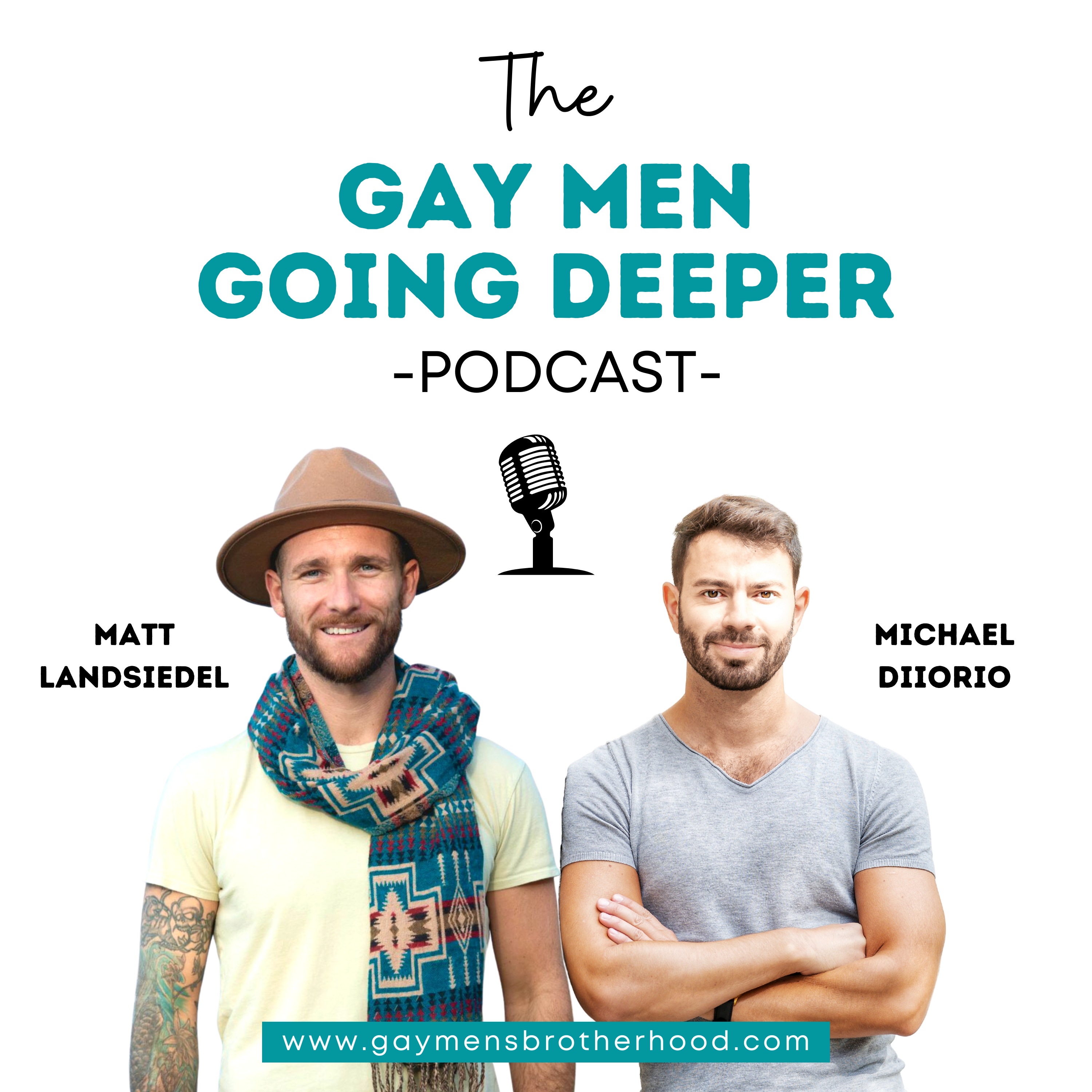
[00:00:05] Speaker B: Going Deeper podcast by the Gaiman's Brotherhood that showcases raw and real conversations about personal development, mental health and sexuality from an unapologetically gay perspective.
I am your host, Matt Lansdell.
[00:00:20] Speaker A: Hold on.
[00:00:21] Speaker B: My speaker. It was way over here. Let's just restart. Did it stop? Oh, no, it's still saying it's recording.
[00:00:27] Speaker A: No, mine's recording. We'll just tell me to cut the first three minutes off.
[00:00:31] Speaker B: Okay, make sure you do.
[00:00:33] Speaker A: Let me write that.
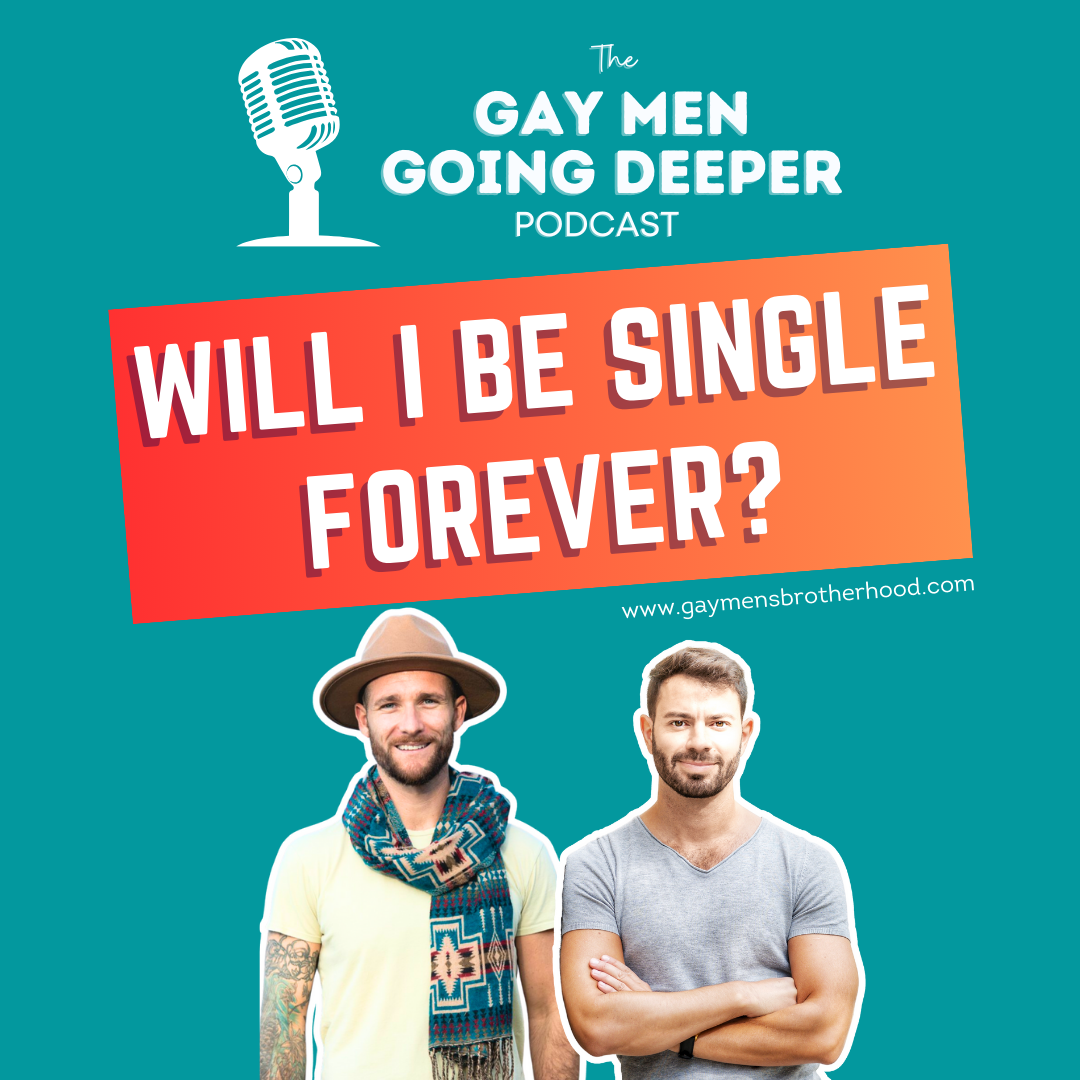
[00:00:34] Speaker B: And cut. Welcome to Gaming Going Deeper, a podcast by the Gaiman's Brotherhood that showcases raw and real conversations about personal development, mental health and sexuality from an unapologetically gay perspective. I am your host, Matt Lansdell, and joining me today is my co host, Michael Diorio. Okay, today we are talking about the fear of will I be single forever?
And we're going to be exploring three questions. Where do you think this mentality of I'll be single forever comes from? What are the most common blocks to love that you see in gay men?
And how can we overcome the blocks to love so we can learn to let love in?
So for this episode, Michael and I are going to be putting on our coach hats.
We want to share with you how to see your own blocks to love and how through healing, you can open your heart to love so you don't have to carry this mentality of I'm going to be single forever. So we got a great episode for you guys today. If you're new here, please subscribe to the channel on YouTube. And if you're listening on your favorite podcast platform, please subscribe and leave us a review which helps us get into the ears of the people who need us. And this podcast and YouTube channel are listener and viewer supported. So if you enjoy what we're creating, you can support the community by making a donation to the show, using the link in the show notes or tapping the thanks button on YouTube.
You can also subscribe to early access option on Apple Podcast where you can gain early access to episodes. And all your support helps us to continue making content for you and supporting the Gaming Gay Men's Brotherhood community. So we do thank you in advance for that. Okay, so we're making an assumption in this episode that you genuinely don't want to be single forever because there's people that are completely content with being single. They have no hang ups about finding a partner. And this is, if this is you, then tag along with us because you might still learn something. But this is for people who maybe you have a fear of being Single, you have a fear of growing old alone, dying alone, these sorts of things. And you really would like to find love, but you are finding that you can't and you're not. Maybe you have some fears around intimacy, whatever it might be. So it would likely tell us that something is blocking you, right? That might be your mindset about love and relationships. It might be fear of intimacy, maybe missed opportunities, maybe you're not putting yourself out there.
If you're staying home every Friday, Saturday night, and you're not going out and meeting people, you're not on any of the apps, it's gonna be really hard for you to find somebody, right?
It might be an inability to receive love.
Maybe you struggle with low self worth. Maybe you were never modeled how to have healthy relationships in your life. So maybe this is a very foreign thing for you. So if you're somebody that has never been in a relationship and this is a pain point for you, and you worry that, are you ever gonna get to experience this in your life, then stick with us to the end of this episode because we're going to be sharing lots of tips on how to, how to heal and how to get yourself to a place where you can start to receive love. And I do think that this is more than just about relationship status. I think this kind of ties into even like, just questions beneath the question of will I be single forever? Such as, like, am I lovable?
Right. A lot of us as gay men struggle with this question, am I lovable? Because we've been taught by society that there's a big aspect of who we are, a fundamental aspect of who we are is not lovable, is wrong, is sinful, is disgusting, Whatever, whatever we've picked up from society, okay? Maybe there's the question of, am I too old for love? Right? Has it passed me by? And some of us might be rooted in shame and might be thinking there's something wrong with us. Maybe I'm single because there's something wrong. Maybe nobody, nobody's chosen me because there's something wrong with me, okay? And I know that these are deeper things and they often kind of lurk in our subconscious, but I want to bring them from the subconscious into the conscious so we can start to work with them and understand them. So Michael and I are going to do our best job to try and shine some light on some of these things and go from there. So, yeah, let's unpack this, Michael. So where do you think the mentality of I'll be single forever comes from?
[00:04:31] Speaker A: I think we could have done an episode for each of these questions.
[00:04:34] Speaker B: Right.
[00:04:36] Speaker A: There's some really good, really big questions with a lot of depth and nuance and complexity to them. But nevertheless, let's. Let's jump in. So I think before we talk about the internal thing, it is important just to underline what you had said. I always look at the external environmental macro first, just to get an idea for it, because that informs the personal. So what you had said there about lack of role models, I think is really, really important.
Most people, at least in the era that you and I and older grew up in, did not have happy, healthy gay couples growing old together as the norm. Yeah, any kind of happy, healthy gay couples was not the norm, let alone growing old together, having this beautiful life together. While our.
I talk about this a lot. While our straight brothers inherit a blueprint of marriages that are loving and wonderful and they grow together, we don't get that. We get nothing, or we get despair or pain or nothing at all. So anyway, that's really important. That does play a role. Nevertheless, let's jump into it with the personal side of it.
[00:05:35] Speaker B: Yeah. I want to say something quickly about them because I also do think that the guys that are in monogamous relationships, that could be a model for us, they often pair off and they go off into the suburbs and we don't see them anymore. Right. So it makes it tough.
[00:05:51] Speaker A: Right.
[00:05:51] Speaker B: And when I do see a monogamous couple that's, like, actually healthy and happy, I'm like. It's inspiring for me. And it's like, oh, this is such a beautiful model relationship for me. So not saying that an open relationship can't be a model for. For a healthy relationship either, but it's. For me, it just tends to. It hits differently.
[00:06:06] Speaker A: Yeah, they're out there. They're out there. They're out there. Actually, guys, if you're in one of those, say hi in the comments.
[00:06:10] Speaker B: Yes, exactly.
[00:06:12] Speaker A: Um, but yeah, that. That's. That's just a very good point. We have to understand that the environment will shape our own perceptions. It's a bias. Okay, so the question was, where do you think the mentality of I'll be single forever comes from?
I think it comes from repeated disappointment.
I don't think people are born with that thought and that belief. I think they start off hopeful, optimistic. This can happen for me. You know, it's just not my time yet. Or, you know, when you're young and then you go through heartbreak and you go through ghosting and you go through traumatic Relationships, you go through toxic relationships, you go through a series of bad partners, you go through a series of rejections, and then all of a sudden you start thinking, huh, maybe this isn't for me. Yeah, you know, some people will blame the community and everyone else is the problem. Other people will internalize it and say, I'm the problem.
Either way, it gets to that same point, which is I'll be single forever. I think it's a, a death by a thousand cuts. We just get tired of the disappointment. We get tired of hoping. Because hoping for something and not getting it is painful when you're hoping desperately, when you're hoping without, when you're hoping with surrender, it's, it's not. But when you're hoping desperately, it's very painful. And so it's easier to just give up.
Right.
I'll speak to, to my personal experience with this particular sentence because I have been in love and I have had amazing relationships and I have lived with my partners and we've met each other's families, we've completely shared our lives. And then it ends. And through that gut wrenching pain, anyone who's been through that kind of heartbreak knows, yeah, you're single again, but you're older now and in a culture that values youth, starts to think. You start to think, oh, my star has faded here. I'm not getting the attention I used to. I'm not the draw. Maybe I used to be on apps and in bars or whatever. And you start to think, love is for the young.
And so the mind takes all these things happening at once and it's very easy. I've done this, I'm saying this from experience, it's very easy to paint the brush forever on that.
And so I think for me and for a lot of guys out there, when I was in that painful, heartbroken spot, looking at the potential coming from a place of pain, keep in mind, yeah, it was, I need to protect myself from this. So it was really easy to just shut the door and say, nope, not for me. I'm going to be single forever.
Not because I don't want love, but because I was afraid of going through all of that again. So all this to say is, I think it is a, it comes from a protection mechanism for a lot of guys. I think we are optimistic, we want the love, but it's just too painful to go out and get it. It's too painful to put yourself out there. It's too painful to go through all that again. If you've been in love and had to deal with heartbreak. And so it's a vulnerability shield, it's a protection. It says I don't want to be disappointed again. So I'm just going to shut myself down and keep myself safe.
Which. True, sure, you're keeping yourself safe, but at what cost? The cost is I'll be single forever.
[00:09:18] Speaker B: Yeah, exactly. And we stay in this mentality of kind of victimhood, disappointment.
Yeah, yeah. Makes it very challenging. I share the same sentiment, actually. I feel like it's, for me, I get almost like down on this, this, like on the community.
But I'm also starting to realize too, it's like it's, it's a, it's a me thing. It's a, it's a we thing. I think as gay men, we grew up and we have a lot of developmental trauma and I think we carry those wounds. So I think that I'll be single forever is coming from wounding.
[00:09:51] Speaker A: Yeah.
[00:09:52] Speaker B: And it's, it really is tough, like being in the dating pool as a gay man. If you're looking for something beyond sex, it's challenging, it's heavy, it can be very discouraging. And I find that might be where this is coming from for people. It's like.
But I am, I am hopeful that as, even for me, like I'm, I'm in my 40s now and I find like something feels different about like, because I do think gay men are like 10 years behind, like in their development. So I do. Like, if you look at a 40 year old, they're like a 30 year old. If you look at a 30 year old, they're like a 20 year old. Like there's like this developmental gap because we didn't have the, the developmental milestones that we were encouraged to hit that help us mature. Right. So emotionally I think we're, we're, we're kind of stunted. So I do think that there's a, there's an element here of this question around like timeline pressures and comparison to whether it's heterosexual counterparts or people who were lucky enough to have secure attachments growing up where they didn't have to struggle. So we see them in relationships and it's like, well, wait a minute, like, I want that too. But the timeline thing, meaning, like we can have when we're comparing ourselves to other people that have love. And as we're getting older, it's like, you know, if again, even comparing myself to like, let's say like a 40 year old woman, heterosexual woman if she was 40 and not married and not hadn't been in. In very lot, a lot of relationships, it would be, like, devastating. Right. For them. So if we're comparing ourselves to that heteronormative mentality, it's like, it doesn't need to be like that. And I do think that a lot of gay men find love later in life, at least more secure kind of stable love, because again, we're kind of catching up in our development. So. Yeah. And that. That could even look like people, you know, us carrying this mentality of, like, by this age, I should fill in the blank, like, hit this milestone, that milestone. But all that's doing is it's just creating timeline pressure that's making us feel like we're not. We're not enough or. Or something's wrong with us because we're not hitting these milestones. But it's just different pace, I guess.
[00:11:58] Speaker A: Yeah, it's a different pace. And what doesn't help is that culture, if you. If you subscribe to it, not everybody does that. Love is for the young, and love is easier when you're young or a lot more people are single when they're young and they're more ready for relationships, and they're like, those are all just assumptions that don't serve us yet. I. I mean, I'm with you. I'm 42, single, and I've been in relationships in my 20s, 30s, and 40s, technically. But at 35, you know, I felt like, okay, cool.
You know, this is. This is doable.
You know, guys at 45 might feel like time is running out. Oh, boy, you know, my star is fading kind of thing. And then by 55, it's starting to feel invisible. And by 65, you just think it's impossible.
Yet. You are right. The great thing about. I mean, I feel for our straight female folks out there because they have so much more social pressure to marry and have kids than we do as men. So they feel it doubly hard. But luckily, we don't have that same. I mean, we're.
A lot of guys don't subscribe to that. To that we need to get married at a certain age kind of thing. Some do. But I will say this one of my favorite client stories. We'll call him Tony. He's listening. I know he's listening. He loves the podcast. He. I gotta tell you guys the story. This will give everyone hope out there. Okay? He started working with me. He was 67 years old, living in rural somewhere. Rural, okay. So not a lot of access.
And he retired at 67. Looked around at his life and realized he was working. He was a workaholic. He owned his own business his whole Life. And at 67, he retired and looked around and thought, huh, I have no one. I have no one to share this with. And he had used his work, like many men do, to avoid his gayness, just avoid that whole thing. But now at 67, he came face to face with it. So he had hired me to want to find connection within a year, yada, yada, yada, within a year. He now lives with a partner, gay man. They have a dog, they live in a house, they bought a house together, and they're doing their happily ever after. I guess he's what, 68, 69 at this point. And this story just always fills me with such hope and inspiration. It could happen to Tony in rural nowheres Ville. It could happen to anyone. So, yeah, and. And to your point, I think I want to reiterate that he spotted the problem.
He knew. He obviously hired someone to kind of help him through it, and he took action. I will say this. He did the things that we talked about and that I had recommended for him, and he took his action and it yielded results for him. And now he is that, at 6, in his late 60s, finding love for the first time.
[00:14:45] Speaker B: Yeah, I love that. I love that. And that's where we're going to go with our second question is into, you know, some of the problems or the blocks to this. But before we hop there, if you're following us on YouTube, let us know the answer to this question for you. Where do you think this mentality of I'll be single forever comes from within you? If you do carry that mentality, where does it come from? Take a moment and just contemplate that. And if you'd like to come and join us in having conversations like these, you can join our connection circles in the Gay Men's Brotherhood, where you'll have a chance to share your own experiences and connect with other listeners of this podcast. And you can have intimate conversations in breakout rooms. And you can go to www.gayman's brotherhood.com, check out our event section. You can RSVP there and also go into the show Notes and get on our email list because everything will be emailed to you. We do our promos all through email, so get on that list.
And let's. Let's hop into this second question. So what are the most common blocks that to love that you see in gay men in your practice?
[00:15:46] Speaker A: Yeah, I can do a whole episode on this, too. Okay, gonna work backwards on this one.
I have found that when shame loosens its grip on your thoughts, on your beliefs about other people and yourself, one of the byproducts of that healing is that you become more available to giving and receiving love.
[00:16:10] Speaker B: Yeah, yeah, exactly.
[00:16:12] Speaker A: So that's the source.
[00:16:15] Speaker B: Yeah. Because shame tells us that we're not worthy of love and belonging. That's kind of what it ruptures for us, right?
[00:16:20] Speaker A: Exactly. There's many byproducts of it. But at the end of the day, we could talk about all the symptoms. Symptoms and all the ways it looks. Because most guys out there, I'm going to say 80% of guys, don't recognize that they have a shame problem. They don't recognize that, oh, this is a shame running the show situation.
[00:16:38] Speaker B: Yeah.
[00:16:39] Speaker A: Which is exactly how shame operates. It doesn't want you to know that it's running the show.
[00:16:42] Speaker B: That's the whole point.
[00:16:44] Speaker A: It doesn't announce itself like, oh, hello, my name is shame, and I'm going to.
I'm gonna wreck havoc on your love life and on your self esteem and on your dating life and on your sense of self. Like, it doesn't do that. It just operates through its sneaky little ways, which Matt and I will talk about. And then it makes it sound very reasonable, like, oh, I'm just. I'm just being realistic and I just have. I just have high standards or. No, I'm focusing on myself right now. And my personal favorite. I don't need anyone. Yeah, that's my favorite one. But if you. If you work through the core of this, you know, you're going to get to some kind of shame.
And what shame does is wants you to believe that you are fundamentally flawed on some level and that you don't deserve or you're not worthy of connection or that connection isn't safe for some reason.
Any kind of flavor like that. But again, it does not announce itself as such. So as I'm saying these words to our listeners, you're probably thinking, oh, no, that's not me.
[00:17:39] Speaker B: Yeah.
[00:17:39] Speaker A: I bet if we looked at the symptoms of maybe some of your patterns in dating and then love, and if we went, why is that happening? And why is that happening? If we followed that thread all the way down, we probably would find some kind of subconscious about. About how. How you feel about love, about how you feel about others, and how you feel about connection.
[00:17:56] Speaker B: Yeah. Yeah. I'm a firm believer that shame doesn't really exist in the conscious part of our brain where we actually are relating with shame until we do enough work on the things we've built around the shame to protect us from feeling shame. So these protector parts, and for a lot of gay men, I see perfectionism, I see, which is like, I have to be perfect and then I'll be loved and accepted. It's high achievement, right? If I, if I do, do, do, and I have all this money and likes and follows and blah blah, blah, then I'll be worthy of love.
You know, it's, it's avoidance is a protector part. There's so many. And we just have all these protectors working full time as bouncers around this wounded part that is shame. And it's not until we actually start to understand these parts around and start working with perfectionism and working with the high achieving part and the part that's avoiding intimacy, that's our entrance into shame. So I do think that that's, you know, and I agree with you. Like we could sit here and talk about shame and people are not gonna, they're not gonna, it's not gonna ring because it's so deeply buried in the subconscious. But if we start talking about perfectionism and you know, that's when a lot of gay men are like, yep, that's me. Or running from intimacy as soon as it gets a little too close. Yeah, that, you know, they're like, yeah, that's me. Right? And these are the things that we're doing that we're engaging in that are really causing ruptures in our ability to be able to a feel safe in, in the mentality of I will find love. It's out there for me.
[00:19:25] Speaker A: Yeah, I run a men's group. It's actually, I guess by the time this is released, we're already starting. But anyway, I run a men's group called Foundations and I've done it fall and winter.
And this is what we do. And within Foundations, I have something called the shame detox, which is a pre work that I make them do before we even start the men's groups. Like, this is what you need to know to get to the men's group is the detox. And in that what we do is unlearn.
First of all, recognize the armor. You just named a whole bunch of really good ones, recognizing it for what it is. The armor, the bouncer, whatever protects us or shields us. That guardedness that doesn't let people get too close. Hyper independence, that lone wolf mentality, the way we intellectualize things instead of feel them. And when I think about the Guys in these groups, okay, they're not broken, they're not sad, they're very successful. They're wonderful men, all ages, all over the world, they have loved, they have been in relationships, some of them are in relationships, they've been hurt.
And so the block isn't always necessarily fear.
It's self protection shaped by shame. So to answer the question, it does again, I'll go back to shame. Internalized shame at the deepest level. And that armor we wear, that comes in many flavors. So maybe the question isn't.
Maybe the question isn't, will I be single forever?
But I would like to flip it to what would change for me? How would I relate to people differently if I stopped seeing love as something that isn't meant for me and started seeing it as something that I'm capable, ready, and worthy of receiving?
[00:21:00] Speaker B: Yeah, yeah, I agree. And for a lot of people, it's such a big jump to get to that place, right? It's like, yeah, it requires healing.
You know, I think the most common one that I'm. That I see for a lot of people, and it's, it's the thing that makes us hide and shame makes us hide, but it's the fear of what shames does, which is. Causes us to have a deep seated fear of rejection.
And I just see this, I see this in myself, I see this in every single person I work with. It's a human condition for sure. But I think gay men, because we, we have early experiences of rejection and we've learned to reject ourselves through internalized homophobia, that rejection is a real, real deep seated thing for us. So that's going to prevent us from putting ourselves out there, from attending that event to. Right like that, it just makes it a lot more challenging. So developing a tolerance to rejection and being able to work with shame, which requires us to be feeling our emotions, I think it's such an important, important part because shame is an emotion and we have to learn how to be with shame, right, and, and not let it completely annihilate us. So, yeah, it's, it's interesting stuff.
[00:22:11] Speaker A: The sad part is when people, I don't think a lot, I don't think a lot of people are willing to do that work or do that work. The exception is listeners of this podcast. If you're listening to this podcast, you are definitely not, not who I'm talking about because you are an exception if you find this content interesting. But for the rest of the people who do not listen to the game and going deeper podcast, I Think the unfortunate thing is, see, is that they don't obviously do the work because they don't think there's a problem or they know what the problem is or they just don't care to do the work.
And so they are all connecting with each other, trauma bonding. So all these hurt people leading with shame, not knowing it's shame. Just having these situationships and these toxic relationships and confusing electricity in connection with compatibility and having all these, I don't want to say wounded, but wounded, you know, in a way, men who are not self aware, who don't understand their feelings, who don't do that work, trying to have relationships with each other and it's just not working. And I see it pan out in so many unfortunate, ugly, painful ways for everyone. And it makes it harder I think for other folks, maybe those of us who do do that work to connect. Because I don't think there's a lot of people out there who are willing to go deeper I gaming going deeper, who are willing to go deeper and do that work.
I think that just makes it even harder for us. That pool then narrows, right? We're only dealing with our gay men, which is such a small amount of people. And then the gay men who are doing this work and can recognize the patterns and are actually willing to do something about it and then the rest who aren't.
[00:23:45] Speaker B: Yeah, that's kind of where my, my will I be single forever comes from. It's like once you get out of the big pool, the mainstream pool, where you're just willing to date whoever because you don't have the consciousness to like know your needs and you haven't done some healing work to be able to receive love and see red flags in others, blah blah blah, all this stuff, you start moving over into other lanes, right? The more you go on this path, the more consciousness you develop, the more you're really connected to your heart, your body, you have a lot of self respect. Pool really gets smaller. And I'm like looking at it like, damn, like I'm, you know, on Grindr looking and I'm just like, I can feel energies right too. So that's a big, a big thing for me. And like, oh my God, this is just right. And I'm like, sometimes there's a part of me that wishes I could go back and unknow all the things I know, unheal all the parts of me and just be in that place. Because you're. The pool is endless. You, you can, you can relate with anybody because you don't really have the same type of standards. You know what I mean?
[00:24:43] Speaker A: But I would argue that. That they're not the quality or the level that you are capable of, Matt. Yeah, yeah, yeah, yeah.
By the way, guys, I'm not, I'm not saying this to say that you have to be perfect or you have to be healed to find love. I'm absolutely not saying.
[00:24:58] Speaker B: Yeah.
[00:24:59] Speaker A: Neither is Matt. I just want to underline that. It's just some people are happily blind and ignorant.
[00:25:04] Speaker B: Yeah.
[00:25:05] Speaker A: And other people ask questions and they get curious.
[00:25:08] Speaker B: Yeah, yeah. There's nothing wrong with, I think, also celebrating the work that I've done on myself. Right. Like, it's a lot of work. Like a decade longer, 15 years of deep, deep work on myself. And I think all gay men, every single gay man should be in therapy coaching something where you're, you're processing and working on the. The parts of us that have felt wounded by society. Right. And I really don't know many gay men that don't have some form of pain around growing up gay. I'm not going to call it trauma because of that. I don't want to diagnose people, but there is pain that we carry around feeling different. Right. And that ruptures our ability to relate to people. And I do think insecure attachment is sky high in the gay. Gay community. I think most gay men have insecure attachment, so that also creates a lot of issues. And then when you get into. Into dating in the pool of dating.
[00:26:02] Speaker A: Right.
[00:26:02] Speaker B: Insecure attachment coming together with insecure attachment and it's just creating more and more pain for each other.
[00:26:08] Speaker A: Right.
[00:26:08] Speaker B: So if we get into therapy, we interrupt the cycle and we have more awareness. We can come into the community with more awareness and we're not going to be re. Traumatizing each other. Right. So I do think it's like so important to be working on ourselves as gay men.
[00:26:21] Speaker A: A hundred percent. Yeah. And. And having that support from a gay person as well. I think I'm going to underline that. Like that queer affirming person who understands what that's like, I think is really important.
[00:26:33] Speaker B: Yeah.
[00:26:33] Speaker A: Relatability there. One of the, one of the ways that I think the intimacy avoidance shows up a lot is you want love. Because maybe you see it in movies and you see it on TV and you hear all the love songs like, oh, yeah, I want that. And then as soon as it becomes available because we've built that shield around ourselves. You know, we talk about vulnerability, love, that kind of love and intimacy requires you to be vulnerable and to risk taking off that shield. And for many gay men, that shield is like caked on. It's not just something that you can rip off. It is like caked onto our identity for safety reasons. And it's a lot of work. And even though you want it, and even though you want the love and you want it so bad, if you are not careful, you will sabotage that and that will be your shame, sabotaging it. Not, not you. You're not broken. You're just trying to be protect yourself. And that's, that's, that's the work. The work is understanding which part of me is reacting to this connection right now. Is it fear that is reacting in my survival mode, which makes sense because that's the default for a lot of guys out there. Or do I want to respond to this connection, request to this opportunity with vulnerability and authenticity and really show myself? And that's a hard decision to make for someone who's their whole life have spent hiding their, their true self.
[00:27:57] Speaker B: Yeah, exactly. And there is something beneficial about doing, like, programs like what you and I offer in the sense that it's platonic. When we try to practice these things in romantic connections, all the chips are on the table. It's full stakes. When you go into a container where you're creating, like you and I are creating a co culture where vulnerability and authenticity are culturally acceptable. And then you're practicing with your brothers, not guys you're. You're wanting to date. It just, it gives you the, the capacity to be able to practice doing these things and then you can carry that into your romantic relationships and dating and stuff like that. So, yeah, group programming is very powerful too, like therapy, Individual therapy is really powerful. But like, doing group stuff can be even more powerful, especially for shame healing.
[00:28:46] Speaker A: Yeah. And Matt and I do both guys. So check out our links in the show notes and see what's available.
[00:28:51] Speaker B: Yes, exactly. Yeah. Take a moment and just reflect. If you're listening on the podcast or watching on YouTube, just take a moment, close your eyes, and just, just notice what's coming up for you in hearing Michael and I share about some of this stuff. Talking about shame, talking about rejection, some of the big things that we deal with as gay men, like are you noticing, you know, activity in your tummy? Are you noticing any tension in your body?
Are you noticing, like, that you're celebrating because you've done a lot of work on yourself and you've gotten to a place where maybe some of these things aren't impacting you anymore. So just take a moment to notice that and just really welcome whatever you're noticing going on. And if you're wanting to continue doing some of this work, maybe you don't want to do group work, you don't want to do coaching or therapy. Michael and I have created our coaching collection, which is two courses. So healing your shame and building better relationships are included in the coaching collection. You can also purchase them separately as well. These are two great courses that will help with a lot of the stuff we're talking about today. And then within the coaching collection, we also have 45 other premium personal development coaching videos on different topics related to body image, body positivity, community, confidence, relationships, these sorts of things. So you can head over to gaminggoingdeeper.com for more information there.
All right, let's. Let's end up this episode on a positive note. Just talking about how can we overcome these blocks? Let's inspire and motivate. So how can we overcome the blocks to love so we can learn to let love in? That's what this is all about.
[00:30:17] Speaker A: This is a whole other episode again. Okay. It's really about letting. It's not about finding the right person. I think it's about becoming the right person, cliche as that might be like. It's about becoming someone who trusts himself enough and loves himself enough and is compassionate with himself enough to put himself out there to risk that rejection, to risk falling in love, having it end, breaking up, and then doing it all over again. Yeah, that's me.
And. But when you are that person, you're so much more open to love, giving it and receiving it. And you don't slam the door shut when connection knocks because you have that self trust. So you know, instead of closing your heart to stay safe and building walls around it, it's. You're strengthening your heart to stay open and, and be able to fully feel the beautiful parts of love and the parts that aren't so beautiful because trust me, they're out there. Every, every love story has a shadow side to it, right?
[00:31:11] Speaker B: Yeah.
[00:31:11] Speaker A: So, yeah, I suppose. Strengthening. Strengthening your ability to trust yourself, to be compassionate with yourself, to become someone who lets love in.
Yeah. And, and finding all of the ways, all of those bodyguards that you have. And trust me, guys, we have many. I have many, Matt has many, you have many. But when you know who they are, you're like, oh, there you are. There's my perfectionist showing up to like this up for me. Or there's that lone wolf part of me that Wants to run away because I'm scared. But notice how Matt and I talk about this. We. We know it. We. We see it in ourselves. And we can. Doesn't mean that that part goes away, but we can recognize who. Who it is, how he's operating, why he's operating, and what to do about it. And that's really the gist of it. That's. That's the.
[00:31:58] Speaker B: Yeah, it's befriending those protector parts, and it's how. That's how we integrate them. We befriend them, we understand them. We thank them for protecting us, but we also let them know that they're blocking us from being able to. To let love in. But we do that with gratitude. We do it with appreciation, not with more shame.
[00:32:16] Speaker A: Yeah.
[00:32:17] Speaker B: Like.
Yeah, I do.
[00:32:19] Speaker A: With fun sometimes. Like, I. I will actively try to have a lighter relationship with these parts, even though it's not necessarily light. But that's just me. Like, I. That helps me. Like. Oh, there you are. I knew you were coming. I see you. You sneaky little. Like, I know what you're doing and that just talking about it lighter helps loosen its power, not like, oh, my God, there's this big, bad shame thing within me. I gotta. I gotta hide under the bed. No, it's like, shame is here. Here we are. Here we go again. But I got you. I know what to do with you, you sneaky guy. Yeah, that's just the way I do it. I'm not saying everyone has to do it that way, but the point is, the steps are, you got to catch what's driving you. You got to recognize it. You got to notice it. You got to see the patterns when they show up within you. Then start removing that part of you from the driver's seat, because right now, it's probably taking a lot of. You're probably driving a lot of your actions and behaviors from that, not from the other parts of you. So kind of not getting rid of the part, but just minimizing it. Letting. Taking away its authority to drive the bus and then practicing a new way. And that's it.
[00:33:24] Speaker B: Yeah. Yeah. I love that.
What. What's your. What would you say is your most prominent protector part to. To shame?
[00:33:32] Speaker A: Lone wolf.
[00:33:33] Speaker B: Lone wolf.
[00:33:34] Speaker A: Yeah. The.
I. The. The shield of.
Everyone's going to disappoint me, so I don't disappoint myself, and I am safe in my own world, and I won't get hurt.
[00:33:48] Speaker B: It's.
[00:33:48] Speaker A: It's kind of what I was saying at the beginning. Heartbreak sucks. Having people disappoint you sucks. Having people betray your trust sucks, especially when you've given them your heart.
Like me. I'm very open. I'm very open with my heart. I will give it to. To the people who I trust. And it's. It's scary. Anyone who's been in love, it's like, basically, that's what love is like. Here's this most fragile, tender thing I have, and I'm trusting you with it. And then when they break it, I almost was like, I'm not. Why did I do that? I know I don't break my own heart, that's for fucking sure. So I will just keep it to myself, thank you very much. And the rest of the world can stay out there. Mind your business. I'm happy here in my castle. That's. That's my protector part. I see that happening at the same time, though. Time, though. I love love and I love being in love and I love falling in love and I love letting people in. So it's this. It's this area where I have to really balance out protecting myself with letting love in and letting myself be vulnerable with my heart again. Even after it's been broken a few times.
[00:34:47] Speaker B: Yeah.
I actually do think I do break my own heart. And I think it's my protector parts. But they don't do it the way you described other people doing it to you. It's. We do it. I do it slowly.
[00:35:00] Speaker A: Right.
[00:35:00] Speaker B: Keeping people over there, right. Worried about disappointing. So I don't trust people. All these things. I'm slowly breaking my own heart because I'm keeping love out. Right. My heart is starving for love, and these protector parts are keeping the love out. So I do think my heart is slowly breaking by not right. By not allowing that in. So it's. Yeah, it's interesting. And, you know, I'll answer the question just from a personal perspective. Is just my. My dog. It's, like, so cool. Like, how, like, learning how to overcome, like, blocks, you know, Like. I don't know, just things. Things don't matter the way they did before. Like, I don't. I don't get hung up on overachievement or perfectionism. Like, he's running around the house and there's, like, muddy prints and things like. You know what I mean? It's just. I've just kind of let go. I've surrendered a little bit and I've. I've let go of routine.
And I do think sometimes my. Like, if I were to answer my own question, That I asked you is for me a big protector part would be like rigidity or control, controlling every aspect of my life and having things to be in a certain order and.
Right. Because it's like if everything is predictable, then I can predict what's coming and I'm not going to get. Be heartbroken, I'm not going to feel shame, whatever. So I've had to learn how to surrender and let go and be more flexible. And it's within that flexibility that I'm able to be a little bit more spontaneous and new experiences come in and it's opening me up.
[00:36:21] Speaker A: Right.
[00:36:22] Speaker B: And that's how all this happened. Like, I didn't, I wasn't planning on getting a dog. It was like my friend had sent me this thing and it. One thing led to another and then suddenly I have this puppy. Like, it was like really cool. And it was because I like opened myself up to Wolf A even going out and hanging out with him. I wasn't gonna go and I did. And then he ended up sending me this thing while we're sitting beside each other and he's like, oh, you should check out this. And then it.
[00:36:42] Speaker A: Right.
[00:36:42] Speaker B: Like, so just like these sorts of things. Sometimes we have to just get out of our own little bubble and we gotta like put ourselves out there a little bit and, and things can enter our life that might change us. Right?
[00:36:54] Speaker A: Yeah. You got to take that first step before the universe responds. Like, you got to show the universe I'm ready and I'm willing and then the universe will give you something. It'll give you, it'll give you an opportunity.
[00:37:04] Speaker B: Yeah, yeah. The last thing I'll say too is this is a play on the nervous system in such a huge way. Because if we have developmental trauma, we have the things happening in our nervous system around fear of rejection. There's a lot of fear, a lot of hyper vigilance that we have as gay men. And our nervous systems are programmed to look around a room, look around an environment and see where there's, there's trouble or where there's fear, blah, blah, blah, right? So if we're always looking through that lens, we'll find it. And love will be always the thing that's that we're afraid of. So learning how to work with our nervous systems do some healing work. But then I do think part of this too is about developing a capacity in our nervous system to be able to hold love, to hold joy. These things are big, big energy.
[00:37:45] Speaker A: Right.
[00:37:45] Speaker B: Like, even for me, it's really uncomfortable to hold joy in my nervous system when I've spent a lot of my life struggling and in depression and these sorts of things, joy can feel like, almost like it's too intense or too overwhelming. So I do think there's an element here around, like working with the nervous system, working with the body, learning how to feel. It does play a big, A big role in this learning how to be.
[00:38:06] Speaker A: Happy and just satisfied with where you are in general. I think that that in itself is a skill for any kind of topic of your life. Not just dating, relationships. But yeah, so many times people, I'll see this, I'll see people manufacture. I call it manufacturing problems because we are used to dealing with problems. Or people bond over problems like, oh, okay, let's have this conflict. That way I'm still in connection with you. Sometimes it's nice to just ease into a peaceful, grounding relationship that doesn't activate your nervous system. And then you call that butterflies or you call that chemistry, you call it fireworks. And it's just like, this just feels good and soothing to me and relieving and it just feels safe.
And I think that's, that's a hard skill for people to have too, is once they do find that relationship and that love, don't sabotage it because your shame will also do that.
[00:38:54] Speaker B: Yeah, exactly.
My commitment to myself in 2026 is to stop telling the stories I told myself in 2025 that aren't serving me anymore. And I want to really adhere to that because I'm, you know, the stories that we tell ourselves create our reality. And I feel like if you're always telling the stories of, I'm going to be single forever, no one loves me, blah, blah, all the things, those are stories you tell yourself that create beliefs. So catch yourself mid story. If you don't like the story, stop telling it. Just in that moment, say, I'm not going to continue telling this story. I'm just going to stop myself, move on to the next thought.
[00:39:32] Speaker A: Right.
[00:39:33] Speaker B: The more you do that, you're. You're creating new neural pathways in your brain that say, stopping this story. Done. Let's create new stories. Right? And the more we stop telling old stories, the more space we have in our consciousness to create new experiences, which allows us to create new stories.
[00:39:49] Speaker A: So I love that with my clients, when they start going down that story path, I say a lot of the same thing. I'll be like, colder, colder, colder. Tell, tell another story, telling her. But they don't want to like it. They're so sticky. Even though the stories don't serve people, they're familiar. And that's the thing. So I love what you said, Matt, and, and I encourage everyone out there to do the same thing as Matt. But just notice where you don't want or you don't want to let go of that story, even though it hurts you.
If I challenge that, say, tell another story, they're just like, you don't have another story. That's the whole point. And that's. I think what Matt is trying to say here is like, start developing new ways to look at these things because you're right, your narratives will affect your reality for sure.
[00:40:36] Speaker B: I think so many of us are addicted to our own pain. Eckhart Told calls it the pain body. And we all carry pain in this part of our body energetically that we have never processed. And that's where all the stuff we haven't processed, all the grief, all the hurt, all the jealousy, all the shame that we haven't processed, it goes into this part of our body called the pain body, and the mind eats off of it. That's why we ruminate and have negative thoughts and have hate and violence, because it's. That's what's feeding it. And I think that when we are wanting to keep telling the old stories of victimhood and these sorts of things, it's coming from that place within us. Right. So sometimes it. It truly does feel like it's so pathological that you can't stop telling those stories because your pain body is what's feeding the stories.
Yeah.
[00:41:19] Speaker A: And I think it is worthwhile to tell it. I'm not saying that you want to. You want to, like, put your head in the sand about it, but I think it's worth. If you're going to tell it story, it's for the purpose of processing it, something about it and healing, not to just ruminate and spin in it. And that's the difference. Okay. So you can tell that story for a purpose of healing, processing, and then eventually moving beyond it, or you can just tell because you're stuck in it and it feels good and you're stuck in that mindset of like, I'm the victim, always me, everyone's a problem, blah, blah, blah, blah, blah. And there's a. So again, I want to make it clear that there's kind of two ways, two flavors of it. I'm not saying don't tell the story. I'm just saying if you're going to tell the story, do it with intention and purpose and healing that's the goal.
[00:42:02] Speaker B: Yeah. A great interrupter for me is just asking myself, where did this story come from? And then start thinking about where it came from as opposed to telling the story. Think about where it came from, because you're going to get closer to the roots. You'll get closer to home. You'll get closer to your pain body.
[00:42:15] Speaker A: Right.
[00:42:16] Speaker B: That's what. That's the golden ticket. So meet your stories with curiosity as opposed to unconsciousness or judgment, where you just keep rolling forward this energy without being actually aware of where it's coming from.
[00:42:28] Speaker A: Yeah.
[00:42:28] Speaker B: Where is this story coming from?
[00:42:29] Speaker A: That.
[00:42:29] Speaker B: That question will change your life.
[00:42:31] Speaker A: I can point to mine for. From heartbreak, for sure. Those first.
Those first times where I trusted someone and they hurt me, that's. That's where my. Was the birthplace of this. Never doing that again. Yeah, Right. Instead of.
Instead of tending to that part of me that was hurt, I just built the wall. I forgot the part where I mended it and healed it. I just built a wall. I think a lot of people do that. We jump to the defense instead of processing the wound.
We put a band aid on it, don't heal it.
[00:43:05] Speaker B: Yeah. Yeah. Mine. Mine would be similar for sure. I think it was the day my parents said that they were getting divorced, and then my dad left, and, like, I kind of made a deal with myself. I'm like, oh, this is, like, way too painful. I invested so much in this family, and I had so much hope and love. And then now everybody's kind of going their separate ways, and, like, my whole family kind of broke up. It's, like, interesting. And then I was like, no. Like, I'm never gonna invest my heart fully in. In anything ever again. I'm gonna always keep one foot out. Right. It's kind of interesting. So I've been working on healing that in a big way. But there's always something, right? Like, there's always something.
[00:43:42] Speaker A: Yeah. And I. I don't regret loving deeply. I mean, that's not true. I do. After it doesn't work out, I will go through a phase of that heartbreak where I. I do say I'm not doing this again. I regret it. Blah, blah, blah. I go through all that. I mean, I don't know who really doesn't, but eventually. Eventually that I. I will have. Know that I'm healing when I'm ready to say, okay, cool, let's do it again.
Yeah. And part of me is like, are you crazy? Like, you just did this and it didn't work, and you got Heartbroken. And you had to do this, that you had to grieve and you had to cry and it was awful. It was terrible.
Yeah. And I'm like, okay, let's go. Who's in for another round?
[00:44:21] Speaker B: Yeah.
[00:44:22] Speaker A: And I put up my hand like, let's. Yeah, let's do it again.
[00:44:24] Speaker B: Yeah, yeah, yeah. I've been the same way. Even though it's painful, but I'm like, there's something that keeps drawing, drawing us back in. And that's probably our soul calling in the next thing, right? The next karmic lesson that's going to help us evolve. You and I are both inward travelers. We're both seekers, we're self studiers. So like we know relationships emulate that growth, right? And eventually one day I have a feeling that I'm gonna, I'm gonna, I'm going to choose the right one. That won't be karmic. It'll be a relationship that is not attracted from wound, but attracted from like my evolution. All the work I've done on myself, I think is, is where I'm going to eventually attract somebody from. So until then I'm just going to enjoy being single instead of looking at it as a bad thing.
[00:45:09] Speaker A: I agree. It's fun. Singles, single, single's not so bad. But of course I want that. I want, I want that feeling again. The intimacy, the feeling seen. Building a life together, building a home together. I mean, yeah, really important stuff. Sharing family, sharing each other's lives. I love that. That's beautiful. And I love being single. There's beauty. There's beauty there too.
[00:45:27] Speaker B: Yeah, yeah, yeah. I feel like I've really mastered the art of appreciating where I'm at with what I have. And when I'm single, I appreciate being single. And when I'm in a relationship, I appreciate being in a relationship. Whereas I think a lot of my life it was the inverted inversion of that. When I was in a relationship, I wished I was single. When I was single, I wished I was in a relationship. And I'm like, why? Why not just appreciate where you're at and all the beauty that comes with it, you know?
[00:45:49] Speaker A: Yeah, yeah. There's drawbacks and benefits to both. So yeah, just. Just enjoy the ones that you have while you're there.
[00:45:56] Speaker B: Exactly. Yeah, that's a good point. All right, any closing comments before we wrap this one up?
Put a little bow on it.
[00:46:05] Speaker A: No, I think I've said a lot here, so thank you for posting our conversation today. It was a good one.
Yeah.
[00:46:11] Speaker B: I like. I liked it as well. And thank you to our listener viewer coming on this journey with us once again and just again. Reminder this podcast and YouTube channel or listener viewer supported. You can make a donation in the link in the show notes or the thanks button on YouTube. And if you're not part of the early access option on Apple, you can join there and get early access to our episodes. And we thank you in advance for that. Come join us in our connection action circles. We host them once a month, Michael and I do. And for everything GMB related, go to gaymansbrotherhood. Com.
Much love everybody.