Episode Transcript
[00:00:00] Speaker A: Foreign.
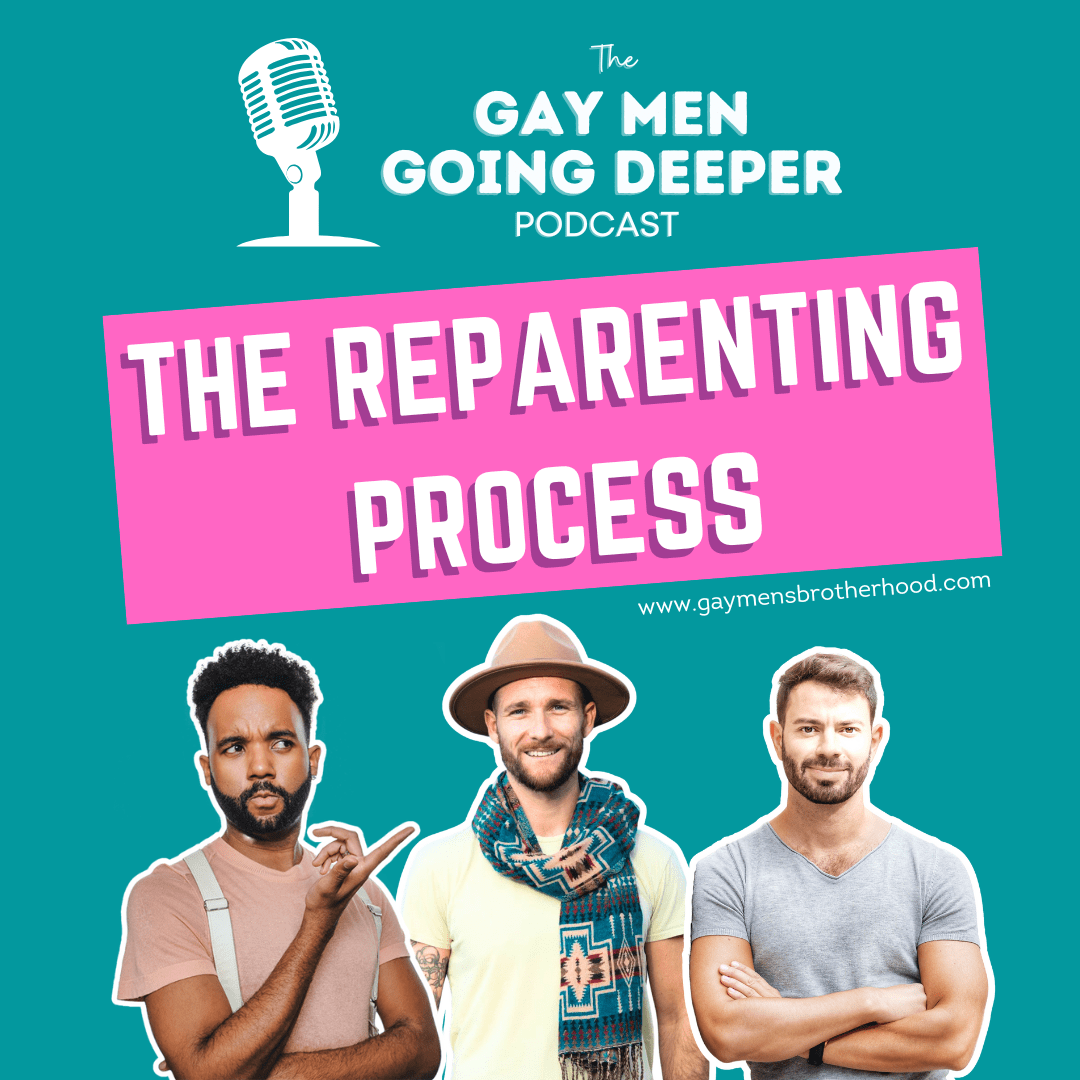
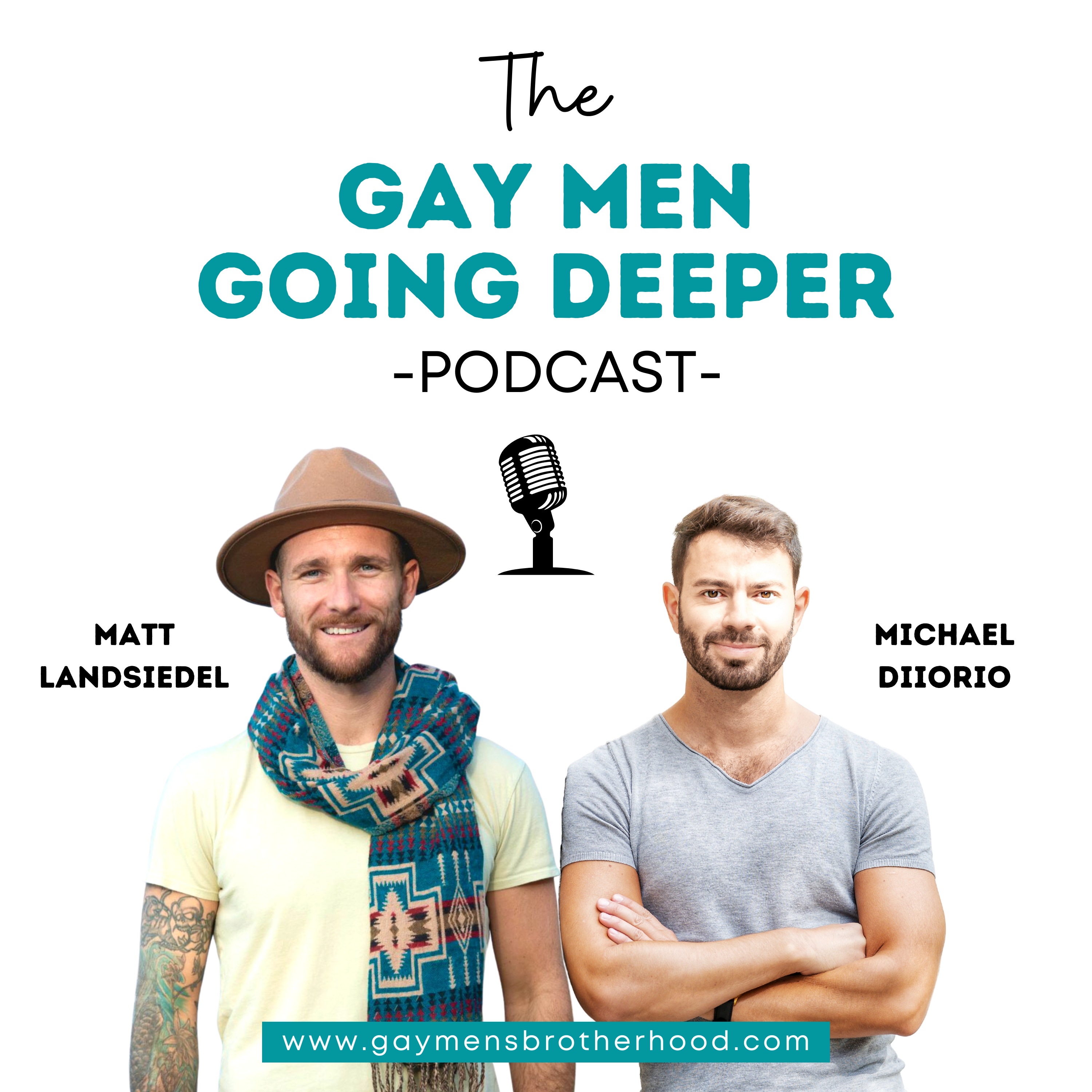
[00:00:06] Speaker B: Welcome to Gay Men Going Deeper, a podcast by the Gay Men's Brotherhood that showcases raw and real conversations about personal development, mental health and sexuality from an unapologetically gay perspective. Today, I'm your host. My name is Michael DiIorio. And joining me are Matt Lancitle and Reno Johnston. Hey. Today we are having a candid conversation about masculinity, attraction, and the fine line between personal preference and internalized homophobia. What we want you to get out of this conversation is a better understanding of how attraction is actually shaped by conditioning and to honestly reflect on the beliefs you carry about masculinity and femininity. This podcast and YouTube channel are listener and viewer supported. If you enjoy what we're creating here, you can support the podcast by making a donation using the link in the show Notes. You could also tap on that thanks button if you're watching us on YouTube to show the podcast some love. All right, I want to do an intro before we jump into the topic today. And this is about the topic of masculinity and internalized homophobia. So I can acknowledge that attitudes are changing. Absolutely. And I think it's a great thing. However, it is still out there, this mask for mask mentality. You might hear people say, I'm not into flamboyant gays or guys or I. I'm only into masculine, muscular, manly men. This is very common in gay apps and in general in the gay vernacular. Now, sometimes if you're like me, you might question someone on it because I get kind of curious when I hear things like that and they'll say something like, I can't help what I'm attracted to. But it raises a bigger question. When a gay man says he prefers masculine men, is that simply attraction or is there something deeper going on? So I'll be transparent right from the start for myself, because I'm sure a lot of y' all listening have talked to me on apps and see me out there. I am attracted to masculine presenting men myself, and I am a masculine presenting man myself. And that's been true since the first moment I felt same sex attraction. I've always been into masculine presenting men, and so this episode is not about pretending that attraction doesn't exist or even trying to police who people are drawn to. Because, yes, attraction is personal and we don't consciously choose what arouses us. Nevertheless, you cannot deny the impact of culture and social conditioning on what we value, on what we consider attractive. And this is regardless of sexual orientation. Now, when you step back specifically and looking at gay culture specifically, an interesting pattern emerges even today, and that's masculinity is not just attractive, it is status. It is admired, it is respected, and it is still, even to this day, positioned as the, quote unquote, ideal version of gayness. Now, this isn't spoken directly, perhaps, but it is subtly out there for all to see. And on the flip side of that is, femininity can sometimes be seen as something people want to distance themselves from. So there's maybe a hesitation to have expressive mannerisms or to flail or flare or have a way of speaking that might be perceived as feminine. Or perhaps we quietly judge the guy wearing nail polish. Or perhaps you cringe when you hear people who sound gay. Which brings us to a term that gets thrown around a lot in having these kinds of conversations about masculinity and femininity. Internalized homophobia. Internalized homophobia does not necessarily mean that you hate gay people. Most of us don't consciously feel that way anyway. It's not a conscious feeling or thought like that. What it means is that the messages that we have absorbed growing up about masculinity, about femininity, about what it means to be a man, about what it means to act like a man, can and do influence how we want others to see us and how we see other men. And sometimes it sounds like I'm gay, but I'm not a flamer like those gays. Or it might be placing a higher value on guys who look and sound straight, passing. And then sometimes it hides behind that word preference. And so today we're unpacking all of this. There's a lot here to unpack. And I'm really happy we're finally having this discussion. We're going to tackle this in three parts. One, I want to first define what. What we mean when we talk about masculinity. What exactly are we talking about once we cover that? Then I want to look into how internalized homophobia actually shows up in the real world. And finally, we're going to answer the big question in the title. Where is that line actually between preference and internalized homophobia? I want to normalize it here before we begin, because if you grew up in a world where being gay was stigmatized, and I assume most of us did, called Earth, it would actually be strange not to carry some kind of internalized homophobia. Okay, so we gotta normalize it right from the jump. This is not a personal failure. It is a predictable byproduct of growing up gay in a straight world. Our Jobs are simply to acknowledge it, see it, and course correct when it happens. Okay. This topic can therefore make people feel very defensive or uncomfortable. So if you're listening and your back is already up against the wall. Good. Stay tuned. That's a good thing. It usually means that we're touching on things that perhaps you've been avoiding, maybe consciously or unconsciously. And just remember to always approach that defensiveness with curiosity. We are not here to shame you or to even try to change who or what you're attracted to. We're simply here to better understand the cultural forces that shape attraction. Okay, let's get started with question one. And today we're gonna start with Maddie. When you say you're attracted to masculine men, what does masculine even mean to you? What. What qualities are we actually referring to here?
[00:05:39] Speaker C: And I am. I am attracted to masculine men. That is my. That's my thing, my hang up. I. It's, you know, growing up in a. In a home and within my family. Both my families had, like, blue collar masculine men, like, worked with their hands. So I was very much exposed to that. And I feel like masculinity, for me is, like, strong. It's, you know, and I kind of see it in hands, like, strong hands. A guy that has strong hands is really masculine. I probably would say, like, maybe a little bit more rigid body movements.
[00:06:08] Speaker B: Not.
[00:06:08] Speaker C: Not flowy, but a little bit more rigid, kind of stoic in their expression. Masculinity, it's like the number one thing I'm attract. I'm attracted to. So it's so easy for me to kind of tune into this energy and feel. I would say one of the bigger ones would probably be voice, like a deeper voice. Body hair.
Yeah, I think body hair. That's another reason, again, why I think I'm attracted to guys that are more masculine presenting, because I really love body hair. I think it's. It's very attractive.
Yeah, I think, again, a lot of it comes down to mannerisms as well. I would say, too, like, the way that they walk. There's, like, a certain way that a guy would walk that would. I would frame him in different levels of masculinity, you know, And I always tell the story on this podcast about being, like, 13, 14 years old, walking in front of my friend, my friend, group of girlfriends, and they're like, one of them said, look at how Matt's bum wiggles when he walks. Or look at how his hips sway when he walks. And I was like, oh, shit. So I started, like, correcting my Walk. Right. And then over the course of my life, I ended up developing lower back issues and hip issues because I wasn't letting my body do what it naturally wants to do. So. Yeah, yeah, it's fascinating example.
[00:07:16] Speaker B: And you know what, Matt, when you read the comments of the podcast, a lot of the times people will often say that they love that, like your deep voice. And so like they will actually say that about you, that you're very masculine. This is a good thing. So I'm really happy to be having this conversation with both of you today for a lot of these reasons. Reno, what about you? Are you even attracted to masculine men? I don't even know.
[00:07:36] Speaker A: Yeah, I'm a bit of an enigma. I'm going to, I'm going to read what I wrote and then I'm going to kind of riff on it a bit. But I.
Because it's kind of specific.
I don't, I don't say that I'm attracted to masculine men so much as I'm attracted to male bodied folks which include but are not limited to masculine men. And so that's kind of the way that works for me. And I discovered that because what I started to notice was that when I was exploring with men, when I started exploring with men, one of the things I did notice is that I did have, I did find myself gravitating toward like certain archetypes with certain qualities or characteristics. And they did tend to, let's say, have deeper voices or be limited in their expression. For example, they did tend to appear outwardly to be physically strong and enduring. They did tend to be individuals who like, led the experience. Right. Which allowed me to follow or to be a bit more submissive. What I started to notice over time though was that the people that I was attracted to, and I would say it's no coincidence that this maybe coincided with my own, my self love journey, I guess. Self, self love, self regard, self respect, self reclamation journey that I just started appreciating people who were like themselves basically. Like people who stood on who they were with what felt like, like nobility, who didn't really like sway in who they were and how they held themselves. There was kind of this like uprightness about them. And that could be like, I remember I had a fling with a drag queen, you know, and like one of the strongest people I know, you know, one of the most confident people I know, you know, could probably kick your ass. Right. Like which I. And it was just like, it was sexy, but then also like there was a softness and a Femininity about this person, if you will, if it. You know. And it's funny because I even caught myself just now equating softness with femininity. And, like, that's why I'm so interested in this particular conversation is because, like, what does femininity mean to begin with? What does masculinity mean to begin with? And, like, where do these ideas come from? Where did they start? You know, what maintains them and reinforces them? And how do they help and also hinder us? Right. So, yeah, the other thing I guess I will name is that prior to beginning to dissect some of this. Yeah. For me, I looked at masculinity as someone who was masculine, a masculine man, as someone who had a deep voice, who was stoic, who was a provider and a protector, who created a sense of safety, who embodied and. Or at least appeared to be physically strong and enduring, someone with limited emotionality and expression or nonchalance, someone with a bit of a hardness.
And usually someone with body hair as well. Yeah, Matt mentioned that one. Not always. Not always, but definitely, you know, and. And. And if there. If there wasn't body. I was gonna say if there wasn't body hair there, then usually there was some sort of, like, large physical stature, if you will. And so, yeah, definitely. Those are some of the things I.
The.
The labels, the. The qualities of masculinity that I. I used to look for. And still. It still shows itself. But I'm sure we'll get into that a bit more because it's such a nuanced conversation.
[00:11:37] Speaker B: Yeah, yeah, and that's exactly it. I'm so happy you talked about two things. One is the reason why I wanted to start with this question is first, to exactly demystify what this word means, what we're actually talking about. So I think people use the word masculinity, myself included, as a short form for, like, a cluster of traits that we find attractive. And you guys named pretty much all the ones that I had on here as the only thing I would add on, there is like a decisiveness and a confidence, but it's just like a. It's a one word that we all know because it's. It is a. The second word you had used, Rena, was archetype. It is an archetype, and archetypes are universal to the human experience because they've been around for thousands of years in every religion and every culture.
Masculinity is one of those ones that is just one word, but it just means so much. And I Think it's really important to all of us out there, and I'm encouraged that we, the listener and viewer, to do the same. Think about what those traits actually are. Because if we start actually using those words instead of the word masculine or feminine, then we can get a lot
[00:12:35] Speaker A: further and can, if I may say one more thing, because this feels important to note as we draw out nuance. They're feminine people who, you know, and again, like, let's dissect that word, right, and what it means at some point. But, like, there are people who we might define as archetypically feminine who also provide, who also protect, who also create a sense of safety, who also embody physical strength and endurance. Right. And so, like, when we. When we start to look at that, who also have body hair, even, you know, so when we start to look at that, it kind of, you know, it kind of turns things on their head a little bit and again, points to some of that nuance. And it can be a bit of a mind screw.
And I think for the sake of this conversation and I don't know, for the sake of our personal freedom and connectivity, that's a good thing, you know, to be scratching your head, to be feeling challenged by a conversation like this. Yeah.
[00:13:34] Speaker B: And I think it is a good thing that all these things are getting kind of flipped on their head, like I said, and the attitude is changing. But, you know, in, like, what, 10, 20, even 30 years of attitudes changing. Archetypes are thousands of years. They're going. They're going back, like this archetype of a man. And what the man, what it means, like provider safety, protection. You. You can't argue with archetypes. And so many people will say to me, oh, yeah, but that's such antiquated thinking. I'm like, yeah, I get it. It is. But also, it's thousands of years old, and we have to understand what we inherit, and that's really, really important. Masculinity is not something that gay men reward in our culture. Gay men didn't invent that in the hierarchy. We inherited it from the world where this is the case everywhere. And we have our own unique flavor of it, which we'll get to with internalized homophobia. But I think it's really important that we start with this just to understand the landscape in which we have showed up.
[00:14:28] Speaker A: Beautiful word, too. Inheritance. I love that.
[00:14:31] Speaker C: But I have a point I want to make, or maybe a question, actually. Are we talking about masculinity and being a man as the same thing in
[00:14:38] Speaker B: in the archetypal sense, then. Yes, in the archetypal sense, like being a man and what that means and what.
Think of all the stories and, and all of the religious texts, like everything that just comes from that archetype of the man, provider, safety, protector, you know, at the very core amongst everything else, taking initiative, being decisive. All the things that. All the things that we had said. Yeah.
[00:15:02] Speaker C: I think a lot of men derive their sense of manness from masculinity, and I think a lot of women derive their womanness from a sense of femininity. And I think the binary is actually very important to have, but I think that's where we've. We maybe need to work on is having. Can. Can there be a feminine or, sorry, a woman who's masculine and can there be a man who's feminine? And can there be one that's blended in both? I think that's what is really coming up a lot right now in the gender conversations, especially around, like, trans people and these sorts of things. I think it's. It's important to have that, but I actually really do think it's important to have masculinity and femininity. It's just. Can we actually broaden the. Our ability to pull from each of these pools and say, I'm a man, but I'm going to pull from the feminine pool too? And same with, you know, women pulling from the masculine pool, which I think we're starting to see happening on the planet. But I actually think it is healthy to have masculine and feminine and have a binary that we can look at and say this is a spectrum that we are wanting to. To look at as whether we want to call it archetypes or.
[00:16:04] Speaker B: And how identity, identity and attraction weaves into that conversation.
[00:16:08] Speaker A: And I think. And again, like, I'm just gonna name.
[00:16:11] Speaker B: I'm.
[00:16:11] Speaker A: I'm not in no way, shape or form am I an expert. And so I'm okay with getting some of this wrong. There are some distinctions as well that I think are important, like the distinction between sex and gender. Because if, if I'm not mistaken, I think. I think sex has to do with biology and physicality, whereas gender is something that is societally created and assigned. Right. Gender. Gender is a thought or an idea that is upheld by society. And so too is masculinity and femininity, and so too are archetypes. Right.
And. And again, that's not me saying there aren't a place for all of those things and room for all of them, but yeah, there are Distinctions, Right. Like, I was born in a male body.
Right. Like, biologically now, everything else that comes with that is. Is more or less made up. You know what I mean? Right. Like, I have hair, we make that means I have hair on my face. We make that mean something. I have a penis, we make that mean something. Right. Like, we make all of this mean something. And where does that come from? Right. But ultimately, my flesh is just slightly different than someone else's.
[00:17:30] Speaker B: And.
[00:17:31] Speaker A: Yeah. So anyway. Nuanced, right?
[00:17:33] Speaker C: Yeah.
[00:17:34] Speaker A: Yeah.
[00:17:34] Speaker B: Okay, let's get into the internalized homophobia a bit, because that's important. But first, I want to hear from the audience. What does it mean to you if someone is attracted to masculinity? If you are attracted to masculinity, what traits are you referring to? What traits come up for you? What are some of those archetypal words that come up for you? And if you're enjoying the conversations we're having here, I want to remind you guys that we have connection circles twice a month, and Matt will host one and I will host one. And these are small, intimate conversations about the topics that we discuss here on podcast in a connection circle. Though you don't hear from us, we get to hear from you and each other, our viewers and listeners. So the format is you guys come in, we'll do a brief intro, put you in breakout rooms of three or four, and then you guys have about an hour to talk about whatever topic we have that month. So if you're curious to see what topics are out there, go to gayman's brotherhood.com and check out our events section to RSVP. And if you want to get on our email list, then that is probably the easiest way because we'll email you all the events in advance. Okay, let's get into the good stuff here. So what does internalized homophobia actually look and sound like in everyday life? What are some of those subtle ways that it shows up when we're. When we're talking about ourselves with other men?
[00:18:42] Speaker C: Matt. Shame. Sounds like shame. I think some people might have a hard time wrapping their head around because we've had an episode where in the comments of that episode on YouTube were like, this is not homophobia. This is not homophobia. People were so adamant about me relating rejection of femininity to homophobia, and I can understand because it's not directly. Yeah, it's indirectly correlated. Right. So I would say internalized femme phobia might be an easier way for people to get their head around what we're Talking about. But, you know, you've already listed off quite a few of them. It's like, you know, if a guy, if we see. If we see in somebody else traits that we feel are not okay with being gay, it's like all the split parts, it's like that's. I don't like those things about being gay. So we put those in a little jar and put a lid on it and throw it over there. Right? But these are still parts of ourselves, right? We, you know, a good example is, you know, the way we talk, right. If a guy sounds gay, right, Then there's gonna likely be something in us that it's like, that's.
That's not okay, right? Or an internalized femme phobia or internalized homophobia for me would be me changing my hips when I was walking. It's like, I can't look gay. I can't let people know that this is who I am.
[00:19:52] Speaker B: Right?
[00:19:52] Speaker C: So, yeah, I would say it's a, it's a rejection of self through shame. And then we're judging ourselves, right? And then that ends up getting projected out into the greater world. And we, we judge other people. We judge people that appear gay or appear feminine.
And I actually think this is why a lot of. I'm not just gonna put this on straight men. There's a lot of gay men that are like this too. When they see a feminine guy or a guy in drag or different things like that, it's so triggering for them because it's like this is a part of them that they have rejected.
[00:20:19] Speaker B: Right?
[00:20:20] Speaker C: They rejected the, the parts of them that maybe you dressed up like a girl when you were a kid and it felt good, right? And you were straight or whatever. It doesn't matter. But these parts of us are so conditioned to be repressed that when we see somebody else embodying it, it can be very activating.
[00:20:34] Speaker B: Very well said. I love that rejection piece. Yeah. I think that word homophobia for obviously for us gay men has a lot of trigger warning in it. And we're like, I'm not that. Oh my gosh, that was the guy who bullied me. There's no way I have that in me. And, and so I get, I like that you had used maybe a different word to kind of soften the approach because, yeah, it, it. Homophobia doesn't mean like a hatred of gays. Like you don't. Again, it's not conscious. It's more a subtle rejection of maybe traits or aspects that might be gay related within others. Even within ourselves. So that's why it's important to have this. This conversation.
[00:21:07] Speaker C: And most of those things, if you think about them, they're all related to femininity or weakness. We're vulnerable. Right? It's all. It's all gonna come under those categories. So.
[00:21:17] Speaker B: Yeah. Reno, what about you? What. What does it look like in everyday gay life?
[00:21:20] Speaker A: The breakdown again, Right? So, okay, homosexual, okay, so homophobia, right. Would be. Would be, as I understand it, a fear or aversion to homosexuality. Homosexuality is, again, in my understanding, I have to look it up. But a sexual preference or attraction to males. Right? So I often make a distinction between being gay and being homosexual. Because my. The way I see it is that being gay and being homosexual, they kind of include and transcend each other. Like, in the same way that you can be a male and not be, quote, unquote, masculine, I think you can be a homosexual and not be, quote, unquote, gay.
Right.
The way I look at being gay is that it is sort of. They're. They're like characteristics. They're qualities that are attributed to homosexual men. So that. That's. Again, this is just me and my own perspective and my own sort of limited understanding of things. And so first and foremost, I would say internalized homophobia to me looks like the fear of. And the manifestation of the fear of being attracted sexually and phys. Attracted to men. Right? And so immediately, you know, this. That in anyone who's unwilling to admit to that, to cop to that, to embrace that and to meet that. And I mean, I've seen that across the board. Like, I. I've seen it in. I've seen it, but I've also seen it in men who identify as straight. And I've. And I've seen it. I've seen it quite a bit, actually, in men who identify as straight. And that. That is always interesting to me, those conversations that I've had with some of these men who were actually physically and sexually attracted to men, but they're like, no, bro, I gay, though. You know, like, no homo. Just. I just like, you know, I just like dick. Right? And I'm like. Like, whatever you want to call it. Like, you just said it, right? And. And like, if you want to get into it, we can. But yeah, I would say that's another example of homophobia in. In everyday life and not gay life specifically. I'm trying to think about my answer to this question as well, because you said gay life specifically. And I would say, going back to what Matt said, and I remember we did an episode where Matt actually spoke to this, and I, I thought it was a really interesting introduction to the conversation.
And it was around the relationship between, like, gay, gayness, and there's that word and femininity. We always crack up because of how that word sounds. I can't help myself. But the relationship between gayness or being gay and femininity, because there are, there are in fact, connections between the two. And this is something worth looking at. Right. So we can also discuss patriarchy. Right. We can discuss patriarchy and how.
So by definition, a system of society or government in which the father or eldest male is head of the family and descent is traced through the male line. Right. Also a system or society of government in which men hold the power and women are largely excluded from it, or society or community organized on patriarchal lines.
[00:24:54] Speaker B: Right.
[00:24:55] Speaker A: And so when you start to look at that, and you start to look at the ways in which powers defined and who holds the power, and the qualities and characteristics attributed to and assigned to people who hold the power, you start to understand why femininity is something to be feared, why gayness, again, that word is something to be feared. Right. Or, or to shy away from. And why there would be any sort of phobia around embodying or honoring any of these qualities within each of us or within society. Because to own them, claim them and acknowledge them means that you are essentially relinquishing power, safety, status, like anything that. That essentially upholds your place in, in society. You are, you are in essence saying, I'm choosing to be exiled because I am choosing to be myself.
[00:25:56] Speaker C: Yeah. Or in an empowered way, I'm willing to change what I value.
[00:26:00] Speaker A: Right.
[00:26:01] Speaker C: Like, and I think that's what it comes down to. Our society values certain things. We value strength over weakness. We view men as stronger than women. So. Right. We value men more because they're stronger. Like these sorts of things. It's like, and I know there's a lot of the generalization because there's a lot of women that could probably be stronger than a lot of men, but this is what I'm like, what we've learned to value is what we end up being drawn towards and putting on pedestals.
[00:26:27] Speaker A: Yeah. And. And you can also, I mean, pay attention to how individuals interact with other individuals embodying qualities of a gay person or a homosexual. And, and if you notice that they are treating them inhumanely or you notice that they seem to have issues engaging and interacting with them, there are some of your first signs that there may be homophobia and, and this internalized homophobia. And this may be you. You know, you may be the person that you're looking at. You know, and the. The last thing I'll say as, As I answer this question is I think the beautiful thing about the Gay Men's Brotherhood and this podcast and some of the other communities that I'm a part of, whether it's the Radical fairies or even the Body Electric School community, but the Health Initiative for Men community, is that I've seen these communities and these cultures bring out some of the best parts of gay people, of homosexuals. And so I think that's worth noting that environmentally and culturally, there are spaces that start to shift how we relate to ideas and archetypes. Right. Masculinity and gayness and do, do, do, do. Right. So I just, I. I want to name that, because what I notice is those ideas start to fade and shed when you get into a space like this and you're just meeting people as they are and really connecting with them on a soul level beyond identity.
[00:28:08] Speaker B: Yeah. And I think when you're also around to those other folks, you will notice where you have perhaps some of your own internalized homophobia just in the thoughts you carry or the way you judge or what you judge on. Because, you know, internalized homophobia is not as directly as a. I reject being gay, and I reject gay people. It's hardly ever that overt. It's usually something like, where they judge or reject certain ways of being gay or certain aspects of it. And that's. That's the part that, to me, is the interesting nuance which we'll get to in the next question. But it's not like I hate gay people. I've rarely heard people say that, but I have a very good friend of mine who has some significant internalized homophobia, and we clock him on it all the time. We're like, hey, you're doing it again, like this. This is it. And he's just like, what? I don't get it. And so, you know, it's top of mind for us. But they're like, he's not saying, I don't like gay people. What he's saying is, I want to distance myself from that part of gayness because I don't like those types of expressions of gayness, or I'm not like them, or. Or that makes me cringe. And I just prefer. There's that word prefer. I just prefer this. And so what we call preference is really just distance from stigma. And I get it. I Get it? We don't want to be stigmatized. We stigmatize ourselves.
[00:29:26] Speaker A: Great way of saying that. Distance from stigma. I love that. Thank you. I'm taking that with me.
[00:29:32] Speaker B: I think that's what it is for a lot of folks. And when we look at it from that way, it's like, okay, then, yes, now I see it. Like, now I see why the areas of gayness that I want to distance myself from, because I'm not like that, so I don't want to be part of it. And that's. That's. That's the.
That's the. The interesting part. It's. Notice for yourself where you are perhaps embarrassed with other gay people or when you see gay people doing their thing. Like, what part of you feels shame or embarrassment? Is it the flamboyance?
The voice and the mannerisms? Is it the way they act? Is it what they're saying? Equally notice when you feel relieved when people say things like, oh, you don't seem gay. Like, what is your. Is it relief? Is it a badge of honor you wear? Like, oh, yay, I'm. I'm the good kind of gay, right? That was me for sure. Because when I first came out, it was. I've said this before. I was like, okay, I'm going to come out, but I'm going to do it in the most palatable way possible.
Which for me meant presenting as masculine and all the things. And so I liked it when people said that to me. I thought I was winning. I was like, yeah, cool, I can be gay. And I was out. And if someone said to me at that time, that's internalized homophobia, I'd be like, absolutely not. Look, I'm out of pride. I'm a. I'm a pride. How could I be homophobic? But that's just it. As soon as that flinch, flamboyance or. Or. Or femininity or anything that we would put in that bucket of femininity, as soon as you see those as embarrassing or less than that reveals your hierarchy.
[00:30:52] Speaker C: Yeah, yeah, yeah. I like the. What did you say? Distance from stigma. For me, it would be, I like that. But I like, also distance from stereotype because I see myself as very different from mainstream gay culture. And that for me, I always thought I'm like, maybe I am. Maybe this is homophobia or internalized stuff, but it's actually not. It's just showing me misalignment. Like, I'm. I. And where I feel uncomfortable is guys, like, on floats at parades with their G strings on. Like that sort of thing. Like that. For me, it's not, It's. I have not. It has nothing to do with me having shame or, or hating gay people or anything like that. It's just like this. That's just not me. So I like the term distance from stereotype because I don't. I actually think it's kind of like for me, it would be unhealthy to just look at this is what it means to be a gay man from this, from the mainstream perspective and then take that on and try become that as a way to fit in. And I see that. I see that a lot with gay men. It's like, I don't. I think a lot of us have. Develop developmental delay in our sense of self development.
So we come into the gay community, the gay culture, and we're like, okay, so this is what I have to be to fit in. And we just grab onto these things and we just become this.
[00:31:59] Speaker B: Right.
[00:31:59] Speaker C: And that for me is where I really struggle with gay culture is it's like, I don't feel like I. I fit in that. And I think a lot of gay men would probably say the same thing. It's like, I don't want to actually be part of that because it doesn't. It doesn't celebrate who I am.
[00:32:15] Speaker A: So that's just interesting out myself a little bit here. So I grew up in Winnipeg, Manitoba, and then I spent about five and a half years in rural Manitoba. So, like, I'm a bit of a country boy, prairie kid and. And. And also, like, also a city boy. I always say, like, I contain multitudes. And so what's so interesting about my journey is that when I came out, like, I remember the year I came out, I'm on a float in, you know, in a gym string.
Basically. Basically, basically they gave me the outfit. I was like, oh, wow, okay, this is what I'm wearing. And I just threw it on and I was living it up. Now somewhere down the line, I start looking at all of that and I start scrutinizing it and I start to notice that I. I'm kind of. And. And when I say all of that, I don't mean all of it, but there were just. And even to this day. And again, this is where I'm outing myself. There are certain events I'll show up to and there are events that are really sexually forward, right? And I'm talking like, I've seen people sitting on, like, what are those things called? The pylons? Are they like those orange piles Like, I've been to events where people are sitting on, like, orange pylons. Like, it's, you know, it's pretty wild. Like, just stuff like that, right? Like, I've seen some things and certainly they've made me, like, curious, intrigued. They made me scratch my head. And in some cases they've even created a sense of disgust or judgment. Right? And this is where I'm outing myself, because what.
What replace that with in those moments is curiosity. And so, you know, my invitation would be to notice where you're observing something and your initial reaction is judgment, disgust, and sort of like stigmatizing or othering and to. And. And to look at that as perhaps a sign that there is some sort of phobia there, Right? Because I would say that's almost the distinction between preference and phobia, right? Like, I can have a preference without. Without experiencing disgust, without experiencing othering, et cetera. And what I've noticed is that as I've been able to do that work, there's less of a charge there, if any at all. And thus, no, no sort of phobia. It's more just like, yeah, that's cool. Like, yeah, that, that looks, that looks fun for you. It's not. It's not my thing, you know, but it. That looks fun, you know. The other thing I want to name too is to notice when you find yourself kind of making sweeping statements about a particular group.
And that is often a sign that you are engaged in some sort of, like, phobic activity. And again, that's where your work may lie. And I say that as someone who's experienced it. I've had my moments where I'm like, the gay community. I just can't, you know, because whatever, Whatever, Whatever, right? It's like, okay, well, is it. I catch myself. I'm like, is it the gay community? Because, you know, like, you seem to be cool with this person and this person, and you really like this space and you really like that space. So is it a gay thing or is it this, this thing? Like, you know, break it down, right? I'm not into black people. Right, that's another one, right? And it's like, it's like, okay, well, so what? Like all black people? Like, what? Like, what do you mean? And where have you been? What black people are you talking about? You know what I mean? And like, can you be sure that that's true? Have you met all of them? You know.
[00:36:02] Speaker B: Yeah, yeah, great segue, because that's what we're going to be talking about. In the next segment. But, yeah, I love that. Okay. For our audience out there, a lot of the patterns that we've been talking about here today, Things like attraction, identity, understanding yourself, community, the gay community at large. These are the kinds of things that we explore in our coaching collection, the gay men going deeper coaching collection. We have an entire pathway on community specifically, but also three other pathways on confidence, body positivity, and relationships. You can explore this at your own pace. And there are two other courses in there. Healing your shame and building better relationships. And you have lifetime access to these once you have access to the coaching collection. So go to gamingdeeper.com to get access to that. Okay, so let's continue with the big question, the whole point of this episode, the name of the episode, the big question we came here, that Reno so nicely got us started on. Where is that line between having genuine preference, which we all have, and then internalized homophobia? Matt.
[00:37:07] Speaker C: It's such a blurry. It's a blurry space because one is rooted in shame and one is rooted in desire. But as we heal shame, desire changes.
[00:37:16] Speaker B: Right?
[00:37:17] Speaker C: So it's a fine line. Where are you in your journey of sexual maturation, personal development, healing your own trauma and your own shame, wounding, healing, internalized homophobia? Where are you on that journey? Because that line is going to be very different for different people. So, yeah, I guess for myself, you know, I used to, again, like, really reject femininity. Like drag queens or feminine men. Like, stuff like that. I would just be like, right. And that is, like Rena was saying, it's rooted in judgment. And whenever judgment is at play, then it means there's shame.
[00:37:49] Speaker B: Right?
[00:37:49] Speaker C: Shame. What we judge in others is the unhealed shame within ourselves. It's always the case. There's a huge correlation between those two things. And when judgment starts to transcend into. Into curiosity is when I think things start to shift and we are able to say, yeah, you know, like, I prefer masculine men, but I. I love feminine men, too. Like, Right. Like, there's no triggering, there's no activation.
And for some people, as they heal those parts of themselves, maybe feminine men become more attractive because they've integrated the parts of themselves that they.
[00:38:17] Speaker B: Right.
[00:38:18] Speaker C: But I. I don't think that has to be a prerequisite, because I know for myself, like, I just. I'm very drawn to masculine men, and it's. It's just a big part of my erotic template. And I've done a lot of deep healing around integrating my feminine and I actually, in a In a connection, I actually want to be more in that feminine energy and be with a guy who is. Can. Can contain that feminine energy in me and hold that right. So I know for me, I need to be with masculine energy, masculine presenting men. Because there's just something about that that. That really lights me up. That's the best way I can answer it. Honestly. It's a hard thing to answer. It's like. Because it is a very gray area. But, yeah, that's all I got for you guys.
[00:38:53] Speaker B: I think that the way that you had described it in yourself, I think that helps because it's very relatable. I could very much say the same thing. You and I matter very similar in that way.
And you're right. As I healed my own shame around all the shame that I had, and we all. We all have shame, that's when all of a sudden, all my attraction just started to widen a bit. Like, I just became less judgmental in general.
And as that judgment comes down, all of a sudden it's this birthplace of, oh, I didn't realize I might, like, be a little bit attracted to these kinds of people and these kinds of things. And it's just this beautiful thing where then you. Then. Then preference can live without the judgment. And. And we all have preference. We all have attraction. That's okay. There's nothing wrong with that. A big defensiveness I. I hear on this topic is people say, well, you. You're trying to change what I'm attracted to. And I'm like, no, you can't do that. That's not what this is about. It's about understanding why it's there, what and. And what's causing it. And also to answer the question a little bit, is, is for the things that you're not attracted to, what's your relationship with that? Is it met with contempt, judgment, and shame? Or like Reno had said, good for you. Yeah.
[00:39:58] Speaker C: I want to say one thing before you. Before you share, you know, so I've actually the. The. The. My attraction integrated in the other direction as well, because I used to be really attracted to performative masculine men. Like, the. The extra stoic. They wouldn't even laugh or. Or be playful. These sorts of things. They used to be really drawn to that. And that, to me, is like. It's a trauma response response. They're. They're hiding behind their masculinity. It's performative because they're terrified of showing anything feminine. I used to be really drawn to men like this, and I used to be that Man. So I integrated those parts of myself, and now I feel more free to be more my playful, silly, you know, like, flowy self. And. And so I'm no longer attracted to those guys in the same way that I was before. So it's my. My attraction has swung this way a little bit in the sense of I want a man who's still masculine presenting, but he's not performing it. He's not guarding with his masculinity. He's free, but he just is organically masculine, right? That's his. His natural presentation when he's in a softened and ease, you know, a state of ease in his nervous system. So I just think it's important to note that because I realized in myself, I used to be so stoic and so rigid in my body and these sorts of things because I was guarding with my own masculinity, right? Which is probably why people get triggered with by this topic, is because that part of them, the part that guards with their. With their masculinity, is being challenged. And if you want to see that live in action, go to the internalized homophobia episode on YouTube and go into the comment section and you will see what I'm talking about. How people get so defensive around this topic.
[00:41:31] Speaker A: I need to go look. Oh, gosh, that's gonna be so fun. To be so fun. Well, it's so interesting, too, because, like, I think about the freedom I feel, like, physiologically, emotionally, like, just in my being, the freedom I feel when I. When I started to, like, embrace and embody the multitudes that I contain, you know, it's like. It's like I can, like, chop wood and lift heavy shit and, like, build stuff, right? And also get a fucking manicure, you know? And, like, my Runway walk is on point, you know? Like, I can walk in a pair of heels and dance in a pair of heels better than, like, a lot of women, to be honest. You know, it's Whatever. You know what I'm saying? Like, whatever. And it took time to get to that place, and that's. I love Matt. I love what you said. I had to write it down. You were like, as you heal your shame, your desire evolves. And I think, like, as you. As you hear your shame, like, you. You evolve to. I've come to embrace, like, the. The multitudes that I contain, and as a result, I've come to embrace the multitudes that, like, the world contains, you know, which is why I can break bread with someone who doesn't share my beliefs, for example, or who doesn't identify the same way I do because I'm like, well, you're not my enemy. You know, we just aren't like, we're just. We're different. And actually, fundamentally and universally we're probably the same. The line between genuine preference and internalized homophobia. I would just say, like, look at where you are experiencing charge in relationship to something, anything, another in, in this case, and, and meet that with curiosity because it's like, I'll give you an example. I'm trying to think of a food example here, but it's like, it's like, do I have any sort of charge wrapped up in the fact that like, I prefer whole grain bread to sourdough? Right. Like, is that. My God, you know, is anybody getting all up, you know, up in arms about that? Like, am I getting up at. No, there's this. I'm just not really into sourdough and I'm into. Right, but if there's any sort of charge or judgment or story attached to whatever your preference is. And again, I didn't even know this, but go look at the comments, right? Like, if all of that's coming up, it's like, there's your work.
Say it. There's a work. But, but look at that. And you'll, you'll find that, that sort of fine line, if you will, between preference and phobia, I. E. Fear, insecurity, shame, whatever you want to call it. Right? So that, that's where. That's where I would start to look. Yeah, yeah. And then, and then the other thing is, look at how, and I know this is going to seem kind of out there, maybe, but if you pay attention to how you treat different people based on what you think you can get from them or what you think they provide, there's something in there as well. Because I notice that this comes back to the whole conversation about like society and societal stance and positioning, etc. So again, we tend to treat people differently when we value them in a particular way. And we often value them based on how we've been conditioned to hold value and hold as valuable. And so if you start to look at that, you will also start to see where some of your phobias lie.
[00:45:21] Speaker B: Well said. I think. I think you nailed the line. Because, you know, two things that I want to add to this is, is the line, which I would agree is exactly what you had said there. And I love the example of food. I think it makes it so much more understanding when we can look at food. Is it like, I For example, to use your. Your food analogy, I don't like pineapple on pizza. Now, to me, like, it's just not something I would ever do. Like, I'm Italian. It's just sacrilegious in the world that I grew up in. Now, if you, Reno or Matt, want to put pineapple on your pizza and I come over your house and you make a pizza, and it's loaded with pineapple, I'm not gonna be like, oh, my God, you are a terrible human. You don't know what the fuck you're doing. You're stupid. You're ignorant. Like, I'd be like, okay, let's try it. Let's try this thing. Would I have that personal preference? No, because my personal preference is not to put a pineapple on a pizza. So I love that you had used that, Reno, because it kind of takes the sting and the heaviness out of this conversation. But it's exactly like that preference is just what you're naturally drawn to, and we all have it internalized. Homophobia shows up in, again, how you think and feel about the things that you're not drawn to. So, you know, I am, as I said from the jump, I'm attracted to masculine energy. I'm attracted to those traits that we talked about in the beginning. But I have no contempt at all for people who don't present that way.
I don't. I'm not around me like, oh, fem guys are so annoying, and they're embarrassing, and they're ugly. Like, that's not what I'm saying. I'm just like, they do them, and they're wonderful humans, and I love them, respect them equally. But it's not. Just not what I'm doing. And there's that word, respect. I think that's it. When you can respect everyone equally, regardless of their preference, that's what we're aiming for. But when you all of a sudden have a hierarchy and you're valuing these ones and dismissing these ones, that is where the internal is, homophobia is, and that's where the work is. So if masculinity is the only version of gayness that you like and that you respect and that are. That they're allowed to have. They're. They can be proud of who they are, but they can't wear. They can't wear these kinds of clothes. That's where you got a problem. You got to respect all of the beautiful rainbow of expression of homosexuality. And if you can't, then that's. That's your Work.
[00:47:28] Speaker C: Yeah. Yeah, I like that. And there's attraction templates. Everyone has a different attraction template. I think as gay people, we think that everyone's attracted to masculine energy. But I think there's a lot of guys out there that are.
[00:47:39] Speaker B: Right.
[00:47:39] Speaker C: Like, others on. Even on Grindr, it's like, femme only, trans only. Like, I see all these things now. It's like everyone has their own right?
[00:47:46] Speaker B: So, like, yeah, hierarchy and value. So there's. There's a line there, like, where you notice that hierarchy and where you notice that value. You could have your own personal preferences. But what do you. Like, who deserves your respect or who's earned that versus who? You kind of dismiss and say, oh, those that's not.
[00:48:02] Speaker A: Had a guy over yesterday, still lit a candle, you know, Was still kind to him, wasn't he? He came in, I wasn't attracted to him. I was like, come hang out. Still lit a candle. We sat in my bed, we chatted briefly. You know, super kind to the guy. He's like, wow, this is the first time I felt relaxed all day. I was like, yeah, that happens in my space, right? I said to him, you know, kindly, like, I'm. I'm not into this, right? But, like. And it's not you. It's not a you thing. You're beautiful, et cetera. But we had this really beautiful experience. Experience. And he was just shocked. He's like, most people are just like, ugh. And they walk away.
No. Why would I do that? You know? Yeah, so the respect. The respect thing, it's. Yeah, yeah.
[00:48:43] Speaker B: You could be attracted to whatever it is you're attracted to. Masculinity, feminine, it doesn't matter whatever it is, without believing that that thing is superior just because you're attracted to it.
[00:48:51] Speaker A: Yeah, exactly.
[00:48:52] Speaker C: I've been doing a little test with myself on Grindr. I am like, when I'm scrolling, because I would catch myself in, like, unconsciousness and be like.
[00:48:58] Speaker B: Like. Like.
[00:48:59] Speaker C: Oh, like, just so much judgment, right? And so now I'm, like, trying to change that. And I'm like, as I'm going through, I'm like, okay, yeah. Like, I'm, like, leading with, like. It's not judgment.
[00:49:09] Speaker A: It's.
[00:49:09] Speaker C: I don't feel like I'm better or worse. It's just like a curiosity. Like, okay, yeah. What must this person be experiencing in their life that they are showing up like this or that or whatever? I'm trying my best. It's like one of the hardest things to do. Like, I encourage everybody to try that. If you're single or. Or whatever, you're on Grindr like any dating app for that reason, like, slow it down a little and really try to just be curious and not be judgmental. It is very, very difficult to do.
[00:49:35] Speaker A: This is huge work. Huge work. Put yourself in places where you're othering. Yeah. And then. And then be there. And like you said, slow down, regulate, get curious. Some of the best shadow work you can do. Oh, my God. Yeah.
[00:49:51] Speaker C: Yeah.
[00:49:51] Speaker B: And the goal of this is not to change or police and make you be attracted to something you're not. That's not the point you're missing. You're missing what we're saying here. The point is to just notice what comes up for you and. And find that, yes, you can't have a preference that does not. Is not someone else's and still find respect and not and not again feel superior or put the other one down. That's the work.
[00:50:13] Speaker C: Yeah.
[00:50:13] Speaker B: Yeah.
Okay. Any last words, guys?
[00:50:16] Speaker A: No. This was juicy. I feel like we could keep going, you know, but gosh, we touched on
[00:50:21] Speaker B: a lot as well.
[00:50:22] Speaker A: We did.
[00:50:24] Speaker B: Okay. Thank you boys for your insight, wisdom, and experience. As always, I appreciate you. Thank you to our listeners and viewers for joining us on this sometimes loaded conversation. It takes a certain kind of person to make it all the way through to the end with us. And so we appreciate you. If you're here, if you're watching us on YouTube, please go ahead and tap that thanks button and show the Gaming Brother community and the Gaming Going Deeper podcast. Some love. Don't forget, guys, you can also subscribe on Apple to get early access to episodes before they are released to the public. We've usually got a bank of two or three in there ahead of time, so if you're listening to us on Apple, go ahead and listen to the next one. All of your support helps us to continue making content and supporting the community. So we thank you so, so much in advance and we'll see you next week.