Episode Transcript
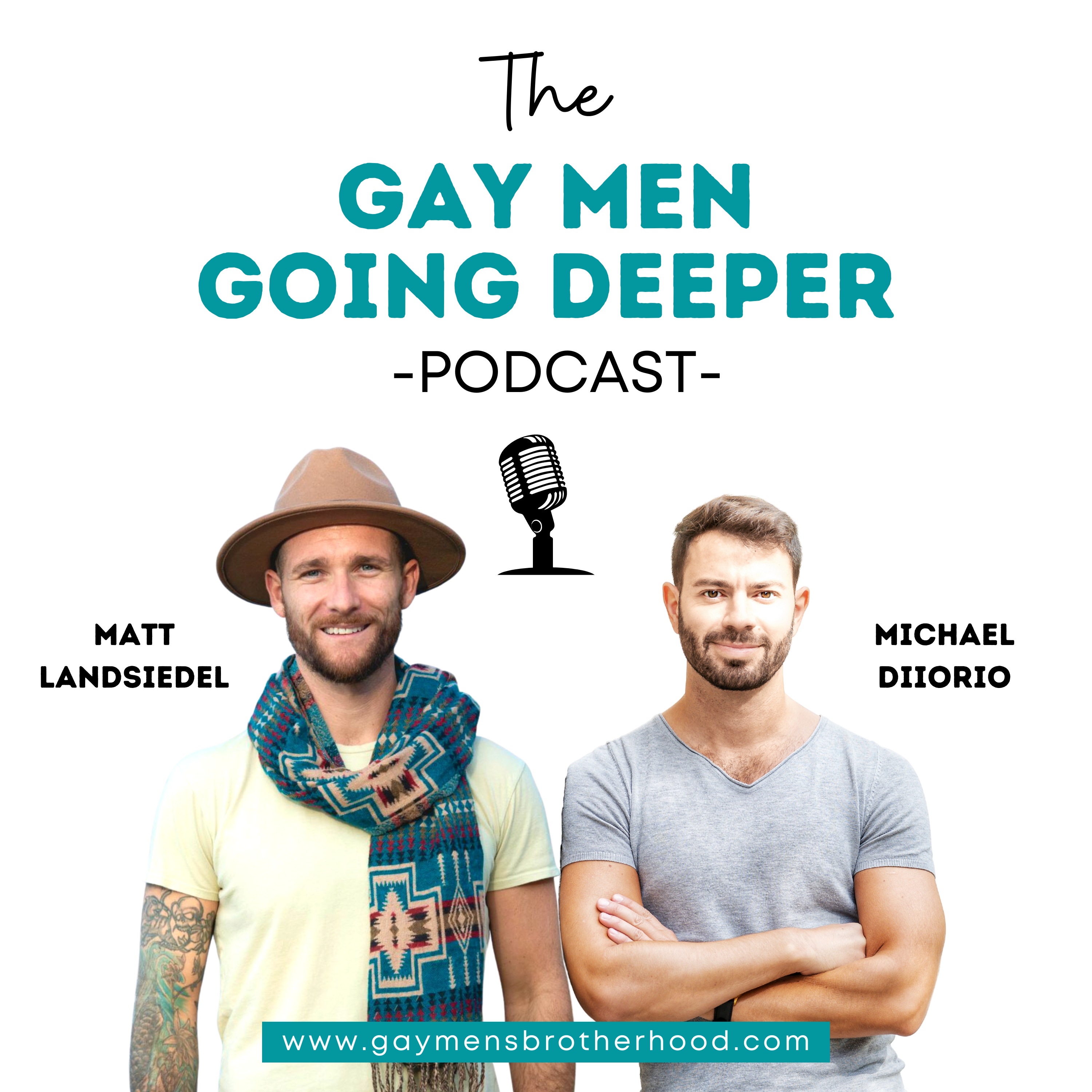
[00:00:01] Speaker A: Hello everyone, and welcome to another episode of Gay Men Going Deeper. This is a podcast series where we talk about personal development, mental health and sexuality. Your hosts today are Matt Callan and myself, Michael.
Collectively, we have over 40 years of experience in the personal development world. And if this is your first time listening to us, we want to welcome you to the show.
We each have our own coaching practice, and in this podcast we're giving away all of our best stuff.
So today, guys, we're going to be talking about intimacy. In fact, this is the theme of the month in the Gay Men's Brotherhood Facebook group, which has just surpassed 5,000 members. So if you're not there yet, go join us there. We'll be talking about intimacy all month, but in this episode we're going to be answering these questions.
What does intimacy mean to you?
What was an intimate experience you've had that was not sexual?
What unique challenges do gay men face when it comes to intimacy?
And finally, we'll share some tips on how you can nurture intimacy in any kind of relationship. So not just romantic relationships.
For those of you out there who want to join us in the GMB Zooms, we want to hear from you on this topic. So we'll continue this discussion on intimacy on Thursday, April 28, where we will be hosting a Zoom Hangout. This is where we give you guys a chance to share your own thoughts on the topics we discuss here in the podcast. So if you want to join us, go to the Gay Men's Brotherhood private Facebook group. Check out the Events tab and rsvp. We've got two time slots for you to choose from.
Reminder that this podcast and YouTube channel is listener and viewer supported. So if you enjoy these episodes and you want to show us some love, please head over to our Patreon page where you can support the show. You can also subscribe to get early access if you listen to us on Apple Podcasts so you can listen to the episodes before they are released on Thursdays. The link to all of this is in the show notes.
And lastly, the Gay Men Going Deeper membership is open. We will be launching our new course, All About Relationships this month, so please go join us there. That's included for anyone who is a member. So if you're not a member yet, go join us. If you are a member, you have access already.
If you've been waiting to join in on more group zooms and just go deeper with your personal development, this membership is the right fit for you. So please join us. Head over to gaymengoingdeeper.com to register.
And as always, before we jump into today's topic, I want to read a review from one of our podcast listeners.
This is from Fairways Billy, who left us this review on Apple Podcasts.
All right. He says, I can't thank you guys enough. I finally found your podcast after trying so many other gay centered podcasts that just weren't giving me what I needed. You're all open and honest about your emotions, and that is felt when listening to you. Every show I listen to has me nodding along that, yes, I did that exact same thing, or I have thought that exact same thing.
Hearing it come out of another guy's mouth helps me understand another part of me and helps me normalize another part of me, and it's truly freeing. I can't wait for you to tackle some really gritty stuff like depression and suicidal ideation. I'll throw my hat in the ring to openly talk about that and definitely join the Gay Men's Brotherhood on Facebook for more support.
So thank you, Fairways Billy, for those kind words and those suggestions.
Okay, guys, without further ado, let's jump into today's topic. So today's topic is intimacy.
And in our last episode that we did together, we talked about secure relationships, and that was really about the rhythm that exists in all relationships between closeness and separation or separateness. So today we're going to focus on the closeness aspect of that. And intimacy does mean a lot of different things to different people. So I want to offer. I want to start us off by offering an umbrella definition that I'm going to use. And then of course, we're going to hear from you guys what intimacy means to you. So as a vague umbrella term, I like to call it mutual vulnerability and closeness in personal relationships.
Mutual vulnerability and closeness in personal relationships. Notice I did not say romantic relationships, and that's on purpose, because intimacies, while it's often talked about in the context of romantic relationships, they could also exist in platonic friendships or even family relationships as well.
And even within romantic relationships, there are many ways to achieve this closeness or intimacy. But as gay men, we tend to put all of our eggs in the sex basket. But we'll definitely get to that a bit later.
So I've run workshops for intimacy for gay men. And so I want to offer a little slice of that for the beginning of this. And so I want to briefly share with everyone out there the four different types of intimacy. And I think that'll help illustrate what true intim is about to kind of Give us some, some tangible ideas and concepts here. So the first one I want to talk about is experiential.
This is about bonding while sharing new experiences. It's about working together as a team towards a common goal. This is about sharing experiences that take you both out of your comfort zone. So some examples that I love are going on a vacation together, that somewhere new that you both have never been to, and experiencing that together. Maybe a road trip. It could be embarking on a DIY project together or even taking up a new hobby together. So it pushes you both out of your comfort zone and the bonding happens as you're both doing this new thing together that creates a sense of intimacy.
The second one is emotional intimacy. And this is all about feeling safe and comfortable, sharing your deepest emotions.
It's feeling understood at a deep emotional level.
It requires of you to allow yourself to be vulnerable enough to share these thoughts and feelings and knowing with your partner or whoever that you're doing it with that it is safe to do so. Because we naturally all have that urge to want to protect ourselves. So it's feeling that urge, going against it and say, no, I'm going to actually let you in a little bit here. So some examples of what could develop this emotional intimacy would be sitting down with a friend or loved one and sharing your deepest fears, sharing some of your big fears, opening up about a past trauma with somebody is a great way to experience that emotional intimacy. Or even just sharing your hopes and dreams for the future. I think so many of us don't want to share our hopes and dreams for the future. We have some kind of anxiety about sharing what we want for ourselves. But that could be a great way to develop that emotional intimacy.
The third one I have here is intellectual intimacy. And I describe this as a meeting of the minds. This is about brainstorming and problem solving together. It could include healthy debate, while of course respecting each other's views.
It could be exchanging ideas and opinions while allowing room for that disagreement. So some examples of how you can develop into intellectual intimacy is doing an escape room date night. If anyone has done an escape room, you know that it does require a lot of mental agility.
It could be a fun way to develop that. Another one would be starting a joint business or a joint venture or a side hustle together. You know, it really brings out a meeting of the minds, as I said. Another one, easy one could be a game night or even just watching a movie or reading a book and then having a critique on that and discussing the elements of the book or the cinematography of the movie and so on, and really having a critique about what that could be.
And finally, the fourth one that we all know and love so so much is physical intimacy.
And this is about giving and receiving physical touch and affection. Of course, sex is included in here, but you could do this without sex as well. You could have physical intimacy with clothes on or clothes off. And I think it's important that the physical intimacy, there's no expectation or obligation for it to turn into sex, but of course it can.
But ultimately it's just about experiencing each other's physical presence. So some ways you could do that without having sex would be cuddling, holding hands, a nice massage, discovering each other's erogenous zones, or one of my favorites is just putting on your favorite song and dancing with somebody to your favorite song.
All right, so these are the four types of intimacy. And as you can see, a lot of these examples actually cover multiple types of intimacy. And that's fine. It's not really only one. I just want to use these as a way to illustrate for you guys that there's different ways of developing intimacy.
Ultimately, though, true intimacy requires just a few things.
Being present with the other person, whoever that may be. This. This willingness to be present, a willingness to be yourself, share yourself, a willingness to be vulnerable.
And of course, the sense of trust and safety. Trust and safety came up in all four of those. In fact, all of these things come up in all four of those. So that's how I want to start us off with what intimacy means to me. Now, I definitely want to hear from Matt and Kellen on this. So let's pass it off to you. Matt, what does intimacy mean to you?
[00:08:56] Speaker B: Well, first of all, your monologue was beautiful.
It was perfect.
It stimulated a lot of good stuff.
I absolutely love this topic.
In the last few years, I have discovered being demisexual. And I'm not quite sure if I've been demise my whole life and have just repressed it or if this is new because I've had a few spiritual experiences that have kind of opened up different parts of me. And I feel like I've evolved in a different way sexually.
So my. I'm very much more demisexual and sapio sexual. So those are the areas of intimacy that I really gravitate towards. So I love intellectual stimulation. I love emotional connection.
And don't get me wrong, I love physical connection as well. But it. There has to be the foundation of. Of intellectual and emotional for me to enjoy the physical. So for Me, it's all interconnected and I've had to do a ton of work to get to a place where I felt safe to share these parts of me.
[00:10:00] Speaker A: Right.
[00:10:00] Speaker B: You know, and I think that's one of the ways I would define intimacy is, is sharing ourselves with somebody else and allowing them to see us.
I can't remember where I heard this, it was a long time ago, probably when I was in university. But intimacy being described as into, you see, so we're allowing somebody to see us in our most authentic and vulnerable ways. And for me, when I allow somebody to see me, first of all, it's very scary.
It's a very scary thing to fully allow yourself to be seen because we have so many mechanisms built around us to prevent other people from seeing our vulnerabilities and our insecurities and these sorts of things.
But as we learn to feel more safe and share these parts of ourselves, I think, you know, intimacy is such a beautiful thing and, and mutual or mutual intimacy when, when you, somebody's willing to go to that same level that you're willing to go to, it's just a really beautiful experience.
So yeah, I would, I would say probably really important elements to intimacy for me would be sharing in a vulnerable, in a vulnerable way, our fears, insecurities, needs and desires. I think those are all very vulnerable things to share with, with somebody else. And when we do and we allow ourselves to be seen in that energy, I think it's just really, really beautiful. So it's very. And then, you know, it bleeds into all the work that we do, which is, you know, authenticity. Right? Everything's about authenticity and showing up in the most authentic way, the authentic version of yourself. And intimacy is a really beautiful container to practice sharing your most authentic self. So yeah, what about for you, Colin?
[00:11:55] Speaker C: Oh, well, I think for me the first thing I think of when I think of intimacy is safety. And that's what it really just all comes down to for me is like, do I feel safe with this person in this moment?
And then that safety basically parallels intimacy because that safety can then allow the intimacy to come through and those little moments and those things because it's like you just said, when you let somebody else see you, that's very vulnerable. And when I feel safe, I feel safe enough to be vulnerable. And so then that allows the other person to then have that opportunity to see in.
And a lot of my intimacy moments has probably come more from friends. I mean, of course I've had intimacy with, you know, ex partners and all that. But a lot of the intimate things that I think about are, you know, moments with friends that I've really cherished that I've, you know, we. We got to that point in our lives where we're just so aware of the other person and who the other person is and how, you know, we communicate that. It allows all the levels of, like, you know, the frivolous, funny, stupid shit up here. And then you can go all the way into the deeper stuff of,
[00:13:09] Speaker B: you
[00:13:09] Speaker C: know, talking about breast cancer and fears and, like, sicknesses and illnesses and parents and, like, parents getting older and, like, how we're going to, you know, so there's so many different levels, but for me, the first and foremost comes from that safety feeling. And, sorry, everybody, I have a bit of a cold getting to that space of safety with another person.
And that takes time. That really takes time, especially with me. I just. I really like to take my time with it. I'm in no rush with it. And if we're talking romantic relationships, I find a lot of people.
I know people really do this weird thing where they're like, oh, I can't date my friends.
Especially in the gay community, people like, no, I can't date my friends. And I'm like, but so many of your friends are obsessed with you. Like, so many. There's so many relationships that I'm like, but you're clearly both in love with each other. Like, this makes no sense. Like, that is what intimacy is about. That is what a relationship is about. But it's like, people put you into the category and it's like, okay, if you're my friend, that's it. If you're my lover, that's it. And I'm only going to meet people on dating apps, and then we're going to go straight into the intimacy of, like, sexuality and all these things. And it's like, but where do you give time to develop the friendship part? Like, I don't know, maybe I'm weird, but I really like. If I really like somebody, I like to develop an intimacy with no sex for at least a couple months. And people might think I'm crazy, but, like, if I'm really into you, the sex and all the other physical intimacy stuff is going to come. But what might get skipped over and what might, you know, the sex cover up is all the friendship intimacy, that upfront safety stuff. And so for me, it's really important over the first couple of months to develop that and develop that safety and that security and that friendship first, because I know that that's just going to make all the other stuff better.
And I think people kind of, like, separate them where it's like, they kind of need to be brought together anyways. Yeah. So for me, safety really is intimacy or, like an opening door to intimacy. That's what I'll say about that.
[00:15:19] Speaker B: Yeah.
[00:15:19] Speaker A: And that makes perfect sense because if we want to feel. If you want to feel vulnerable, we want to feel safe to do so.
[00:15:25] Speaker B: Right.
[00:15:25] Speaker A: We don't just want to go in there, guns a blazing, opening up ourselves to people where we don't feel safe. So it's that dance between, okay, I feel a little safe. I'm going to open up a little bit of myself and doing so slowly. I think patience is a really good point as well. This stuff doesn't just happen, like, overnight. You can't just decide, like, okay, that's it, done. I'm going to open up my deepest fears to anyone out there. It really does take time. And that also is where trust comes from.
Okay. One of the things that we wanted to do in this podcast is underline the fact that intimacy can be sexual. Of course there's sexual intimacy. We all know and love that one. But it doesn't have to be. So I think some examples of what that looks like could help illustrate what intimacy can look like outside of sex. So the next question I want to look at here is, what was an intimate experience you've had that was not sexual? And let's do the same order and although last this time. So let's start off with. With you, Matt.
[00:16:18] Speaker B: Okay.
I feel. I feel inclined to share a bit of a story, actually, to kind of lead into this. I.
I created a video at the beginning of this whole thing, the whole gay men's brotherhood thing called Gay Men Sex addiction, the lack of true meaningful connection in the community.
And I had an opportunity about a month ago to watch it over again. I hadn't watched it since I recorded it, and, like, oh, my God, so much stuff came up. Like, talk about, like, just, like, there was a lot of projection in that video. There was a lot of me requesting things from the community that I had yet to integrate in myself, and that's where it was coming from. So I've learned a lot in the last two years since recording that video on how what was happening was. I was. I was really, really wanting intimacy and connection in the gay community.
And I wasn't able. I didn't know this at the time, but I actually wasn't.
I wasn't feeling worthy enough to receive it. So I kept attracting men who weren't able to have intimacy with me, to highlight to me my lack of desire to be able to receive intimacy from somebody else. And in the last few months, I've been really peeling back all these layers, and I've been feeling very vulnerable in all my interactions with my family, with my friends. Like, I almost kind of feel like I'm naked, like I don't have defenses, and I'm just kind of, like, really raw, you know? And it's. It's. It's an. And I think what it is is it's a new level of vulnerability that I'm accessing within myself. Because as I'm doing a lot of this healing work, I'm pulling back some of the conditioning, some of the defense mechanisms. My ego is becoming more flexible, and I do feel like I'm being seen, and at times I don't want to be seen, and. But I don't have the defenses to not allow myself to be seen. So I'm kind of in this really raw energy in the last few months.
So anyways, I wanted to. I wanted to proceed what I'm about to share with that because I think it's important to note. So I have a friend, her name is Vanessa, and she's one of my. One of my best friends, and we hang out, and I was having one of those days where I was feeling just extremely raw, and I was even having trouble making eye contact. That's how intense it was for me to just look in somebody's eyes. And I felt like, oh, my God, like, she can see into my soul. You know what I mean? And it was really raw. But we ended up doing a psilocybin ceremony, which for me, it, like, exacerbates my rawness, my sensitivities, everything. And so throughout the experience, we were, like, laying on the floor on yoga mats, and we were just, like, you know, just moving through our journey. You know what I mean? And then towards the end, as things kind of calm down a little bit, we. We just kind of settled into this really beautiful energy where we were just, you know, she was in this really beautiful energy of curiosity, just wanting to learn about me, wanting to know about me. And it just felt really good to have somebody take a genuine interest in me. But she was asking me some really deep questions, and it gave me an opportunity to, like, go into, you know, my childhood, my past relationships, and it gave me an opportunity to really just share these deeper parts of. Of myself. And so that was the probably the most recent exchange where it was really, really intense and.
Yeah. And what came from that? Like, I always think, you know, intimacy is just this really beautiful container that allows us to kind of really feel so connected to somebody, you know, And I felt really connected to her, so. And then since then, we've just. Our relationship kind of leveled up, and, like, we're now in this, like, other level of vulnerability where we can share with each other. So I think intimacy is also cumulative. Like, as you said, Callan, the more trust and safety you access within the container, the more you're able to kind of level up and go to these deeper places. And I'm learning about myself that I've yet to even touch the tip of the iceberg of what intimacy means and, like, what I can. How I can share myself in these deep ways and hold space for somebody to share themselves in a really deep way. Right. Because that's hard, too. It's hard to hold space for somebody to be.
To share all of their stuff, too, because there could be some countertransference. There can be some of that energy of, like, oh, like, I see myself in them.
So, yeah, it's.
[00:20:46] Speaker C: It's.
[00:20:46] Speaker B: It's all a journey. It's all cumulative for me, and I'm learning and growing through practicing vulnerability and intimacy.
[00:20:54] Speaker A: Yeah.
[00:20:55] Speaker B: What about for you, Callan?
[00:20:58] Speaker C: I love that.
Yeah. I'm probably going to take two. I'm going to show two sides here.
The first one is Michael, you were talking about, like, traveling with people, and it can, you know, it can be intimate and all that. And one of the. Not one, but many of the intimate experiences I've had is one of my. Well, with two of my best friends, Elma and Ann, we have all trapped. I've traveled with both of them and enjoyed it, but with Ann, we've traveled extensively to many different places together, and we've also been best friends since I lived in London in 2007. And so I've gotten to know her on so many different levels of, like, when we were in our early 20s and we were just a fucking hot mess, going out, partying all night, getting wasted, waking up at some person's house, being like, where are we? Like, we've done the whole gambit and then, you know, becoming adults and, you know, talking about those deeper conversations of, like, our parents are getting older and breast cancer scares and all of these other things. So it's. You know, we've built that spectrum together and traveling with. And it was. It's just now that we have Such a level of intimacy and such a level of connection together. Like, we could go anywhere and do anything and be put in any situation and we just know what the other one needs. Like, she knows what I need in a situation, and I know what she needs in a situation. Like, you know, if we're. We did a road trip all around the US not all around the US all around Western us. We did like California and then the Grand Canyon, Las Vegas, like, all that kind of stuff. And we just had such a blast on that trip and we had so much fun. And it was like, okay, she's from the uk, so if we're driving in a country that's on the other side, she'll drive. But if we're driving in a country that's on our side, I drive. So it's like those little things where we just know who's going to be doing what and who does what.
And there were still moments where we got drunk and we just lay in bed or lay in one of each other's beds and just cuddle and talk about shit. And there's no sexualness to it. It's just being open and honest and connecting with each other and just like, it's just so, so nice to just feel that with somebody and just be like. Like, of course we've had our fair share of fights and whatever, but we also have developed that deep respect and care and love for each other that it's like, she's going to be in my life forever. And so that's kind of on the plutonic side of having intimate relation or having an intimate experience with somebody who. It's not sexual. And then I do want to say this about my second example because my second ex and I were very much an intellectual, like, sapio sexual relationship. Like, we were together for a few months, but we only. I think we only had sex like twice. And we only fooled around like, maybe two or three times in like, that months. Months. Months. Long span. And so.
But I never felt unfulfilled. I mean, of course there could be more, but, like, the intellectual intimacy of the things that we could talk about together was so riveting for me that it was like almost feeding other aspects of that that I'm like, okay, like, it was a balance in a different way. You know, some relationships focus a lot more on the sexual intimacy. Others there's more of an intellectual intimacy to it. And, you know, whatever balance works for you, works for you.
And that was one that had a mix of the, you know, sexual in there. But it was mostly, like, Internet intellectually base for that intimacy. And I really enjoyed that aspect of just having somebody to, like, have those deeper conversations with who was just, like, really there. And, like, there was some sexualness and there was, like, kissing and cuddling and all that. So it was more of a romantic base, but it wasn't the focus. It wasn't, like, the center stage of it all. So. So, yeah, so those are my two stories of, you know, experiences that aren't exactly sexual, you know. What about you, Michael?
[00:24:55] Speaker A: Thank you guys for sharing that. I love those examples. I love that you both used, you know, relationships that were platonic, even with, like, women. Right. Which we can have intimacy with all different kinds of people, including straight women, gay women, family members, whoever that may be. One came to me, actually, while you were speaking there, Colin. We. So we all have the sapio sexual side of us. I very much and, you know, love that mental stimulation quite a bit. Turns me on to see someone in their element. Turns me on to see that.
[00:25:25] Speaker C: Sorry to interrupt you. Should we explain what sapiosexual is to people who are listening?
[00:25:29] Speaker A: Sure, yeah. Yeah, that's a good point.
[00:25:30] Speaker C: I'm like, we haven't actually said this.
[00:25:32] Speaker A: Yeah. So very quickly, sapio sexuality would be people who are aroused, physically turned on by mental stimulation of any kind. And that could look like a lot of different things.
So I guess that's what it talks about. So for me, how that comes up.
I just realized this while you were talking, Helen. I have intimacy with both of you when we get together. Not just during this podcast, which is live for everyone to hear, but even when we get together at our other meetings.
We spend a lot of time together, the three of us. And there is this shared intimacy that I get from us when we're creating together, when we're having discussions about where we want to take the podcast and what we want to do. And I think I just wanted to take that moment to acknowledge both of you. You for being part of my intimacy journey, because I didn't realize it until you just said it. So thank you.
My other example that I was going to use is with respect to my relationship with my partner. So, first of all, the examples that I used at the beginning were things that I've. I've enjoyed and had in my own life. But a specific example recently would be just a few weeks ago when we were in Mexico and we both got Covid just before we were going to leave. So having to navigate getting Covid in Mexico, being stuck using air quotes because it wasn't that bad being stuck in Mexico. But that's not normally a situation where you would consider it to be intimate. But I'll explain why that was.
So we were having to scramble to put our heads together, having to problem solve, having to do some teamwork, which is always a turn on. Again, being that. In that.
Seeing that mental stimulation of, okay, how do we get through this? What do we do? What's our plan? We could figure this out.
We're both a little scared. Oh, my gosh, we have Covid. We're not in our home country. What are we going to do? We feeling vulnerable? So there's all those. Notice all the check marks there, Right?
Sharing that with each other, like, what happens if we get really sick? Or we're going to take care of each other. All these things are going through there. And again, trusting each other and knowing that we're not alone through this, like, I got your back, you got my back. We're going to make it. We're going to do this. We're going to figure this out together, you know, what's our plan? So. So Star dealt with insurance, and I dealt with getting the accommodations. We did this divide and conquer thing. We spent a couple hours of the day just getting all this shit done. So on paper, that's not something you would expect, would intimacy or intimacy building. But again, it has all the trademark aspects of intimacy. Vulnerability, trusting each other, being present with each other, working together as a team. So that's the other example that I wanted to share. Even though it was a challenging situation and not very fun looking back, it did bring us closer together. And, you know, again, it'll be one of those memories. It's like, hey, remember that time we were in Mexico? We got Covid. Like, it's going to be a story that kind of defines our relationship. Whether we stay together or not, we're always going to have that.
Okay, so that's mine. And I'm really happy we all shared different aspects and different types of relationships. So now I want to talk about why, looking at it from the gay lens, specifically, why intimacy is so hard, specifically. Or so challenging for gay men. So the question is, what unique challenges do gay men face when it comes to developing intimacy?
And let's go with the same order. We'll start off with you, Matt.
[00:28:50] Speaker C: Hmm.
[00:28:51] Speaker B: Yeah. Well, thinking back to that video, right. That I created, I'm trying to think of this, the mind space that I was at. I really, really. There was a lot of dissonance. Okay. I really really wanted intimacy, but it scared the shit out of me, right? I didn't allow myself to have it. I didn't feel worthy of it. I felt shame. And I had unresolved attachment trauma. So my shame told me there's something wrong with me. So why on earth would I want to share all my vulnerable parts with somebody when I have an internal sense of. Of lack of worthiness and that there's something wrong with me? And I think, you know, to generalize it now into the gay community, I think a lot of men, a lot of gay men share that story, right? They have unresolved shame from growing up and feeling different. And, you know, all the social conditioning we get around being gay.
And then a lot of us have attachment trauma, right? Because we grew up in family systems that reject us for being gay. And I think that those two things really impact our ability as gay men to connect with one another because we what that, what, what shame does. And even attachment trauma tells us to reject ourselves, right? If the world around us is rejecting us, then we're going to reject ourselves, right? Because there must be something wrong with us if the world around us doesn't. Doesn't accept us.
And then we develop a strong, deep seated fear of rejection. Because when we are rejecting ourselves, whether on a conscious level or an unconscious level, and then we experience rejection outside of us, it stimulates all of that wounding, right? So a lot of us don't want to take risks. We don't want to put ourselves out there because we're so terrified of rejection. Because then it makes us have to sit with all the parts of us that we've, you know, our shadow self, our ego, or all these parts of ourselves that we haven't integrated.
So I do think that that's a big, big part of this. And, you know, you look at what those two things are going to create, right? Shame and attachment trauma. Well, dysregulation in the nervous system and to, you know, build off of Callan's point about safety.
When we have trauma and our nervous system is holding that trauma, the messaging is, the world around me isn't safe, right? So we got shame, there's something wrong with me, we have trauma. The world around me isn't safe. Blend those two things together and it really, really makes it challenging to put ourselves out there, be vulnerable, talk about our fears, our insecurities, be authentic. All of these things that are so essential for intimacy, they're really developmentally delayed in gay men, in my, in my opinion, and I speak from personal experience, they were developmentally delayed in me. Hence I'm 36 and I'm now learning how to have real intimacy. I thought I was having it before, but I actually wasn't. Right. At least not to the. In the depths that I think are required in order for us to be fully seen. Right. I was very selective on the parts I would allow people to see.
In my opinion, that's not true intimacy because you're not fully letting go, you're not being present, you're not being authentic. So I think that's, that's probably the biggest thing for me. So I wrote down here, not feeling safe to be authentic, not feeling safe to share emotions, I think is a huge part of this. And I think there's this element too in the gay community, and I'm noticing it a lot in dating, is that gay men tend to not trust one another.
There's like this mistrust energy in the gay community that like, you know, this person's going to betray me or this person's talking behind my back. This catty energy in the gay community. And I think it's just a lot of us are in self protection mode and we're in that kind of.
Yeah, the survival mode of the nervous system because we've experienced things in our lives that, that have told us the world around us isn't safe. And we haven't done that work yet. And I think that's why we're creating this. And then there's other tons of other coaches out there that are doing the same work that we're doing and I think it's really beautiful.
And for those of you, because I often hear people being like, shame is one of those things that's so elusive and it's really hard to pinpoint your own shame. It's extremely hard to pinpoint your own shame because it's one of the more shadow aspects of ourselves, the things we feel shame about. And it's very difficult for us to become conscious of that. And that's where I think our course, the healing your shame course is really effective. We basically walk you through a six week journey of learning how to understand your shame. Right. Because the biggest thing with shame healing work is you need to understand the shame wounds that you have first and then you'll be able to move forward and start to work with these parts of yourself that you've learned to. That, that you've told yourself that there's something wrong with you about that.
So it's. And I know, I know, I totally, I feel Like, I just totally should. All over the gay community and I. But I do want to say that we, we are set up for success if we are willing to do this work because we come from a culture where we are different, where we're. Where we don't fit into the. The traditional heteronormative world. We don't conform to those things. So we are set up to have that energy of like, like being authentic and, you know, moving towards intimacy and vulnerability and these things. But we need to do some of that healing work first before we can access it.
[00:34:10] Speaker C: So, yeah, very, very, very well said.
Thanks a lot of that. That I resonated with the shame. And I think I'm going to be piggybacking on what you said in what I'm going to talk about in the unique challenges that men face when it comes to intimacy.
First, I'm going to start off with.
Women experience shame in a multitude of different ways. And Brene Brown and one of her great TED talks explained that men experience shame in one major way, which is don't be vulnerable.
Don't be vulnerable, be strong, and that's it. You can't show your vulnerability.
And so being just mentioned, that's one of our big things, is like, don't be that. And then taking it to the gay side of things.
I think that because of the gay community and because we had to hide for so long and because just the way the world grew with homosexuality, you know, we weren't allowed to get married. We weren't allowed to develop those intimate relationships because the world said no. But what we did do is we got really good at the sex part because that's what we could have, you know, so it's like, well, fuck you, I'm going to have this. Because you don't really have to commit a lot of time or effort and energy to that. And so I'm going to, you know, it's going to sound like I'm shitting on the cake media a little bit as well, but like the generational indoctrination into the focus of sex and that, that's the connection tool.
It kind of allowed us to kind of sidestep the intimacy part and go straight to the sex part. But I've had partners who've like, literally been like, you're too intense. Like, and it's not, it's not what they are meaning or it's not what I think that they're meaning. I think that they're. What they're trying to convey is like, I'm not emotionally available because I've locked that part away with me. And you are. You are emotionally available and you are present during the sexual encounter. And the intimacy level is too intense for me because I don't know how to go there, there. And so that's what I've experienced before. I've had somebody literally leave being like, I can't do. Like, this is too much for me. Like, this is too intense for me. And they've, like, been like, I gotta go. Because they weren't capable of that intimacy because they didn't have the tools and they didn't get to that point. But they did. You know what the generational thing was, was like, I can engage with sex. That's it. And they compartmentalized it all.
Sorry, excuse me. And so, because of, like, how the gay community grew up, you know, we didn't have gay marriage until even so recently, and even still across the globe, we can't get married in so many different countries. So we still have this heavy shame that's weighing on top of us. And then we develop sex really good. And also just men in general, that's a lot of the defaults. And then we're also told, don't be vulnerable as men. So it's no wonder that we have all these challenges when it comes to intimacy, because the world basically, for generations has told us not to to. It's been like, be a man, be strong. Don't do all these things. That's a woman's job. Even though straight men marry women. And like, part of being in that relationship is supposed to be intimacy.
And then add gay on top of that, where it's like, okay, now add in all the shame of you're not supposed to be intimate with another man and that that's a bad thing. And that all that you can now focus on is sex. So it just kind of exacerbated that whole experience. And I think that we're still doing a lot of the work work to undo that generational indoctrination of, like, only do these sex things or only focus on these things because we're comfortable with it, because we understand it, because we've been doing it for so long. So that's what we can talk about and that's what we can joke about. And now the work we're doing is kind of bringing this other stuff into the conversation. And people like, I don't know how to fucking talk about this. I don't know how to dive into this shit. This shit's too heavy. This Shit is like this. Like this conversation that we're having is like me being present in intimacy and that guy on the other side who was like, I need to leave because I can't do this with you because you're too present. That's what a lot of the gay community is doing is because they're like, I don't know how to fucking do this. This is too much. And so they shut down and they close off because it's safety, it's protection.
So I think that there's a lot of unique challenges that come with this for gay men. That is just.
It's no fault of our own. It's just been generationally handed down to us. But now I think our generations and the younger generations are starting to do the work to say, fuck that something needs to change.
[00:38:41] Speaker A: So, well said, both of you. Oh, my gosh. I want to second what you both said. I want to underline it, piggyback off it. Everything.
Very, very good stuff, I think. Yeah, I completely agree. And there is a lot there I want to piggyback then off of what Kalan just ended up with talking about how we kind of rely on sexual.
So I have this Venn diagram. I actually don't know if I've shared it on the GMB Instagram. If not, then I'm going to do that. But. So there's think of sex and intimacy as two circles, right? There's sex, there's intimacy, and then there's that overlap, if you put the Venn diagram together, and that overlap is sexual intimacy.
But you can have intimacy without sex, like we just talked about. And you could also have sex without intimacy, which Callum kind of briefly talked about there. And there's both.
So I think one of the challenges when it comes to intimacy for gay men is exactly that. Putting all of those having this need for intimacy and connection and doing it only through the means of sex. And there's a lot of reasons why that is. Callan talked about a bunch of them right now. So I think part of it is knowing what you truly want. Like, do you just want the sex part? Like, do you just want to have that? That sex? Fine, great. Go do it. Fine. But if you're really looking for intimacy, connection, the things we're talking about here, safety, vulnerability, all that good stuff, then you could fill that need in other ways. And I think a lot of men don't know that. I think that's one of the key issues here. I like to use the analogy of, let's say you want to Have a healthy, healthy, physical body. So you decide to go to the gym. Cool. Great job. But then you go to the gym and you just work on one machine or one exercise over and over and over. You're just constantly doing, let's say, a bicep curl. Okay, that's great. You're gonna have one really good bicep, and you're gonna be really good at it, but you're not necessarily gonna meet that need of physical.
Physical. Overall physical health.
So it's the same thing if we have this overall need for connection and intimacy and we're only looking for. Through sex. And I am projecting my own experience here because this was my story for a long time.
Yeah, you're going to be really good at finding the sex, but you're not going to feel it's going to. If you're actually needing a void, if you're actually using that to fill a void that cannot be met through sex, it's. You're not going to get very far. So I think that's one of the biggest challenges that I've seen is. Is looking for ways we can meet this need for connection and intimacy. A, knowing that that's what I truly want, and then B, how do I do that? How do I do that without relying on my body? How do I do that without relying on the things that come very easy to us?
Now, I'm not saying I want to make it clear. I'm not saying it's not good to have sex. I absolutely advocate for that too. But I'm saying that know what you truly want and. And then aligning your actions to that. So if you do want connection and deep intimacy, then you have to. To learn to use all of the equipment at the gym. Going back to my analogy, not just the one bicep curl machine that might include. And that's uncomfortable, right, because we don't necessarily know how to use these other things. Like, what does this machine do? It feels awkward. It's weird. I'm not that good at it. Right.
And in the, you know, intimacy sense, that includes things like learning how to be you, learning how to just be authentic. It sounds so easy when we say it, but actually, I think it's really hard for a lot of people to do that.
It's about learning vulnerability, letting those walls down, even just one. One little brick at a time. Learning how to trust, having patience, taking time, like letting it take time, not being in any rush, and then, of course, communication skills. So I asked this question in my workshops, and 90% of hands go up. I say, how many men have a hard time being vulnerable? Boop. Hands go up. The next question is, how many gay men here have Trust issues? Boop. 90% of hands blow up.
And therein lies the problem. We don't want to be vulnerable, or we have challenges with being vulnerable. We have challenges trusting. And therefore, we fear the very thing that we want. We want intimacy, yet we fear the things you need to get to it. The intimacy, the vulnerability, all that good stuff, being me, letting myself be seen, all the things that you guys just talked about. I think for a lot of people, myself included, I feared that for a really long time. And I think that's still an issue today that I see with, with. With a lot of gay men. And we all do. We see that in the group. We see that in our membership. It's very common, which is one of the reasons why we are working on this course. We're releasing this course.
Okay? So before we wrap up, we know we love to leave our audience with some helpful tips. So I want to hear from you guys. How can you nurture intimacy in any kind of relationship? So this is whether it's romantic, platonic, family, anything at all, All. So give us your best tips, guys. Matt, we'll start with you.
[00:43:24] Speaker B: Well, in my personal opinion, you can't have intimacy with someone else unless you have it with yourself. You got to be willing to see yourself. You got to be willing to be with yourself.
And if we're always escaping ourselves, it's going to be hard for us to have intimacy because we need to have presence with self, we need to have presence with other. So I would say working on embodiment and.
And presence is going to be probably my number one tip, because that's like, that's when you start to open yourself, right? You start to connect with that part of yourself downward into your body.
And for those of you who haven't seen the podcast that I did with Sifu on embodiment and authenticity, watch that because that'll give you all the tips on how to access embodiment.
I think nervous. Nervous system co regulation, I think, is a really great strategy. So that can look like syncing up your nervous system, breathing together, cuddling, hugging, anything that's going to bring the nervous system into that settled energy so it can feel safe, and then it can start to feel safe to open up and be authentic.
For people who really struggle with intimacy, I find that like, like something like side by side intimacy might be nice. And I tend to, like, if I Go on a first date with somebody. I don't want to. Deep intimacy on a first date, for me, it's just. It's. It feels forced. So I always request to do something where I'm walking, let's go for a tea. Let's grab something. Because I find some people open up easier when they're side by side versus sitting across from you at a table. It's just easier for you to connect with people.
So that's a tip for people.
Mutual exchanges of vulnerability, I think. Think, you know, having it be like a dance, right? Vulnerability isn't you throwing everything on the table and then hoping they do later, right? Like, it's like you share a little tidbit. They share a tidbit. It's just a. It's accumulation, and it's a dance that we do.
So something that I really like is like a questions game, right? Where it's like, you start off with, like, lighter questions, and then you move your way up to more intimate questions, and it's. They ask and then you ask and they ask and you ask. Because then it's a dance, right? It's moving back and forth, and you're exchanging, and you're letting the nervous systems build together towards that precipice of, like, having that intimacy.
And then I'm a huge fan of authentic relating, as you guys know.
So speak up about the apprehension and the anxiety, right? You need to. Because if the nervous system doesn't feel safe and you have anxiety and you're trapped in your mind and you're like, I don't want to show you. Are this part of me. I'm scared? What if they reject me and you're playing out all that. That stuff? What happens when you externalize it is it melts away. It's all energy. And when you're encapsulated in your body, you stay stuck, right? So talk about it. Say, you know what? I'm feeling really vulnerable to share this, right? Or I'm really nervous, or I'm noticing my. My critical mind is coming in as I'm about to share, like, externalize that stuff, and it'll. It won't have as firm of a hold on you.
Those are my tips.
What about you, Callum?
[00:46:31] Speaker C: Well, you just said all, like, all of them, and they're all so good.
I'll basically just kind of build off of it, because it can't come for me. It comes down to just building safety and creating safety, and there is not. There's no way to fabricate that and make it happen quicker. Like basically you're going to have to be patient and create it slowly over time.
You can't just like decide to do it and just start doing it.
And you know, that's like oversharing. You're gonna have vulnerability hangovers like that. No, that's. It has to be little by little, step by step. I'm a firm believer at the 1% at a time kind of mentality. Like I don't buy into this hustle culture, like go, go, go, build fast, all these kinds of things. I'm like a one day at a time. 1% of the time. It's like me right now. I've been doing one push up every day for the past couple months. And yeah, it's just one pushup, like big whoop. But it's compounding over time. So by the end of the year, I'll have done 365 push ups that I wouldn't have done otherwise. Right.
And so it's the same with creating safety. You just got to be patient. Just do it little by little each day.
And I know that like I've, I've done some work around trauma and sometimes somebody who's experienced trauma isn't capable of being vulnerable. They aren't capable of building the intimacy. And so, you know, if you're in that space where you really aren't capable with doing it naturally with other people around you or people that you've kept in your life to do that, go online and find, you know, a counselor or a therapist or you know, there's lots of outreach programs or you know, there's, if you're younger, there's programs like the Trevor Project and stuff like that where they give you access to people to talk to, where you can start building these trusting relationships and you can start taking the baby steps of like, okay, here's a trusted professional person that I can talk to and start building these connections, start building this intimacy. Because then that will become a learned habit and you'll be able to take that experience and put it into other relationships and continue to build because that's what it really is going to take. It's going to take time to build these relationships and, you know, compound over time. And there's going to be slip ups, there's going to be fallbacks. But the more you can build the good energy, the good experiences, the more you'll be able to look at those other ones and say, okay, that was just a one off, that was just a one experience. That's not the default for most humans, where a lot of people who are in that trauma mode are like, oh, no, the default is the terrible thing.
[00:49:08] Speaker B: Things.
[00:49:08] Speaker C: So that's it. What about you, Michael?
[00:49:11] Speaker A: Yeah, you guys nailed them all.
I had a list here, but I think Matt covered all of them. So I think go back and listen to those.
Adding to that, I would say. Yeah, yeah. The safety that you mentioned, Kellen, some things that you can do, like in a practical sense, if you're dating somebody or even otherwise is just planning an activity together. This really works for me. I like that. Experiential intimacy. But planning an activity together that is new for both of you, that just gets you out of your routine and gets you out of environment, just helps stimulate, like, just move. Like moving into something different is helps to stimulate intimacy. And I know it doesn't seem that way, but it really does from a new experience point of view.
Other things I had were sparking a discussion about something meaningful and interesting. So, you know, for me, I. I love a good, high quality discussion topic. So this is not gossiping or talking about other people, blah, blah, blah. But it's really talking about, like, what are your hopes and dreams for the future?
You know, philosophical discussions for me are wonderful. And you can have that with anyone. Family member, friend, romantic partner.
So just controlling the dialogue and asking thoughtful questions. Ma, you talked about that. I love a good, powerful question. And you know, for someone who asks that to me, like, again, as a psychosexual, my dick responds in a wonderful way when someone asks me a good question.
And another one that you had mentioned is acknowledge that feeling of being nervous or scared. This is hard for a lot of people, people. Really hard for a lot of people.
So acknowledge it. Yeah, like, hey, you know what? I feel?
I feel a little bit nervous talking about this, or I feel unsure mentioning this or saying this and letting that be there really takes the power away from it.
And then from a physical perspective, I love to advocate for touching each other without needing it to turn into anything. Just let for a partner, like let each other touch each other and just enjoy it. Just say, I just want to touch you. I just want to hold you. I love the one I mentioned about dancing. I think that's so much fun, just dancing with somebody. Even your friends, right? You go to a bar and dance with your friends. So much fun.
Yeah. So those are some of my tips as well.
Any last words, guys? On this topic?
[00:51:20] Speaker B: I have one thing I want to say because I think there's a lot of gay men out there that are amazing at this. They are really good at intimacy and I want to give a shout out to those people because they've done their work and. And I want to share a few tips for these people to, you know, if you're a high level person that you can have intimacy and you're good at it. Something like eye gazing is very powerful if you want to kind of see into somebody's soul and kind of connect with that tantra is really good.
And being in silence together, nothing's nothing being said. Let your soul speak through energy. And I think those are really, really good for people who are or in the advanced level of intimacy and vulnerability.
[00:52:04] Speaker A: So yes, 100% on that silence one. Yeah, for sure. I love that. I think for me, that's how I know that I truly am comfortable with somebody is if they're in my home and I can just be there without having to like fill the. Fill the air with anything. Just let myself be me. Let them be them. In our own spaces. Like in a shared space, but like in our own mental space. It's such a beautiful.
Again, it doesn't seem like it, but it is.
Yeah.
Okay. Callan, how about you? Any last words?
[00:52:34] Speaker C: No, I'm the same. I love like just reading a book next to each other. Like each reading a book and just like having your legs intertwined and like, just like that's it.
Nothing needs to be said. Just live in your own worlds and just be connected while doing it.
[00:52:47] Speaker B: Yeah, that's nice.
[00:52:49] Speaker A: Beautiful. I can't believe it took us this long to do an entire episode about intimacy.
Right?
All right, well, we'll be doing another episode not exactly on this, but in a couple weeks, so look out for that. I want to thank all the viewers and listeners for tuning in today. If you like what you heard today, please leave us a review and give us five stars. We do read our reviews at the beginning of the episodes. Also, make sure you subscribe and click on the bell to get notified each time we release a new game and Going Deeper episode.
You can check out the show notes to learn how you can become a patron of the show. And again, we want to hear from you guys on this topic of intimacy. So join us in the Gay Men's Brotherhood Facebook community.
April 28th. We will be hosting the Zoom and we'll be talking all about this and we'll be asking you guys the very same questions.
Finally, make sure you join the Gay Men Going Deeper membership where you do have access to all of our coaching videos. The Healing youg shame course that we talked about. And then our new course about relationships, where we will cover this topic of intimacy in greater detail.
And of course, thank you again to my lovely co hosts, ever so wise.
Thank you for coming today and sharing your wisdom. Callan, I know you're not feeling well, so kudos to you for showing up.
Okay, guys, thank you so much. We'll see you next time.