Episode Transcript
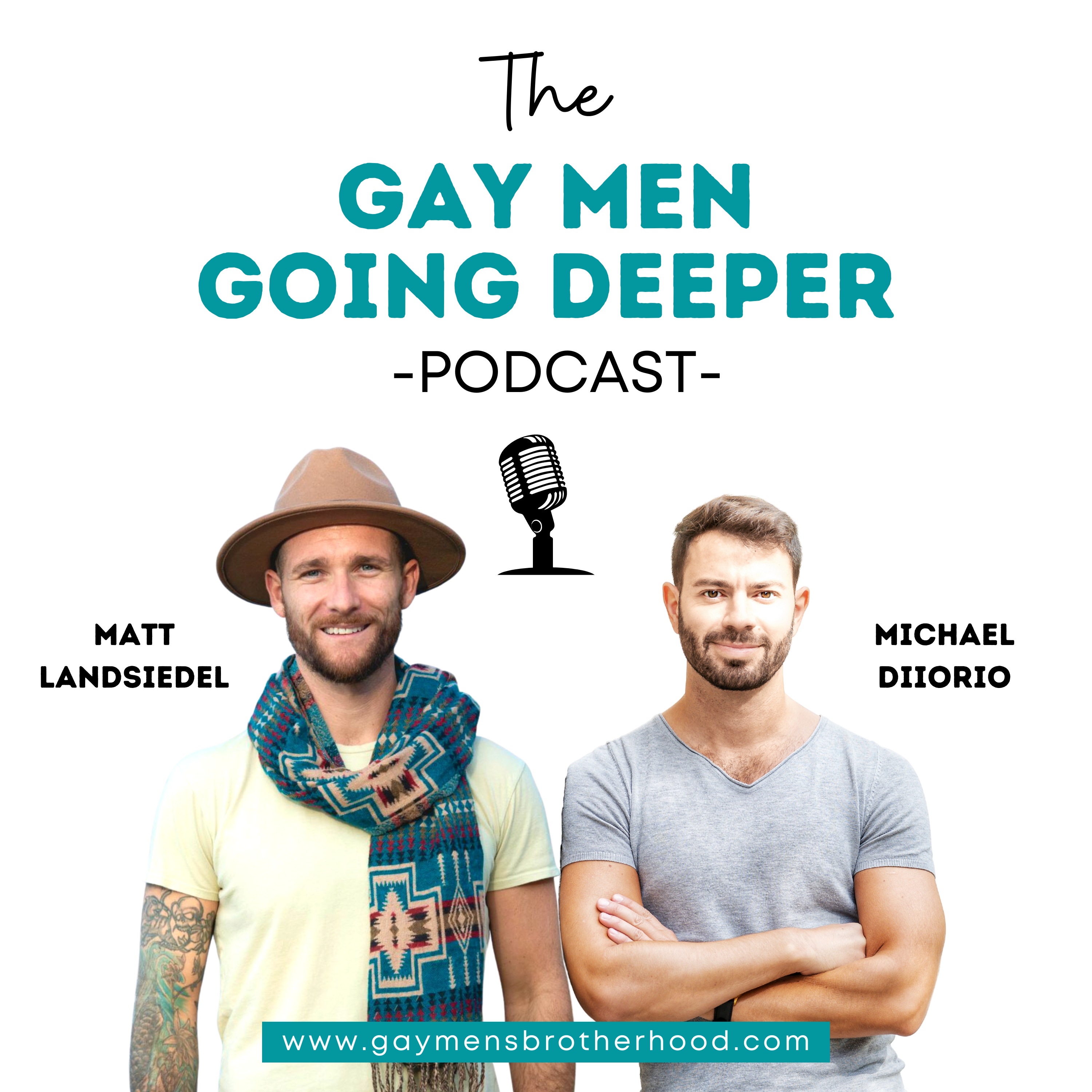
[00:00:02] Speaker A: All right. Hello. Hello, everybody. Welcome back to another episode of Gay Men Going Deeper, a podcast where we talk about all things personal development, sexuality, and mental health. Today, I'm your host, Kalyn Brecken, and I am joined by three amazing fellows. We are going to be talking about coming out later in life. So all the gents that I have with me today came out later in life, and we are here to say that you can still have a damn good life even after you come out later. So I'm really excited to jump into this topic. I think there's a lot of listeners who are going to be very interested who have had similar experiences, or maybe they're even still in the closet themselves.
So I'm excited to bring them your stories and share them.
So how about we dive right in? I would like to introduce Phil and Ron and DJ.
If you're watching this on YouTube, everybody gave a wave and let's jump in. I want to know what age you came out at. So, Phil, let's ask you first. What age did you come out at?
[00:01:11] Speaker B: Yeah. Thanks, Kellen. Hey, everyone.
So great to be here.
For me, I came out.
I'm trying to remember how old I am now and doing some math. Maths while Caleb was speaking there.
I came out at 40 to my wife and came out to the world when we separated, when I was 42. 42.
And so that was almost just a little over two years ago now.
[00:01:48] Speaker A: All right, wow. Awesome. Thanks for that, Phil. We're going to dive more into that whole stuff, but we're going to move along.
Ron, how about you introduce yourself and tell us a little bit your story?
[00:01:59] Speaker C: Okay, thanks for inviting me to this. I was a little later. I didn't come out Till I was 63. I was married for 43 years, so it took me a little time to get to that place where I would feel comfortable to come out. But I did, and I'm glad I did.
[00:02:19] Speaker A: Nice. And how long ago was that that you. How long have you been enjoying coming out? Like, being out now?
[00:02:25] Speaker C: It will be six years, the first of January.
[00:02:32] Speaker A: Congratulations on that.
Nice. Awesome. And, dj, what about you?
[00:02:39] Speaker D: Well, I'm right in the middle. I came out at 50.
[00:02:43] Speaker A: Oh, split the difference.
[00:02:45] Speaker D: 15 years ago.
[00:02:47] Speaker A: Nice. Awesome.
So if I am correct in saying you were all previously married?
Four. Yep. And you all also have kids and I think, Gigi, you even have grandkids now?
[00:03:02] Speaker D: I have two grandsons. Yes.
[00:03:03] Speaker A: Yes.
Awesome. And Ron has five.
Oh, my goodness. Okay. This is going to be great. All right, so who wants to go first and share your story of, like, coming out, what that was like and kind of like what it's like now, being out on the other side of it.
Who wants to jump in first?
[00:03:25] Speaker D: Well, I'll go. I'll go ahead.
[00:03:27] Speaker A: Go ahead.
[00:03:28] Speaker D: I'm probably the most nervous, so I'll go first.
[00:03:32] Speaker A: Perfect.
[00:03:33] Speaker D: Well, I was married to a woman for 26 years.
We actually been together for 32, basically.
And it just.
Well, just cut to the chase. I was having or seen a guy and was found out.
And that's when it all started.
Basically. It was. My wife had said, well, if you can promise that this will never happen, we can try and work things out. And for me, that was just the epiphany. I just thought, no, I can't promise you that.
So we just have to.
We have to end it. And like they say that weight off the shoulder, it's real. That's. I had felt that immediately.
[00:04:24] Speaker A: Yeah. What was that experience? Like, that like. Like, it must have been so, like, oh, crap. I got found out. Because you didn't choose to come out. You got found out.
[00:04:34] Speaker D: Well, you know what? I think subconsciously I wanted to get caught because I've been struggling for years and years and years with it.
My wife knew years ago, before that, that I had feelings for men, you know, interest in men, but kind of dismissed it, and we never discussed it at all.
So I think it was. Actually, I was.
I was ready for it to happen. And I think because basically I invited somebody to my home and my wife was going to be out, and that was really stupid. Right.
And that's where I really think that I kind of wanted to get caught.
And it was the best decision I made when I just said, you know, we can't. I can't. I can't promise you that I didn't want to.
To lead my wife on anymore. Mm.
[00:05:26] Speaker A: Right.
And what about coming at, like, what was the after effects now? Like, now that you've been out for a while and life is different, for
[00:05:37] Speaker D: the most part, it's been wonderful. Like, friends and co workers and some of my family were all good with it. Of course, there was some that weren't good with it at all.
And still dealing with that to this day.
My ex wife is still. We don't have much of a relationship. We see each other when we're there for the kids or grandkids, but it's just small talk if that. Even so that I would like to change, but I can't change that. So hopefully you'll get better. Hope you'll get.
But as far as the rest of it, it was huge for me. I mean, I.
Well, the men's chorus. I joined the men's chorus shortly after I came out. And that was huge for me because there was. I hadn't been living the gay life, really. And now I got to be in a group of 100 guys that all accepted me. And I was looking for some gay friends, and I found them.
[00:06:46] Speaker A: And that's how we know each other. So for those who don't know, DJ is talking about the Vancouver Men's course, which is a gay men's course, um, all ages, and everybody's in there. And there's quite a lot of guys, actually who have had, you know, previous marriages and kids and that whole thing. So you probably found some good camaraderie in that group of people.
[00:07:06] Speaker D: Definitely. Definitely.
[00:07:08] Speaker A: Amazing. Awesome. Well, thanks for that. Dj, let's jump in with Ron. I want to hear your story now.
[00:07:16] Speaker C: Okay. Well, number one, I always knew that I was gay.
Basically. I, you know, I was in my teens, in the. In the late 60s.
It wasn't a time that I felt I didn't know anybody. I didn't feel accepted or I didn't want to be gay. I wanted to be normal. I kept thinking it would go away.
And so I met my future wife when I was 19 years old. She's only woman that I ever dated or went out with.
And she knew that, like, Phil, that I liked men.
Right. So that was never. But it was never like Phil never talked about. Like it was there but never done. So then we got married and we only had only one daughter, who's just amazing.
I had her when I was. Or we had her when I was 22.
And you get, you know, you get going. I made the choice.
I knew I was gay, but I didn't. Right. So I was committed to that relationship and we went on our merry way. Had kid, had our daughter. And you get caught up in that life. I started my business then, and I was living a life, right? And it was hard at times because I did not really. I didn't play around.
[00:08:37] Speaker B: I did.
[00:08:38] Speaker C: I tried it once and I just felt such a guilt and so horrible.
And then it was during a time when AIDS was. Just started talking about. And then I was sure it's going to die. I mean, just like, oh, my God. I just like, oh, my God, what am I done? And it was just horrible. So that was a no.
It was interesting. When I was in my mid-40s, I thought about coming out and my wife got breast cancer.
And I didn't feel that that was an appropriate time.
So I just kind of went on with life the way it was by then. Our daughter was married and I had become a grandfather by then. And so then as I got into my 50s and we're dealing with all the repercussions of Sherry having cancer and family members and all that stuff, I decided when I was about 35, I was too old. Who'd want me anyway? I was just like.
And my cousin, who always knew I was gay as well, and he took me to England and Amsterdam and we went to this club in England and there were all these older men with young guys, and it was called the Elephant's Graveyard. And I. It was the most depressing place.
I was just like, shit.
Like, he thought it would cheer me up. Like, I was just like, so. Because it's not me, because I've got a.
I feel. I've got a young energy about me. But at that time I just felt overwhelmed. And I'd lived a life, you know, but then I was married 30 some years and, well, what the heck.
But what happened was, I would say my relationship, because I was doing a lot of personal growth.
And the more I grew, more distance grew between my ex wife and myself.
And I thought, I don't even have a friendship, so why am I here?
And so by the time I got 63, I don't know, for one thing, I thought, anybody that I get to be with or gets gets to be with me, they're lucky.
Because if I don't feel that way about me, who wants you? Right? It took me time to get my head wrapped around all that you have. That is being in this group, in the men, going deeper has made me realize that the biggest stumbling block was here was the story I was telling myself.
And so I came out and I came out like a racehorse. I told everybody I'm a hairstylist. So I told everybody because I didn't want my clients finding out from other people. So that was really hard on my wife because she would. She would have liked me to be more like DJ and take time with her and I making it. But I had spent 43 while I knew her. We were together for 45 years. I had decided that this is it.
I want to live my life. This is it. And so it has been very difficult for her. She's not lived in Victoria, she's lived in Ontario, but she's coming back next month. And so we'll see, we haven't got much of a. Haven't had much of a relationship because I come from a. I'm a. I'm basically.
We were in a codependent relationship. I'm a pleaser, and I did that. I tried to make her life as good as I could.
And so I have to. I have to set boundaries.
[00:12:08] Speaker A: When I.
[00:12:08] Speaker C: My daughter said, dad, you need to go to counselor. I said, okay. So I went to the counselor. Sherry and I were supposed to go both.
She said, can you imagine? My daughter thinks I'm crazy.
Anyways, so I went and I kept. Kept giving me this thing that said setting boundaries.
Every time I leave, I have this sheet of baby. How to set boundaries.
So it's been interesting navigating since I've come out, because what I've noticed behind the chair as a hairstylist with my female clients, that the second time around, quite often they pick much like they did the first time around. So maybe they're a different sex. But so now.
[00:12:51] Speaker D: Right.
[00:12:52] Speaker C: So I've really been cognizant of that. And I found it a big lesson. I would like to meet somebody, but in the meantime, I'm enjoying my life. And the gay men going deeper has been. That's my drive. I found a place to express myself with all these different men of different ages and to learn from them and to hear of their experiences and that other life that I lived before. I love being a dad. I love being a grandfather. I love all that part. And I was. I was lucky. I would say hardly anybody.
Well, one client said to me, oh, I always thought you and Sherry had an arrangement.
The only person that was surprised was me.
That's kind of how it worked out.
[00:13:39] Speaker A: Isn't that always the way, though? Even when I came out, everybody's like, well, yeah, we know.
[00:13:44] Speaker C: And I was like, we were just waiting for you.
[00:13:48] Speaker A: Right?
[00:13:49] Speaker C: Oh, gosh.
What.
One caveat for me is coming out and being authentic has changed my relationship with everyone.
And I know I have changed, but. Well, when you change, all the people do around you. And one of the people that I have. I always had a really good relationship. Now I have a fabulous relationship is my mom.
And we've had many, many conversations about. I mean, I'm very fortunate to have a really with it mom still at 90 years old, that I can have those conversations. But it's been. And my family, my brother and his wife are here now, and they love me and I love them, and it's. So that part didn't change. So I was really lucky. Very fortunate.
[00:14:33] Speaker A: Good, Nice. Oh, I love your storytelling, Ron. Well, thanks for sharing that. I'm excited to go deeper on that conversation, but let's jump over to Phil and get your story. I'm sure you're itching to share what your adventure's been.
[00:14:50] Speaker B: I, I've been sitting here listening to what's been said and so much of what Ron and DJ have shared, like, I'm like, yep, yep, yep, me too.
So for me, I was with my wife. We were together for 23 years and married for 18 of those years.
Two kids.
And we both Australians and lived in lots of different places around the world because of our jobs.
And so we weren't sort of the general kind of, dare I say, suburban couple.
We both very kind of internationally focused.
And when you have jobs like that, when you live a life like that, you, your relationship is different because it's like the two of you against the world. The two of you experiencing the world in more than just popping down to the local mall here to go to the supermarket kind of experience. It's battling the dangerous situation in Caracas or trying to get things done while living in Ho Chi Minh City or, you know, getting and exploring Seoul as places to live and, you know, the relief of living in an English speaking country when you live in Wellington, in New Zealand.
But, you know, you become a real kind of very tight unit.
And through our relationship, we had kids, got two boys, they're 14, so they're twins.
[00:16:50] Speaker A: And you got two for the price
[00:16:51] Speaker B: of one, two for the price of one.
It's, it's, it's, it's a miracle that I look this good and. But there's a whole lot of gray here because of all of that, I would say. But like, like Ron, I suspected, really didn't want to believe that I was gay when I was 14, and that was in the early 90s and I went to a Catholic boarding school outside of Melbourne.
And at that time in that place, it wasn't, you know, there were very few positive gay role models in society.
And so, you know, I kind of wished it away.
And that said, like, I do love my former wife now still, like, we're really good friends where, you know, parents to our kids together and with my partner now who's an awesome Kiwi, like, the five of us are this awesome sort of family unit that we're getting to grow and evolve, all five of us.
So it's wonderful. It's not like how I imagined it would be, I thought sort of stereotypically that in separating it would be sort of acrimonious and awful and absolutely, you know, just like gut wrenchingly painful.
And I spent years and years and years and years wanting to not make that happen. So I was trying to wait for the perfect time where I would come up with the words, thoughts and actions that would make it as, as easy as possible on everybody around me.
And so I paid that price of, of denying myself the part of me that, you know, that is my sexuality.
And there was, you know, I'd done a whole lot of work within myself, you know, chiefly through the portal of loneliness. Like, I realized that I was lonely and while I was a member of a very dynamic duo and was living a great life and had a great job and all of that, I didn't have anyone that I could actually go, you know what?
There's thoughts and feelings here that just keep coming back and I don't know how to say it and didn't want to say it to my wife because that was going to be completely devastating.
And yeah, so got help, went through a coaching program and with that found the words, they weren't perfect, but I found a way of saying, you know, I think I'm gay.
And yeah, it was at once the most liberating and like it was just this, this roll of the dice really. It was. I, I thought that she was going to be on, you know, she was going to take the kids and, and be on the next like that night's plane to Sydney and I would be in Korea and like what would happen.
But yeah, the drive, the drive. I was scared. I was really scared of what would happen if I didn't take the choice to come out.
But I'm very glad I did, very glad I did. On this side of it. I'm like life's, you know, I think I'm getting ahead of slt, but I did not imagine in my wildest dreams that life could be like this on the other side of some really shitty, painful conversations.
[00:21:11] Speaker A: And I'm looking at dj, you're nodding your head. Do you want to speak a little bit about that for yourself?
[00:21:19] Speaker D: Yeah. Lots of painful conversations, mostly with family.
Probably one of the most or the worst ones for me was my, my brother and sister in law that I was, I thought we were very close to and had been basically since we were all, all married.
They lived in the same town as I did and we saw each other probably every weekend or every couple weeks anyway.
And they happen to have a lesbian daughter who had come out Before I had. And I also have a younger brother who was gay and he came out in his teens.
And so my ex wife basically said, well, you're gonna have to explain stuff to people. I'm not, I'm not saying anything about it. You have to do that.
[00:22:11] Speaker B: Right.
[00:22:12] Speaker D: So I went over to talk to them and just let them know what was going on.
And the first comment was my brother started to cry and said, well, I guess it isn't a choice, you know, with my daughter and our other brother, maybe it isn't a choice. And they, so they said, well, no it's not. This is.
And but then that two weeks later that changed. It was all of a sudden it wasn't a good thing anymore.
I was told that I was immoral and was going to burn in hell and that was a horrible person. And how could I have deceived them all these years?
And you know, you're not the person that we thought you were. And basically I said, yes, I am. I'm just not the whole person that you, that you knew.
And that, and there's. To this day we still don't really speak, but I, I'm changing that because I miss my relationship with my brother.
Not so much my sister in law, but with my brother and my partner. And I just got engaged on my birthday this month and so I sent him an invitation to the wedding.
And probably my other, my biggest other worry was my kids, what my kids were going to think. And I was afraid that I was going to lose them.
My girls were, I think 19 and 21 at the time. So one was out of the house and the other one was just about to get out of the house.
And so I, you know, sat them down and just, just point blank said, sorry, but your mom and I are getting divorced. I'm gay.
And they both came and hugged me that we don't care, dad.
That doesn't make any difference to us.
We are upset that our parents are getting divorced, but we love you. You haven't been happy, so. And then a few years later they said, it's nice to see you happy finally, dad. So it works out.
[00:24:24] Speaker A: Yeah. With that ring on your finger. Congratulations. You've got to be super excited.
[00:24:31] Speaker D: I am. Yes. Yes.
So we've been together for 15 years and we finally decided that. Yeah, let's do this.
[00:24:40] Speaker A: Amazing. So, okay, well, let's kind of jump into that a little bit. The light at the end of the tunnel. Because if somebody's listening to this right now and they're in that Space where they're still.
Before coming out or even in the midst of the coming out. Let's talk a little bit about the adventures you had after you came out and kind of the aha's and the amazing, like, oh, wow. Like the feeling of relief. You were talking DJ earlier that, like, the weight on your shoulders was lifted.
[00:25:12] Speaker D: It's a real feeling. It really is. You could just almost. You can almost see it leaving as soon as I made that statement that I, you know, I can't promise that, but yes, it's good. So, I mean, the worry with my kids, that's all good. They absolutely adore my partner, he actually called them before he proposed to me to get their blessing, so.
And they said, yeah, so that's good. And I had two wonderful grandsons that grandkids are the world. They really are.
Wouldn't give that up for anything.
But for the most part, things were good with me. Like after the initial going through the divorce kind of thing, you know, I found out that my wife had tried to have me killed and stuff like that, which is not something you really want to know, but apparently that was about to happen or was in the works, but it didn't.
I just lost my train of thought. Sorry.
[00:26:19] Speaker A: That was a. Wow.
There is some adverse reactions that can be had.
[00:26:25] Speaker D: Yes, yes. Yeah. And my mother, she wasn't good with the whole thing on. On her deathbed, it was, you know, I told her that I loved her and she said, I don't know how you could leave her. She was such a wonderful woman.
That was what I got. So. Okay, see you, Mom.
That was not a good part of it, but the rest has been good. Like I say, I joined the chorus, which was huge for me, because I needed some friends, some gay friends. I didn't know how to be gay. Right.
So that was huge. I made a lot of really close friends in the chorus.
And like the others were saying, everybody knew I was gay before I did it. Like kids I went to high school with or, you know, they said, well, yeah, duh.
So. And for me, I don't know if it was so much.
Well, I guess it probably was denial, but I kind of felt level. Everybody has these feelings, you know, that everybody probably experiments and, you know, it's. It's. It's normal. But it wasn't.
[00:27:34] Speaker A: Is your relationship with your younger gay brother, did that get stronger or did anything there change?
[00:27:42] Speaker D: Yes, actually, it did change for the. For the worse and.
[00:27:46] Speaker A: Oh, not what I would have expected.
[00:27:48] Speaker D: Not what I would have expected either. But no, unfortunately, that. That relationship has been severed too, so.
[00:27:56] Speaker A: Well, I mean, you never know how people are going to react. But in saying all that, you're still happy you did?
[00:28:04] Speaker D: Oh, yes, definitely. Definitely. I was in such a depression before that. Like, for years before that. I had like a. A major breakdown about probably 10 years before that. Maybe more than that. You know, where I was. I was right out of it for like 10 months and. And it was all because of being gay and not having to. Knowing how to deal with it and just trying to work my way through it, you know, and like the others said, you know, I. I loved my wife and I. I wanted to have children. And you get. You get all caught up in it and then you have these little moments of thinking, this isn't quite right. But then you just.
A baseball game comes along, you have to take the kids to or whatever, and it just. Life goes on.
But no, it was the best decision that I made.
[00:28:55] Speaker A: Good.
Yeah. There's no guarantees in life, so you might as well live it authentically, right?
[00:29:01] Speaker D: Yes.
[00:29:01] Speaker A: Well, thanks for sharing that. Ron, I'm curious about you talking about the light on the other side. The other side of the tunnel after coming out. How's life been on this end of things?
[00:29:13] Speaker C: Oh, well, there's like. That weight is not there.
I can be myself. I can be myself.
And I think that's such a gift. You don't realize what it's like until you're there.
And yeah, there was. I was afraid of a lot of things.
And much like dj, I went through a period of time I was terrible with anxiety. I was just riddled. Like, I didn't like flying.
I flew, but I didn't like it. I had white knuckles. I couldn't go to the dentist. All that stuff that. I don't have a problem with any of that as I.
I had a vision when I was about 50, I was involved. Well, I still am, with a group that a lot has to do with personal growth with this business. And so that began my journey.
And at one point I realized there was this little gay boy and there was me. And I'd spent my whole life hating this little gay boy and not wanting him.
Well, even when I say that now, I get really teary.
And I spent the next 13 years, because I was 50, joining those two together.
What I've noticed since I've come out and been involved is I'm meeting all these younger men that are. Right. That have come out at 19 or 22 or. And they still have all that stuff to go through that I realized. And I. I did dealt with all that stuff before I came out.
So when I came out, I was ready to come out.
I put my dancing shoes on and I went out.
And it's interesting because I'm the kind of. I love. I love being in a relationship. Right.
[00:30:55] Speaker B: I enjoyed it.
[00:30:57] Speaker C: I'm a family person.
Like I said, I have five grandchildren. And it's interesting you mentioned about. So my daughter, like, I had her at 20, 22, when I was 22, and she was married when she was 20.
And so I can remember it was December. I knew this was the last Christmas that we'd have together as a family. She was moving with her husband and kids to England.
So I wanted to get through Christmas before I told Sherry. I thought, one Christmas. And so we're in the kitchen and we're getting. Doing something with just her and I. And I said to her, I have to tell your mom something first, and then I'll tell you, but I'm not doing that till next year. And she looks at me and she goes, dad, are you coming out?
Well, I started bawling my heads off. And since then, that's been an interesting thing for me because I was so happy and had done all my work.
It was a little tough for her, even though she was so happy and is so happy for me, because like she said to me, about a year and a half later, we sitting, having a conversation, and she said, dad, I always knew you were gay, but you were always with Mom.
She said, we didn't have the best family, but we had better than most.
And she says that I miss. I miss the family that we had because we were very devoted grandparents and did everything, whereas now it's all separate.
And so that was myself. But I said to her, I said, you know, honey, because when she got married, her husband had a child, so that. So my oldest grandson is 29 years old, and the youngest one is nine. So she had two later on. And I said to her, I've been a grandparent for a lot of years. I've been a parent. I said, you know, it's my turn.
I want to have a life and I want to live it. And I will love you to the top and the kids, and I'll be there as much as possible, but I need time to find out who I am, right? And that's the journey I am on now. And it is so exciting. And I.
I involve myself in things like this because I feel a responsibility to let people know Guys know that. Or anybody, really, to live your authentic life. Like, who does that, really?
We think. Society. We think.
[00:33:12] Speaker B: Yeah.
[00:33:12] Speaker C: We're told who we're supposed to be or what we're supposed to do or who. All that stuff, and we believe it and we don't have to.
It's not easy, but it's definitely worth it.
This side is way better than the other side because guess what?
[00:33:28] Speaker A: I found me.
[00:33:30] Speaker C: I love me.
And what's that worth?
Right? Like, it's a gift. Even if, you know, if I end up not having a partner in the future or whatever.
Whatever. I have these great relationships with people now, and I myself have these wonderful conversations that mean something.
At least that's the way I feel. But I. Like I said, I put my dancing shoes. I've had some fun times discovering myself. Well, because I think it's by guys I dated, by things that I've done, that. What I found was that thing about boundaries. I'd be in a situation, I go, oh, enough. Or I don't like this.
[00:34:12] Speaker D: Or.
[00:34:12] Speaker C: I discovered a lot about myself by different situations. Like, I didn't. How are you supposed to know? Like, DJ said, I don't know what it's like being gay.
[00:34:22] Speaker B: Right.
[00:34:24] Speaker C: So.
[00:34:24] Speaker A: Mm. And I actually, this brings up a really good topic. I. I kind of just want to throw it here for a second. Is for the younger generation.
I know going out, a lot of the young guys kind of sometimes can look at older guys and be like, like, what is he doing here doing on the dance floor, acting like he's a kid, blah, blah, blah. And what I always think of is, I'm like, you don't know if that guy just came out. And this is the first time he's at a gay bar, and the first time he's allowed to enjoy himself authentically.
Like, how dare you judge.
[00:34:56] Speaker C: Excuse me. So I'm at a club in Vancouver, and I'm on the floor dancing with Antonio, and we're having this wonderful time.
And he's like, I'm six foot four. I'm a big guy. And so he's not. And he was from Ecuador. I'm still really good friends with him. He's married. Whatever. But anyways, I'm dancing. I go and get to the bar to get a drink, and this young guy comes up to me and said,
[00:35:18] Speaker B: oh, my God, I want to be
[00:35:19] Speaker C: just like you when I'm your age.
I mean, Antonia and I were the only people on the dance floor. Like, I was just giving her. I was having so much Fun, you know, like, you know, I think when someone sees joy and happiness, they see joy and happiness, and I was happy.
[00:35:37] Speaker D: Yeah.
[00:35:38] Speaker A: And the people who roll their eyes and stuff, they're the ones who are fighting that inner happiness. They're denying themselves that happiness.
[00:35:44] Speaker C: But the interesting part, that's what I said. By the time I came out, stuff like that wouldn't bother me. I look at that person and think, you have no freaking idea. And I just go on my way.
[00:35:53] Speaker A: Right.
[00:35:53] Speaker C: Like, so that's the gift for me of doing the work and then coming out.
[00:35:59] Speaker A: Yeah, right. You're like, I fucking worked hard to get here. I'm gonna enjoy this.
[00:36:04] Speaker C: Yeah, exactly. Well, you know what? It was for me, what I always say. And so I lived in fear for so many years. I was afraid of freaking everything.
And I held myself back from other things in my life because of that fear.
Like, I'd be in a situation because I'm basically a shy person or introverted. And so I'm kind of on the cusp.
60, 40, and there'd be a situation. By the time I decide to jump in, it'd be over.
Right. That was my life. So I missed out on so much.
Now, like, I've met some guys that are my age. They've been out for. Well, I'm seeing somebody right now, and he's been out for, I don't know, 30 years. He says, you've had more experiences than me. Like, I.
[00:36:55] Speaker B: Like.
[00:36:56] Speaker C: He says, you've lived. Like, I cannot believe that he's. I said, oh, listen, I want to embrace this new life, and I want to find out about it. That's why, like, I joined these groups and I talk and I have these conversations because I. I want to just absorb and. And feel everything that I missed out all those years.
[00:37:15] Speaker D: Right. It's like being a teenager at 50.
[00:37:18] Speaker C: I know. Absolutely.
[00:37:19] Speaker D: And you know what?
[00:37:21] Speaker C: I don't have that cynicism that I see is in the. But I'm not that kind of person. I'm the half cup full person anyway. Even when I was the straight guy, I was the uplifted guy.
[00:37:32] Speaker D: But.
[00:37:33] Speaker C: Right.
So I find that sometimes a little bit. Wow. It surprises me.
[00:37:40] Speaker A: I love that. I love that you're living your best life now, Ron.
I'm curious, Phil. I want to know about you. And, you know, because we found out about, you know, you coming out to your wife and all that. What was it like on the other side now at the. The light at the end of the tunnel, how did that all turn out? Because Obviously you have a partner now and, you know, life is good. But what was the kind of. The immediate aftermath?
[00:38:07] Speaker B: So the, pardon me, the aftermath was one where, like, there was the kids.
Sorry. So my former wife, she.
If, if there was sort of like the, the, the image of the accepting, tolerant, loving response, that was it.
And you know, just like, yep, you know, you're, you're more you than you have ever been and I love you, so why wouldn't I love the more you?
It's just shit, really, that this comes at that cost.
And then I perhaps sort of showing my age here, but when I came out, I wanted to be all the way the fuck out, like, just out.
And I'm like, you know what? I want to put an ad in the paper.
And then, you know, the, the, the, you know, I don't know if this
[00:39:18] Speaker A: is Bill comes out.
[00:39:20] Speaker D: Yeah, yeah, yeah.
[00:39:21] Speaker B: It's like, you know, you've got the hatches, you got the matches, and you've got the dispatches in the newspaper, right? So birth deaths and marriages.
And I wanted there to be a fourth column of like, you know, the outs.
And Phil McAuliffe proudly announces that he's out, full stop.
You know, send donations to whatever and that to be it, you know, job done, let's all move on with my life and our collective lives. But there's a couple of things that I want to say here. The when, when negotiating the coming out process, I, you know, my wife was sort of like, you know what? Let's just sort of, you know, take it a bit easy and stuff, but. And I don't want you to come out to the kids.
And I'm like, well, like, I don't see how that can happen because they're pretty smart kids.
And the very first question is going to be, well, why?
And so we went and got some counseling and the counselor essentially gave us both gold medals. It's like, you guys are awesome. Like, you're sorted. Like, this is shit. Undoubtedly this is a horrible experience, but, you know, like, your kids are far more resilient. Kids are far more resilient than we ever give them credit for. And yes, this is going to change their life, but what a gift to see their parents living and loving still just differently.
And so we went along. And then later that afternoon, they came home from school and we're like, hi, like, let's, you know, have some candy, kids. And the kids are just like, they were hip to that jive. They're just like, what's going on? Like, you're acting weirdly.
We told them lots of tears. And, you know, the youngest by two minutes. He kind of collected himself first and said, well, you know why?
I said, well, you know, insert name of child here. You know, I'm gay.
And he's just like, oh, oh, okay.
And then a little while later, you know, still, like, we're all sort of sitting around blankets and stuff, having a good old chat. And he's like, well, when did you know?
And so I shared that and he's like, oh, okay.
And the process for me, one of the other things that I wanted to say, process for me in coming out was an evolving process over a few years of becoming Phil.
Like, of being Phil and being gay was one of the.
Coming out as gay was one of the last layers so far of becoming Phil.
And so it was a process of learning my values and living my values, like knowing, you know, and Ron's mentioned boundaries a few times and absolutely having the courage to maintain your boundaries.
But for me, you know, it's also reckoning with my sexuality is also being part of reckoning with other facets of who I am and being proud of who I am in totality.
And so I've said this a few times. When I came out, I felt like I was living my life at 98%.
And sometimes that 2% became the 98%. I was, like, consumed by attraction for guys.
And then other times it's like, well, no, barely, rates are mentioned kind of thing. But now I'm 100% me on the other side of that, like the light at the end of the tunnel, there is a lightness in being who you are.
But that also comes up with a whole lot of other challenges because, you know, we are expert mask wearers. And armor, like, you know, we've carried around armor. We all do. We all carry around different armor.
[00:43:40] Speaker C: Right.
[00:43:41] Speaker B: But, you know, the criticism that we have of, you know, being straight is that you, like, you can still, you know, fit in, but when you're not, when you're out, like, the comments about that part of you hurt.
Like, they always hurt. Comments about us always hurt. But, you know, this is a new kind of hurt for me.
The majority of people, vast majority of people in my life have been extremely accepting, like, yeah, good for you.
Some who have in the process of me coming out have outed themselves as not being worthy of me, me being me, and had attached themselves to a version of me that no longer exists and weren't allowing me to grow. And that wasn't easy to let Go.
But some of the things that, that I've experienced is, you know, when you, when you're going to first party, going to, you know, the first bar, I'm still waiting to go to the first nightclub. Bloody Covid.
But the biggest amount of judgment has actually come from other gay men.
It's like, how could you do that? How could you? How could you. And it's like, how could you do you. Like, how about we just sort of the judgment in the like that I've received from other gay men, sometimes it's, well sort of intentioned and general curiosity of like, you know, I'm going to poke you with a stick to see actually how you work and how you could have done that in those words, how could you do that?
And yeah, and then other times it's like, well, no, I think you're an absolute bastard for what you've done and which has raised a whole lot of issues of like, you know, within myself. Like what? You know, I think both Ron and DJ have said this, like, didn't know how to be gay. No, I don't know how to be gay. I know now how to be me who happens to be gay. And that for me is a big, big difference.
Then I don't, I don't know how to be gay.
But I've wrestled, still wrestle, even through all my work of now being very publicly out, like being gay enough.
And then which leads questions to am I gay? Like, who am I trying to be gay enough for?
You know, the kid who, you know, could, could, you know, grew up in, you know, whatever circumstances and was accepted and everyone just knew that they were gay and they actually didn't have to come out.
You know, am I trying to get his attention, his, his, his approval or whatever? But it is that, that, that judgment from other gay men. And I'm feeling it now, I'm feeling it now. And you know, I've been, I've been pretty quiet in this conversation. Not only is it very early in the morning here in Canberra and I'm still waking up, but it is like I'm feeling the judgment and wanting to like or perceiving the judgment that this could bring. It's like, well, how could you?
And indeed, how could I?
[00:47:25] Speaker A: But everybody's journey is different, right? And Ron, what do you want to say? Ron? And I can see it, I want
[00:47:32] Speaker C: to just address that a little bit because that's what I feel. It's that voice in your head, it's that relationship you have with yourself that sees that judgment Right.
That precedes that judgment. That. And I agree with you 150%, because, I mean, now when I said I was coming out to be, I didn't know what it was like to be gay. But really, like, I wanted some gay friends. I wanted to know. I wanted to be part of that gay community. I had all these straight friends.
And what. What I found was, as I grew personally before I came out, I lost people in my life because I'm the rah rah person. So that I attracted that negativity or those people that wanted to be uplifted. And I would like this, like plates.
And then as I began to change and as I began to grow, some of those plates fell on the floor and I didn't see those people anymore. And I realized I wasn't supposed to see those people anymore. So now I see that part. Those people weren't supposed to be in my life, like Phil said, you know, like, I'm trying to remember. Exactly. But there were some people that don't support you.
Forget it then. Like, you don't have those people in your life.
But a lot of times, if they're significant people or we perceive them as such, we feel we have to somehow change, earn, be. And that was one of the things that kept me in the closet, was those people, those people that I had in my life that I didn't want to disappoint, that I didn't, you know, like.
Or that I didn't want them to, you know, I didn't want to be ashamed or. Or judged or.
That's been really difficult for me to sort of. Because I was a people pleaser and I wanted to read like me.
And guess what? Not everybody likes you. And I think one of the. Particularly when you're a public. Out there in public, people say things.
And I had to get to the place where I realized when someone says you're great and I think you're awesome, it's their opinion. Just like if someone says to you that you aren't.
Yeah, it's really interesting because I've done a little bit of that stuff. And it'll be 14 people that tell me how awesome and great.
[00:49:45] Speaker D: Oh, my God.
[00:49:45] Speaker C: There'll be one negative comment and I'll go, and I'm stuck there. And it's just like.
And it's taken me time to work through that, to let it go.
I think Letting it Go is my new.
I'm reading a book, Letting It Go, and it's.
[00:50:02] Speaker B: It's really been beneficial being like Elsa, right?
[00:50:07] Speaker A: Yeah.
[00:50:08] Speaker D: Let it go.
[00:50:09] Speaker C: You know, my granddaughter.
How old were your sons when you had that conversation with them? I meant to ask them.
[00:50:17] Speaker B: I think 12. 12.
[00:50:22] Speaker C: So one of my best friends while I was at work, he was gay and Heart Mike. Heart Mike. Heart Mike. And so my daughter knew Heart Mike.
And it had nothing to do with me, but she knew they were gay. She always knew they were gay.
[00:50:35] Speaker B: Right.
[00:50:36] Speaker C: Six years old, seven or as she's getting older. And then one day she comes home from school and she was in her home there, maybe a little bit older, she goes, hart and Mike are gay, like all of a sudden. Because before it was just like a word, it was like, they're gay. And isn't that neat?
But she finally understood. And that's kids, like, they only. They take in what they're ready to take in and they're very. I think we. We overthink that part, you know?
[00:51:04] Speaker B: Yeah. We happened to be in San Francisco a few months before, on.
Before separating, on a family holiday and found ourselves in San Francisco. And it was Pride weekend and we went to the Pride Parade and the kids were there and stuff. And after about an hour, we finally found somewhere that we could actually see. And after about an hour, the kids are like, can we go? This is really boring. We want to go and do something else and stuff. And I'm like, no, it's important.
People being themselves. It's awesome and stuff. They're like, no, that's out there. That's all good. It's you and mom dancing. That's really embarrassing. We just want that to end.
We're fine. We're fine with what's on the street.
We're fine with like, what. What people are wearing or not.
It's like how to explain a cock ring to 12 year olds.
Yeah, I.
[00:52:12] Speaker D: Good.
[00:52:12] Speaker B: Notice that snort thing.
[00:52:14] Speaker A: Oh, man.
[00:52:15] Speaker B: But yeah, they were just like, no, like, all of that's fine. It's your mum dancing. That's. That's enough.
[00:52:22] Speaker A: Right? Because kids are. Kids are resilient. It's like you guys said, kids are resilient. They get to the point where it's like, no, it's not all this shit that you have in your head about it. It's the fact that you're my parent and you're just straight up embarrassing. Is no matter who you are, what it is, you're going to embarrass your kids.
[00:52:40] Speaker B: I'm just going to lean right into that role because it's. I'm born for that.
But. But I want to I want to say, just to finish my sharing, like the light at the end of the tunnel, the relationship that I have now with my partner Jeff, like, it's amazing. It's amazing to put myself so fully into a relationship as me, warts and all. Light, dark, you know, crazy, sane, all of the stuff, all of the stuff. To have that opportunity again and to be met in that place.
You know, he's been on his own journey and he is who he is right now.
And, you know, I am so lucky, feel so lucky. But also through a lot of work, to be in this position now and not feel at all, at all guilty, at all ashamed of, you know, actually just, like, wanting to be with him all the time and not having to wrestle with the. I'm wrong, I'm bad. This is not right.
It's like. No, it's right. It's really right, and it's amazing.
And to be in that kind of partnership, yeah, is, Is. Is. Is amazing. And in reflecting on. On something about this yesterday, it's like, you know, to live big, like, to live like this, like, it was a huge bloody roll of the dice.
There's no guarantee of this, but there was no guarantee that I'd wake up tomorrow or there'd be no guarantee that I'd cross the road safely or anything like that. That's an easy sort of trite thing to say.
When, you know, you're in a relationship, that's where you're happy enough. Where you're, you know, you're. You're, you know, it's. You're enough to throw that away, you know, I felt like I'd taken Bambi at the back and shot it when we separated and that, you know, massive roll of the dice. For me, it was always going to be worth it, but I didn't anticipate how awesome it would be to be seen, heard, and to belong in this kind of relationship and to see the nature of our family life and how we as a family unit engage with the world. It just gets me right here.
[00:55:45] Speaker A: That's beautiful, Phil. Thanks for that.
This has been. Oh, dj, do you have something you want to say before?
[00:55:51] Speaker D: I just wanted to say on the same, you know, how lucky you feel or how great it feels.
The same happened with me because I. I met my partner, actually, about eight months after I came out, and it was instant.
It was love at first sight.
And we've been together ever since that. And he was. Has been such a support to me, you know, like saying, I know exactly what you're going through, I went through that like 30 years ago or whatever and wanting me to go through that. He said you've got to do this kind of stage thing. You're going to go through your teenager and then you're, you know, your 30s or where things get different in your 40s or whatever. And that was huge for like, I mean, and I'm lucky because I mean a lot of, A lot of gay men don't get that relationship that they want, you know, the long term relationship.
So I'm very lucky, very lucky.
Thanks.
[00:56:52] Speaker A: DJ Ron, do you have any last words you like to throw out there?
[00:56:58] Speaker C: Well, since I'm the one that is not presently in a relationship, but I feel like I am because I've gained a relationship with myself I never had before.
That.
That's so precious to live my life the way I see it and discover what that is and move forward and it's great. You know, when you come out in your 60s in the gay community, it's a little different.
It's like you go to those clubs and those guys are there and that kind of stuff. But it doesn't really matter because it only matters what I feel, what I think. And I'm very happy. And you know, like I have this fabulous family and most of the people in my life have accepted me so well and I am going to. Now my ex wife, like I said, is moving to Victoria and that's my next. We'll get to a place. Now that her hurt has subsided, I think we can have a relationship again, which will be nice to have my friend back.
But we'll see.
[00:58:08] Speaker D: I hope that happens for you. I really do.
[00:58:10] Speaker C: Well, I mean it, it can.
[00:58:13] Speaker B: I'm open to that.
[00:58:14] Speaker C: I've always been open to that. It's been hurt. It's not. I think she needed to go through some stuff. See. Well, I could continue talking forever, so I won't.
[00:58:24] Speaker A: Yes, I'm sure we can.
[00:58:25] Speaker C: I have to say this. Thank you so much, Kellen, for inviting me to this because as usual, I have learned from others so much that have influenced and adjusted how I see things and had a few ahas myself from other people. Shares, which is growth is change.
[00:58:46] Speaker B: I love it.
Thank you.
[00:58:49] Speaker A: Thank you for that, Ron.
[00:58:50] Speaker B: Yeah.
[00:58:51] Speaker A: This is a really important topic.
This is a really important topic for
[00:58:55] Speaker C: me because I've been really emotional at times.
[00:58:57] Speaker A: Like I got a little teary eyed. Not gonna.
[00:58:59] Speaker B: Yeah,
[00:59:01] Speaker A: because it is. It's an emotional journey. You've all gone on. You've all gone on different journeys but you've all kind of experienced a lot of similar things, and now you're all on that other side of it where you're like, oh, hell no. I would never go back into the closet. Like, I am me. I'm so happy now. Like, yes, sometimes you got to go through some emotional shit. But that's life. We go through emotional shit. Whether you're hiding who you are or you're not, you can't run away from it. Your life's not going to be sunshine and rainbows and lollipops all the time. And so, you know, you can either work to enjoy that authentically, who you are wholeheartedly, or you can lock it down and still have to deal with the shit. So it's, you know, you might as well try your best to live it authentically and actually enjoy it. Like, you know, coming out on the other side and finding amazing partners who love you for who you are. And like Phil was saying, It's a wholehearted 100% in. There's no part that's kind of like something's a little off now that's not there anymore. It's full in.
And it's just been a beautiful conversation to have all you gentlemen on here and to be able to discuss this. And I hope somebody out there who's listening takes strength from this and takes advice. There's lots of sage advice here. So thank you, dj. Thank you, Ron. Thank you, Phil, for being here.
If you're watching this on YouTube, please hit subscribe button. And that little bell. We release episodes every Thursday and give it a thumbs up. If you like what was going on, please share it around with your friends. You know, sharing is caring. If you're listening to this on a podcast format, like Apple, itunes, something like that, give us a star rating, hit that subscribe button. We really do appreciate that. We appreciate you supporting us and the gay men going deeper than podcast. And if you want, you can come and join our free support group, our peer to peer support group, which Ron was talking a lot about, called the Gay Men's Brotherhood. All this is going to be in the show.
[01:00:59] Speaker C: Links for everybody.
[01:01:00] Speaker A: So thank you so much. Have the best day ever, everybody. Peace, love, rainbows, and bye, guys. Thanks for being on the show today.
[01:01:09] Speaker D: Thank you.
[01:01:09] Speaker B: Thanks for having us.
[01:01:11] Speaker C: Yeah, for sure.