[00:00:00] Speaker A: Foreign.
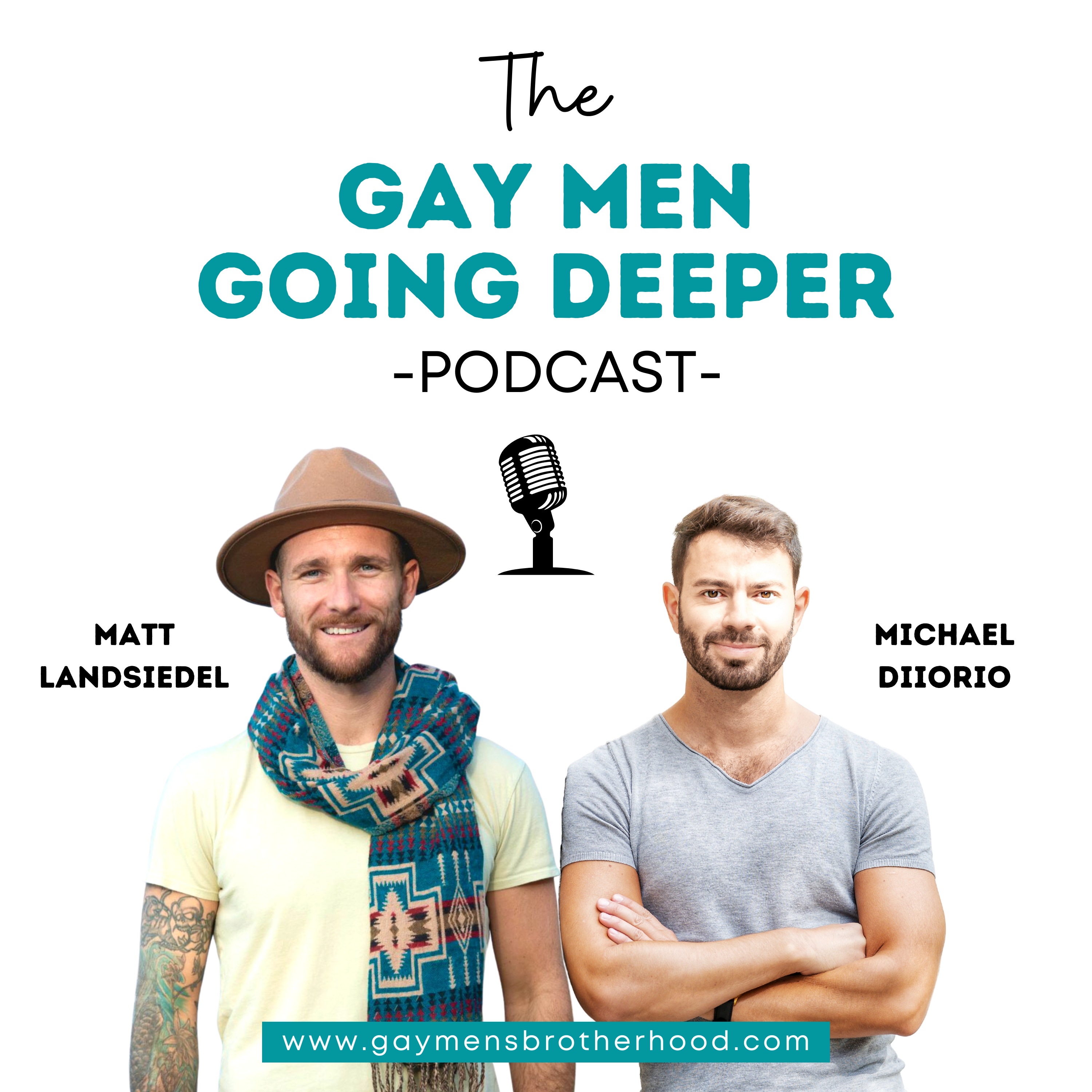
[00:00:05] Speaker B: Going Deeper, a podcast by the Gay Men's Brotherhood that showcases raw and real conversations about personal development, mental health and sexuality from an unapologetically gay perspective. I'm your host, Matt Lansadel, and joining me today are Michael Diorio and Renal Johnston. Today we are talking about the daddy issue, and it's not what you think it is, although it could lean into that conversation. But. And we're going to have maybe two streams of. Of this conversation. But the questions that we're going to be unpacking today are, how did your dad react to you coming out? How do you feel expressing your gayness around your dad? And does being gay impact how you experience intimacy with your dad? All right, so this, this episode was inspired from the episode we did last week. We were talking about our relationship with straight men, how straight men are attracted to us, how we're attracted to straight men. And it made me think, I'm like, for the most part, we all have straight fathers, right? So what is that, what is that like for us to have a relationship with a straight man that is our father? So we're going to be unpacking that today.
If you are new here, please subscribe to the channel on YouTube. If you're listening on your favorite podcast platform, please subscribe and leave us a review which helps us get into the ears of the people who need us. And this podcast and YouTube channel are listener and viewer supported. So if you wish to make a donation to the community, you can using the link in the show notes. And there's also the thanks button on YouTube and your. Your love is appreciated. We also have early access option on Apple if you want to get early access to our episodes. We are doing bi weekly episodes now, so we're going to start storing more episodes in the early access if you wish. It also helps support us in the community. So we do thank you in advance for that. All right, so most of us, like, like I said earlier, grew up with straight fathers. And these fathers may have consciously or. Or subcon felt disappointment or disapproval or even shamed us for being gay or for being feminine when we were young boys. So this episode is basically to explore that, what that was like.
Some of it was maybe overt. We felt it, they were doing it deliberately. And then some of it might have been covert, like subliminal messaging around, like don't do that or kind of odd looks at us when we were maybe acting too feminine, things like that. Right. And because of this, we might have a strained relationship with our fathers. So I Wanted to bring this conversation to the forefron. So that's one stream of it. And then it's kind of ironic that this conversation does lend itself into this whole concept of daddy and, you know, young guys being attracted to daddies and calling each other daddy when you're having sex and these sorts of things. It is kind of an interesting. There's a bit of crossover in that. I do believe that, you know, if we do experience rejection from our fathers from a young age, there is a part in us, what probably more of a subconscious part that is yearning for love and acceptance and approval from an older male figure. So that's. This is why I think there is a high prevalence of intergenerational relationships in the gay community. We seek older men. We want their, their experience, their approval, their love, these sorts of things. There's absolutely nothing wrong with this at all. And, and I'm not pathologizing it at all. I'm just stating that there's a, a reason behind why that happens. And I think that is one of the reasons. So we can talk about that today as a sub, as an adjunct conversation. But I wanted to really talk about like, the tenderness around our relationships with our fathers and if there is, what that was like for you. Ye.
How did your dad react to you coming out? This is the question I want to start with with you guys. And why don't we start with Reno today?
[00:03:35] Speaker C: I was probably around 19 years old, and by the time I had the conversation with him, he was actually one of the, the last people I had the conversation with.
And it's because I was the most fearful in that, in that scenario, which is interesting. Had at that point told friends, talked to my mom and told her and my siblings as well. And he was next down the line. And I think I rang him like, you know, shortly after. And it was a, it was kind of a nerve wracking conversation. But I was pleasantly surprised because I essentially just told him like, hey, dad, I'm like, I'm. I'm gay. And he was like, I love you, like, no matter what, you're my son. And you know, he's like. I don't think his exact words were like, duh. But that, that energy was there, obviously. It was like, yeah, like I kind of figured, you know, I wasn't exactly. What is it covert about it? I guess someone once said to me recently, like, they said, you're not. You may be more obvious than you think, like just in general.
So, yeah, I was relieved to, to, to learn that, like he accepted me as I was because.
And we'll get into this a bit more later, but we had a track record for conflict and personality clashes, and so I. I didn't see that coming. I didn't see that coming.
[00:05:20] Speaker B: How old were you?
[00:05:20] Speaker C: I was 19 years old, I think, when I. Yeah, when I came out. And to be honest, this.
So I'll probably get into this a little bit more later, but I got caught.
Me and a friend were interacting physically when I was younger, and he caught us. We were like, outside.
We thought we were well hidden. Apparently not. And he.
He was quite angry. It was this sort of. I can say it with a smile and a giggle now, but, I mean, at the time, it was really embarrassing, you know, because here I am sort of being yelled at and. And sent home, you know, and then later I could hear him and my mom going back and forth, like, she's defending me, of course, and he's so unimpressed.
Yeah. So it was. It was interesting. We've come a long way though, that man. And I definitely.
[00:06:21] Speaker B: Do you remember how you felt in
[00:06:22] Speaker C: that moment or when I came out,
[00:06:24] Speaker B: when you were coming out to him?
[00:06:25] Speaker C: Yeah, I. I felt relieved. It's weird to say that I did. I didn't feel so surprised. Like, there is a part of me that I think knew he would accept me. But it's strange, right, because even with my mom, like, it's like, duh, of course she's gonna love me. And of course she knew. And of course everybody knew. But I think there's still that part of you that's like, but what if they don't? You know, like, but what if they don't? What then?
And I think what really helped for me was that I had, you know, by that time, I had told my best friend at the time, and I knew she was in my corner, and so it was like she was my ride or die. And if I had her, it didn't matter if I had nobody else, you know, I was like, we're good. It's just her and I against the world anyway, so I'm. I'm good if. If I get rejected by everyone. That's cool. Like, we're out here having fun anyways.
[00:07:26] Speaker B: Yeah, I'm glad you had that experience because it's so nice to have one person. Like, just. All you need is one person, really, to be resilient and have. Being a protective factor. One person that you can be yourself with. And they'll. They'll, you know, that they'll be there for you.
[00:07:40] Speaker C: And she was quite, quite the one person.
We had fun. That's somebody you want in your corner when you. When you come out.
[00:07:48] Speaker B: Thanks, Reno. What about you, Michael? How did your dad react to you coming out?
[00:07:52] Speaker A: Yeah, well, context is I first came out at 19 to, as I've mentioned before, my best friend at the time, ex girlfriend from high school, came out to her at 19, and I went on a coming out spree between the age of 19 and 20. Just one right after the other. Just kind of felt like a house of dominoes. Except for my dad. He was the one and only holdout. And you know, my siblings and even my. My stepmom, his wife had said, do you know, do you want me to tell your dad? And I was like, no, no, I. I want to. I want. I should. I felt like I should be the one to tell him. But I didn't. Despite my best efforts, I'm okay, this is the time. This is the time. I'm going to do it this time. And it never, it just. It was stuck here in my throat. It just couldn't. It couldn't come out for years. For about three years, I'm going to say. So, yeah. It wasn't until I was. I was 22 or 23 maybe that I finally came out to him.
And he handled it very well. Very, very well. And I was actually quite surprised. Similar to what Reno had said, it was. It was a fear. The reason I. He was the last was it was just of a fear of his reaction. I didn't know. I didn't know. I really didn't. But when he was. We were talking about it, he's like, okay, well, does your mother know? I was like, yeah. Does your sister know? Like, yeah. Does Felina know? His wife, my stepmom. I'm like, yeah. And then that look of pure, like, that's when the disappointment kicked in. Not that I was gay. He didn't care about that. He was disappointed that he was the last to know. And it was realizing that I had kept a secret from him, that I had kept a secret from him and that the rest of the family, I think, had kept a secret from him was. I could see it in his eyes. It was devastating. And I think what happened for him is it really revealed the extent of our emotional closeness or lack thereof, that I was comfortable and safe to tell everyone else. And it kind of showed him, I think, where I stood with him or where he stood with me in, like, this hierarchy of, I guess, family dynamics. And that for him Was very disappointing. He read it as. I didn't feel like he was safe enough to tell this to, but everyone else apparently was. And, and, and when I didn't feel safe to tell him the truth, that was what hurt him. His response effectively was to me, well, what did I ever do to make you feel like you couldn't tell me? Like, what, where. Where did I go wrong? Was I a bad father? All these things. And it really called into question his. Our bond in his eyes. Right. And I think that's what really disappointed him. It wasn't anger, it wasn't disappointment about being gay. He really could care less. He just felt that we were closer and that maybe he deserved more in terms of when. When he found out. Yeah.
[00:10:19] Speaker B: That's such an interesting. Like, what was it about you that felt like you. That you had to hold off on telling him you didn't feel safe?
[00:10:25] Speaker A: I didn't know his reaction. I really didn't. I didn't know. I mean, I'm. I'm his only son. It's an Italian family that means something in our culture. And I just didn't know. Like, I didn't have any reference points. He doesn't have any gay friends. He didn't. He never talked about it. It was just never something. He didn't have one. An opinion really, about gay. This pro or con. Whereas I knew my stepmom was, you know, an ally. She, she. She just. I just knew, like, she had talked about it. She was great about it, and she knew that I was gay from when I was like 5 years old. So we kind of. We had a. Knowing she was very safe, but with him, I just didn't know. And I thought that this is going to really disappoint him and he's going to be. My fear was he would be disappointed in me and I didn't want to face that. So similar to what Reno said, I just, I just assumed the worst. And, you know, it luckily wasn't the worst, but that's why it took me so long.
[00:11:11] Speaker C: Were there, were there like moments throughout your relationship with him and your time together that I guess would have you think or feel that that would have been his reaction or his response?
[00:11:25] Speaker A: The, the fear? Yeah, yeah, yeah, yeah. I've. I've told you guys before. A very random memory. When I was 10 years old and we were on vacation together in Provincetown. We weren't. We weren't actually in Provincetown. Little did he know that was a big gay hotspot. We were driving through Provincetown and there was all these gays. Of course, this was maybe, oh, 1993. And I remember, you know, him looking out the window and saying like, looking at all these claiming homosexual guys having the time of their lives in P town. And he had made a comment like, never be like that. And that was it. Now I was 10. I don't, I didn't know I was like that. I didn't know these were just random people on the street. But for whatever reason, that is a core memory that stuck. Maybe I did know that I was gonna be like that. I have no idea. But I can tell you for sure at 10 years old, that did not know I was gay. I didn't know what gay was, but that always stuck with me. And he probably has no idea that he even said that. It probably left his memory 10 seconds after he said it.
[00:12:16] Speaker C: Interesting, because I'm so the reason you
[00:12:19] Speaker A: with at 22, in that moment, I did not have the. I couldn't have had that conversation. I knew that at the time, but I didn't want to bring that up. And I think you're right. In retrospect, I think that would have helped him understand. Oh, okay. He probably was like, I don't remember saying that. But yeah, that is, that is my reason. But even then that was a one off thing in, in, you know, 1993 and so many years had gone by and there was no other recurring instances of like homophobia or anything like that any which way. Not even just anything. Like I remember there being like some pride thing happening on the tv and he was just watching it, didn't say anything. I was like waiting, like, does he approve of this? Does he not approve of this? Kind of looking in his eyes for like something, nothing. And so it was only that one moment.
[00:13:03] Speaker B: Interesting.
[00:13:04] Speaker C: It, it makes me so curious, like, like I sometimes wonder if our fathers remember those moments and if we asked them about them and they went back and reflected on what was occurring for them in those moments, like what they would say and, and how that differs from what they would say now or how they feel now. Like, was that just a flippant moment? Were you like in a mood that day? Did you really mean what you said at the time? Where was that coming from?
Would you say that now? If not, why? What's different? Is it because I came out or is it because you learned some things through the years that changed your perception? Like, I'm just so curious about the psyche and the psychology, you know, behind how our fathers or other, like straight men or straight Friends, et cetera, behave and express and view the world, you know?
[00:13:59] Speaker B: Yeah. I hear from a lot of guys that I work with in my private work that it's almost like it's a blow to. To their. To them. To their ego. Oh, I have this gay son. I created this because a lot of heterosexual men see it as less than. Right. It's like, I created this, and. And then what ends up happening is they're processing this blow, and they're not there to support us in the moment of, like, complete and total vulnerability. Right. So it becomes about them. Right. And they don't know how to emotionally support us as we're coming out. And I. I see this even with mothers, like, oh, my God, my son's gay. And they're. They're taking all this information in, and it's like, no, wait a minute. Like, we're the one been carrying this secret for so long. We're the ones that are holding this heavy burden. Why is it now being about you?
[00:14:43] Speaker A: Right.
[00:14:43] Speaker B: And I think that's where, like, I'll ask each of you, did you feel supported by your fathers when you came out? Like, did they, like, take an interest and be like, you know, how has that been for you? What has it been like to be carrying this? Or was it just kind of like, whoa, like. And then it just got swept under the rug after?
[00:14:59] Speaker A: For me, it was more of.
Like I said, it was more of a determining of, like, what. What happened with us. Like, it was, I guess, about him. No, he did not ask me, what was this like for you as a kid? Not. Not like that.
[00:15:10] Speaker B: Yeah.
[00:15:10] Speaker A: Not that it got swept under the. Under the rug either, but we kind of went back to day. To day, and then it was up to me to start bringing in my gay life more and more. And I was never invited to. I just did.
[00:15:22] Speaker C: Yeah.
[00:15:22] Speaker B: I was gonna ask him how had. How his relationship changed from that moment. You told them, like, did it feel like there was this unspoken tension or was it kind of.
[00:15:32] Speaker A: No.
[00:15:33] Speaker B: Back to normal?
[00:15:33] Speaker C: Yeah, it was kind of back to,
[00:15:35] Speaker A: like, let's just go back to living our, like, lives and talking about the things that are safe to talk about.
[00:15:39] Speaker B: Yeah.
[00:15:39] Speaker A: But then I was able to start bringing my. My boyfriend around and say, this is my boyfriend, not this is my special friend, or whatever the hell I called him before that. Yeah.
[00:15:48] Speaker B: Yeah. What about you, Reno?
[00:15:49] Speaker C: Yeah. What I remember was I felt supported, but I don't know. I think even for both of my parents, I'm not certain, but I think for both of My parents there wasn't like, I don't remember. Maybe I'm just forgetting, but I don't remember, like, a lot of inquiry. What I remember was me feeling more comfortable to be like, okay, well, now that you know this, you know, like, I can spill the tea on all of this other stuff, you know. And so I had the most fun with my mom in that regard because I was like, oh, guess what? Like, I was living a double life by the time I was, like, 13, you know, and. And then I could just, like, tell her everything.
My dad, I didn't tell him everything initially, but I did. And I'll get into this when we get into our next question, because I did open a can of worms, and it was quite a can of worms.
[00:16:42] Speaker A: That's what you do. Reno.
[00:16:43] Speaker C: I know, Yeah, I was going to
[00:16:45] Speaker B: say, reno, opening a can of worms.
Yeah, yeah. How did my dad react to coming out? Like, same. Same as Michael. I'll set the context. At that time, I was 18, and I was in active addiction basically at that time. And I was living with my dad, and he was. He was basically observing my decline.
[00:17:08] Speaker A: Right.
[00:17:08] Speaker B: Like, I was addicted to crack at that time. So my. I was losing a lot of weight and I was like, up all night and these sorts of things. So he was seeing this. And then it got. He ended up. I went to rehab, and then he was part of the family program, so he went to rehab as well. And I think that we started to kind of open this dialogue just around, like, all the stuff that we had experienced, because the thing in my family was we never talked about stuff like the traumas, the incidents, all the things that happened. We never talked about it. It was just like, move on to the next day. And then so we started to actually open up dialogue around. Around things. And then I remember the exact moment we were pulling out of the driveway and his Forerunner and. And I said to him, like, I can't remember exactly what I said. Actually, I think I said, yeah, I just wanted to tell you something because I had told my mom the weekend before. It was. I told her on Mother's Day. And I said, yeah, I'm gay.
And he, like, just kind of stopped before he, like, put it into drive to keep driving. And his exact words, well, were, well, I guess I'm never going to be able to be a grandfather.
And because my sister didn't want kids at the time, and lo and behold, she's now has two kids. But so it was like, you know, he made it about him, right? And Then never asked me, like, what has it been like, you know, why have you not shared this, like, any of these sort of things? It was kind of just like. Right. So. Yeah, it was. I remember the feeling that I had with both my mom and my dad and just everybody that I was coming out to. I didn't want them to change how they saw me. It wasn't like. I guess it was shame. Like, I didn't want them to see me as less than. I didn't want them to see me as disgusting, to be completely honest, I wasn't so concerned about them being, like, just abandoning me and like. Or rejecting me. It wasn't really about that. It was. I didn't want them to change how they saw me as, like. As I saw what being gay meant. Right. That I'm now some sort of deviant or. Right. All the messaging that we get from the media. So I think that was my greatest fear. I was afraid of my perception changing. So. Yeah. Yeah. It's interesting.
[00:18:58] Speaker C: Yeah.
[00:18:58] Speaker B: The feelings around all this, and there was just a lot of fear. I remember. Yeah. I was quite disconnected from myself at that time, though, like, emotionally, just because of using a lot of drugs and things like that. I wasn't really. I was quite dissociated, I think.
[00:19:10] Speaker C: Have you gone back and revisited that moment with your dad at all or that. No, no.
[00:19:16] Speaker B: In therapy? I have, but not.
[00:19:18] Speaker C: Right. Yeah. It's also interesting, like, you know, whenever you share, there are so many parallels.
Like, you mentioned family group. You know, I'm familiar with family group because addiction runs in my family as well, so I was like, interesting. I had a flashback there.
It's just whenever you share certain things, I'm like, oh, there's so many. So many parallels in, like, our. Like our. Our childhood, our conditioning or upbringing, that sort of thing. Yeah.
[00:19:43] Speaker B: I feel that when you share, too. Okay. Yeah, this. This is a. Yeah, it's a tender. I feel tenderness in this area. So I want the audience. Listener, viewer. Just. Yeah. Take a moment and just pause and reflect on this question. How did your dad react to you coming out? How did you feel coming out to your dad? Right. What was that like? Kind of take a snapshot of where you were at emotionally in that time in your life. And after you've taken some time to process, we'd love to hear from you on YouTube. Write a comment, let us know how your dad reacted to coming out. I've heard hundreds, if not probably thousands of stories in my career and working with gay men, so I'd love To hear your story in the comments and if you want to come and share your story with us. Michael and I host our connection circles every month, so come and join us over there. They're just basically what exactly what we do here. So you'll be put into pods of three or four. You'll be able, you'll have questions, unpack them and it's just a great way to meet new people. If you are interested in that, you can go to gaimansbrotherhood.com and go to our event section on our website. And otherwise you can go onto our email list and we will email you all the information.
So that's
[email protected] all right, so next question. How do you feel expressing your gayness around your dad? Your gay anus, your.
[00:20:57] Speaker C: Your gayness? Okay, so I just realized I left something super important out as well. I have two dads and not because they're like in a relationship or something, but when I was in my 30s, I moved to the west coast and I met my biological father for the first time. And funny enough, I was actually with Matt the day I went and put the paternity test in the mailbox. I came to your place after to have dinner, which is so wild. And so I found out that he was my biological father some weeks later. So as we're meeting, I'm like, oh my gosh, I have to come out again. Like, this is so weird, right? Anyway, I, I just shared with him, I was like, by the way, like, I'm gay. And he was like, oh, cool, okay. Like, and that was it. You know, we talked a little bit. He was like, is there like why, you know, he, like, I think he, he just wanted to check in with me, see, like what, you know, how does that, how was that for you? I guess how did that feel for you? Which is actually interesting to say. Like he did kind of check in, you know, which is cool. So when it comes to my. And this is actually a perfect tee up for this, this question because when it comes to my dad, who is my non biological father, this is a whole other conversation.
When I was younger and I don't know where this comes from, but I was aware of attraction and like sexually aware at an early age. Some people say that comes from like, I don't know, some sort of trauma or having had some experience.
I don't know that that's what happened. I'm not really sure that it's possible that something happened. I don't know. But anyway, was you know, this very, like, effeminate, playful, curious. Even, like, in some ways mischievous. Like, I liked to ask the interesting questions. I like to converse with adults. I like to know what adults were up to and what they were talking about. I like to go places you weren't supposed to go and do things you weren't supposed to do. Right. I'm a Scorpio. So, like, Taboo is my playground in a lot of ways. Right. And so, you know, I'm playing with dolls and I'm, you know, and I'm. I'm playing dress up and I'm performing Spice Girls and watching, you know, the First Wives Club and death becomes her and, like, all that stuff, right? And so is, again, it was, like, so obvious, I think, that I was different. I was unique in so many ways. And my dad really kind of had trouble with that. And it was. It was pretty obvious that, like, we. So there are a couple things here. One is, I think despite my femininity, I also felt like I was the man of the house. And so, you know, I knew he came in when I was about 3, but I still knew, like, this is not my dad. You know, this is a guy, and I'm sort of the man in the house. So we would butt heads in that regard, especially because my mom had sort of made me her, like, emotional partner, I think, whether consciously or unconsciously.
And so we would butt heads around that. We would butt heads around my, you know, my personality and my ways of expressing. Because my dad at the time was sort of this, like, if you can imagine, this really tall, masculine dude, you know, like, hairy chest, deep voice for basketball player, you know, a voice and an energy that like, shit shakes and affects the house. Just his presence alone was like big, little me, like, you know, standing 10 toes down and telling him what's up, you know. So we got into it and the other piece, and this. This was something I wasn't sure if I was going to share on here. Not because I have any shame around it, but more so because, you know, I wasn't sure, like, how he would feel about it. But I'm going to speak to my experience specifically, and that's that because he wasn't my biological father, because I'm human, I was attracted to this man. And I don't think that was a secret either. And so it created a very interesting dynamic as well, because as after I came out and then I met my biological father, I actually had a conversation with him about this. And I said, listen, there's some things we need to talk about one is that I'm feeling kind of this guilt and shame around, like, meeting this man who is my biological father. And I just want you to know, like, you're my dad. Like, that's it, period. That doesn't change. And also, now that we're talking about all the things, let's go back in time. And I basically said, like, I'm sure you remember me being attracted to you in some capacity. And that must have been really, like, strange for you, you know, that must have been really unusual for you. Like, what. What.
What was that like? You know? And so we got into a conversation about it, and honestly, it was really healing to have that conversation, you know? So, yeah, that. That's. That's kind of. That's kind of that there. I mean, there were. There were definitely moments where I felt shame for, I don't know, playing with dolls or, like. Like, I had shared previously, my dad had caught me and one of my friends. Like, you know, I think the terminology we use for it was, like, experimenting or something like that, but it happens. You're, like, looking at parts and comparing parts and touching and then feeling things and having experiences, and you don't really know exactly what you're doing. You just know it's, like, curious and fun and interesting and edgy. Right. And so my dad caught us and sort of sent me home, and he was not too happy about it. And I think that as well, really kind of set the tone for, like, oh, okay, this is something I need to be cautious around, and this is something that, like, I need to be secretive about, you know, and the fact that, you know, it is a man, my father, who's sort of setting the tone also kind of sets the tone beyond that for, like, other men, too, I think, in a way.
[00:27:08] Speaker B: Yeah. It's really interesting because I think it's, like, psychologically, I think we do form our attraction template based off of our fathers.
[00:27:15] Speaker A: Yeah.
[00:27:16] Speaker B: Descent of Our Fathers ceremonially. Like, there's, like, actually.
Yeah. A lot of data.
[00:27:23] Speaker C: I mean, Freud would have a field day, you know, for sure. And. And, like, it's funny because you'll even hear women say this, like, you know, like, daughters date their fathers in a way. Right. Like, not actually their fathers, but usually that's. Yeah. That's the framework. Right. They're like, oh, I want someone like my dad. Right. It's like, that's. It's really interesting. That's a whole other conversation. Yeah.
[00:27:46] Speaker B: Yeah. I applaud you for having that conversation with him, because that's not an easy conversation to have, but I can. I'm glad. That was very healing for you.
[00:27:53] Speaker C: It was edgy. It was very, very edgy. And I knew it would be, but I was like, we're here and we're, you know, I just braced him, too. I said, hey, so are you cool if we get into it? Like. Like, you know, can. Can you handle the conversation we're about to have? And he was like, let's go. And I was like, like, okay, cool. Because, like, we're really opening a can here. You know, there's gonna be some things. And there are things you don't normally talk about with your dad or your parents. You know, like, I don't. I don't think most people are having these kind of conversations. These kinds of conversations, you know.
[00:28:29] Speaker B: Yeah. An intimate one for sure, but necessary, it sounds like. What about you, Michael? How do you feel expressing your gayness around your dad?
[00:28:36] Speaker A: I did not know how to answer this question, so I'm happy Reno went for first. Going back to what I had just said about, you know, my dad being okay with it and everything, it dawned on me why. I think in his psychology, in his mind, being effeminate. Effeminate is the problem. In his eyes, loving another man is not. And I think in his world, how that's why it was okay. Because I distinctly remember as well that Provincetown thing were like, flamboyant gays prancing around. It might have been pride. I have no idea. And then the other instance I have. The other memory I have is when I was wearing that towel up to like. Like women wear, like, up here. And I told you this before, dancing to Madonna after coming out of the shower. And he shot me a look. Don't do that. In both of those instances. That's the common factor. The. The. The being effeminate. Fast forward to when I came out to him and going into the question, expressing my gayness, as we've talked about a fairly masculine presenting. So I think that as long as. As long as that's okay, then he's fine. He's like, love whoever you want. Just, you know, be a man, act like a man. And I think he's never said those words to me, but I think that's the. That's how he sees it. So that just. Thank you, Reno, for saying that, because it kind of. That. That's how I. I reflected on it.
[00:29:49] Speaker B: Now.
[00:29:49] Speaker A: Now, to answer the question. How do I. How do I feel expressing my gayness around my dad? I mean, I don't even know what that means. But he, like, I looked at this from a level of access. Like, how much access to my gay life does he have? Is kind of how I looked at it. And he has, in short, all the access that I want him to have.
I date men. He knows that I have sex with men. We don't talk about the inner workings of that. And I wouldn't talk about any of my sex life with any of my family even if I was straight. That's just not what we do, and that's not what I want. Now, I am trying to find instances where I, like, fight back some of my gayness, but they're all ways in which I wouldn't want anyone or not anyone in my family to know about that. So, you know, when I go visit him in the summertime, I don't stop myself from wearing whatever I want to wear. And, you know, while the rest of my family has shorts down to, like, their knees and beyond, my shorts are, like, right up to my crack. And that's just how I am. I wear my little poom poom shorts and I prance around and I love it. I just. I think it's great. So I don't stop myself from. From my gayness in that way, because that's just who I am and I wear what I wear. Does he have feelings about it? I have no idea, but I don't really care at this point. So, yeah, that. I guess I feel comfortable enough expressing my gayness, but no. Does he need to know, like, the shit I do? Does he need to just need to go through my grinder? Does he need to, like, you know, talk to me about what goes on in the gay bars and, like, no, he doesn't need to know that. And that's fine. I'm okay with that. I will say that I look at this from a cultural perspective, and some may disagree that you have to look at it from. From the lens of the culture. My background is Italian, very traditional Italian values. On top of that, my parents are from a different era. Okay. I can understand their level of acceptance may be limited based on what they're from, where they're from. Some might say that that's on them. They gotta change that. They gotta. They gotta modernize. I personally don't hold my parents to that expectation. I know that they will express their love, acceptance, approval in their way. This has been my journey with my family. For them, that is the way they know how. Through family gatherings, through traditions at the dinner table. The biggest thing for Me that still makes me feel very loved is when I brought my first boyfriend around for Christmas and Thanksgiving, and everyone in my family was so warm and inviting and inclusive to him. And then we broke up, and then years later, another boyfriend, and then another boyfriend. And every single man that I bring into this family, they have welcomed with open arms no matter what. And that to me, is enough. I get. I get Michael plus one and wedding invitations. I get Michael, bring whoever boyfriend is to Thanksgiving, to Christmas. And that's the expression of the gayness. Like, include my partner. Like, let us love each other and, like, touch each other and, you know, in an appropriate family way. In the context of family, that's all I want from my family. They don't need to know. They don't need to approve of what I do in the city on a Saturday night. I don't. They don't. I don't. I don't care. But I do really want them to. I do want to express my gayness in that traditional sense, because I am traditional in that way. And I want my man to be part of my family. That's really important to me. So when they can do that, that's the level of intimacy that I want. That's the level of intimacy that matters to me. I don't need them to see my. Forgive the phrase whole gayness. I don't really need them to do that. And, you know, when I talk to guys, especially, I'm getting in trouble for this, especially maybe younger folks, they tend to confuse intimacy with transparency. And I. I completely disagree. Like, just because you call it intimacy does not mean that they need to know everything. Like, you can have intimacy and not full transparency of your whole life. And I think that's a good thing, personally, especially when it comes to family dynamics, because love isn't always said. I will. I don't know if my dad or anyone has ever said, I'm really proud of you for being gay. But I don't. Frankly, I don't need them to because I know they love me and they show it in their way.
[00:33:33] Speaker B: Yeah, yeah, yeah. Well said. Yeah, thanks for diving into that. I'm. I am curious about if you. Do you hold back femininity at all, like, when you're around your dad?
[00:33:43] Speaker A: No, I don't think I do. Like, what I just. Maybe I did earlier. It's really hard to say. I'm like, I'm 42. Like, I don't know. I've been up to him for like 20 years now. Maybe in the early days. I Might have, but now I don't even notice it because when we're. We play board games, we play cards as a family all the time. And when I'm sassy and I'm drinking, I'll say, I'll. I'll get. You know, I'll say the. The gay phrases. I call people girl all the time just because it naturally comes out to me. And, like, I'll call my dad girl. Girl, what the fuck? Like, you know. And, you know, no one really cares anymore. So I guess I don't hold back those things. I don't know. It's hard to say because it's so natural for me. So I'm gonna say the answer is no, because I don't even notice if I do. So I'm gonna say no. But I probably did in the past. I, like, early. Early days before I was out to him. I for sure kept a lid on it. Yeah. Because I was in the closet with him, so I didn't want him to know.
[00:34:33] Speaker B: Yeah. Have we done an episode on, like, embracing femininity? Like, yeah, yeah. And what that even means. Like, what does it mean to be feminine? I think we've done a lot of work on masculinity, but. Okay. How do I feel expressing my gayness to my dad?
I don't know. It's. It's kind of interesting. Like, I sometimes will have this, like, feeling when I'm around my dad of like. Like, it's not like. Not like a sexual tension, but it's kind of like a weird. Like, it's hard. I don't know how to even describe it. I'm trying the whole time. Even yesterday I was trying to think, like, how can I describe this?
But it's important to share because it's like this, like, weird, unspoken. I'm not sure if it's coming from him or coming from me, but there's this little bit of tension around, like, it's maybe intimacy. It has nothing to do with sex. It's like intimacy sharing intimacy with another man. Not sure if this is because of the gay piece or if this is just. Just two men having intimacy. Right. Like you have intimacy with your father. And I think we'll talk about this in the next question. But I remember when I was younger, like, probably, geez, I used to kiss my dad on the lips until I was probably like 10, 11, 12 years old. And then we got to this weird fork in the road where it was like, like, okay, this is weird. And we weren't sure what to do.
[00:35:40] Speaker A: Right.
[00:35:40] Speaker B: And it's that feeling that comes up for me. It's like I want intimacy with them and he's like, like he's my father, but yet when I have intimacy with him, it feels like it, it's almost like it feels too intense or something. I don't know. I wonder if straight guys have this feeling when they have intimacy with their mothers, do you know what I mean? Like, if that comes up for them. Like. And I think it is important to have intimacy with our parents and, and to be able to have that. So I do think maybe there's some injury around growing up gay and having shame around that. So then it, it, that kind of seeps in a little bit when I have intimacy with my father.
It's like.
So yeah, this is a really important topic. I'm actually just realizing how important this is because I think that relationship, our relationship with our fathers really lays the template for how we share intimacy with other men. And I, I do, and I say this every time almost on every episode, we struggle as gay men to have intimacy with other men. And maybe this is another reason why this, you know, because we have. And well, men, men just have trouble having intimacy with other men in our culture. So it brings up like little mini shame responses when we do. So anyway, that's what's, that's what's coming up for me or when it comes to sharing myself, like, I've done so much work on myself that I don't really, I'm, I'm pretty comfortable in, in the facets of myself. But one area that I would say that maybe I would hold back a little bit, it is the femininity area. Like I'm not going to be like prancing around and like all this stuff with my dad, like, and I don't really do that anyway. But I think I would probably be a little bit more stoic, I guess, or like those sorts of qualities, maybe less, less playful, which I don't want to be, that I want to be playful, you know what I mean? So I think that's actually what I'm reconciling in my life right now is how to bring these parts of myself forward shame free and just be authentic. Be silly, be goofy, be feminine, be masculine, be all the expressions and, and not have to judge myself or fear that I'm being judged by others for it.
[00:37:31] Speaker A: So I thought of an example.
[00:37:34] Speaker B: Sure.
[00:37:35] Speaker A: If I may share, because it just dawned on me recently, two things. One, I went on a family vacation and we were in Punta Cana Obviously, we're at the pool or at the beach. And do I not come out in, like, my Speedo as I would any other. Any other beach? My cute little skimpy Speedo. And the faces of my family were just like, oh, my God. What. What is this? I'm like, oh, right, you guys live in a completely different world. And that. I had, like, a moment of discomfort, like, when I first got to the pools. Like, oh, I forgot. But I didn't. Did I go back to change?
[00:38:05] Speaker C: No.
[00:38:06] Speaker A: I was like, okay, well, this is. This is just. They're gonna have to. My thought was they're gonna have to just deal with it because this is what I'm wearing. So that was one that was recent. And then another time, we were talking with a bunch of people, and it was. It was a friend, like, a family friend who was talking with me about, like, men and dating and, like, oh, you must get all the men, all these things. And my dad was right there, and he. Like, we started going into it and, like, okay, like, it was a little bit awkward for me. Like, my dad is there and he's knowing that I have this sexually explicit kind of life, which we've never talked about. And he didn't leave. He didn't. He just kind of laughed and. Ha, ha, sipped his drink and just put on. Put on the show. But, like, it didn't. It made me feel uncomfortable that he was getting access to this. But I didn't. I didn't stop it either. My heart was racing a little bit more like, oh, my God. Oh, my God. But, yeah, I mean, but this is only recent. These are. These are examples in the last couple years.
[00:38:50] Speaker B: Yeah, I probably wouldn't.
I was going to say I probably wouldn't share stories of bottoming with my father.
[00:38:55] Speaker A: Right.
[00:38:56] Speaker B: Like, there's. Or sex at all. Like, I don't know. I just wouldn't want to talk to him about that.
[00:39:00] Speaker C: What if they let me? Like, if my dad let me, like, if they were like, you know, whatever. It's so funny, too, because I feel like I don't. I don't know. I don't know if, like, straight sons and, like, straight fathers, like, hetero sons and hetero fathers, like, if they. If they have those conversations or not. My sense is that maybe they're probably a little more inclined to go there than gay sons and straight fathers, you know, But.
[00:39:28] Speaker A: Yeah.
[00:39:29] Speaker C: And then the other thing I wanted to mention, too, Matt, I'm. I'm almost certain that everyone or the majority of people sort of navigate that, like what you were describing, that weird kind of tension, I don't think it's unusual, actually. I think it's common regardless of your sexual orientation. And I know because I've experienced it in my own way. Like, especially when we go through that transition where like, you know, kids will go through puberty and then like it gets a little weird because it's like, you know, the daughter like starts becoming a woman and the son starts becoming a man. And so suddenly there's this weird kind of tension. You know, it's like where there used to be certain ways of engaging affectionately, suddenly there aren't anymore. Right. Because it's like, it's too confronting, like, whoa, this is a woman now and I'm a man. Or this is a man now and I'm a man. Or you know.
[00:40:21] Speaker B: Yeah, yeah, it's interesting. And where is that line? Because I see that a lot and I've seen social media posts around when the dad is like really snuggled up to like the 13 year old girl and everyone's like on social media, like, oh, that's disgusting, blah, blah, blah, and I'm like, what's wrong with that? Like he's like literally embracing his daughter. Right. But at what point does it become that where people are like, ew, you're gross for showing physical affection to your child. I just think like the minds of people is so like warped.
[00:40:49] Speaker C: This is a whole other conversation.
[00:40:51] Speaker B: Yeah, I think it's healthy to have physical affection with your, with your family members. And obviously it's not sexual at all. Right.
[00:40:58] Speaker C: It's like it becomes, I think the, the problem. And I, I don't want to get too into it because I know this isn't like necessarily what we're discussing here, but I think the issue starts to come in when there aren't conversations about it, when it's taboo, when it stays in the shadows, you know, And I think that's where a lot of, again, whole other conversation, this sort of shame, pre behavior, all the stuff, the, like the stuff that kind of creeps into all of this, it comes in because we're not having conversations like this. You know, we have conversations like this and suddenly it's like, okay, you know, we're normalizing certain things that are normal, you know, and the things that are unhealthy are healed because we're having these conversations.
[00:41:43] Speaker B: Yeah, yeah, yeah, good point. I'd be curious to hear if you're a listener reviewer and you have, if you're a gay man with a gay father, like, let Us know in the comments, like what that's like because that would be a very interesting dynamic. It, I think it would change things significantly. So I'd be curious to know what that's like. But for everyone else, I'd love to still hear from you. How do you feel expressing your gayness to your dad? What is this? What is bringing up for you? Take a moment, pause, reflect and share with us our coaching collection. So we have significantly reduced the prices of our coaching collection, our courses, everything like that, like by 50% or more for most of them. We're pretty excited to be offering this, almost like a spring summer offering for you guys. So if you've wanted to take our coast, our court courses or our coaching collection, this is the time, right? And in there building better relationships. That course is loaded with tips and how to navigate some of this stuff. So yeah, if you're interested in that, go to gay men going deeper.com for more information. Okay. Does being gay impact how you experience intimacy with your dad? Reno.
[00:42:44] Speaker C: If anything, we're more intimate now than we were before it came out, which is super cool. I gotta give my dad this. I really do. Like both my dads, actually, they, they were, they were champs about it. Like they really were. And the conversations that followed and the things that ensued, like, yeah, sometimes my dad will be like, I want to hear all that, you know, but like, for the most part he's really open. I remember having two of my gay friends come over and like, you know, we stayed with my dad in Toronto and he was so, you know, he was just so cool about it and got a kick out of us, right. And there are things I share with him. There's a closeness we have now. There are things we talk about that like, we just, we just didn't before, places we go now that we couldn't before. Questions I've asked him that we, you know, like, yeah, we're, we're close now in a way we couldn't be before. And what I feel shifted was, you know, I started to respect him as a man and as a person in a way that I didn't before and vice versa, you know, and I felt that and I, and I really feel like I came into my own as well. There were some moments where I established, I want to say like, self, self regard and was like, I'm, I'm an adult now and so are you and in order for this relationship to work, you're going to have to respect me as well. It's not one way, you know, Normally it's like, oh, fathers respect your, you know, or sons respect your fathers. You know, it's like one way. But I established after I came out in particular, like, this is a two way street. You want me to respect you, you respect me. You know, if you want intimacy and connection in this relationship and you wanted to continue, then, like, here's what's required, here's what I need from you, you know, and we were on the same page and now it's just beautiful, you know, and increasingly so. And he shared things with me and I've asked him questions like, I don't know, that I just would not have before, you know, what would you have been if you weren't a social worker? Were you in love with mom? Did you really love mom? Because I didn't know sometimes, you know, like just things like that. And we were just so honest with each other now and even affectionate in some ways that like, we weren't necessarily before. So beautiful. Yeah.
[00:44:59] Speaker B: What kind of touch do you exchange with your father? I'm curious.
[00:45:02] Speaker C: Like, dad used to kiss us and like hug us and, you know, and. And that was there. And if I remember correctly, he was even a sport about me rubbing his feet, you know, which is like, again, we talked about this before, but my ass had a foot feathers, you know, and I didn't even know what that was when I was young. But, you know, but he was even a sport about that too. So, you know, like, we still hug and we still say I love you and, you know, that's there. Yeah, yeah, yeah, it does.
[00:45:32] Speaker A: Does being gay impact how you experience intimacy with your dad? Absolutely. Yeah.
I think a lot of guys can relate to the concept of like having a parallel life with your gay life and your family. That's very much me. Yes. We love each other. I know that. I don't doubt that for a second. But I don't fully understand his world and he does not fully understand mine either, similar to what I was just saying in the last question. But he doesn't have. He doesn't have language for that part of my life. And I don't, I don't expect him to. I don't. I don't need him to. So we connect where our worlds overlap, which means that there's only. So there's a ceiling. There's only so much we can get to. So that intimacy, that emotional depth of what I'm dealing with, the things I'm going through emotionally in my world, we don't really get to that, especially as it Pertains to my gay life, family wise. Yeah, we talk about our family, and that's, again, that's an area that we have in common. We overlap there. So I don't know if I'd call it broken. It doesn't feel broken. It feels partial. It's maybe a better word. It feels partly there, but not fully there.
So, yes, it does impact it as far as my dating life goes and my Guinness.
You know, I will only bring people into my family life that I am. That are like, I'm serious about. And so, again, that's by choice. That's. That's me. That's a Michael boundary. Not. Not because they don't want to or they can't handle it. Context. My siblings are in the burbs, married with kids. Very different life. I'm in the city, no kids, not married. You know, just. And I don't think they know any of my family really knows what that looks like or means. They just see me having a good time. So with my dad, we bond over what I would call safe, surface level things. So the stuff that we've always liked, and it's not me being fake, they're. They are authentic to me, but it's not deep, emotional stuff. Things like travel. My dad loves to travel to Mexico. He's a snowbird, like I am. We talk about music and soccer and we play games and board games. We play cards all the time. We bond over food, those kinds of things. Absolutely. But anything deeper than that, no, it's kind of territory. We don't really go down. Like, the conversations you have, Reina, with your family or with your dad's, definitely not in our repertoire. Never has been. Not that it can't be, but it just has not been that way. And I think that would be the case even if I was straight. I don't necessarily think it's a gay thing. I think that that's just how my dad is with those kinds of conversations in general. I don't think they have the tools for that level of intimacy with anyone, let alone his gay son, of all people. So it does not make me question the love. It does. It does make me feel sad when I see other gay boys and their dads, and their dads are so involved in their lives and so loving them and like, you know, talking about things that maybe I don't get to talk about with my dad. Like, my dad will never come to pride. Not because he doesn't want to, but also, I don't know if I want that either. But I see other dads at Pride loving their gay sons with the flags. And I imagine my dad at Pride, he would be a bear. All the guys would be flocking to him, which is the last thing I need right now.
But, yeah, like, it's just a part of me longs for that and then would want that. And I just know that that's not something that's ever gonna happen with me and my dad. So, yeah, to answer the question, it does affect the intimacy, but not in a way that feels broken, just in a way that feels limited.
[00:48:35] Speaker B: Do you have physical. Like, do you guys hug?
[00:48:37] Speaker A: Yes. My dad is a big bear of a man. He gives great hugs.
[00:48:40] Speaker B: Yeah. Yeah. I'm watching Sopranos right now. And it's funny how the Italian men, they, like, kiss each other and they get. You're so affectionate and stuff. Is your dad like that?
[00:48:48] Speaker A: Yeah, absolutely.
[00:48:49] Speaker B: Okay. Yeah. So that's nice.
[00:48:51] Speaker A: Think of Tony Soprano minus the killing people part. More. More of a warm, friendly version.
[00:48:55] Speaker B: Yeah. Amazing. You flashed me back to my 21st birthday. I went to New York for my 21st birthday, and I went to all the gay bars and it was just me and my dad. And he came to all the gay bars with me. He was dancing with guys. It was. It was quite. Quite the scene.
[00:49:09] Speaker C: Yeah.
[00:49:10] Speaker A: That would never happen in my family.
[00:49:11] Speaker B: Yeah. And that was only a couple years after I had come out and he had that, like, reaction. So I get. I give my dad so much credit. He's really. He really rose to the occasion. And I actually don't think, if I answer this question honestly, I actually don't think on his end it did. I think, like, what you said, Michael, his patriarchal conditioning affects it, not me being gay. It has nothing to do with me being gay. I think where it impacts is me feeling the discomfort of, like, I'm gay. What if I get too close to him, he might think I'm hitting on him. The same thing I have when I connect with straight dudes. If I'm too friendly with them, they're going to think that I want them. And it's not the case all the time. So.
So, yeah, it's interesting, this question for me, I thought I would have answered it differently, but you guys hearing you guys share, it kind of changed. How? Because I don't think it actually does on his part. My dad's pretty. Where we. And we connect in the same way that you, Michael. Like, there's overlap. We talk about hockey. We're intellectually, you know, talk. He shares his Hobbies with me, like that sort of thing. But emotional. We don't have a lot of emotional crossover because it feels like it gets too intimate, probably in that arena, so. Yeah, yeah, yeah.
[00:50:17] Speaker A: That's not how they're built. Not at least not mine.
[00:50:20] Speaker B: Yeah.
[00:50:20] Speaker A: It's just not built to see with anyone. Yeah.
[00:50:23] Speaker B: Yeah. And that's so interesting because I'm the complete opposite. Right. Like, I'm. I went the complete other way. I'm very sensitive. I'm highly empathic. I'm intuitive. I'm a therapist. I write. I go into the heart of emotion, and that's right where I set up camp. And my dad's very much the opposite that way. Yeah.
[00:50:40] Speaker C: So, like, I feel like I become. I become a permission slip. Like I nudge these men in my life in that direction, and it's been a beautiful thing. I think sometimes I gotta. I gotta pull back a bit or I gotta sort of know when they. Or read when they've sort of reached their capacity because they won't always say it's. But I definitely sort of. I step in as a permission slip and sort of. It's like we just. We go there even with men who don't normally go there. You know, they're like. They just do. So it's nice to see that. Like, that's been my experience with my dads as well, you know?
[00:51:16] Speaker B: Yeah.
Anything else need to be said? You feel complete?
[00:51:21] Speaker C: We love you, dads.
[00:51:22] Speaker A: Yeah.
[00:51:23] Speaker C: We love you, dad.
[00:51:24] Speaker A: All the daddies out there.
[00:51:25] Speaker C: Yeah. We love you daddies.
[00:51:27] Speaker B: Yeah. Yeah. Thanks for coming on and sharing this stuff. I know it can also feel like really vulnerable sharing some of the things that we shared. So thank you for your vulnerability and to the listener, viewer. Yeah. Again, just take a moment and check in. Like, you know, this was. This can feel like a lot. Right. Can bring up some stuff, especially if you have a strained relationship with your father or you've been rejected by your father, these sorts of things. So just really honor the tender inner younger part, parts inside that are maybe experiencing some emotion right now. Like, let yourself. Let yourself feel. And if you feel inclined, you can share what's coming up for you in the comment section on YouTube. We'd love to hear from you guys and come and join us in our connection circles if you want to unpack this stuff even further.
And for everything, Gay Men's Brotherhood, go to Gay Men's Brotherhood dot com. Much love, everybody, and we'll see you in two weeks. Bye.