Episode Transcript
[00:00:00] Speaker A: And
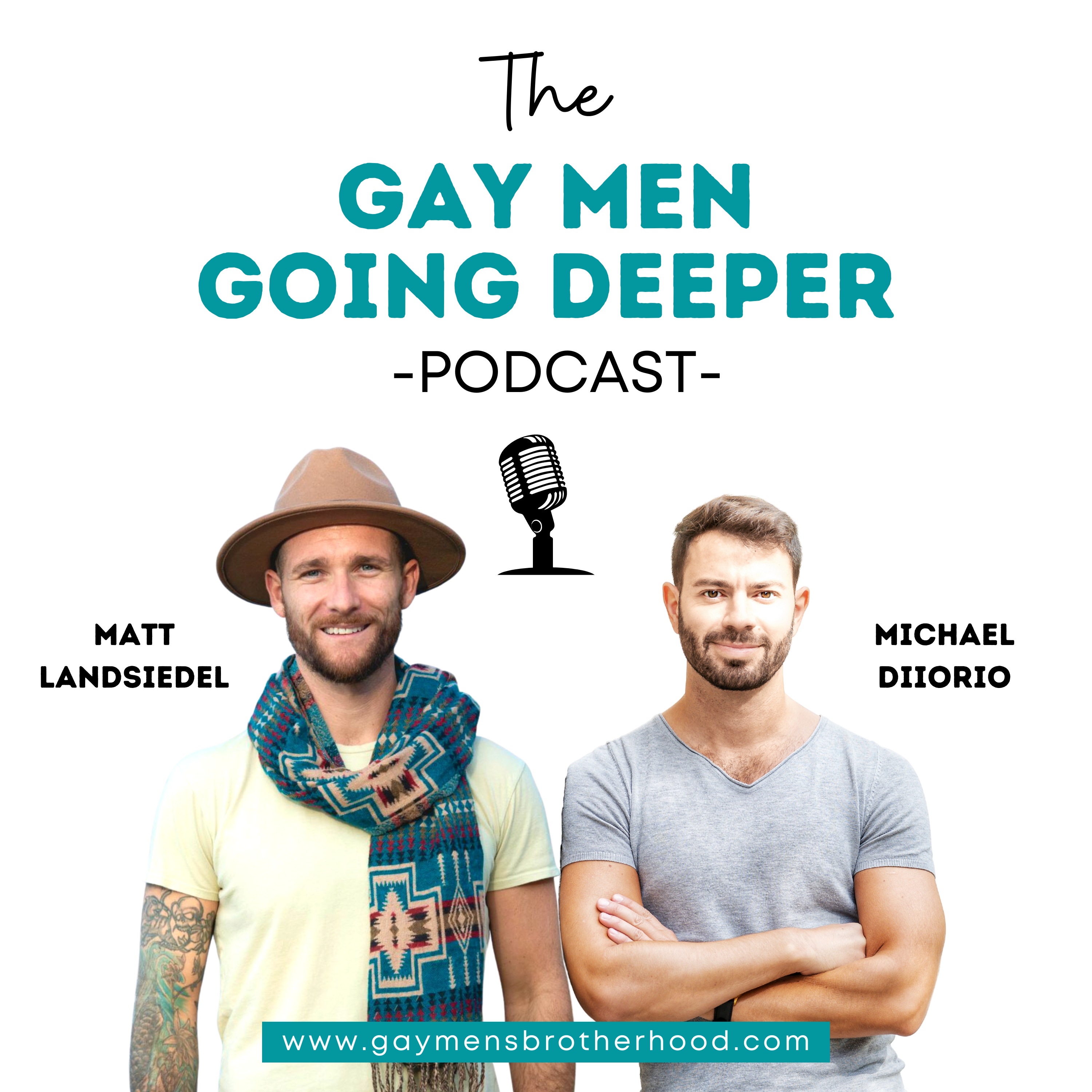
[00:00:03] Speaker B: welcome to Gaming Going Deeper, a podcast series by the Gamins Brotherhood, where we talk about personal development, mental health and sexuality. Your hosts today are Callan, Michael, and myself, Matt.
Collectively, we have over 40 years of experience in the personal development world. And if this is your first time listening to us, we want to welcome you. We each have our own coaching practice, but in this podcast, we're giving away all of our best stuff stuff.
So today we're talking about trust issues in the gay community.
We're building off the episode from two weeks ago, which was about trusting yourself. Now we're going to be bringing it into the dynamic of relationship.
So we're going to be exploring questions like, what do you think has led to trust issues in the gay community?
How have trust issues impacted your relationships?
And how can we begin to heal trust issues amongst gay men?
So we will continue these discussions on the last Thursday of every month in the Gay Men's Brotherhood Zoom Hangout, where you'll have a chance to share your own experiences.
This podcast and YouTube channel are listener and viewer supported. If you enjoy what we're creating, you can support us by heading over to our Patreon page and contributing to the show. Depending on what option you choose, we'll even send you a T shirt as a thank you. You can find the link in the show notes.
You can also subscribe to the early access option on Apple Podcasts and gain early access to episodes. All your support helps us continue making content for you and supporting our community. So we do thank you in advance.
So before we jump into today's episode, let's read a review from one of our listeners. So this one comes from Travis, and he was talking about the Gay Men's Brotherhood Facebook group, and he says, this group is truly a beautiful group.
So much realness, authenticity, and support.
It says something about the creators of this group and the beautiful energies they attract.
Awesome. Thank you very much, Travis.
[00:01:58] Speaker A: Hashtag into it.
[00:02:04] Speaker B: Okay, so we talked about trust two weeks ago, and hopefully that gave people insight into what trust is, how we can start to have more trust for ourselves and the barriers that we're getting in the way from, from being able to trust ourselves.
So, you know, I think one of the reasons why we identified these, this topic of trust is because, you know, we see the three of us see a loneliness and disconnection as a big issue in our community.
And I started to ask myself, like, why is connection so hard for us? Why are we all feeling so disconnected from each other?
And the first thing that came to mind Was trust. I think a lot of us have trust. Trust issues. And I think it's important to talk about it. So the lack of safety and trust in our community is likely leading to one of the leading causes, I'll say maybe not all would be to, you know, loneliness and disconnection.
So I started to kind of ask myself, like, why? What is this? And, you know, the last episode we did will probably play some into that, the last trust episode.
But I want to talk a bit about attachment trauma, um, and the core wounding that a lot of us experience from a young age. So, you know, I hear the story on repeat. It's like a broken record. I hear the story all the time where, you know, I was young, I was gay, I was bullied, I was, you know, ostracized from my family. I was disconnected from. I was told I was disgusting or defective or broken. And this is attachment trauma, folks. This is what we are experiencing.
And when a lot of us have this core wounding around rejection and feeling like we don't belong, we end up putting up walls. That's one of our first defense mechanisms. And one of these walls is to be inauthentic, to fawn to people, please, to be who we're not, to fit in with the crowd, all of these things. And we learn that it's not okay to be ourselves.
Okay? So this. This simple act of self abandonment and self betrayal, it is the foundation, in my opinion, of why we don't trust each other and why we don't trust ourselves. Okay? So we got to look at, you know, what. How. How do. How do a lot of us respond when we experience trauma? And, you know, it could be any type of trauma, but there's the four. The four main things that we experience, right? We fawn, we freeze, we fight, or we. Or we flight, we flee.
Every single one of those leads to disconnection.
Every single one of those impairs our ability to trust, right? So I think trauma is a really, really important factor when it comes to, you know, why we're feeling disconnected and why there are tr.
And, you know, the three of us, we. We all know the lone wolf syndrome very well. We've done a previous episode on that. If you haven't watched that or listened to that, I highly recommend checking it out.
The lone wolf really embodies the. Well, I'll say the shadow side of the lone wolf embodies the inability to trust, the inability to feel safe, the inability to let himself belong.
This is all such important stuff, right? So.
And then I Started to think about, okay, well, how, how do we build trust? And we talked about this in that last episode as well. But I wanted to, to kind of point out three things that I think are really important to developing trust in a relationship.
And this could also be applied to relationship with self, but I'm applying it more to relationship with others.
Consistency.
So we all got to show up and be consistent with one another, right? Who I am and who I'm representing myself is who I am, right? They, there's congruency there. And, and I'm showing up for you in this relationship consistently. That's very important to develop trust.
Transparency is really important. And I think under the umbrella of transparency, we have like, vulnerability, right? Am I going to be congruent with who I am and am I going to share that with the people that I'm in connection with?
And then the last one is connection.
Can I move into connection? Can I be in connection with, with somebody? And all of these things are happening over time, right? So we, we, we develop trust at least I think. And this might be a good thing for us to talk about actually, is do you give people trust right away or do you need it to be built as you go? Right. Some people just give someone a full cup of trust and they're like, well, they can show me that they're not trustworthy. And some people give people an empty cup and let them fill it as they get to know them, right? So it's something to think about. Like, you know, how do you show up in these, in your relationships? Do you give full trust or do you need somebo to earn it from you?
So I, I think those, those things, consistency, transparency and connection over time, this creates a safe environment for us to be our authentic selves.
And if we're not getting those things because we are traumatized or we are in a lot of shame still, and we're showing up in really inconsistent ways because our mood might not allow us to show up consistently. We're hiding behind masks, so we're not being transparent and we' fickle with connection. We disconnect when we're afraid, we come in when we're feeling safe. And again, all of these things are really going to impair our ability to have trust for one another. So I wanted to kind of highlight all those things to give, give us kind of an idea of where this stuff might be coming from.
But that's just simply my point of view. And I want to, I want to gather your guys's point of view and where you think what you think has led to trust issue issues in the gay community? And why don't we start with Michael?
[00:07:40] Speaker C: Yeah. Matt, thank you for that, for that lovely opening monologue. As always, very, very insightful. I gave me a lot to think about. So I think what do I think has led to trust issues in the gay community?
Yeah, I think that we don't show up as ourselves with other gay men and therefore, inherently we might know. Oh, like, I think we can sense the. Sense the fakeness sometimes, you know, and. And we hear about this a lot. People sense it. That's why. That's why our community has grown so quickly, so fast. Right. People sense that there's just like, there's a surfaceness that's just not genuine. It's not real. So I think that's what leads to. I think we just know part of. Part of. Part of us just says, yeah, this is. This doesn't feel real.
[00:08:25] Speaker A: Can I interrupt this? Yeah, I'm so sorry. But, like, also on the flip side of that, people don't trust. Like, I've seen people in the community not trusting because they don't trust that that person genuinely is just a nice person.
Like, I've seen the flip side of it. Like, don't trust are, like, constantly attacking the ones who are like, no, this is who I am. Like, I'm a good person. And I've seen the flip of that, of being like, oh, you're untrustworthy. Because, like, I don't trust that you're so nice. And I'm like, are you fucking kidding me? Anyway, sorry to interrupt.
[00:08:54] Speaker C: No, that's a great point. But that's how bad I think it has gotten in the community is that we're even turning on the genuine people who. Who are being authentic and vulnerable and nice. But yeah, I think. I think that's it. I think we just know that it's. Deep down, we just know that there's a lot of fake news going on. Like, especially if you're doing it yourself or if you have done it yourself, which we all have. That. We all have experienced that for ourselves, right? Feeling this need to. To fit in, like, oh, here's the crowd, here's the things I need to do. Look like, be, like, be interested in. To like, get that acceptance, that fitting in, right? Instead of truly belonging. And so if we know we're all doing it. I remember feeling the same thing, like looking around at some point, being like, we're all just like, who's making the rules here? Like, why, why Are we all acting according to this thing? Like, I can sense that we don't want to be doing this or we don't want to be at this place or saying these things, but like, we perform. It's almost this performative thing. Not to say everybody's like that. Very important. But I think when you know that that is happening and when you do it yourself, how could you trust, how could you trust other gay men if you, if you sense within yourself that you're not even showing up authentically? Right. So I think, I think that's it. I think it's just a lot of. We sense it, we know it. Like, let's not lie to ourselves, let's not kid ourselves. And so it's hard, it's hard to trust other gay men. I think because of that.
Yeah. What do you think, Callum?
[00:10:13] Speaker A: Well, I got a two parter, because I'm going to answer the question, but I also want to unpack kind of what Matt said in the beginning, which, by the way, I think that was beautiful start because, like so much of what you said got me super excited for this conversation. Yes. Like, I'm ready to go.
I want to talk about the cups first. When you were talking about that, instantly I was like, oh, I give trust right away. I'm one of these, like, even though I've had trust broken, I'm grateful for it, but I instantly give people trust when I meet them and then I wait for, like, to them to prove me wrong if that ever happens. I'm just like, I want to believe the best in people. And I think that's an internal, just belief in me that I want to believe that there is the best in people and that they're doing the best with what they can.
Um, and then sometimes that bites me in the ass and somebody's a shitty person secretly. And I don't know, but I'm. I would rather approach the world in this beautiful way that I can give trust to all these people because it's the rare few that end up not being, you know, what they're portraying to be.
And then also in relationships, like, I went through this recently. I gave the trust and like, it kind of bit me in the ass.
But thinking about that most recent experience, I'm still sitting here going, but I'm going to be open to the next person. Whereas before I think I might have shut down with it and I would have been like, oh, this is another reason not to trust.
Now after doing so much work, I'm like, that was their stuff. Like, it sucked, but that was their stuff. But I'm still very open to other people. I'm still very open to meeting other people and going through that experience, because you're not going to, you know, experience the fullness of relationships unless you continuously open yourself to them.
And that comes with, like, me being cup full of trust, giving it away, and, like, hoping for the best.
So I'm really glad that you brought that up. That was really cool.
And so what do I think has led to trust issues in the gay community?
So much. So much to unpack here. I'm going to take this historically because I do believe that, you know, October is LGBTQ History Month, whether that's Canada or North America, wherever.
So historically, I think that this does come through kind of just our history. And, you know, as gay people and as LGBTQ community people, our history is very recent in regards to, like, the access and the changes that have been made, like, even from, like, our generation of being kids to the now generation. It's drastically different from our parents generation. And it happens so quickly that there's still so much trauma experienced in that. And I think that it does come from a lot of what you said, Matt. You know, the mistrust, the being kicked out, the. All of that. There's so much more of those stories in our community of being kicked out or being ostracized because they're gay and religion and all these other things that play into that that has bred a mistrust within our community simply because we've been mistreated more than other communities, especially, like, the transgender community has, like, people of color, transgender communities specifically. And so that is. That is just something that is still being healed, and it's going to take generations to heal, because things don't just happen instantly overnight. And so I think that what has really led to the gay community's mistrust issues is because generationally, we've passed this on, and the generation just before us, they, you know, they weren't allowed to get married. They weren't allowed to have all these things. So they didn't trust people because they're like, well, fuck, this is all I got. And now our generation is learning how to navigate those new things that we're allowed to have and trying to build the trust. And I can see. See us doing the work, and then the next generation.
I just hung out with my girlfriend.
She has two. Two kids, and the youngest one has already expressed. I think he's like, 13, 14, has already expressed that. He's like, he doesn't really know. Like, currently has a girlfriend, but he's like, ah, I don't know, maybe like, has expressed openness about that. And so it's really interesting seeing the different generations and how she's also treating that exchange. And she's like, cool, like, I'm here for you, I love you, whatever. But that could happened generationally because she grew up, even though she grew up super religious, she grew up choosing to experience love and to, to give that to the next generation, to break those cycles. And so I think that a lot of the mistrust comes from our learned experience of how we've been treated over history. And that kind of impacts and informs a lot of what we go through. And even like the protests and the things you see in the media and, you know, even in Florida, like the don't say gay Bill, like, shit's still happening. So it's like, how can we trust when this heavy shit is still happening? Like, how can we trust when all this bad stuff still happens?
And so it's really hard for us to get into that open space, but the only way we're going to get out of it is if we continue to do the work generationally. And that's what I always put my in my head is I always go, I'm doing the work for A, myself, but B, for the next generations. And it's not just immediately things have to change right now. I know that the world, it. It's a process. And everything in life takes time. And so I always keep that in the back of my mind. I'm like, just do my work, do the things like this podcast and the stuff that's helping me stay grounded and, you know, impart my knowledge onto the next generation and then hope that the next generation picks it up and continues to do that work. Because we didn't have the same experience as the heterosexual community to just be ourselves and hold hands in high school and whatever. And that's just starting to kind of become normal now. So that's where the journey's starting for them. But I think a lot of the history of it is where our kind of mistrust issues come from.
I'm now going to get off my soapbox.
[00:16:01] Speaker B: That was good, though. Really, really good. It brought up a lot for me too, actually. Both. What both of you guys said brought up some stuff that I wanted to talk about. And maybe off the top, I'll say just the experience of being a leader in this space is we've had that. We've. We've had the mistrust projected at us. Like, who are these guys? They're just trying to make money off of us, right? They're. They're preying on all of our. Our insecurities. And we've heard it, all, right? And it's like, honest to God, do you actually think that we would put so much time and effort into this to prey on you for, like, you know what I mean? It's like, not like we have, like, giant masterminds that cost thousands of thousands of dollars to join. Like, we're offering a very quality product at a very low price intentionally, right? So I just.
[00:16:44] Speaker A: It's.
[00:16:45] Speaker B: It's so alive there. And. And I see it. It comes again. And I'll say, you know, it comes from the unhealed trauma and shame that we have yet to heal, both individually and collectively. I think, you know, our culture, our community has been traumatized, and we are operating as an individual within a traumatized community and culture. And you. You said it perfectly, Callan. Right? It's this.
It's not just the gay community. It's like we have been mistreated, oppressed, and marginalized by the whole society, general.
So when we are operating with each other, we're operating with each other through this, the macrocosm, right. Of our oppression. Like, we. We've. We have had lots of rights taken away from us or denied, and that's going to play into this as well.
[00:17:30] Speaker A: So.
[00:17:31] Speaker B: And I think, you know, when the mantra like, you know, traumatized people, traumatized people, shamed people, shame people, right? That's just how human beings tend to work. And it takes a lot of healing to get to the place where it can start to become loved people, love people, connected people, connect with people, right? And we. We're rewriting this script like. Like, you know, we are part of the. Of the. The and pioneering a movement of rewriting the script. And I couldn't be more proud and more happy that we're. That we're doing this.
And there's hundreds of other people that I know of that are also doing the same thing, too. So we're not special in doing this. We're just doing our part, right? Which I think is really, really cool.
So I've identified some things that I think have led to trust issues in the gay community. And this is kind of the symptom, right? We just talked about the root, and now I want to talk about some of the symptoms, because we also have to address the symptoms if we want to get to the root.
So hiding our authenticity and not practicing vulnerability with each other. The only way that we can move towards trust and healing, trust issues is through vulnerability and showing up as our most authentic selves, right? And let's be real, like, when somebody shows up and they're inauthentic and they're hiding, like, we're all creatures of energy, we feel that, like Michael said, you know, when somebody's being inauthentic and. And that's. It's. It's just. There's nothing worse to. To disconnect than inauthenticity, right? No one wants to connect with an inauthentic person.
Then that brings into the next one is the superficiality of the gay community. This one was really off putting for me and why I didn't connect. And unfortunately, I. I smacked every single gay man with that label. Oh, they're all inauthentic. They're all superficial because all they want to do is, you know, this, this, this, and this.
[00:19:13] Speaker A: And.
[00:19:13] Speaker B: And it was so not who I was, right? And I think the superficiality is just a symptom of our shame and our trauma of feeling like we don't fit in or that we're so terrified of being rejected, and so we keep it at the surface, right?
But that has. That has its own impacts as well.
And then the shallow kind of mean girl energy, right? Like the A gays bullying the B gays and the C gays, it's honest to God, like a freaking high school or a junior high school, you know, culture, right? And it's like it just comes from that, you know, shame. Shame doesn't want to see someone else doing better. Shame wants to keep you in the crab bucket, right? So, oh, he's starting to rise. He's starting to feel good about himself.
[00:19:58] Speaker C: Let's.
[00:19:58] Speaker B: Let's shame him. Let's be a mean girl and bring him back down to the crab bucket, right? That shit needs to stop, because that is really toxic, and it's keeping us all with dim lights.
[00:20:09] Speaker A: And don't they say, like, trauma gets trapped at the age that you were at? So it's like when we're going through that sexual, as you know, LGBTQ gay people going, like, high school's that time when we were sexually figuring out, or at least some of us were figuring that out, and then we're like, ah, fuck. And so that's where the trauma happened for us. So that's the, like, the age we got stuck at. And then we bring that out in our older years, and so we replay that out in the adult life that we're living, instead of being like, oh, shit, this is something that happened. Like, I don't want to keep living like this. I don't want to live perpetually. In high school, there is. That is not fun. Like, I want to be an adult and have, like, good conversations and I don't want to have this surface level shit. I want to get to know you and still have a Kiki. But, like, you know.
[00:20:57] Speaker B: Yeah, yeah, that was actually my next bullet. I wrote down lack of emotional maturity, and I think that plays into it exactly. Like, when you're stunted developmentally, you will be developmentally where you kind of turned yourself off or where you stopped being your authentic self. Right. So, yes, when we all start to meet this ourselves again, it's like, we are. There is a lack of emotional maturity. And I think for me, I feel guarded around gay men because, you know, like, if, for example, if I post something in the brotherhood and I get all these people attacking me, like, oh, no, it's not like this. It's like this. And. And people coming in with this really heated energy directed at me, there's a lack of emotional maturity there.
[00:21:35] Speaker C: Right.
[00:21:36] Speaker B: And that's off putting for me. So it makes me not feel like I can trust other gay men because they can't have rational conversations because they're so triggered and activated that they're projecting all over the place. Right. So the lack of emotional maturity, I think really directly plays into trust issues.
And then these are two things that I've experienced a lot of, and they were really traumatizing for me. So catfishing. I was catfished many, many times in my younger years. And I did approach the world through the lens that you approached at Callan with, you know, giving everybody a full cup of trust. And I had rose colored glasses. I. I tend to be that person. I see the world through the lens of, like, everyone is innately good. And I've had to learn the hard way that, no, not everybody's innately good. Some people hurting, and they want to see you hurting as well. And so the catfishing was really traumatic for me and it made me.
Well, I deleted Scruff and Grinder because of it, and I haven't had them since it's been eight years.
So that does impair my ability to connect too, because perhaps there's guys on Scruff and Grinder that would be great for me, but I've just. I can't trust that people are real, you know, and then I would say that one of the Elements too is a hyper focus on sexual so objectification so people not actually willing to get to know people on a deeper level. It's like they just hone right in on the sex and they start to look at your body and the only compliments they give you is that you're hot.
[00:22:57] Speaker A: Right.
[00:22:58] Speaker B: It's never about like anything more meaningful. And I think that's really impaired my ability to be able to trust too because it's like there's more to me than my appearance and there's more to me than, you know, sex.
[00:23:09] Speaker C: Right.
[00:23:09] Speaker B: Like there's other. I'm an emotional being, I'm a mental being, I'm a spiritual being. Right. So I think that we need to learn how to bring those, those other elements of, of relation online as well. So.
[00:23:23] Speaker A: Yeah.
[00:23:25] Speaker B: Any comments you guys want to make on that question?
[00:23:30] Speaker C: I agree with all of it. Well said.
[00:23:32] Speaker A: Yeah, I got lots more we'll talk about.
[00:23:34] Speaker B: Yeah, well these next two questions are pretty loaded as well.
Okay, so the next question, and we will start with Michael is how have trust issues impacted your relationships?
[00:23:47] Speaker C: Yeah, absolutely, they have.
How I, I looked at my romantic relationships. That's sort of where it came the first answer. So several, several times in my long term relationships and what I found is
[00:24:01] Speaker A: that
[00:24:04] Speaker C: trust is something that is just naturally not. It's not always easy for people, especially as we're talking about with gay men. So if, if neither of us trusted ourselves in the first place, then it's going to be very hard to trust each other.
Which we kind of talked about in the, in the last episode on Trust.
And so in my relationship when I'm speaking of in particular, we brought all of our baggage from previous hurts into the relationship and it was despite the best efforts, despite our efforts to love each other and be honest and transparent. All these things. If that, that doubt, the self doubt and also the doubt in the other person was always there and we didn't do a good enough job at talking about it. We kind of kept it.
I don't think I had the, this was maybe 10 years ago. I don't think I had the language. I don't think I had the courage. I don't think I knew how. I don't know. I didn't know how to have those conversations, whereas today I do. It's a vulnerable conversation, requires a lot of courage. So back in those days I wasn't there. I wasn't ready for it and neither was he. So again, despite our best efforts, that relationship didn't work out.
And what it looked like when. When we were in, it was on my end. It was a subtle manipulation, small little lies in. In people pleasing. So I was, in a way, people pleasing him. I wanted to be the boyfriend he wanted me to be so that he wouldn't leave so we would stay together.
But what that meant was I had to lie sometimes because I had to hide things about myself from him. Thought, oh, he's not gonna like this. So I'm just gonna just put this over here and get this over here.
And so that's what I call manipulation. Really. People pleasing is kind of manipulation, right? We're manipulating other people's thoughts and feelings about how we are. It's like, oh, I want you to think this about me, so this is how I'm going to perform so that you think that about me. It's a little bit of manipulation. So I was doing that. And that, you know, is not a great place to be in a romantic relationship, because if there's no trust, it's really an uphill battle. Now I was doing those things, and he could sense it, right? Again, going back to what I said earlier, I think we can sense it. I think if we really listen to ourselves, we know when there's something amiss. We don't always listen to it. We don't know what to do with it, but we know there's something amiss. He knew there was something amiss. And so those seeds of doubt had started with him. And he already had such baggage and trauma from previous relationships. He had a story. Men cannot be trusted. Men will lie. Men will hurt me. So here I was replaying that same narrative he had, right? So the situation was he had that baggage of trusting people and thinking men lie. My narratives and stories coming into this relationship were that I had to. I had to hide my true needs and desires because of shame, because they weren't right or whatever. And I had to do this. I had to perform this way so that I could have a partner and have all the nice things, blah, blah, blah. So I had to hide this part myself.
So see how this all plays out, right? Like, I hide. He senses I'm hiding it plays out his story.
And then when he gets mad about her, if he senses something is amiss, I'm like, oh, shit, I gotta hide it more. Instead of. Instead of bringing it to the light and saying, hey, okay, let's talk about this thing instead, I just go deeper within and I build more walls. And so once that seed of mistrust, distrust, I don't know what the right word is was there.
It unraveled. Despite our best efforts and despite the fact that I truly believe to this day we genuinely do did love each other.
If we can't get through that, it's not enough. So that's what happened with me. It created this pattern where we just kept replaying that and it ended the relationship, which is really a shame. I think that happens a lot. I think it really does happen all. And it speaks to the fact that we really do need to learn the skills of having these hard conversations that we're talking about here that we talked about in the last episode, the work we need to do with Inner Child. Communicating your needs, having the courage to show up, speaking your truth, all the things that we talk about when we can do that. I think that's when our relationships really, despite all the discomfort, it's not easy. That's why I didn't do it. It wasn't easy. Despite all the discomfort, can really flourish and thrive and we can develop meaningful, trusting relationships with other men.
So, yeah, that was my story. I think the, the, the. My specific relationship where trust really was what corroded the entire thing from within and it fell apart.
Yeah.
How about you, Callan?
[00:28:21] Speaker A: I was thinking about it as you guys are talking and I don't. In my first relationship, I didn't have any mistrust issues. Like, I never ever thought like, oh, cheating or anything like that. Like, it was very easy. Like, I was very great. I'm very grateful. I had a very easy, loving, fun first relationship where the miss like the trust stuff came up is like when he broke up with me out of the blue and was like, I, you know, I need a break from this because it was like there was on my side looking back now I can see it, but like there was no signals that nothing was bad in a relationship. But that was something that it's, you know, it takes two people in a relationship and if one of them no longer wants to be in that relationship for whatever reasons, those are it, you know, it's going to come to an end. And so that kind of created a mistrust in me that it's like, oh, well, even if things are good, maybe they're not good, you know.
And then in my second serious relationship, I think I can't really judge it because it was a short relationship, but I was also living in the Middle east, in Dubai, and it was more.
I'd been single for so long, like eight years at that point, and it was like, had been so long and it was just so nice to, like, just be around somebody. And it was much more of, like, a this is cozy and comfortable relationship. And it was just like, maybe we're both kind of lonely.
And. But then I kept not trusting myself and my intuition and my instincts about it being like, this isn't right for you. And I kept making up stories like, well, you know, he does really good. He has a really great job. Like, we could have a really nice life together. Like, all these things that I was, like, making up stories of, like, so that I could like it more, that I could make it work.
And then eventually he had to move back to the US So I was like, okay, well, that put an end to that. But I was forcing something. And then he turned around after chasing me for so long to make this relationship happen that he then pulled away. And I was like, you're the one who pursued me. You're the one who constantly kept wooing me. And then once you got me, you did a. You did a backpedal. You're like, oh, no, I actually got what I wanted.
And so, again, that kind of created mistrust in me being like, just be impeccable with your word. Like, say what you mean and mean what you say. And so I think that. I don't know if I necessarily would say it's trust issues within relationships or that impact my relationships, but it's definitely impacted my thought process about getting into relationships. I'm much more conscious about my partners and who I choose. And I think I have much more of a long, like, Runway for people to get into an actual relationship with me. And so it's a lot more of, like, getting to know you, casual dating, that I will go with somebody, because it's like, no, I really need to make sure that, like, you're in this, because if you're not, I don't want to have repeats like I had before. Like, I want an emotionally mature adult. We all have our shit. But, like, I need to make sure that you're at least there to the point where, like, you can have adult conversations about these kinds of things and not keep them locked in. Because that was my first two exes. My first ex didn't talk about, like, we talked about emotions, but clearly he didn't talk about things he was genuinely feeling.
And then the same with my second ex. He didn't express those emotions. It was just kind of like an instantaneous thing. And then even with the most recent experience I went through, it was like, there was no communication about it. It was just a decision that they made instead of actually communicating like a mature adult being like, hey, I'm having these feelings come up. Do you want to talk about this? Or like, you know, this is. And so it's just, it's created a mistrust that people can't actually express themselves. And it really drives me crazy that I'm like, why can't you just be an emotionally mature adult who goes to therapy, who's working on their shit and like, realize that we're both working on our shit, but we want to work on it together, like, what?
So I think that that's how kind of trust issues have impacted my relationships. I think it's more impacted my process and thought process about when I'm getting into relationships or considering relationships.
So that's me. What about you, Matt?
[00:32:48] Speaker B: Yeah. Mine's kind of actually blended between the two of you. I can relate to what you guys are both saying.
[00:32:54] Speaker C: Yeah.
[00:32:54] Speaker B: I think previously most of my relationships, except for my most recent one, I gave full cups of trust.
And it took a long to learn. Learn that it's. It's not the smartest for me. I. I'm not. I don't want to, you know, try and influence people's, you know, whatever. Whatever works for you, but for me, it doesn't work. I'm. I like the long Runway example, Callan. Because I have had the experience every single relationship where I. And even dating where I'm connecting with someone and I call it like the three month kind of honeymoon phase ends and you really start to show each other who you really are.
I tend to show that right away. I show myself right away. And that can be really intense for a lot of people. But I'm like, I don't want to waste time here. Like, I don't want to just be, you know, like, people, please eat. And then three months from now you learn that I've got all these weird quirks and habits that I do that probably will irritate the hell out of you. I'm just going to be that off the get go. Right. But I didn't do that before. I didn't do that before. I was like fawny. And I was kind of like trying to. You know what it was? I was afraid of not meeting their needs. I was afraid of not being enough for them. So I would shape shift and be who they needed me to be. So then I would get the mirror back that I'm approved of and valued. But then in the end, that's not who I am.
[00:34:15] Speaker C: Right.
[00:34:15] Speaker B: And that's a big, big learning lesson for me. And I finally, I actually want to take this moment to celebrate a success. Because my last relationship, even though it only lasted three months, I was this from the beginning. And we actually was my very first taste of a secure relationship. And it didn't end because of insecurity and because of lack of compatibility, but we were both very real and we represented exactly what we wanted from the very get go. And that was a big success for me.
But in my previous relationships, what I was doing is I was abandoning myself. And when I wasn't there for myself, I had to do all of these little up, like, maladaptive, manipulative things in order to try and maintain safety. Because I didn't have my own back, I needed them to have my back. So I would test them. I would do all these little tests and to see how, you know, much they were committed to me.
I was very anxious, I was very jealous.
I would become disappointed easily. I'd bring a ton of expectations into the relationship and I wouldn't communicate them and I would just expect them to be able to read my mind. And then when they wouldn't, I'd be disappointed. Right? So I just think that having trust issues in my previous relationships has taught me the importance of communication. Like, you gotta talk out all your shit. If you're acting out your shit, you're gonna lead to drama. If you're talking out your shit, you're gonna lead to resourcefulness and resilience and all the good things, right?
So I sabotaged a lot of my past relationships because of. Of trust issues.
And I was very hot and cold in my past relationship. So I have a lot of empathy for my exes and that takes a lot of humility to get to that place where you can empathize with the people that were impacted by your wake.
[00:36:01] Speaker A: Right?
[00:36:02] Speaker B: Because I was traumatized and I was shamed and I was bringing that into all my relationships. But yeah, just having this last relationship was really, really powerful for me to kind of see that what I'm capable of in, in relationships, when I make a commitment to communicate and to be vulnerable and to be authentic, the sky's the limit.
[00:36:24] Speaker C: So, yeah, I feel like, Matt, you were like in, in the example I used, you were like my ex. He would always kind of do these little tests.
[00:36:34] Speaker A: Oh yeah.
[00:36:34] Speaker C: Almost as if like he wanted me to fail. And it felt terrible on my end. Right. Instead of us just having that conversation and communicating.
[00:36:41] Speaker B: Yeah.
[00:36:41] Speaker C: It was like, oh, he's testing me. And it just created this like, antagonistic, like, relationship on some level. Like, and it corroded us from. From from within. Right. Like, he's testing me. I gotta answer this. Right? And it just, it just was not a. It was not a good place to be.
[00:36:56] Speaker B: Yeah, yeah, I totally. That's the fearful avoidance, in my opinion. Like, very, very. That's classic fearful avoidant. Lots of testing, lots of hyper vigilance, of betrayal, these sorts of things. So, yeah. And if you don't know what that means, take our attachment style quiz. Because you will learn your attachment style. And then a lot of these things will become more manageable when you understand how you're showing up in relationships.
Okay, last question.
How can we begin to heal trust issues amongst gay men?
It's a very big question, but we'll all take a stab at it.
We'll start with Michael again.
[00:37:33] Speaker C: First thing you gotta do is go back to two episodes ago and listen to that.
Trust yourself, right? That has to be part of it. So absolutely. If you haven't listened to that, wouldn't listen to it again and again and again.
It's not, again, like anything we do here. It's not something you listen to once you work on, once you're like, okay, check. I trust myself now. It is a lifelong process. Trust will be built, trust will be broken. Trust can be rebuilt again if that's what you choose. So, yes, absolutely. That work within yourself.
And then something else I want to add is it's again the past, right? So at the end of the day, you have to believe and know. Not just believe, but really have a firm knowing that you are a good person and that not everyone else, but many other people are inherently. They want to be good. Maybe if they're not actually acting in good ways necessarily, but at their true core. I'm looking at this from a spiritual perspective, right? Everyone is light, whether they're shining that light or not shining that light is another question. But if you can at least believe that you are a good, worthy person, even though you make mistakes, even though goes down sometimes, if you can learn to have that perspective more often than the perspective of I am bad, I am flawed, something is wrong with me. People cannot be trusted. Like, notice the stories, right? It's hard to develop trust in others or with others if your perspective is constantly tinged with biases of things that have happened in the past, your childhood wounds, traumas, previous. Previous issues.
Not to say that the answer is to ignore them. That is not what I'm saying. I'm saying do the work to bring them up. Because relationships, the beauty of relationships is that they will bring up your.
The you see and the you don't see.
So use the relationships to bring that stuff up. Whatever trust issues you have, whether it means you save this person or not, doesn't really matter. But the point is you can say, okay, here's some of the stories that I have. Here's some of the trauma that I might have. Here's how I'm going to do that work. Here's how I'm going to, you know, heal that inner child or. Or do the shadow work that. That Matt had talked about or whatever it is, seeing a therapist, you know, speaking with a coach, whatever that might be, do that work. Because every moment really is a fresh chance to start a new story, to have a new connection, a new relationship. But if we're constantly bringing that old stuff back and looking at our. The people we have in front of us with those same eyes, we're not going to give ourselves a chance where we're just going to keep staying in the cycle of not trusting each other. So you have to ask yourself if you have that. Let's say the story men are liars. Thinking about my ex.
Until you, like, figure out that, hey, some men are. Some men do lie and some men don't. Sometimes they do and sometimes they don't, and you really figure out a way to heal that, not ignore it. I want to keep underlying that. I'm not saying false positivity by any means, but. But even say, okay, some men are going to lie to me. How am I going to deal with that? Right? Because that's where your powers. You can't change whether people lie to you or not. But you can say, okay, if they do, I'm going to speak up. If they do, I will have my own back, whatever that looks like for you.
So really having that courage to pull up your stuff and work through it so that you can start telling a new story. And start not just telling a new story, then creating experiences and creating new connections where you do trust each other, and when that trust is broken, handling it in a very different way than maybe you did. You did before with communication.
[00:40:58] Speaker B: Yeah. Yeah, go ahead.
[00:41:02] Speaker A: Oh, that was so good. I forgot what I was gonna say.
I, like, had something in my head and I got so wrapped up, I was like, wow, this is really good. And now I'm like, what is that gonna say?
How can we begin to heal trust issues amongst gay men? Therapy. Say it with me, everybody.
[00:41:22] Speaker B: Yes.
[00:41:24] Speaker A: You know It's.
I really have sorted out a lot of my own by going to therapy.
It's really helped me. If you want to. If you've never been to therapy or you have judgments about therapy or whatever, I think it's episode 70. I could be wrong, but there's an episode about therapy specifically.
But that's one of my biggest things is therapy, because therapy is part of self work for me. Therapy is part of doing the inner work and becoming a mature, grown adult. And I think it was the morning show with, like, Reese Witherspoon and Jennifer Aniston, a couple other people, but in that Reese Witherspoon's in a relationship and the person's just like. And Reese is going crazy and whatever. And then the other person, I can't remember who the actress is. She's from, like, the Good Wife or something.
She has this conversation with her being like, look, I want to be in a relationship with you, but, like, this is your shit. You need to be an adult and go to therapy like the rest of us and sort it out. Because your life is your responsibility.
And so your life experience is also your responsibility.
So clean your shit up, get the help you need, and we'll continue, you know, doing this thing. But don't bring your drama to me expecting me to do whatever with it, because that's not my job. My job is to be in relationship with you. And so I really took a lot from that episode, that moment. I was like, damn, girl, she keep it real.
And so that's what I always say. It's just like, you are. If you're listening to this and you are an adult, you're an adult. Take responsibility for your life. Take responsibility for your actions. It is nobody else's job to take care of you now. You are a big boy now.
And so act like it. Be like, shit, this is my life. Even if shit's going on, okay, I don't want this shit to go on, but it's my responsibility to sort it out. I can't wait for, you know, the night to come and save me. And like, I used to have a whole prince concept of like some rich guy coming and saving me or something. And I was like, yeah, that's not real. Like, I can't. And even if that happened, I don't want that because that's going to take away so many experiences in my own life of teaching me that I can do things for myself.
And so, yeah, take responsibility for yourself and your experience and decide like, you know what this is no longer acceptable in my life. I'm going to start doing the work and just recognize that it's not just going to change. This is like your life's now work to just commit to yourself. But this is how adult relationships are created where people like, oh wow, their relationship so healthy and they, you know, communicate so well. And all this is because they've done the fudgeing work separately and come together and then continue to do the work together that they co create this experience. But like that starts with you taking responsibility for yourself and for the relationships that you have.
[00:44:16] Speaker B: Mm, yeah. I love that.
I think all three of us have been through therapy, right? Is that true?
We've all had experiences in therapy or coaching or whatever. Yeah, yeah. It's very, very important.
I see a therapist every two weeks and it's just basically especially because of the work we do too. Right. Like it's a lot. So we need our people to kind of, you know, confide in and whatnot. So yeah, honest, honestly, I just think this is, this is a play on, on healing. This is, this is, this is an inside job. That's another episode we have, right? Inside Job or something. Yeah, yeah, so you can listen to that one too. That one's. That one's actually one of my favorite episodes.
I love that one.
So, yeah, it's. It's really about going in and finding trust with yourself because it doesn't matter what people are doing around you when you're. When you got your own back. I think that's kind of the, the moral of, of trust and how trust works, at least through the lens that I view it.
Some tangible things I think, you know, I think about like who do, who do I trust in my life? And believe it or not, most of it are women. I tend to fully trust women. I. For something about women that I, that I tend to be. And do you want to know what it is I was thinking about this? It's emotional presence. Women are better at giving emotional presence and that's. If somebody wants to earn my trust, be emotionally present with me and that's with my emotions. Be emotionally present with my emotions, but also be emotionally present to your own emotions. Because I'll feel if not right. And women are just because of the conditioning, they're better at it. Right. We, we learn from young. As young boys, like, don't connect with your emotions. You're weak if you cry. You know, being sensitive is a bad thing.
I think there's some of that. The social conditioning in the realm of being a Man, not just necessarily a gay man, that we need to unpack as well.
So I would say heal the past attachment trauma, that's probably the biggest focus because that's where you'll learn emotional presence. That's where you're learned vulnerability. You'll learn all those things in doing attachment trauma healing work.
And then reconcile internalized homophobia. I put down because oftentimes, you know, when we have shadow aspects of our own sexuality that we've yet to integrate, we will see those things in other people. The parts that we've yet to love within ourselves, we will see those in other people and we will reject them. And then when they experience rejection from us energetically, they don't trust us. And then we don't trust them because they don't trust us. And it's this nasty, vicious cycle.
And internalized homophobia is so insidious. Like, I still notice things coming up and I've been doing this deep, deep, deep inner work on my, on my sexuality for probably 15 years now. And it still creeps in on me in little weird ways.
So when oftentimes people are like, no, no, I don't have internalized homophobia anymore. I'd say scratch the surface, keep going a little deeper and you'll probably find more another layer of it, right? It's deep in our, in our subconscious and our psyche as, as men, because we've buried it so deep.
And then the last one here is communicate.
Because when we are communicating, that gives us the opportunity to practice things like compassion, empathy, vulnerability, authenticity. It all comes out of communication, right? And we have tons of resources in our community, both free and paid right in our membership. We have the courses. We also have the Building Better Relationships course that you can buy as a one off. And we teach communication skills, authentic relating communication skills, which have been huge for helping me become a better relator, both romantically and platonically. So I highly recommend the Building Better Relationships course if you haven't checked it out. So, yeah, I feel complete.
How are you two feeling?
[00:48:09] Speaker A: Yeah, I felt revved up. This episode got going.
[00:48:12] Speaker C: Yeah, yeah, I think so too. I think it's definitely a triggering topic for a lot of people. Like you said at the beginning, man, like a lot of people have, have trust issues and we know it. That's one thing. But then what do you do with it? So hopefully, hopefully this helps.
[00:48:24] Speaker B: Yeah, exactly. And the three of us. Go ahead.
[00:48:28] Speaker A: No, no, I was going to say just that's why we built the Building Better Relationship score specifically for gay men. Because we're like, these are the things. This is the starting point. This is like the starting point where you can dip your toes in safely.
[00:48:40] Speaker B: Yeah.
[00:48:40] Speaker A: And then that leads to the other stuff.
[00:48:42] Speaker B: Exactly. Yeah. Yeah. And I was just going to say, the three of us are all trained coaches and counselors, and we have the ability to be able to coach through a lot of this stuff. And if you're not aligned to one of us three, then we've interviewed a plethora of guys that can offer support as well. So there's no excuse to not heal this attachment trauma stuff that's coming up that leading to trust issues. You know, you just got to reach out and you got to. You got to put the effort into therapy or coaching or whatever that looks like for you.
[00:49:12] Speaker A: So take the responsibility to do the fucking work.
[00:49:18] Speaker B: Exactly. And we're healing, you know, like when it. When. When each heart heals, it heals the collective heart.
[00:49:23] Speaker C: Right.
[00:49:24] Speaker B: That's the thing. We all got to do our piece. Right. And that's. That's the. That's the work.
[00:49:28] Speaker C: Yeah.
[00:49:28] Speaker B: So.
[00:49:30] Speaker C: Okay.
[00:49:31] Speaker B: Well, great. Well, I want to just thank our audience for tuning in.
This has been a heavier episode, but it hopefully stimulated some good inspiration to go on your own trust and attachment healing journey. So if you're not part of the Facebook group or a gay men's brotherhood, come over and join us. And if you're watching on YouTube, feel free to leave your comments, subscribe, and if you're watching on your favorite podcast platform, leave us a star review. Hopefully five stars, if you enjoyed what you heard today, and leave a testimony of your experience of today's episode, because we would love to be able to share that with the viewers and listeners and a future episode. So much love to you all. Thanks to you two for sharing this episode with me.
[00:50:20] Speaker A: So peace, love, rainbows, bye.