Episode Transcript
[00:00:00] Speaker A: To gay men going deeper. This is a podcast where we talk about personal development, mental health and sexuality.
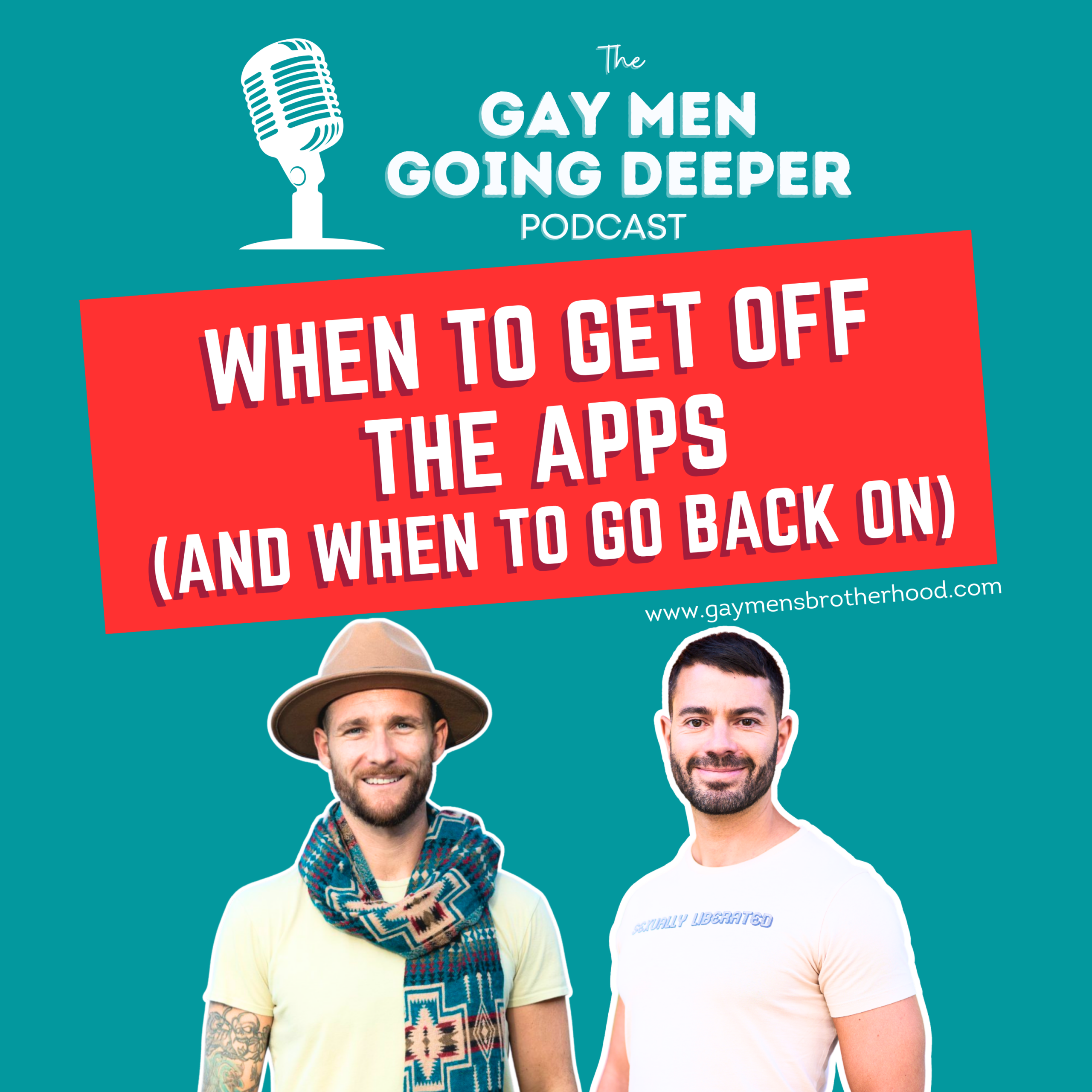
Your hosts today are Matt Lansdel, Kellen Bren, and myself, Michael DiIorio. Collectively, we have over 40 years of experience in the personal development world. And if this is your first time listening to us, we want to welcome you to the show.
We each have our own coaching practice and in this podcast we're giving away all of our best stuff.
Today's episode, we're going to be talking about trusting yourself. Specifically, we're going to cover these questions. How do you know if you trust yourself? What gets in the way of trusting yourself? And what is one thing you can do to build greater self trust?
We'll be continuing these conversations in the last Thursday of the month in the Gay Men's Brotherhood Zoom Hangout. This is where we give you guys, our viewers and listeners, a chance to share your own thoughts on the topics we discuss here on the podcast. So if you want to join us, please head over to to the Gay Men's Brotherhood Facebook page. Go to the events tab in RSVP reminder. Guys, this podcast and YouTube channel is listener and viewer supported. So if you enjoy what we're creating here, you can support us by heading over to our Patreon page and contributing to the show. You could also subscribe to get early access to episodes on Apple Podcasts. All of your support helps us to continue making amazing content and supporting our community. So thank you in advance.
And as we do here, before we jump in, we want to read a review from one of our viewers. This one comes from YouTube. It's from Harrison Sibiliak, I hope I'm saying that correctly. And this was on our 100th episode. He left this comment on our channel, so he says congratulations on 100 episodes. There's a wealth of information and resources within these podcasts that will hopefully guide and help all of those who tune in for a long time to come.
Thank you for all the invested time and work that you put into this project. May it continue to evolve and assist in our community's journey of healing and authenticity.
Beautiful, right? Yeah, that's very sweet.
So thank you, Harrison, for that.
Yeah, we hope to continue making it. So thank you so much. To another 100 episodes.
Okay, so for today, guys, we're going to be talking about trusting yourself.
Trust is one of those things that is very fragile and sacred and it takes a long time to form and a very just quick seconds to break.
And trust is one of those things that we first learn when we're infants, we don't even know we're learning to trust. We don't even have the vocabulary. But it's one of those first tasks of the ego is to trust caregivers to make sure we have our survival needs met.
But as we develop that, it's a lifelong journey. Trust is not just something we develop in childhood, then stop worrying about. It actually is a lifelong process. And what it is, is it builds and then it breaks and then we have to rebuild it again if we so choose.
So when we're infants, we don't have a choice. We just have to trust our caregivers. But what tends to happen is, you know, we learn what we need to do, how we need to act to get the things that we want from our adults, parents, teachers. But what that could do is it's, it's really a people pleasing behavior. But in, in adult life that people pleasing behavior could be maladaptive and we just end up learning to people please our getting that trust need met.
And the bad thing about that is, of course when we only rely on other people to feel safe and secure and loved, then trusting ourself becomes very challenging. Right, because we're getting that need met elsewhere and we don't think or we don't realize that actually the work is to trust yourself first. So that's what we want to talk about here today.
You know, and, and I think this topic is interesting because when we talk about it in the group, in the Facebook group, if we go in there and look at the comments and questions people pose about this topic, it's heavily focused on trusting others. My partner, this guy I'm dating, my parents, people that have hurt me in the past.
But what we want to do is, we will be talking about that in future episode, but today is really about that internal sense of trust. So that might look like trusting yourself to take care of yourself and take care of your own needs, meeting your own needs, it could look like trusting yourself to have your own back no matter what happens. So in the face of criticism and, and whatnot, or trusting yourself to do the things you say you're going to do. So setting a goal, taking, saying okay, I'm going to do this, this is really important to me, and then following through on that.
So those are some of the things that I consider self trust to be for me personally. And I'm, I'm curious to hear from Matt and Callan as well. I consider when I was thinking about trust, like it, it's a personal development Thing, for sure. But for me, it falls within a lot of the spiritual realm of my spiritual development.
Because the way I look at it is it's really a relationship to self, which for me is a spiritual relationship. Yes, it's very mental, of course, in the way you talk to yourself. But for me, it's. It's very much a deep inner knowing that's almost beyond my mind and more of an intuitive feeling.
I don't know if you guys know Ilanya Van Zant, but I really enjoy her work on trust. She actually wrote a book called Trust, which I have, but she defines it as quoting her the development and mastery of an unwavering, unquestionable inward conviction about your own value, worth, and ability to be, create and enjoy all that you desire in the process of living and learning.
It's a really good definition. My interpretation of that is basically having confidence in yourself to do what is best for you, moment by moment, knowing that it's not always going to go well. You're not always going to get it right. Other people are going to break your trust, and also you're going to break your own trust. And in spite of all that, knowing that you're going to be okay no matter what. Because at the end of the day, when we talk about trusting others, it always goes back like anything, just not. Not just trust, but love and everything else. Compassion, it's all about how we do it with ourselves first. So this episode is really about relationship to self. So I think that is the most relationship. That is the most important relationship we have. And I've talked about that a lot here.
So with that said, let's jump into the first question.
How do you know if you trust yourself?
Today? I want to start with Kellen.
[00:06:24] Speaker B: I knew it. I knew it. In my head, I'm like, oh, he's coming to me. He's coming to me first.
This is like such a big. Like I was sitting here, I was like, damn, man. This is like a big topic. This is a big thing.
Because I think a lot of people don't trust themselves. And I think that that's what inadvertently equals the mistrust in other people is it's that they don't trust themselves. Thus they don't trust other people. Because if they don't trust themselves, how can they trust other people?
And so for, you know, how do you know if you trust yourself?
Man, it took me so long, and even still, sometimes I'm like, am I.
[00:07:02] Speaker C: Am I right?
[00:07:03] Speaker B: But I think that through the journey of my Life. I've done enough to ground myself in myself, like doing, you know, all these. This decade of personal development work and really getting to know who I am and what I believe in. And I think that it wasn't just a one thing or like, oh, this is how I know it was the. It's like kind of encompassing of the whole journey. Like, I know that I can trust myself because I've shown up for myself and I've proven it to myself, but that was a journey that I went on and that was something that I had to figure out and that was something that I had to continuously prove to myself. So you know how, like, I wouldn't say that you have to prove to other people that you're trustworthy, but you show up for other people and thus they know that they can trust you because you do show up. So even if you don't show up one or two times, they're still like, that's not normal. You know, normally they are always there and like, we all kind of have those missteps and whatnot. And I think the same goes for yourself. The more that you show up for yourself, the more that you trust yourself.
And I'm going to take this into a spot where maybe we didn't think it was going to go, but I know that a lot of the habits a person has in their system determines a lot of what they do. And so for myself, I used to think I was a really lazy person and that, like, I. I had ambitions and goals and I would get really excited, but then I'd fall flat and then I wouldn't achieve something and then I'd beat up on myself. And I built an internal system of like, oh, I can't trust myself to follow through on something because I never have before or I don't do it. And it wasn't until I started doing my personal development work and especially like James Clear's book Atomic Habits, when that came along, that I really started to understand this concept of like, oh, I am not.
It's not just me, it's the habits and the routines that I have set up for myself that stops me from finishing these things because the default modes come on.
[00:09:00] Speaker A: And.
[00:09:00] Speaker B: And so it's not that I can't trust myself, it's that I didn't know how to trust myself appropriately that, you know, I could see these things through. So once I learned those things, I could start setting up things for myself in order to follow through. Like, I use a program on my computer called Asana and it's a. It's a calendar. And I program everything out because I know that after building that habit, that routine, and that system of using asana, I know that if it's on there, I'm going to do it.
And that is a trust that I've built with inside of myself, because I trust myself to follow that system, because I've set it up and it works. And now I'm like, well, I'm not lazy. Sure, I like to relax like everybody else. But now, as long as I'm following my system, when I do have those moments of, like, oh, I'm just gonna lounge in the evening or I'm gonna take the weekends off, I can thoroughly enjoy those because I know that everything else is gonna get done when it's supposed to get done. And that has built trust with inside of myself because I can trust myself to follow that system because I just, you know, I had to figure out what worked for me so that I took it on, like, a literal, like, actionable kind of a thread. But that's one of the main ways that I learned to trust myself.
And then another way that I trust myself is that through a lot of meditation and a lot of practicing meditation and getting quiet, I think we all have that inner intuition, that knowingness inside of ourselves.
And so for me, when I start questioning, because I hear input from everybody else, that's when I need to take a step back and go, okay, you're getting too much outsider information. Take a step back and, like, listen inside. And sometimes it takes a while to get there in like, a couple days or a couple weeks. But the more I meditate, the more I sit into it, the more I let myself go. Okay, what's really, like, what do you want? What's going on in here? What's going to serve you?
And listening to that. And sometimes you get answers that you don't want to hear, like, whether that's about relationships or situations. And you just kind of have to trust. And you're like, okay, but my inner knowingness knows something that I don't, and I need to trust that.
And it has never led me astray so far. And so that takes time and it takes practice. But those are kind of the two places that I'm. I'm taking the. The inner trust today. So I'm curious as to you guys, what you guys have to say. So, Matt, what. What about you?
[00:11:27] Speaker C: Yeah, I want to also acknowledge the. The magnitude of this topic, at least for me, it's a very big one. I.
I went on a road trip yesterday. And I took these six questions because we're recording after this as well on another trust topic. So.
And it was a heavy day, just contemplating, like, all of this stuff around trust and how it's significantly impacted me.
I kind of looked at it through the trauma and shame lens, which I always do, because that's been a lot of my experience and a lot of the experience of the people that I. That I support.
And, you know, my trauma and shame kind of told me throughout my life that there's something wrong with me. That's what shame always said to me. And then trauma was that you're not safe, right? And those two things, they really pushed me in the direction of abandoning myself essentially. It's like, okay, well, if there's something wrong with me, then I'm going to become a perfectionist and I'm going to show the world that there's nothing wrong with me. Which is the absolute most inauthentic thing I could have done, because then I was getting validation from the world on aspects of. Of me that I actually wasn't. I wasn't those things, they were just masks I was wearing.
And then with the trauma was I. I wasn't able to feel safe because I, well, was safe with others because I didn't feel safe with myself. And I think you said it right, Callan, from the very beginning of your. Of your monologue that you can't really trust others when you're not trusting yourself.
That's pretty much impossible.
So this has been a lot of my work and I, you know, coming into communities where I think I've learned, like, truly how to trust both myself and others. And I still have a lot of room or a lot of room for growth in this space because in all my intimate relationships, I've struggled with trust.
And it's because I have struggled with trusting myself. And I think a lot of my journey has been around self abandonment and self betrayal through things like fawning people, pleasing those sorts of things. So it was almost like there's a part of me that didn't trust myself. And I always was abandoning myself and always kind of not being congruent and not authentic. So it was really hard for me to trust in my relationships because I was unpredictable for myself. And if something happened in my relationships where my trust was violated, I. If I didn't have my own back, that mistrust or that breach of trust was 10 times worse than if I had my own back.
[00:13:58] Speaker A: Right.
[00:13:58] Speaker C: So that's been my. I think My most important lesson.
And then so I wrote down five things here. So that really have been huge for me to that and they're, they're really directly clear sign that I now have a strong sense of self trust.
So I'm living my truth very congruently. So who I am on the outside is who I am on the inside. I don't, I don't fawn, I don't do these sorts of things anymore. They're just not. I've seen the fallacy in them and I've seen how they actually lead to disconnection. And one of my most important things in life is connection. I, I love connection. I love meeting people in a transparent, vulnerable and authentic way. And I've realized that fawning is the opposite of that. It's not actually showing people who I really am. And then they don't feel safe to show up as who they really are. Which again just keeps us back in, in a, in a place of distance from each other.
I've had less, less self doubt and I think you know, to trust yourself doesn't mean that you don't have self doubt. I think because there's so many variables in life that it's like it's easy to. And if you have an open sense of self it's easy for me to kind at both sides and be like actually both kind of look good. I could indulge in both and I have a hard time making up my mind. So I think it's okay to be in places of doubt and like you know, really being inquisitive of like is this serving me? Is this not. But an overarching theme when you're trusting yourself probably is going to be. You have less self doubt, you're more, you have more of a belief in yourself.
And then this is a big one that I actually see in my coaching and it's a big one that I've struggled in my life. And it's. You don't give away your authority because I think when we're, when we don't trust ourselves we give away our authority to other people. Right to maybe it's our coach or our therapist or a psychic or you know, the government or whatever it is and we, we allow these, these, these systems or these, these people to govern our lives. Right. And govern how we make choices. And I think when we are trusting ourselves we're very authentic and we're very, we're not conforming where we see that something is good for us and it serves us. We move towards it. If we see that something isn't good for us and isn't serving us, we move away from it.
Regardless of what the herd is doing. Right. We do what's best for ourselves. And I think that's a big, big one.
And then you communicate your emotions, needs and boundaries. I think this has been. Been a big struggle of mine. When I had the shame and the trauma that was like taking over my life, I didn't feel safe to communicate my emotions and therefore I wasn't able to communicate my needs and boundaries. Because it starts with understanding emotion and communicating emotion that you're experiencing. Then you can start to identify what the need is that's under, and then you can start to set the boundaries. Right? So learning how to trust myself and learning how to trust my emotions was probably one of the biggest things to be able to be more clear in my relationships and, and not just, I guess, my, not just my, my relationships, but yes, my relationship with myself because I was avoiding my emotions for so long. So again, that's a form of self abandonment. And how on earth am I supposed to trust myself if I'm, if I'm not sitting with the very messages that are trying to communicate my needs and my desires and my boundaries to me, Right? So just being with my emotions was probably a really, really big one. And then the last one I have here is self advocacy. Like, when we do get to a place where there's a lot of clarity in self because we are trusting ourself and we are listening to our emotions.
I'm now in a place where I'm advocating for myself in such a strong way.
Like, and you guys probably experienced this in our team, like when there's something that, when a need of mine isn't being met, I'm very communicative. I bring it into our dynamic and it helps us kind of build that vulnerability and that intimacy in our connection.
And it's fairly new for me. Like in the last two, three years, like, I've just learned the skill of self advocacy in a vulnerable way. I should say, like when, when it's really something really vulnerable that's like, oh, I don't really want to share this with this person because I don't want them to have that ammunition.
I'm now overriding that fear and I'm, I'm sharing and I think that self advocacy is really, really putting me in a place of, of strong self trust. So, yeah, it feels good.
[00:18:13] Speaker A: Those are great, guys. Yeah, those are some really good tangible examples. And I think it helps Because I think trust for a lot of people, myself included, is a word that we use. But like to sit and actually think about it, like, like it's, it's actually kind of hard to wrap your mind around it. So I appreciate the examples that you guys have given.
For me, I would say again, as I was thinking about it, it always went back to like a deeper thing. So, yes, trusting myself, of course, but even beyond that, like trusting something greater than me. Like, it really, those two things go hand in hand. I'm having a hard time distinguishing the difference because I like, yes, there's that inner voice. And so I, when I connect to it, first of all, I'm aware that it exists. That's step one, two, connect to it. Because it's a, for me, it's a very quiet, like, my intuition is a very quiet, quiet, still voice. And my ego is very loud and noisy and chatty.
So the more I can connect to it and, and listen to it and then respect it and those feelings, it's really a feeling for me. That's when I can find that trust in self. It's, it's almost like it's beyond me. Like I'm talking about trusting myself, but it's almost like there's a part of me that knows that no matter what, even if I don't feel safe or secure, that there is a power or intelligence even greater than I, that does have my back. Gabby Bernstein's famous the universe has your back. It's like, yes, I have my back, of course, and I, I could do my best. But even beyond that, it's almost like, and the universe has my back so as I can tap into that, that, that voice within and connect with it more often.
That's when I trust myself. That's what it looks like. And what that might look like on the outside. So from the outside looking in, when I'm demonstrating, like when I trust myself and I'm demonstrating that into the world, what it looks like is decisiveness.
I'm very decisive. I know what action to take. I know what path to choose. I'm not like, oh, hemming and hawing. Like I know what to do because I have my own me, like I have my own needs in mind and I, I trust the decisions I'm making for myself, for whatever I need to be doing.
It looks like self confidence. I think people who trust, truly trust themselves give off this era of self confidence. They are kind of grounded and rooted in themselves.
It's saying what I need and what I want very Directly, kind of like Matt, you were saying about the self advocacy, like knowing the needs and wants and then being to express them and say that in a way that is of course, respectful.
Whereas before, when I don't necessarily trust myself, I'm going to ignore those things or I'm not going to know for sure if that's what I really want or if I should say that out loud, that kind of thing. So saying what I need and want, it's self sufficiency.
Again, I can take care of myself.
Not in a way that pushes everybody away like a lone wolf kind of thing, but no matter what I got, that's like, Michael, I got you making boundaries and keeping those boundaries.
And you know, as I said, Michael, I got you. Like, I just felt that sense of trust just like kind of flame up within me. Like the way you talk to yourself. The way I talk to myself definitely is where. Is where I feel that sense of self trust. Like the way you talk to yourself at your most vulnerable, at your.
When you're like on your knees begging for mercy. Like that way you talk to yourself, that voice, the more kind and kind of. And compassionate it can be. That is when I'm in that space of self trust.
Yeah.
So that's, that's a good start, guys. Now let's take it in the opposite direction and say what gets in the way of trusting yourself? And we'll start with Callan again.
[00:21:51] Speaker B: Well, I was thinking about this and I think the biggest things that get in the way for me, trusting myself is allowing too many other people's opinions to affect my own, my own inner knowingness. Like, if I'm constantly out there searching and asking people and like, what do you think? What do you think? That's where I, you know, okay, I'm like, I'm getting too far away from myself because they have their own thoughts and feelings and opinions and experiences in this world. So what they say I might be able to take information from, but I can't make make a decision based upon that that's right for me. Because my inner knowingness and my inner trust is the one that really knows at the end of the day.
And when I get really busy or I allow myself to get really busy and I get thrown into that and I don't allow myself that space in that time to kind of relax and to kind of be with myself, that tends to throw me off. And then that's where I tend to get out of sync with myself. And then I stop trusting myself. So.
And I see this A lot in other people. Especially when it's like that. That person who's, like, always busy, like, oh, I can't. I'm so busy. I'm doing all these things, and they're always running around and they're always doing something, and I'm just like, Jesus, like, slow down. Like, how do you have time to think? Like, how do you have time to, like, hear anything? And I think this is me projecting this, of course, but I think that that's why they do it, is because they don't want to listen.
And I've seen those people crash so many times that I'm like, you're running away from the fear of knowing yourself and trusting yourself. And it's like, if you just learn how to do that instead of run away from it, you would be able to be so much more grounded in yourself.
But so much of the world today is, like, in that energy of go, go, go, like, ego, run, build all these things.
And so I know when I'm getting into that state of mind or that energy, then I know, okay, I need to get back to myself, because my trust is now being put in the hands of others, and that's something that belongs to me. And so I need to re. Ground myself, come back to myself, do some meditation, and kind of just get back on that. And the world throws things your way, right? Like, September for me has been absolutely. Or September for me was absolutely mental and crazy and, like, it had a lot of that. I was like, oh, my goodness. So I had to be more conscious about taking that time and allowing myself to, like, settle down and allowing myself to just chill out and to, like, be alone.
But that takes the conscious effort of knowing that need and knowing that it's like, oh, this is. This is where I don't do so well. Bring it back to self.
So that's usually what gets in the way of me trusting myself. What about you guys? What about you, Matt?
[00:24:40] Speaker C: Yeah, the busyness one, I really related to Callum. That's been a lot of my journey. And I kind of view busyness as a trauma response. And it's like you said, you don't want to sit with yourself, you don't want to be with yourself, because you got to meet the trauma, you got to meet the past, right? So we keep ourselves so busy, busy, busy. But then again, it's a form of self abandonment. So it's like, I just think a lot of this stuff comes back to abandonment and betrayal of self. Right? If you want to develop trust for self, then Quit abandoning yourself. And I think that's been such a huge lesson for me. And, you know, I feared abandonment in all my relationships, like to the point where I ended all my relationships prematurely because I was so terrified of losing them.
And do you want to know what it was when you actually peel back the layers of the psychology? It's, I'm abandoning me.
As soon as I stopped abandoning me, I guess what, I'm not as terrified of being abandoned by other people because I know that I'll have my back. So anyway, that just kind of what came up for me. But so what gets in the way of me trusting myself?
Oh, dear. Yeah,
[00:25:44] Speaker A: loaded question, right?
Such a loaded question.
[00:25:48] Speaker C: It goes really deep. Yeah, it goes really deep.
Yeah. Like, I would say it all for me, it always comes back to shame and trauma and I'll bleed in kind of what I mean, so I had a ton of shame, ton of trauma, developed a crack addiction, and I did a lot of things in that seven year period that I regretted and I had a bunch of past mistakes, past failures and things like that. And I think that's a big one for me.
I, I had a hard time or that got in the way of trusting myself because I was afraid of making mistakes and, and, and failing. And I think, you know, even in the, even in these, these, these podcasts, right, Like, I sometimes freak out that I'm going to, like, what if I go blank? What if I have nothing to say or nothing to contribute? And this, this happened to me in grade school, right, where I think I was called on by a teacher and I just blanked out. My face went all red. I didn't, I froze. I literally froze. And it was so embarrassing for me. So I think again, that's like a perfect example of like, me not trusting, right? And it's like, how many times have we done these where that has not happened, but yet there's the one time where it did and I drag that into my present moment and I make that my, my fearful reality. So the past is a big, big part of that one, I think for me and you know, as what you said, Callan, about other people's opinions, I know that I'm not trusting myself when I'm too concerned with other people's opinions, you know, and that, that bleeds into me or for me, like this whole notion around look versus feel and that, that can be in when it comes to my appearance, but in also in other areas, like look good versus feel good. Right? Look good is about perception. Everything's about Perception, right? And when I'm in that energy of, like, being too concerned with people's perceptions, I'm not trusting myself. I'm too focused on how other people are going to respond to me. And I think there's a nice balance between the two because we can't always be focused on feel good, right? It's. I think it's impossible really, because we're creatures where we do. We're social creatures. We care what other people think about us as well. But I think that has been restored in. Into balance for me where, you know, feel good is just as important. So, you know, when I. This is a big one for me. When I'm getting dressed in the morning, it's like I think about my day. Like, who am I going to meet?
What's going to, you know, how are people going to respond to me if I dress like this? And then I catch myself and I'm like, wait a minute. I don't want that reality. I want the reality of, like, what's going to make Matt feel whatever he wants to feel that day, like sexy or comfortable or confident or whatever. What clothing is going to make me feel, feel the energy of the things I want to embody.
And when I am in the sense of embodied feeling, I do tend to trust myself more. Right? So I think how I feel about myself is a pretty big indicator of. Of how much I trust myself.
People pleasing is a big one because again, that's. That probably is one of the most biggest ways to. To, you know, socially self abandon and betray yourself.
[00:28:54] Speaker A: Right?
[00:28:54] Speaker C: Is to be someone other than who you are. And I've learned this the hard way, and thankfully, because of this community is how I healed it, believe it or not, is. Is by going through all the things I was terrified of going through, right? The judgment, the rejection, the criticism. And now it's like when I, you know, open up my YouTube and there's like, hate male. It doesn't really impact me. Like, before, I used to kind of get the old shame that would come up and it would, like, punch me in the gut and I'd get the hot wash over and I'd be like, oh, this sucks. And then it would make me question myself. And now it's like, I don't really experience that.
Like, I just, I. I leave it with the person. I'm able to discern that this is their stuff.
And.
And I don't change my behavior based on how people respond to me.
[00:29:45] Speaker A: Right.
[00:29:45] Speaker C: And that's a beautiful. That's a. That's Liberation, in my opinion, because I can show up the same way in all settings and just be very rooted in myself. And like you said, Michael, like the groundedness, right, When I'm really grounded and rooted in myself, that's when I'm feeling the most self trust because I can't be swayed, right? I'm, I'm very kind of rigid in my truth and in my authenticity. So, yeah, those would be things that I've identified.
[00:30:14] Speaker A: Yeah, those are some good ones. I want to like second and third, all, all the things you guys said, especially on the topic of other people, just as an umbrella, just others. Just anytime I'm focused on others, like you guys had said, you know, as I was thinking about this, there, there are a lot of people who don't want you to trust yourself or don't want us to trust ourselves just in general, because it brings up in them that they don't trust themselves. And it's, it's a projection, right? They project their own on those people who are out into the world and they do trust themselves, right. And they throw that, that hate mail or that hate speech or whatever it is they're doing.
So it's really important to see that, like, see that for what it is, but also at the same time not blame them, right, because that's, that's the other piece of it because then you're just kind of going down that road too. So it's kind of empowering to say, yeah, I see, I see what you're doing here. And that's not going to let me, that I'm not going to be, I'm not going to change the way I, I do things or the way I approach life. So that's, that's really key. The other way that, that looks like though is like people pleasing, like you guys have said, is blaming. So blaming others, like, oh, I don't trust others because so, and so, because of this is what happened to me. Because this guy broke my heart because of my, my mother, my father, all these things like we all have, that. We've all had our trust broken. So what gets in the way of trusting myself is when I'm in those stories and not looking at things from a fresh perspective, so not saying, okay, you know what? Yes, that did happen, but here I am today, it's a different day or, or taking responsibility and owning whatever healing work needs to be done with that past baggage, with those past hurts, traumas, whatever, like owning that process. And when I'm not doing that and I just, it's it's so much easier to just blame like, well, I'm not going to trust this new guy because the other guy broke my heart. So I'm just going to sit here and be and just not trust people.
That gets in the way. And then another thing would be, yeah, just along that same line, that victim mentality, like blaming. Anytime I'm. I'm focusing more on the outside world and blaming the world instead of looking at what I can do, that's. That gets in the way of trusting myself because it takes away the, the key lesson like the curriculum there is. Okay, yes, this happened to you.
What can you, how can you internalize that in a way that is serving you in a way that, that develops that trust? Like if we talk about having your own back, nothing's gon allow you to have your own back more than going through some kind of adversity or challenge. You will learn very quick what that means and how to do that.
So I would say those are some of the ways that, that when I'm focused on others that, that I'm not learning the lesson of how to trust myself.
And then you know what? Self sabotage.
[00:32:56] Speaker C: Right.
[00:32:56] Speaker A: So self sabotage is kind of the opposite when we're self sabotaging where we are abandoning ourselves. So believing the self doubts, feeding the self doubts, you know, like we said, self doubt's always going to be there. Nothing has gone wrong. We're humans, we have doubt. But when we believe it and indulge in it and feed it more, that's self sabotage.
Procrastination. So Callan, I love the example you used. I was definitely resonates with me where I say, okay, I'm going to do this. I have my best, you know, I've got my goals, I got my, my best, highest interest in mind. And then the day comes like, yeah, no, this thing that's important to me isn't important anymore. I'd rather just watch Netflix or whatever.
There's a line of course, right? Like there's, there's a healthy balance like we talked about. But I see that, that kind of procrastination of putting off actually important things and creating excuses, you know, that, that for me, like not showing up when I really truly want to show up in my inner being says, no, Michael, you got to show up and do this thing that you really want to do. But then like my ego or scared self is like, no, let's just come over here and not do it.
So yeah, those are some of the ways that I don't trust Myself or that those are things that get in the way.
[00:34:02] Speaker B: I really like that last one. Like, I really resonate with that last one of like, oh, no, let's just chill out. It's like, oh, is it because you have this big thing that kind of is scary that you really want to do?
[00:34:17] Speaker A: It's insidious because it sounds very nice and very gentle and very compassionate. Like, okay, like, but, but sometimes it is. And sometimes that is what you generally, sometimes you just really truly, you know, need a break or need to not do that thing. But it's, it's hard to know that difference, which is why that inner voice is so important, I think. Deep, deep, deep down, you know, you know when it's legit and you know when it's just a little bit maybe of an excuse.
[00:34:43] Speaker B: Thanks for that.
[00:34:44] Speaker A: Yeah. All right, guys, final question here. What is one thing you can do to build greater self trust? Kellen, over to you.
[00:34:52] Speaker B: Oh, sorry, yawning.
She had a busy weekend.
Well, for me, I'm going to bring it back to the habits and like creating routines for yourself. I think that that was one of the biggest ways that helped me get my lack of self trust is, was like learning how to set schedules and stick to them and kind of like hashtag adult and just like do things that you don't necessarily want to do, but because you have to. And you know in the grand scheme of things that they're going to be good for you. But setting those schedules and setting up that system that works for you, whether that's a calendar or whatever that is, I don't suggest to do lists because what that usually tends to do is overwhelm you because the list gets bigger and bigger and bigger.
So I always break up those big projects over days or weeks and I kind of just break everything up before their due dates so that I know I have more than enough time before that they're due. And I can see it.
And that really allows me that time, that spatial time to relax in the evening, to relax on the weekends and fully give in to that and not feel guilty about that. And so that helps build my self trust because then that also gives me the space to get quiet with myself, to listen, to go internal. And so it's kind of like a knock on effect of like setting up that system so that you can give yourself that space in that time.
So that's what I would say. My big, my kind of big thing is, is set up a routine and a system and habits that serve you and learn how to do that, because I really found. Because, you know, we all talk about freedom. We all love our freedom. And I always felt that structure was so unfree because of the school system. Like, I felt like I hated doing what people told me to do when I had to do it. All of these things that I just took structure as, like, unfreeing. And now as an adult, I've created that structure. And it's so much more freeing because I've created that structure, but I got to choose how I created that, and I get to stick to it or not stick to it.
But I found so much freedom in that. Because before, I just used to be, like, stressed out about, like, all these things I had to do. And, like, this thing's coming up. Am I gonna have enough time to get it done? And now I don't need to question those things. So it frees up my brain to just do whatever the it wants.
What about you guys? What about you, Matt?
[00:37:20] Speaker C: Yeah, I second the that kind of valuing the freedom. I'm definitely defiant. As soon as somebody tells me to do something, I'm like, no, right? And I was like that. I've been like that since I was a little kid, which is so interesting because I guess that's the Gemini in me, the duality. Because there was a part of me that was very fawny, and there was a part of me that was very defiant. Right. Like, I had these kind of both of these characters, and maybe it was like, depending on the person or something. But yeah, I remember kind of just being, being both those things.
All right, so building greater trust or building greater self trust. So for me, this was a play on inner child work. Believe it or not, this was where my inner child work really, really played such a huge role in that. Because, you know, coming from attachment trauma when I was younger, I, I, I did fawn, and I became codependent with my mother, and I abandoned myself constantly to take care of her emotional needs.
And so my inner child always, pretty much my whole life felt abandoned, right? So in my relationships, that's why I was anxious or fearful, avoidant in all my relationships, because I would abandon to take care of their needs. And then as soon as their needs were taken care of and they'd be off doing their thing, my needs would be left unmet and I'd be be. I'd be spiraling, right? So this, the inner child work for me was learning how to, first off, feel my emotions.
That was the biggest thing. I had to bring my emotions back online, and then I had to understand what my emotions were communicating to me. So my needs, what were my needs? What were my emotional needs? And then I had to learn how to start to communicate those to people. And that was setting boundaries. So this is probably one of the hardest things I've ever had to do in my life. What is healing codependency, which I did through inner child work because I had to face all the things I was terrified of, right. And, and that. But then when I faced those things, it was like my inner child was just like, oh, okay, finally you're here, you're here. Like, you have my back, you have our back, I should say. And, and once I started to exhibit consistency of having my back and consistency of not abandoning myself and betraying myself, that's when everything shifted for me. So I think that's, that's a really big thing. And then that also bleeds into kind of like the reparenting process. I kind of see them as kind of one in the same.
But I couldn't reparent until my inner child felt safe. Because it's like if you meet yourself, if you meet your inner child, I'll say as a hot mess, it's just impossible. Your inner child cannot. So I find inner child work comes a little bit later on the personal transformation and the healing journey because you have to have some safety in self in order to be able to do that inner child work. Because you have to meet your inner child and you have to meet your inner child from a place of feeling like somewhat secure and that you have a little bit of your together. Right. So it's a kind of a finicky process.
But the pre parenting for me was like meeting myself with a lot of unconditional love and a lot of compassion. And that actually happened through shadow work because a lot of my. The reason why I wasn't wanting to be with myself is because of my shadows, my past shame, my past trauma. So once I did my shadow work, integrated that stuff, it was easier for me to be with myself so I could show up for my inner child. Right. So it all kind of, it's a really, it's a really tricky transformation. I got to say. Even when I take people through it, it's like, it's tricky. It's tricky to where to begin because there's lots of moving parts when it comes to doing the inner child work.
But it is probably shadow work and inner child work are probably the two biggest bodies of work that I've ever done that had like the. That packed the biggest punch and gave me the most value.
And then once that kind of work was, was, was complete, I wrote down stop seeking validation and approval from others without offering it to yourself first. Because when we are outsourcing our authority and our sovereignty to other people to tell us who we are, how to show up, what to do, you know, what to say.
Again, it's really, really tough. So like, you know, moving through the process of learning how to validate yourself and approve of yourself is, is pretty essential.
And then the last bullet I have here is listen to your body. Everything, everything when it comes to trust, at least in my opinion, like intuition, emotions, self governance, groundedness, all of these things are embodied states. They happen in the body, right? Your intuition is, is, is your body literally communicating to you. So if you are dissociated, you're not connected to yourself in an embodied way, it's going to be extremely hard to develop trust for yourself.
So it's not mind versus body, it's mind and body coming together in harmony and working towards your, your highest good. And I think that was a big lesson that I've, that I've been learning. Even like I kind of went like full bore right to the body and I all I was listening to the body and I was like shaming my mind for having all these compulsive thoughts. But I'm like, that's maybe why my mind became like that.
So now I'm in a place where I listen to my mind, I listen to my body, I give them both a seat at the table and it's really helping me connect inward to what I, to what I need and what I want and what I desire. And I just think that's, that's so important.
[00:42:45] Speaker A: So yeah, very well said. Great tips.
Again, a lot of stuff that I would highlight and reiterate.
For me, the question what is one thing I have more than one what is one thing you could do to build greater self trust, I would say right off the top of my head, is notice the way you talk to yourself. Notice the way you speak to yourself.
Oftentimes that default inner voice that we talk to ourselves with is something that has been conditioned from childhood, right? It's maybe the voice of a parent or maybe the voice of a teacher or society. Just all these things that we, we kind of soaked in when we were younger and they just keep playing. But it sounds like our voice, it sounds like your voice, but it's not actually if you think about it, if you question it, it's like, wait a Minute. That's. That's something that my mother used to say, or that's. That's a belief I got from my grandparents or something. So notice the way you speak to yourself. Think. You know, Matt, when you're talking about the inner child work, I think talking back to that as if it's an inner. As if it's a child. Like, talking to your inner child, like, in that very compassionate way. I'm kind of saying the same thing here with that, like, notice. Are you speaking to that child, to yourself, with, like, shame and criticism, or are you saying, hey, hey, buddy, it's okay. Like, I got you, we'll get through this. Like, I hear you. I listen. Like, I'm listening to you. What do you need to tell me? That kind of thing? So that's a much more compassionate way to speak to yourself then.
Yeah, feeling. Feeling shameful for having these compulsive thoughts or feeling like, oh, I shouldn't do that, or I shouldn't say that, or why did I do that? And all these other ways that we, we tend to speak to ourselves.
A lot of the times this is very true for myself still. I don't even notice it until I slow myself down or journal.
I write down all my thoughts and then I read it back and I'm like, whoa, this is really nasty, Michael.
And the great thing with coaching is what we do with clients is they will talk, right? They're talking and I'm listening and I'll, like, jot things down. Like, notice the words you're using to describe yourself, right? Notice the words you're using to describe the situation. This person, it's not conducive to, like, self trust or self confidence or anything like that. So really watch the way you speak to yourself. Try to speak yourself more kindly. And, you know, the irony, of course, is don't shame yourself for speaking to yourself without kindness saying, oh, I kind of laugh about it. Oh, here I go again. Here he goes. This. This inside of me who just likes to trip away and, like, I notice him and I'm like, okay, let's bring it back. Like, that's just a voice that's trying to protect me. It's just a part of me that just wants to do a good job, whatever that may be. Notice it for what it is, but then bring it back to something a bit more compassionate.
And then finally, I think something tangible is taking action in service of yourself.
Just saying, owning your decisions, knowing that you always have a choice. I don't. I can't. Stand that victim. I don't have a choice mentality. You always have a choice. Even if it's not a good choice or not a choice you want, it's still a choice. So own it.
If we're constantly giving away that authority or that power to other people or just not noticing that you do have a choice, like, if you're in a job you hate. This was me, by the way, for, like, years. I was complaining about the job and my boss and everything, but I didn't leave, right? And I had my reasons for it. I didn't leave because there was all these other things that I was getting out of it. But. But let's be honest with ourselves. I had a choice. I could just not go in. I could quit. I could just off and go somewhere else. So, you know, you always have a choice. I could have chosen to say, you know what? I'm going to do this, and I'm going to, like, give it my best and, like, just soar in this career. Right? But either way, own the fact that you have choices. And then when you decide, decide consciously and own that and take action in support of yourself. Like Callum was saying, like, do the things you know are going to support you in your future and whatever it is that you want. Take that responsibility and take action towards yourself. It feels really good. It feels really good when you say, hey, I'm gonna do this thing, and then you do it. That develops trust. It's like, hey, I said I was gonna do it and then I did it. Like, that's integrity. I have integrity with myself.
So, yeah, those are the two.
Two things I would say to. To develop greater trust, self trust.
[00:46:45] Speaker C: I love that. I want to say one thing.
[00:46:47] Speaker A: Yeah.
[00:46:48] Speaker C: I actually want to affirm what you said, because in Freudian psychology, he describes it as the parent ego, which is the internalized voice inside of our heads, of our parents. And, you know, the. The critical things that they used to say or the way that they viewed the world.
[00:47:02] Speaker B: It's.
[00:47:02] Speaker C: It's their conditioning that's been now been, you know, implanted in us. And then we play that out, out. So it's. It's very important, like you said, to notice the voices in the head. And then one thing at one practical tip around doing inner child work for people is to personify your inner child, like you said, like, to make it a separate entity from yourself. Right? So, like, I named mine Matthew, and, like, I nurture him, I care for him, I love him. He's a separate part of me. And that I Think that's the reparenting is when we can start to see that part of ourselves, our past, our memories, which is essentially a form of ego, and we start to care for that and love that part of us. So, yeah, yeah, good stuff.
[00:47:42] Speaker A: Great tip. Thank you.
Kellen, do you have anything else you want to add?
[00:47:48] Speaker B: Yeah, I kind of forgot to mention this bit about, you know, what gets in the way of trusting yourself and. Because I thought about it and I totally forgot to mention it, but like, during the pandemic, I think a lot of people were forced to into the slowing down and a lot of people were forced to go through a lot of this stuff that we talked about. And so that's like what we're seeing, the shift now because there's the whole, you know, the great resignation and all these things that are happening and the quiet quitting and all this stuff. People are unhappy and I think it's because they were forced into that slowed down situation where they actually had to think about these things and they went, oh, I don't actually like this, this.
And so I just want to throw that out there that we're going to see a lot of this shifting happening, not just like right now, but like over the next five, ten years. Like this is going to be a shift that's happening of people being like. And we can see it now. People are no longer willing to put up with the. That they were putting up with before. And it's like, no, we were pushed to the breaking point, done and over with. Things need to change, which I think is a good thing.
So, yeah, I just wanted to throw that out there.
[00:48:54] Speaker A: Yeah, I agree. This use. Use this changing in. In times to really work on this concept of self trust. It's a great time for it.
All right, guys, any last words?
No. All right, well, to our viewers and listeners, thank you for tuning into today's episode. If you like what you heard today, please leave us a review and give us five stars on whatever platform you're listening to us. We do read the comments in YouTube, so we love it. If you can give us some love over there too, you can go show notes to learn how you can support the show. And don't forget to join us on the last Thursday of the month in the GMB Zoom Hangout. Thank you again to my beautiful co hosts Matt and Callan. We'll see you guys next.