[00:00:01] Speaker A: Welcome to Gay Men going Deeper, a podcast series by the Gay Men's Brotherhood where we talk about everything personal development, mental health and sexuality.
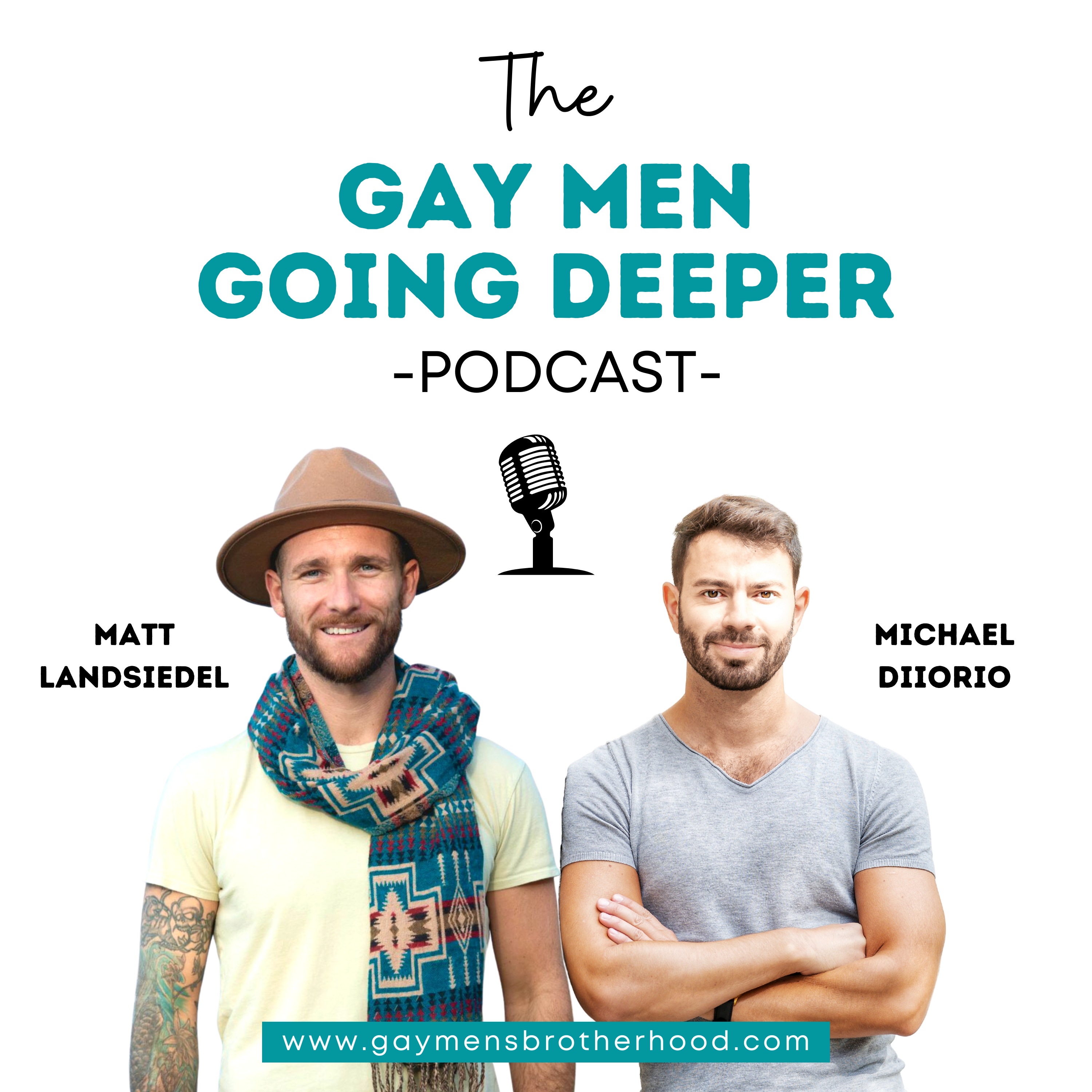
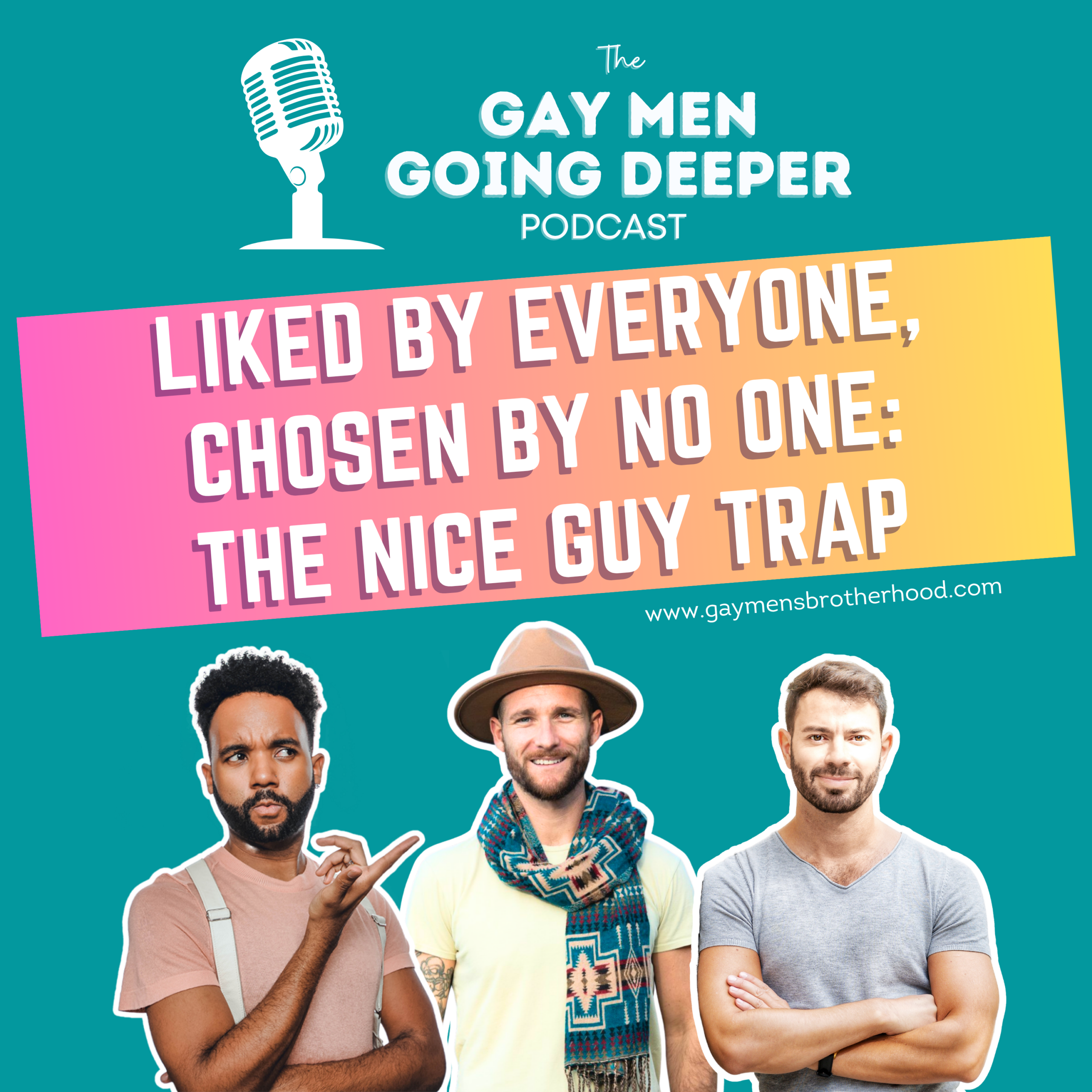
We are your host, Michael Diorio is a life and wellness coach specializing in sexuality, relationships and self confidence. Reno Johnston is a life coach, business consultant and director of marketing for the Body Electric School. And I am Matt Lansdell, an intuitive and spiritual life coach and counselor specializing in healing and empowerment.
We each have our own coaching practice, but in this podcast we're sharing all of our best stuff.
So today we are talking about expressing your masculinity. This is going to be a awesome topic.
It's a very controversial topic. It brings up a lot of things for a lot of people, so it's going to be exciting to unpack it.
We're going to be exploring questions like what does masculinity mean to you?
In what ways has societal conditioning shaped feminine? You relate to your own masculinity and how do you express your masculinity?
And we'll continue these discussions on the last Thursday of every month in the GAM's Brotherhood Zoom hangout where you'll have a chance to share your own experiences.
The podcast and YouTube channel are listener and viewer supported. If you enjoy what we're creating, you can support us by making a donation to the show using a link in the show notes.
You can also subscribe to early access option on Apple podcast and listen ad free and gain early access to episodes. All your support helps us to continue making content for you and supporting our community. And we do thank you in advance.
If you're looking to accelerate your personal development journey, check out our new coaching collection. Learn how to heal and empower yourself at your own pace by getting Instant access to 45 premium personal development coaching videos created by us, as well as our healing your shame and building better relationships courses.
You can head over to gay men going deeper for more information on that.
Okay, so I want to articulate just kind of how I'm feeling right now. I'm feeling a little bit anxious is too strong of a word, but I'm feeling a little bit maybe, I guess sensitive to the fact that this topic, it's. It's very controversial, especially right now. There's a lot of gender ideology around in the world right now and a lot of oppression around this. And so I'm going to try my best to get it right. And I use air quotes when I say that. And by getting it right for me means sharing authentically and sharing how I perceive masculinity. And how I perceive what it means to be a man and these sorts of things. And. And me getting it right might rub people the wrong way. And that's completely. Okay. I would just ask everybody to have an open mind when you're listening today to, you know, different people's ideologies on what this topic means, because it's. It can mean something completely different to. To me than it would to Michael or Reno.
[00:02:51] Speaker B: Right.
[00:02:52] Speaker A: So we're hopefully going to be able to share our. Our perspectives today.
So off the top, I want to say that we're not talking about the sex of an individual and we're not directly talking about being a man. Okay. It might come up because part of masculinity is about being a man, but we are more talking about the physiological, psychological, and energetic expression of the social and gender construct of masculine masculinity.
So masculinity isn't. Isn't so much a biological construct as it is a social and gender construct, meaning it can mean something to everybody.
You can have a masculine woman, you can have a masculine man.
[00:03:30] Speaker B: Right.
[00:03:31] Speaker A: These. These things are very, very much. We get to define them, what they mean to us and. Or we have been told what they mean to us by the patriarchy.
[00:03:41] Speaker B: Right.
[00:03:42] Speaker A: Which is a very masculine dominant system. And it has informed us how we need to be in order to be seen as a man or to be masculine. And a lot of us have bought into that.
A lot of the work I've done has been unpacking that and picking what's good. What do I want to continue to subscribe to, and what do I not want to continue to subscribe to? That's been a very, very painful, but also very liberating journey for myself, and that's where I'm going to be sharing from today, is what that's been like for me.
There's a couple terms I'm going to be using throughout this podcast. A lot of people use the term toxic masculinity.
I'm not a fan of this, this. This term. I don't think there's anything toxic about masculinity or femininity. I think it's. It's the perhaps dysfunctional or maladaptive ways that we express masculinity that can be toxic using air quotes. So I prefer to use the terms performative or hyper masculinity. So you'll hear me using these throughout this episode.
And these are essentially terms that are used to describe the inauthentic expression of masculinity as a means of fitting in and earning the approval or acceptance of others.
I see this as a, you know, we have the divine masculine and we have the wounded masculine. And I see this performative or hyper masculinity as the wounded masculine. It's us being taught as, as young boys or even girls.
This is what it means to be masculine and that it is a currency. You get validated when you are this. So we learn how to perform that, we learn how to become hyper in that, in that expression of masculinity. And we get validation, we get approval, we get acceptance and we get further and further away from our authentic self.
So today I want this episode to be hopefully an opening for people to see that they can reclaim what this means to them and start to incorporate whatever they want it to mean to them so they can connect more with their masculine self.
And so I do have I created like a little I guess infographic on my, on my Instagram page probably a year ago when I was really navigating this stuff, I was in the thick of it and I broke down like performative masculinity on one side and authentic masculinity on the other. And I just want to read it to you guys because maybe it'll stimulate some things for your guys's share.
So under the performative masculinity side, I have, motivated by fear of rejection and judgment, worried what other men or even women might think of of them.
Built on people pleasing, it lacks connection to joy and playfulness.
It's fear of being seen as gay, feminine or too sensitive.
Limited displays of emotionality spends a lot of time in their mind thinking relationships can be hard due to neglecting the feminine or the yin energy and buying into rigid social and gender norms about what it means to be a man.
And then on the authentic masculinity side, I put motivated by self possession.
I see self possession as very non conforming. It's like this is how I am, this is how I'm going to show up and this is how I'm going to represent myself regardless of what people think about me. So we care more about what we think about us than what others think about us.
We're less concerned by the opinions of other men.
It's built on a strong desire to be authentic.
It's rooted in joy and playfulness.
It isn't threatened by being seen as gay, sensitive or feminine.
Connected to their emotions, they practice embodiment.
Relationships are fulfilling because they can be themselves and it challenges social and gender norms that don't serve their evolution.
Right. So we recognize that there's something like, for me, there's something about me that needs to express itself or myself in a very sensitive, very emotional, very intuitive way. This is the work that I do. This is my sole purpose. And this part of me was really shut off for a lot of my career. I was doing counseling and coaching, and I wasn't connected to this, this healer in me. The healer in me is the divine feminine, and I was repressing that. So, you know, when I say, you know, we're connected to or challenges the social and gender norms that don't serve their evolution, that's what I'm speaking of. We all have to really get in and connect to, like, what are we evolving into and does these old gender norms and social norms around what it means to be a man or, or masculine, do they still serve me?
[00:08:15] Speaker B: Right?
[00:08:15] Speaker A: And I think that's, that's a really important thing to, to dissect.
And then the last things I'll say is unhelpful beliefs about masculinity or, or being a man. Don't show emotion.
Be composed and controlled at all times.
Vulnerability is a weakness we must be providing to be worthy.
We must always want sex.
You will be more desirable if you're an alpha male and connecting with other men in intimate ways makes you gay. These are kind of like the top eight that I picked that I was just like, you know, these are really ones that I, that I see, I see a lot of them in the gay community, but I see a lot of them in the heterosexual community, especially amongst, like, athletes in these really kind of alpha communities where men, they feel like they have to perform their masculinity to be accepted. So, and then a lot of us as, as men, I think we put those men on pedestals. We see them as the top of the food chain. So we idolize them and, and we, we, we get further and further away from who we actually are. So I, I see masculinity now as a space, and it's a, it's a space that I can step into and it can be whatever I want it to be in that moment.
I've created that space very intentionally. And my, my wish is to continue to create content and, and share wisdom that can help other men step into creating their own expression of, of masculine and what it means to them. So, yeah, I think that's everything I wanted to, to touch on.
Yeah, actually, I did write down one thing. Each time you perform for others, you move further away from your authentic self. Self Betrayal and self abandonment will leak your power. And you need to feel courageous to express your authentic self.
[00:10:04] Speaker B: Right.
[00:10:04] Speaker A: And when we don't have power, we don't have courage. So we got to learn how to not perform and learn how to just show up and be our most authentic selves. And then in that, we find our power.
[00:10:15] Speaker B: Right.
[00:10:15] Speaker A: So it's kind of this catch 22. We're scared to step into that, but when we do, we get power and we get the courage to continue to step into it. So we have to be willing to initially take that first step to stepping into who we want to be and who we want to become.
So.
Yeah.
So now I want to turn it over to Michael.
What does masculinity mean to you?
[00:10:38] Speaker B: Great intro, Matt. Thank you for. Thank you for setting us up with that. You did a really good job explaining it, and it certainly got me thinking about this question.
Yeah, thank you for that. And I think it's important to. To kind of reiterate that as we go, as we go on.
So what does masculinity mean to me?
You said a lot of words there that was like, oh, that one. Oh, that one. I think the number one that that comes up for me is confidence, but in that grounded, authentic way that I teach my coaching. Right. In terms of self confidence. And I think where a lot of people go wrong, myself included, is we tend to confuse confidence with, like, aggression, dominance, control, power, like overexerting power. And I think true in the masculine form, confidence is really about inner strength, boundaries, self discipline.
It's that confidence that really does come from within, which is what I teach, like that inner internal validation. Right. So it's not seeking. It's more so like being very grounded and secure in who you are and then projecting that into the world. So that's the first thing that comes to mind for me.
And I guess the. We're not using the word toxic. Another. Another word that I've used that I like is wounded masculinity. But what's the one that you use, Matt?
[00:12:07] Speaker A: Performative, hyper. I don't. You guys, you can use whatever you want. I just. For me, it's toxic. A lot of people use toxic. And that's.
[00:12:14] Speaker B: Yeah, okay. I like the one that you said performative, because coming from my background in. In the corporate work environment where I spent 13 years, it was a financial industry, very Bay street, which is like Wall street for those of you in the US it was very dominant masculine energy, and I was very much rewarded, like, super competitive. Do, do, do like, bulldoze over everybody else and, like, cutthroat. That kind of energy.
And so you're right. You know, you had said earlier that that is rewarded in the gay community, but it's also rewarded in, like, a lot of aspects of society.
So I think something I've learned is from a business perspective, I'm putting on my, like, entrepreneurial hat now, is as I am, as I kind of healed that aspect of me. It took a while to, like, wash that out of me. Coming from that background, my business did better. Like, it actually performed better when I. When I kind of healed that aspect of myself that always needed to do and compete and, like, win.
So, yeah, I would say. I would say, to answer your question, it's really about confidence and groundedness and. And. And I guess we'll get to the other parts about how it's changed in future questions. So I'll. I'll pass it off to Reno to hear what he's got to say about what masculinity means to him.
[00:13:32] Speaker C: Thanks.
Yeah, so I guess I want to start by saying that I'm still answering this question for myself. You know, it's. It's.
It's not completely clear to me what the masculine is.
And yet I can say that I've seen expressions of it through people. And also I actually look to nature as another sort of model, an example of, like, polarities and contrasting energies and expressions. So for me, masculinity.
Well, first of all, as you both mentioned, I think there's, like. I would call it. My version would be the secure masculine and the insecure masculine, or the secure feminine and the insecure feminine.
The. To me, what the.
The insecure masculine looks like is.
It's, like. It's, like, overpowering.
It's.
It's taking.
It's competing, but not.
Not competition in a way that invites and inspires all ships to rise. Because, you know, that's. That's a different kind of competition. Like, when I'm actively engaged in, say, being the best and winning from a secure place, what that does is.
Invites other people to become better, you know, as opposed to trying to win, to.
To overpower other people or make people less or to take people out, so to speak.
So this is, like, one example for me of the distinction between, say, the superior masculine, insecure masculine.
Also, I look at leadership.
To me, the masculine is a. Is an energy of leadership, and in its secure form, it's leading via, let's say, inclusion and, like, clarity, groundedness, connectivity.
In its insecure state, it's leading by force.
Right. It's leading by force. It's leading by control.
It's leading by dominance. Right. So these are some of the distinctions I think of when I think of the. The secure masculine versus the insecure masculine. Archetypally speaking, if I were to kind of look at examples of individuals with a leading masculine energy, I would. I would think of someone like, say.
It's not. Yeah, it's not immediately coming to me, but I guess the first thing that came to me actually was Arnold Schwarzenegger.
Why? But I think it's because here's this. This. This archetype who symbolizes strength and leadership and order and structure. You know, he ran for politics. He, you know, was actively involved in bodybuilding and weightlifting.
You can sort of hear and feel what I experienced to be the masculine expression and that leading masculine energy in his embodiment, in his expression and in the way he shows up.
Now, in contrast, I would say that an example of an insecure masculine expression might be someone like a. Let's say, Donald Trump, or dare I mention his name. And we may have to bleep it out, but Andrew Tate, you know, there's a lot of talk on the Internet about these particular people these last years. And I would say that if you're looking for an insecure or, let's say, unintegrated or unhealthy expression of masculinity, I would say you can look in those directions. And I say this not with judgment, but. But with I. Compassionate empathy, to be honest, because I myself have been in unintegrated or insecure states of masculinity and, And. And expressions of masculinity. And I know that when I was in those spaces, I was not at my best. And, Matt, you talked about performance.
When I was in those states, I was also performing, you know, so, yeah, I think I'll leave it there. But that's. That's. That's sort of what I've got. And as I said, I'm still learning. I'm still figuring it out, you know.
[00:19:29] Speaker A: Thanks, Reno.
I want to. I want to share something that came up when you were talking, and it was kind of. It was interesting when you. When you were trying to come up with a. With a person that embodies the. The secure masculine. And you. You kind of were like, nothing was coming to you. It reminded me of something that happened about three months ago. I went to a workshop with a. A shaman, actually, that I have sat with through all my medicine ceremonies. And he and I Never really resonated very well prior. But when I went to this time, I had sat with him in four separate ceremonies and never really connected.
Went to this, this workshop that he was running here in Calgary. And he walked into the. The center and he looked at me and he was so excited to see me. And he like, gave me a hug and he's like, oh my God. And he's. I've never had a reception from this guy like that. And it felt so good to me.
And so I'm sitting through his workshop and I was just really almost enamored by him. Like, he was so authentic and so grounded and so present to everybody. And I was like, this guy is like. I feel like woke up to him. And for me, that's not a very common experience. I've actually really don't have that at all. So I got home that night and I was just feeling really emotional and I'm not sure where it was coming from. And I just got taken over by. By emotions. I started to cry and I had this epiphany that I'm yearning really badly in my life right now for a strong, masculine leader and mentor, like somebody that I can connect with and look up to and, and soften into.
And I don't mean romantically. I'm not looking well that I'm looking for that too. But I'm, you know, I. I don't feel like I have that in my life. And it was almost like a grief around. Like there's so much wounded masculinity in our world and so many men leading with ego and force. And, and when I, When I'm. Do as I'm doing this work on myself and learning how to lead with more tenderness and compassion and inte.
Feminine with my masculine.
I'm realizing that this. There's a major gap here. And. And you know, I want to call out men, you know, to step. Step up, step up and do your work that will allow you to embody, you know, this.
This thing that I think a lot of us as men are really yearning for a safe place to land with other men and not to feel like we always have to compete with each other.
So anyways, that's. That's what came up.
[00:22:04] Speaker C: And can I, Can I add to that?
[00:22:07] Speaker A: Yeah, please do.
[00:22:08] Speaker C: Yeah.
I love that you shared that.
And it is interesting to me that it didn't immediately occur to me.
I want to say that I was looking. I was kind of looking for men who are like, well known in the public eye. And again, it's not lost on me that I was struggling to come up with something, you know, that say something in my. In my personal circle. What's been really amazing is that as I've done the work to heal my relationship to masculinity, what I've started to notice, and it's an ongoing journey and process, is that all of these amazing men have started to show up in space and come out of the woodwork and. And like, to me, these men, while they're not like, on television and, you know, in the news and in the public eye in a. In a. In a large way, these men are doing the work and it shows. You know, I feel safe with these men, and I feel like I can not only embody my own masculine, but. But my feminine as well.
When I'm with these men, I can tell that they've been doing the work because I feel safe in their. In their presence.
That that's subjective in a way, but it's something worth paying attention to. When you're around people who are expressing the. The masculine, you know, notice in your body, like you. You feel safe around these people, and do they feel safe within themselves? You know, that says a lot.
[00:24:02] Speaker B: Yeah.
Yeah.
[00:24:04] Speaker A: Thanks for sharing that. I think that's what's happening now is I'm learning how to soften. So I don't view men as. As threats as much anymore and comp. And competing with them. So something shifted in me in that moment. I released, I softened. And then it interesting because now I've got about three or four guys that have reached out to me randomly and they are leaders in their own communities and they're like, wanting to connect. And we've been having calls and. And I feel like they're my equals. It's like really cool. Whereas before I would be like, wait a minute, I don't need you. I don't want you telling me whatever. And I was very resistant to being soft.
[00:24:37] Speaker B: Right.
[00:24:37] Speaker A: With. With these people. So, yeah, it's so cool.
I want to just quickly share with what masculinity means to me.
And, and as. As in always my Gemini nature, I've broken it down into two things. Through. Through my own lens of duality, so material and spiritual. And I view my material self as my conditioned self. This is the programs I have around what masculinity means. And spiritual is my divine self. It's how I resonate with the. And express the masculine energy.
So I just made a couple lists. And my material is very much conditioned based off of growing up in a Family system, both family systems and paternal were blue collar, super masculine men.
Like, you know, hard working, work with their hands, deep voices, like, just. That's just what where I come from. So I really looked up to that growing up. And I think that's why I've had a hard time integrating my feminine, because I really got a lot of messaging, whether indirect or direct, around don't show that part of yourself.
[00:25:39] Speaker B: Right.
[00:25:41] Speaker A: So the material is actually derived from what I'm drawn to or attracted to. And I would say I see masculinity as muscled, deep voice, big hands, providing, safe, secure, strong, athletic, hairy.
You know, just some of these qualities that really. And these are all the things I'm drawn to and attracted to in men minus muscle, probably. Like, I've never really gone for muscled men, really.
But everything else, I think I'm really, really sexually attracted to, especially big hands.
I love big hand and spiritual. So this is the energetic expression of the divine masculine for me, which is active, grounded, providing, manifesting, protective, assertive, planful, humble.
And I think humble comes when the feminine comes in. When the feminine and masculine kind of integrate each other, you find humility. At least that's been my experience.
Conscious, attentive, intellectual, present and self assured. Those are just some things that came up for me around the. The masculine. So anything else you guys want to add on question one? Before we hop over to question two,
[00:27:07] Speaker B: I do want to add for our listeners and viewers that this is sort of a part one of two. Our next episode is actually going to be about expressing your femininity. So don't worry, we. We will be getting to that. I just wanted to point that out there.
[00:27:18] Speaker A: Yeah, exactly. And then the third episode of this month will be guided meditation that I created on how to balance the masculine and the feminine. So we kind of were hitting all the, the corners of this, this very deep topic. I guess it is a pretty big topic. So yum, yum, yum in your tum.
Great.
All right, Michael, in what ways has societal conditioning shaped how you relate to your own masculinity?
[00:27:47] Speaker B: Great question.
I was thinking about this as you guys were sharing.
Matt, at the beginning, you had talked about sort of the. What it means to be in your. In your intro at the very end there, you had given some traits or qualities of like what, what it was to be masculine. I think in the end there.
[00:28:05] Speaker A: Yeah, yeah.
[00:28:06] Speaker B: And what you described is essentially like what I was raised to believe masculinity was.
And so that for sure was it. But I want to talk about the Positive side. So the. The authentic masculine, the. The kind of masculinity, that energy that I think was beneficial for me.
And I look not necessarily to my dad because my parents were divorced. I didn't spend too. Too much time with my dad, but I spent a lot more time at a very young age with my grandfather on my mom's side and both my grandparents, actually. And so I learned.
I just realized that today's his birthday anyway.
Wow.
Would have been his birthday. So, yeah, I learned from him, from that side in that generation. Right. So this is an older Italian generation, immigrated here, worked hard. Very similar to you, Matt. Blue collar, that whole thing.
And so what I loved about that and what I learned from it and I take from it was it was a very protective energy that he had around his. His wife, his family, all of us.
I don't know if you guys read tarot cards, but it's kind of like that king energy. Just very strong, silent type. And he was very much a silent type, almost to his detriment, but that. Very strong, like having discipline, self discipline, you know, managing your emotions.
Like, again, not. Not. He was almost too far where he didn't show them at all, but, you know, to the point where, like, he was always calm. Like this man. You could not ruffle a feather on him.
Very stable energy, very supportive.
I used to be a little bit scared as a kid of him, but I. I come to realize that he was just. He was just that person that you could go to and, like, he got your back. He might not say it. He might express it very much at all.
Never expressed the vulnerability, kind of like you were saying at the beginning, Matt, but definitely had that. Instilled that sense of respect. For sure. I definitely got that from him. Respect for family and for. And for your elders and for.
And also discipline, like working hard and also, you know, enjoying. But that. That work ethic came from him. So I'd say familial conditioning was that, which I. Which I think from a societal conditioning point of view, which was the question, I think that's where it all kind of goes into.
Into a frenzy. Because the societal conditioning is kind of what taught me about, you know, having to win. And if I'm going to, you know, you can't just like Reno has said so nicely, like a rising tide raises all ships. No, no, no, no, no. What I learned was, you know, I win, you lose. There's an infinite or there's a limited amount of pie, and I need as much as I can for me and so back to what I was saying in the corporate world is that really influenced me a lot because that was not only dominant, but it was rewarded. Like those. Those people got the promotions, they got the. The projects.
So I think that didn't help me at all.
And it has been a deep unlearning of that, as I said earlier, like, realizing that, wait a minute. There is no winning, really, first of all. And if I do want to win air quotes, it's really about balancing the femininity with the masculinity.
So I think I'll leave it there for now.
I might. I might want to add some more stuff from a gay perspective, but I'll. I'll chime in later on that. Let's go to Reno.
[00:31:22] Speaker C: Okay, so I have a question for you both. It's totally random in our left field, but, Michael, you're in a situation. You're in a lap dance situation.
Are you the person giving the lap dance or receiving it?
[00:31:37] Speaker B: Receiving.
[00:31:39] Speaker C: Are you?
Okay. And what about you, Matt?
[00:31:43] Speaker A: Oh, I don't. I would be super uncomfortable receiving it, especially if people were watching, but I would be. Yeah. I don't know.
[00:31:49] Speaker B: Probably.
[00:31:50] Speaker A: I wouldn't be. I wouldn't be in that scenario.
[00:31:52] Speaker C: Okay.
[00:31:53] Speaker A: Okay.
[00:31:54] Speaker C: The. The reason I'm asking, I was just kind of. In my mind, I was just kind of playing this game because my. My thought was. My thought was, like, the feminine would be more inclined. Like, the feminine would be more inclined to, like, to be the person sort of giving the lap dance, like, dancing around. Like, the vision I hold in my mind is like, the masculine would be the person sitting in the chair, like, present, you know, and sort of grounded in that moment.
And, like. And the feminine would be like the. I don't know, the person kind of floating around and dancing around or that sort of thing. I'm not sure if it's completely accurate, but.
But, yeah, societally, I think that.
What I notice is that to me, what the masculine looks like was, you know, was like.
Like competing and.
Yeah, competing, getting, winning, getting done, doing stoicism as well, sort of.
[00:33:03] Speaker B: But.
[00:33:03] Speaker C: But stoicism, not in the. The secure masculine sense, which I think shows up as a sort of repression and oppression, which results in depression.
But, you know, whereas, like, to me, the. The secure version of. Of stoicism is someone who's like, like grounded, integrated, present, imperturbable, and perhaps because they've spent time sitting in lotus pose, allowing all of their.
To come up again and again and again.
And rather than scratching that itch or like, reacting from that space. They're sort of being with it and allowing it to move without, you know, as I said, reacting.
It's interesting because my. My dad.
And I could say my dad's. Because actually, you know, technically speaking of two, my biological father and then the man who raised me from the time I was three.
And what's interesting is that when I was young, you know, I just saw this, like, I saw this man who was always kind of like angry, tired, frustrated, flustered, like, I don't know, shouting, controlling, dominating, like, all of these things. Really good at sports, deep, booming voice, loud, tall, towering.
And I thought all of these things were. Were. Were masculinity. I was like, oh, this is what masculinity looks like. And if this is masculinity, I don't want anything to do with it. I was like, no, thank you. I'm not interested in this. This doesn't feel good in my body, so I'm not interested in it.
But then there were these moments where, like, you know, and I see this now more looking back than I did at the time, but it's like he protected, he provided, you know, he made sure that we were safe.
He helped maintain order where there was chaos.
And so, you know, at some point, I started to see what looked to me like a healthier expression of the masculine. And, you know what. What I was interested in embodying were I to step into that space and begin to express that energy within myself. But what I say is, initially, I kind of rejected it in a big way. I was like, I just don't want anything to do with this because I couldn't really see.
Not that. Not that it wasn't there, but I couldn't see a healthy example of masculinity in my. In my environment.
And the other thing I'll say too is, I mean, I liked being emotive and flowing and moving and dancing, and I loved color, and I played with Barbie dolls and I, you know, sang and was into sort of drama and performance and, you know, all of these things that were deemed feminine and. And for girls, right? I was into all of these things.
[00:36:41] Speaker B: Things.
[00:36:41] Speaker C: I. I love them.
And I was reprimanded for that constantly.
You look like this, therefore you should be like this, you know, and it's like, that doesn't. Again, that doesn't really work for me, you know, So I would say that that's how society influenced me. And. And thank goodness, as I'm, you know, as life goes on, I start to see more inspiring Is the word. I'll use more inspiring societal examples and.
And influences of the. Of the masculine. Yeah, yeah, Yeah.
[00:37:32] Speaker A: Thanks to both of you for sharing. It stimulated some things for me.
Again, Another story was stimulated, so I'll share it briefly.
So I just hired a fitness coach because I have been out of the fitness world for almost four years now. And I want to start work, getting more strength in my body. And so I go there and this guy's, like, super duper masculine. And I can tell he's got some of that energy around, like, math, you know, Pretty sure he's a straight guy.
And I. It's just interesting what happened in my body. My body started to go rigid and, like, started to, like, hold itself, like how I used to, and I had to, like, really breathe into that and, like, let go of some of these things. And I felt guarding around my. Around my solar plexus. And I felt like this kind of like, it's like this door just shut. And it was like, do not show that serpent. The serpent in you. That's the feminine for me is the serpent. It moves through me very fluidly. And it was like, lock that down. Don't show. Don't share that. And it's just interesting how old programming came through. And I chose to kind of override that. And I let out the playful and excited Matt, and I was, like, excited to be here, and I was expressing that. And then something really magical happened is like he felt that energy in me and that I made it safe to be that. And then he softened. It was almost immediately as soon as my. My gate opened and I started to share that playful side, he softened and he let his gate open. So it was, like, really cool how, like, I let my. My femininity come through and then it gave permission for his femininity to come through.
[00:39:10] Speaker B: Right.
[00:39:10] Speaker A: At least that's how I perceived it. So, yeah, anyways. But the societal conditioning has shaped me in a tremendous way. It's been huge, Absolutely huge. And I think for a long time I used masculinity as, like, a safeguard from being perceived as vulnerable, weak, feminine, even gay.
[00:39:32] Speaker C: Right.
[00:39:33] Speaker A: I didn't, like, up until I didn't come out till I was 18. So I use masculinity hardcore from, you know, whatever age, probably 12 to 18. You know, I rode motorcycles and dirt bikes and played hockey, and I literally wore all the things that I needed to wear in order to be seen as, well, straight and masculine and these sorts of things.
So, yeah, it made me reject my femininity and Perform my masculinity.
[00:39:59] Speaker B: And
[00:40:02] Speaker A: yeah, I got very, very far away from who I actually am as a person.
I found it hard to experience joy, be playful, be enthusiastic, tender.
[00:40:17] Speaker C: These.
[00:40:17] Speaker A: These sorts of qualities were just really shut down in me. And now that I've brought them back online, like, this is a big part of who I am. Like, you know, when I'm by myself or with people that I feel fully safe with, like, I'm very, very tender and sensitive and playful, and I'm always joking around and, like, I have a very light heart. And, you know, I think me performing my masculinity put this stoic shield around me, and it only made me feel safe to share certain parts of myself with the world. So I think that's why, like, authenticity and self expression is so important to me now, because I lived most of my life shut down.
Well, I shouldn't say shut down. I was only allowing certain things through the filter. I'll say so anyway, that's a big part of the impact. And then it made me deny, like, things that I love about and that I'm passionate about. And a good example of this is singing. I'm really realizing, like, how much I attributed singing to femininity, and I denied myself sharing that with people. And it's been tremendous. It's been scary. Very scary. Because when I'm singing, I feel like I am sharing my feminine and I'm overriding old programs with people when I'm sharing that part of myself. It's a very, you know, and I sing from the heart, right. So that I'm sharing my heart with people when I'm singing. So, like, for me, that's.
[00:41:36] Speaker B: That's.
[00:41:37] Speaker A: That was a big injury, and I'm healing that now, and it's leading to tremendous breakthroughs, which is really, really cool.
And then the last one is it formed my material attractions to men. So societal conditioning really brought that online for me. And I've had to learn how to.
I've had to learn how to find attraction in men through the feminine as well. And how that's happened is be by me integrating and learning to love the feminine parts within myself. And it's now making it easier for me to move towards attraction and in.
In others. So, yeah, those are my answers.
[00:42:14] Speaker C: Beautiful.
[00:42:16] Speaker A: Thanks, Reno.
All right, so the question three, how do you express your masculinity? I'm really, really curious to hear what your guys's answers are on this one. So, Michael.
[00:42:26] Speaker B: Yeah.
[00:42:26] Speaker A: How do you express your masculinity? Yeah.
[00:42:29] Speaker B: Before I go to that one. I do, I do wanna. I figured out what, what else I wanted to say on the last question about social conditioning, specifically with, with gay culture and the gays and coming out, I would say that how that conditioning shaped how I relate to my masculinity was that I think we.
This is a generalization, I'm gonna say it anyway.
We reward those kind of typically masculine looking appearing guys.
We give, we give them attention. They historically have gotten a lot of attention. That's changing. I will be the first to say and happy to say that that's changing. I love that I, that we'll talk more about that in the next episode. But I think that has shaped it as well because I remember thinking, oh, okay, if I, if I'm going to be a viable gay man, I need to look like this. And that. That was always around bigness, like muscularity, fit, athletic, that kind of thing. And I was like, oh, I can't escape it. Like, I had to, I had to, I felt I had to be like that, you know, when I wasn't out. And then when I did come out and I moved to Toronto, I was like, oh, like, okay. So I think that, I think focusing on the, the, the strength, like the outer strength at the expense of inner strength, that has been a big key learning for me.
Sure, people can look really strong on the outside, but you know, if for me it's all about that inner strength and having both. Personally, I like that. Both. So I think that has, that has also shaped how I relate to my own masculinity. Okay, now I can answer the, the real question here.
So the question is, how do you express your masculinity? Yeah.
All right.
I'm a doer.
I just love getting done.
I just love it. I'm a doer. I, I get so much joy out of it. I, I love it. There's the, that aspect of me can be very. It's that fiery energy. Like, just get it done. Very fiery, very action oriented. I'm goal focused. Like, that part of me really does shine, right?
I'm assertive. I have no trouble asking for what I want and getting it.
So yeah, it does come out in that way. Everyone who knows me, it's definitely my partner's like, oh God, yes, he does.
So those are the big ones. I'd say I'm also very logical. I'm very mind focused. You know, I do, I do have a really good mental process. Like I make decisions, I'm decisive, I can balance both things out.
And then finally I would say exactly what I teach is that grounded confidence that. That confidence that really comes from being yourself, being secure. Like, grounded is really the best word I can think of. Like, you are grounded. You are, like, built on a rock of yourself or whatever that may be, spirit, God, whatever you decide.
And that. That's unshakable. Right. So I think that really helps me create boundaries. And first of all, knowing who I am and what I want and then creating boundaries around really helps. Helps me do that. And then also, like, I. I don't take shit, so that's a good thing. Right. I think when you don't have those boundaries, you end up. And this was me for a long part of my life, people pleasing and. And. And finding other ways to get your needs met that are maybe more manipulative versus just saying, hey, this is what I need. This is what I want.
Right. Not to say that that's going to work. Not to say you're going to get it, but either way, if you don't get it, you're just relying on your. Relying on yourself to. To figure that out. So. So, yeah, those are. Those are the main ones. And I think those are all aspects, correct me if I'm wrong, of, like, that typically masculine energy.
And of course, all of these things that I just said, I say them in a positive way. But like we talked about at the beginning, there is. There is an excess of that that can become unbalanced, where it becomes, quote, unquote toxic or wounded or performative. Right. But I'm really talking about in that balanced way. I think those are some of the ways that I really do express it from an energetic perspective. Was the question about energy?
[00:46:25] Speaker A: No, it can be whatever you want it to be.
[00:46:27] Speaker B: Well, I love.
[00:46:28] Speaker A: I love your answer. I love your answer.
[00:46:29] Speaker B: That's our answer. Let's go to Reno.
[00:46:33] Speaker C: The feminine in me was very turned on by your answer, actually.
[00:46:36] Speaker A: Yeah, totally.
[00:46:37] Speaker B: Oh.
So
[00:46:44] Speaker C: I'm thinking of instances, like, there's a.
When I'm. When I'm in the. When I'm in the bedroom, for example, I can remember this particular instance where, like, I was on the giving end and the person I was with was on the receiving end. And when we were complete, he said to me, he's like, I felt like you were my heart.
And I was like, I was.
I was.
And there was a. There was, like, a presence in my penetration and the way that I was, like, loving this person who was, you know, beneath me.
That, to me, equates to the sort of, like, healthy Masculine expression, grounded, masculine, loving masculine expression that I'm interested in embodying. You know, that's one example of it showing up in the bedroom. Another would be, you know, a scenario where I was with a friend. We were going shopping, and he had commissioned me to help him find an outfit, knowing my background and style.
And we walked into the store, and without skipping a bead, I was off picking things off the shelves. Someone came and asked if they could help. I said, no, I got this grab stuff. We were like. It all happened very precisely and very.
What's the word? Harmoniously. And remember him saying to me, reno, I've never seen this side of you. You're so, like. You're so assertive. You're so, like, organized, direct, you know, like, strategic, controlled.
And so that's another instance where I felt at home in embodying and expressing my, you know, my own masculinity.
And then I think it also shows up in. In, like, my work, in the ways that I problem solve. I can bring, like, a very powerful presence and thoughtfulness and strategicness to solving problems or resolving conflict. What I notice is I just get, like, really clear. And it's not that I'm not feeling or emoting, but it's that it's, like. It's, like, grounded. And I'm really coming from this, like, clear, focused, present space. Like. Like ordered, sort of structured space.
And then. And then I would say lastly, and this might be.
You might say that this is, like, an example of, let's say, the integrated shadow side of the masculine, which is, like, competition. I actually really enjoy competing. It's fun.
But what I've discovered is that there's a way of doing that, like, we see, say, in a healthy game of basketball, right.
Or a sort of board game or something like that. To me, these are, like, healthy means of. Of. Of being in competition. Integrated means of being in competition, so to speak. So these are some of the ways that I would say I express the masculine in me. Yeah. And there's probably a laundry list of others, but. Yeah.
What about you, Matt?
[00:50:37] Speaker A: Beautiful. I love the heart. I'm gonna add that to my Tinder profile.
Looking for someone to my heart, because that's. That sums it up.
[00:50:48] Speaker C: Just kidding. Just kidding.
[00:50:53] Speaker B: Not up your heart. That's a different thing.
[00:50:55] Speaker A: Yeah, no, more up my heart.
[00:50:57] Speaker B: My heart.
[00:50:57] Speaker A: Don't penetrate it.
[00:50:59] Speaker B: Yeah.
[00:50:59] Speaker C: Yeah.
[00:51:02] Speaker A: Good. Yeah. Okay. Mine. For me, this was a hard one to think about this whole thing, actually. All these questions, like, you know, I. I've been sitting on them For a month.
So I'm just wanting to really honor that. That it took me a lot to like, really put into this, but so I broke it down into material and spiritual. And the first for material is sports.
Playing hockey. I grew up playing sports, and I just think, you know, being competitive is a big part for me of being able to exert that energy. I find, you know, even if you look at young boys and young girls, like, young boys are like, really, like, brute and like, for the most part, right. And they're just a lot more forceful and these sorts of things. And I've. I always liked that as a kid, like, really, you know, wanting to engage and play, you know, that was a big part of. Big part of me. So play would probably be. Be in there achieving. Definitely. I'm actually altering my relationship with achieving now. Like, I think I was overachieving before, stemming from inadequacy and shame. And now I've really healed a lot of that. And I'm like, coming at it from this place of, like, creation. Like, it all starts with creation. What do I want to share with the world? Not what do I feel like I have to share with the world. World. It's like, it's all coming from a place of inspiration within me. So achieving is actually a really beautiful process. And I love. I love achieving and productivity. Like you, Michael. Like, nothing gets me off better than like, you know, cleaning the house and like, feeling like. Yeah, like, it's. I feel good.
[00:52:29] Speaker C: I've.
[00:52:29] Speaker A: I've accomplished. Accomplishment is a big part of. Of my masculine energy.
Deep voice for sure. And I think probably when I was younger, I tried to be rigid with that. And I don't know, I think this is my authentic V, pretty sure.
But I can also play around with my voice. And I'm learning. My voice is, you know, I have like three and a half octaves. I can go very high and I can go low, but I'm, you know, so for me, that's how I express masculinity. I notice when I'm around guys and they are performing, I will make sure my voice is. Is expressing itself in a. With not a lot of inflection.
Callousness and anger, I think are probably two side, like the shadow sides of my masculinity. Like, I can become shut down, stoic and callous when. When I'm feeling threatened in my masculine energy and then anger. That's been a very big way that I. I relate to the world.
That's changing now, though. I think I'm softening around that I used to get really, you know, use anger to keep people away. And I'm learning that it's actually safe to bring people close. And, and so it's. I'm not needing to use anger as much.
And then the spiritual side of me, which is the spot. The side of me that, like, I don't know, I feel like this is just what I'm really.
It's. I'm really indulging in this right now. Like, it just feels so good. But, like, the groundedness, like, I feel like I'm like a tree. Like, that's the energy that I feel. Like, I, I, I am. And I'm very attracted to trees, and I think I have very deep roots.
I hold space for others really well. I'm a great listener, so I'm just really good at holding. Like, I have a very good, you know, I've always been told that.
So presence is something that is part of my masculinity, remaining calm in times of conflict. Like you, Reno. Like, I feel like that's a very strong skill set that I have. I don't get thrown off center very easily, and that's, you know, kind of part of that leadership. I think I'm a strong leader. And I think in the last three or four years, this, this space connecting with you guys, everything has really molded me into a true leader and not just like a manager or a controller. Like, I'm. I know I now know how to lead.
I protect the vulnerable. This is something that's really important to me, and it definitely comes from that masculine energy inside me. I advocate for people that can't advocate for themselves, and then I empower people how to advocate for themselves. That's a lot of what I do. Helping people reclaim their voice and their power. And then lastly, I speak my truth. I never hold back, and I always speak what's on my mind and on my heart. And I think that's a very much an embodiment of the masculinity.
[00:55:13] Speaker B: So.
[00:55:15] Speaker C: Wow. Yeah, thanks for sharing.
[00:55:18] Speaker B: Yeah.
[00:55:19] Speaker A: Thanks for receiving any last comments that you guys want to make.
[00:55:28] Speaker C: Yeah, well, I think I just. Yeah. Thank you for sharing all of that. Yeah, it. It brought up some things that I hadn't thought of for myself as well. Ways in which the masculine expresses myself, expresses itself through me, rather.
Yeah.
Yeah. That's all. Thank you.
[00:55:50] Speaker A: Yeah, you're welcome. You're welcome. And yeah, we're going to be essentially continuing this conversation because it's gonna be a very similar conversation next week. So come in and join us next week for the the expressing your femininity. And if you have not already, join us in the Facebook group Gay Men's Brotherhood. And then come in, join the conversation and come. We want to hear from you. And in the next GMB Zoom Hangout. And if you're listening on your favorite podcast platform, please leave us a star rating, hopefully five stars if you enjoyed what you heard. And we always love your guys's reviews and comments, even if they're constructive, we still receive them. And so thank you. And you can check us out for anything GMB
[email protected]. and yeah, much love to everybody. Take care.