Episode Transcript
[00:00:00] Speaker A: Today's episode is sponsored by the Silva ultramind system, which is a highly optimized framework for awakening your mind's fullest potential by giving you a reliable access to altered states of mind. That's based on the Silva Method, a pioneering mind empowerment methodology founded in 1960.
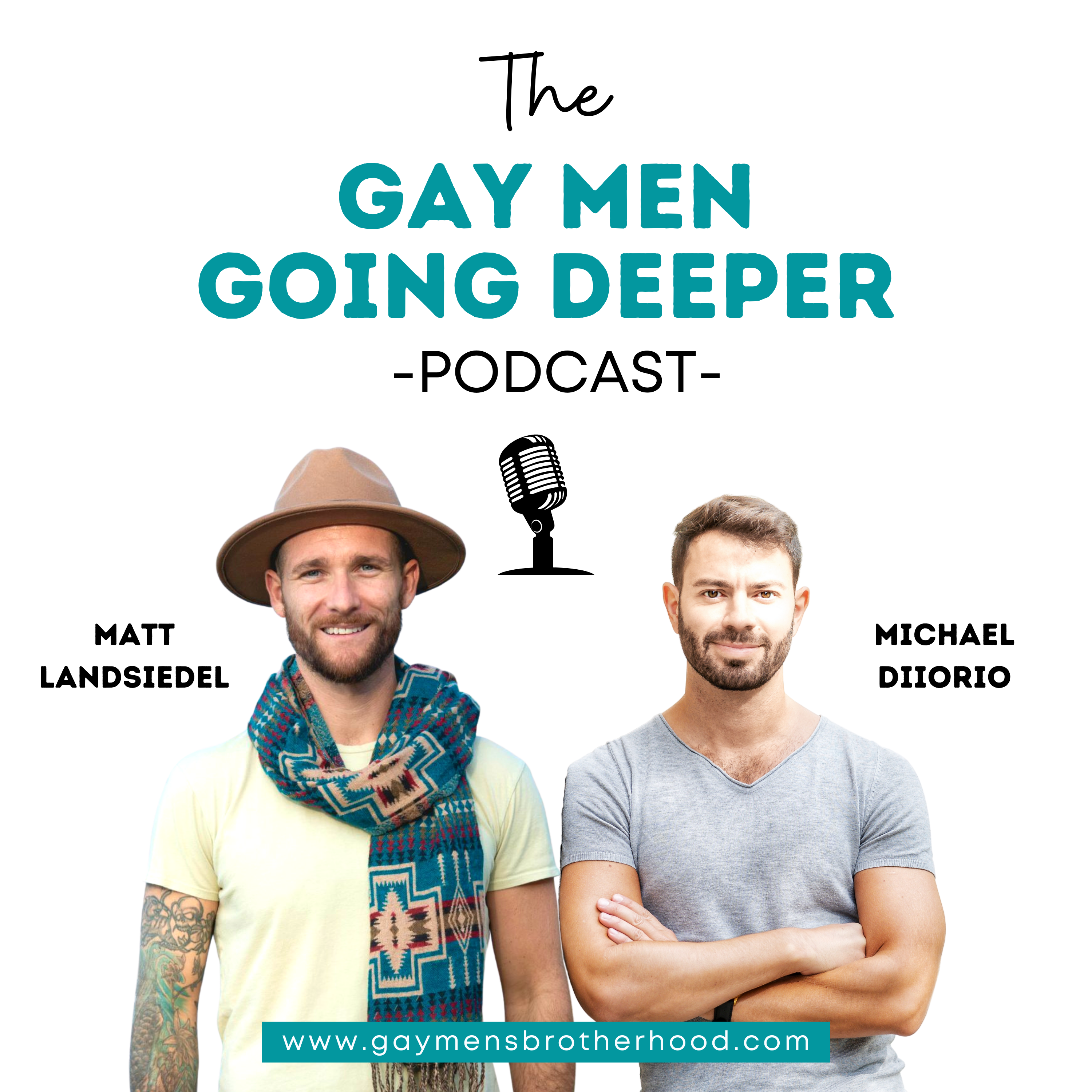
Basically, it's a long way of saying it's a meditation style that I started using recently and it has changed my life. It's more of an active type of meditation, so it's not any of that, like, clear your mind stuff. Get super quiet. It's more of an act of, like, doing something with your mind. You're actively thinking. And I can say I've seen measurable difference in my life since implementing it. They also have a super easy to use app, so you can use it on any smart device that you want. So if you're interested, you can head on over to our show notes and look at the Silva ultramind system link that we have there. Now, let's get on with today's episode. Hello, everyone, and welcome back to another episode of Gay Men Going Deeper. This is a podcast where we talk about personal development, mental health, health, and sexuality. Today, I am your host. My name is Michael DiIorio, and I am a life and wellness coach. I help people build genuine self confidence from the inside out by helping them become more of who they really are. I specialize in areas of sexuality, dating, and relating.
Today, I am excited to welcome back to the show Tim McCaskill.
Tim is a longtime Toronto writer, activist, and educator.
In addition to being part of the body politic from 1974 to 1986, he also fought back against the police raids on the gay baths in the early 80s.
He fought for funding for AIDS treatment and medications in the 90s, and he has fought against apart apartheid his entire life.
Tim has published two books. His most recent book, queer Progress, was published in 2016 and is part memoir, part historical historical account of the LGBTQ movement. So, Tim, thank you for coming back to the show.
[00:02:05] Speaker B: It's a pleasure. Thank you for having me.
[00:02:08] Speaker A: All right, guys, today we're talking about cruising and bath houses.
Important note for our viewers and listeners, if you're here and you saw the title of the show and you're all excited, mom, dad, if you think that this is about cruising like cruise ships and going on vacation, that's not what this is about.
So you could just go ahead, turn this one off.
We're actually going to be talking about cruising in the uniquely gay sense of the word. And so today's Episode will cover. What exactly is cruising, and how does that compare to bath house? We'll start off with some definitions, and then we'll talk about how cruising and bath houses became synonymous with gay culture. We'll share some of our anecdotes along the way, and we'll talk about if bath houses and cruising are really still relevant now, as maybe they were back in the, you know, 60s, 70s, and 80s. And of course, we'll talk about, for people who do want to engage in cruising and go to bath houses, what are some risks that you might encounter and how to mitigate those risks. And then we'll give you some tips for success.
So if you're someone who's actually never been to a bath house or never actually cruised, I want you especially to stick around for this episode.
It's not for everyone, and that's totally okay. We're not here to try to sell you on it. I think we're here to have a very honest, candid discussion.
So, yeah, Tim, why don't we start off with some basic definitions here?
How would you define those two terms, cruising and bath houses? How are they similar? How are they different?
[00:03:40] Speaker B: I think of cruising as the more spontaneous connection between gay men in places where that connection is not.
It's not organized in a way. So on the street, places like that usually begins with the kind of a flash of eye contact that is held a little bit too long.
And remember, that, of course, is very culturally determined because some places in the world, people hold eye contact longer, and some places they don't. I remember going back to Colombia after I came out and thought, everybody's cruising me.
And then I just realized no, Colombians actually hold eye contact longer, and I'm a gringo and people are looking at me. Right. It was a very different kind of thing.
So it's that kind of unexpected connection that is taking place unbeknownst to most of the people in the environment.
Like, if you're walking down the street and somebody kind of looks at you in a particular way, and they usually walk past and then both sides look back. Those kinds of rituals, which mean that you're operating in a. In a kind of a secret world, surrounded by people who are completely oblivious to the kind of connection that you have made.
Now, bath houses is kind of like, I guess bath houses would be to cruising as fishing would be to shooting fish in a barrel, right? Because everybody there, they know why they're there. Right? One doesn't have to be particularly repetitious about it or anything.
But there's still the kind of sense of unexpected contacts that not everybody in a bathhouse wants to have sex with you or wants to have sex with everybody. And so there's a kind of a ritual there of, of looks and smiles and connections.
Often, I think.
Often, I think in street cruising there may be a bit more conversation before people try to negotiate actual sex. Whereas in baths, I certainly found that it's better to have sex first in conversations later. Right.
Because the conversations turn out to be much more relaxed if they're not entangled in.
In the particular kind of instrumentality of the connection. Right.
So, yeah, that's my definitions of bath houses and cruising.
[00:06:22] Speaker A: Yeah. Very, very good. I think cruising can happen pretty much anywhere, really, as long as there's more than one person and there's that eye contact. I think there's, there's. Now, there are certain spots that are kind of known for cruising certain areas of particular cities or spots indoor and outdoor, or that you might find more.
More luck or more people that are kind of going in hopes of finding that versus bath houses, as you said. I mean, it's, it's. It's very much. It is what it's there for, and it's not as discreet in terms of what's going on.
I found here in Toronto, most of the cruising spots that I have found, I just kind of happened to find myself and then later found out, oh, that was actually a really popular cruising spot. So I think that's really interesting. I mean, I, for, for, for me, I enjoy both.
I'll enjoy bathhouse more, honestly, if I'm in a different city. Like, if I'm going to a new city, one of the first things I'll look up is, oh, do they have any gay baths? I'm very curious about that. I like being. I like kind of being the new guy or the tourist in that situation. Whereas cruising is something I'll do more locally here because, again, I know the spots so well. Let's find out from you. What. How did you get involved into the bath scene in the first place?
[00:07:42] Speaker B: Okay, so I came out into a kind of a small political scene and so didn't really go to the baths at all until after 1981. I think I'd maybe been once or twice, but after the bath raids and the huge response to the bath raids and finding myself at the center of the right to privacy committee, spending like 24 hours a day trying to keep these places open and repel the kind of police attacks and the fact that my partner Was away at the time, traveling, I thought, well, I should go and check these places out. Right. So they know a little bit of what I'm talking about. And it was, for me, a kind of a.
A revelation. I think the. The political community, people around the body politic, or even the kind of the key organizers around the right to privacy tended to be a little bit isolated. We were kind of, you know, talking to ourselves a lot of the time. And there was a kind of snobbery, I think, in that political community as well, about people who just went to bars or just went to baths and, you know, weren't politically. Weren't politically developed and weren't even out, because most people were in the closet because that's was by far the safest place to be.
And when I started going to the bath and suddenly began to engage in this intimate behavior with all of these different kinds of people who then I could get to tell me their stories and all sorts of things, I found it. You know, my background is in sociology, so it was like finding, like a kid in a candy shop that suddenly I had kind of an intimate connection to.
To a whole range of people in their lives that I had not had before because, you know, I sort of saw myself as being apart from them.
So that's how I got into. Into the baths. I mean, in the early days, everybody.
I don't think I was very good at it, cruising on the streets.
I mean, I grew up in a very small town.
There was.
Everybody knew everybody. So cruising didn't really happen. Right. Because you wouldn't see anybody you didn't already know. But oddly enough, when I think back, I remember when I was in my teen years in high school, I would often, late at night, before I would go to bed, go out and walk through the town and just walk and walk and walk as if I was looking for something that I didn't know what it was. And I kind of think back that there was some sort of primordial cruising gene that had been activated as I got older that I didn't understand. But, like, what was I looking for? Walking around this small town in the middle of the night for sometimes like an hour or two hours at a time, just kind of wondering.
I think I was kind of very much a proto gay that didn't know it.
[00:10:46] Speaker A: And did you find that in that small town?
[00:10:49] Speaker B: Oh, no, Absolutely.
[00:10:50] Speaker A: Okay.
[00:10:50] Speaker B: There's gonna be nobody else on the street, right?
[00:10:52] Speaker A: Right.
[00:10:52] Speaker B: Yes, it was. There'd be somebody you knew, Right? Right. So no. No. And mostly there'd be late at night, nobody on the street because everybody was at home.
[00:11:00] Speaker A: Yeah, yeah. My first time kind of stumbling upon cruising was when I first moved to Toronto. I lived in a place on Markham street, which is down Harvard, just west of University of Toronto. And I been out in the Village and I was kind of walking home on my own at about what, three, you know, the average time people are walking home. And I cut through Queen's park because it's on my way home to go on Harbor Street. And I was walking, walking through there and I kind of saw a figure in the distance kind of walking towards me, kind of going towards the village area. And I could just tell this, this, this person, just the way he walks, he walks kind of confidently. He look, looks kind of cute. But I couldn't see him, of course, but I had my eye on him and he's coming closer and closer. I'm like, oh yeah, this guy actually looks cute. And just, I can tell by the way he walked, he was, I could just tell by, by the way he walked he was gay or at least possibly had a good chance of being gay. And as he came closer, I saw his face and we just made eyes, extended eye contact that you talked about. And I wasn't about, maybe it was the alcohol than me, but I wasn't about to like, not, not look at him. I wasn't going to turn away, so I gotta keep looking at this handsome man.
And as he got closer, he started smiling. And I'm smiling and he just kind of stops. We kind of do the look back and he kind of does one of these with his, with, with his head, kind of nods me over into the, into the woods at Queen's Park.
And I was like, what is happening right now? Like, but my heart was racing. I didn't know. I'm like, oh, this is definitely a dangerous thing. I should not be doing. I should not be doing this. I should not be talking to strangers. That sort of came up for me first. But again, I think the alcohol helped and I kind of just followed him into, under some trees there at Queen's Park. And guess what? There were quite a few other guys, you know, in the shadows that I, if I just kept walking, I wouldn't have even noticed or seen them. They kind of blended into the shadows very, very well. At the time, Queen's park was a lot darker. They've brightened it up a bit since then. And yeah, that was my first experience. We, we got to, to doing some things against a tree and then within what was it like 30 seconds? There was maybe two, three, four other guys joining us, and I freaked out. I kind of panicked because I'm like, oh, my gosh, what's going on? There was, there's. There's too much for me. It was, it was a lot really fast, and I just kind of removed myself from the situation. But that adrenaline rush afterwards, I, I wanted to get. I wanted it again, right? So after, like, all the fear went away, I was like, oh, my God, I can't believe that just happened. And wait, there were other people there. So I found myself going back to the spot, you know, over and over, over the course of my time here in Toronto. And that's how I kind of fell into it. Literally just happenstance.
[00:13:41] Speaker B: Yeah, yeah, I tried, I was trying to think as you were talking when the first time I cruised, like, park sack stuff. The, the, the, the, the, the best park for me anyway was David Balfour, which was. It's farther north. It runs kind of north of Mount Pleasant up underneath St. Clair.
It had in those days quite a.
An open grassy area kind of in the lower reaches, just close to Mount Pleasant. And then it got into bushes and all sorts of little trails.
And I was living in a gay communal house once, and I remember George Smith, who was the elder in the house, saying, whenever you're cruising in a park, be sure you go there in the daytime. First figure out where the trails are, how they work, how they connect, how to get out if you need to get out, right? Because you don't want to find yourself with your pants down. All of a sudden you hear police are around and you're lost, right? Because you're going to be in real trouble, right? So, like, suss the place out first.
Acquaint yourself with the environment, and then go back at night and enjoy yourself. David Belfor used to have like, a little areas for, for orgies and other areas for like one on one, and the trails went farther back. And it was a really, a lovely, A really lovely sight. My. I think my best memory from David Belfor was it must have been in the early 80s. We could probably figure out the date because there was a full eclipse of the moon.
And so we were. People were in the bushes and it started getting darker and darker and darker, right? And so like, even so dark that it was hard to, to, to cruise. And people started out of the bushes and there must have been 50 or 60 people in the big grassy area in front laying on the grass, watching this celestial marvel take place in the skies above. Us, right.
Some people were chatting or smoking or, you know, or not much at all, just watching what was going on. And then when the eclipse passed and it started getting a little bit brighter with the full moon, right. People drifted back into the.
Back into the forest to continue with the festivities. Right. It's like a really lovely memory.
[00:15:57] Speaker A: I think it is. It is very primordial. I like the word that you just used to describe it. Like, I imagine like our. Our prehistoric ancestors doing very much the same thing, right. Like, probably hasn't changed very much since. Since then.
[00:16:09] Speaker B: Right.
[00:16:10] Speaker A: All right, Tim, now, this podcast, a lot of people might be thinking is about sex, but you and I both know that bath baths especially, but also cruising, it's not just about sex. So whether you like them or not, whether you forget them or not, whether you cruise or not, baths are important queer spaces that have a very important part of our collective history, which is covered a lot in your book here.
But can you briefly tell us a little bit about how that happened? How did the baths become synonymous with our gay culture?
[00:16:45] Speaker B: I think, I mean, even as far back as the Roman bands, right, when you get a bunch of guys together with their clothes off in steamy places with nooks and nooks and crannies, sex is going to probably happen, right?
And whether that sex is attached to an identity or not is like a whole other. A whole other big historical question.
In, like, early Toronto, we look back, we can see from the 1890s, and so ads for bath houses, and those were sex segregated. They'd be gentlemen's bath houses, largely because most people didn't have running water or baths in their houses at the time. And so this was the place you could actually go and bath. And you could see that tradition in many other places, like the Oakleaf, for example, was like old Eastern European men who would go for kind of the bath experience and same thing in Japanese culture and other places.
And I think probably in the 60s, some of those baths began to specialize. First of all, it would be just, you know, happenstance. It would be a kind of very much a cruising situation where someone would make eye contact with someone they didn't know and then drift off to a kind of a more secluded area. But by the. By the 60s, gay baths themselves had.
They really specialized in. In.
In bringing gay men together to have sex began to develop. So when I came out in 74, there were club baths was just opening. I think the barracks was there, the Romans was opening.
The Brisbane street was a little bit later, gay Beth became gay best for the kind of the grinder of the. Of the period, right? That was the place you went to to look for sex because there was no other way of doing that except maybe street cruising and the.
It's like the cost ratio, right? I mean, you can spend a lot of time on the street where there are not a lot of other gay men during particular times of day. And, you know, maybe you'll get a hit or a second hit or something like that. Whereas in the bath, I mean, people are being brought together there because they're all looking for.
For similar things.
And so baths became a real center for.
For gay life in that period before most people were. Were out, they were safe.
More safe than say, a park where you always had to worry about police because police didn't seem to really care about the bads in the early days.
They were warm. Problem with parks, of course, is in Toronto you've got maybe six months at max of the year that you wouldn't freeze your dick off if you were, you know, trying to have sex in a park.
They were comfortable. You know, there would be lounges, it'd be a television set, There might have been exercise equipment. So they were kind of like a club where people could get together. And even if you.
Even when you weren't actually having sex with people, there was a kind of a sense of community. People you knew and recognized and maybe chat with were all there in.
To go back to that dichotomy that I talked about earlier with the political movement, I don't think we really recognize the significance of those places until in 81, or first of all in 79 when they raided the barracks. But then the major raid in 81, these places were under serious police attack. And then we realized how important they were to a much broader community. The night after the 81 raids, 3,000 people sort of took over downtown Toronto and had as close as what Toronto ever got to a riot, probably.
And so at that point it was like the switch clicked. We realized that hold of these places we've been kind of snobby about because they weren't political enough. This is in fact the.
These are in fact the networks that produce community.
I mean, they're the. They're the ground that we're supposed to be as activists tilling and working in and like developing, not.
Not turning up our nose at. And so began to recognize the real importance for a growth of community when people would find places that they could come together and have more than just the most fleeting of contacts.
And really get to know each other and develop a sense of us as a. A group that had something in common.
[00:21:40] Speaker A: And that's worth protecting. Absolutely.
[00:21:42] Speaker B: That's worth protecting. Yeah. Yeah. Because without that, then the politics, like, floats in the air. It's got. It's got no ground to, to send out any roots into. I mean, who are we talking about? What is community if community is not the networks of people that are actually organically coming together?
[00:21:58] Speaker A: Yeah. What I, what I think is interesting is that, you know, it was an attack directly on people who frequent the baths, but indirectly attack on queer people overall. So it was interesting to read in your book how many, how much of the community came together, including people who don't go to baths, including lesbians or, you know, people that maybe you wouldn't typically find there, how they, how we all came together to, to fight for that. I think that's very, very insightful.
[00:22:25] Speaker B: Yeah.
Yes. It was a really important movement and it brought together those different solitudes of the community, like the activists on one hand, the kind of the business people on the other, who never really liked the activists because we. Rocking the boat too much. Right. Then the vast majority of people who went simply did find, you know, connection, but were still very much in the closet because you would be pretty, pretty stupid to not be in the closet. Right. You, in those days, you could be fired from your job, you could be thrown out of your apartment, you could be refused service in a restaurant if they thought you were gay and you had no recourse. Right. So of course people wanted to have private places where they could connect with other gay men, that they wouldn't run the risk of exposure. And it was like the, the violation of those spaces in 81 when they started raiding the baths. That just shocked people because it was something that went really to the core of what, what community was and what our networks were where. And like, the, the.
The fear of, like, what would it mean if we no longer were able to connect with people that have sex. Right. And he's like, why? And that's.
That is to people who are horny, a pretty important, Pretty important thing to be worrying about.
[00:23:43] Speaker A: Yeah. And to think that people who, you know, they talked about, I forget which paper was publishing names of the patrons in the, in the newspaper for everyone to read.
[00:23:53] Speaker B: If you got arrested, then of course that was standard. You know, your names would be. Your names would be.
Would be put on the paper. And for gay men in those days, I mean, that could, that could be the end of their lives. I Mean, in a number of places, I think in Ottawa, there'd been a raid when the Olympics were on in 76, and then there was another raid in the early 80s because, like, all the police courts for police forces suddenly thought, oh, this is a cool thing to do. They've just done it in Toronto. So there were other, smaller places, not so much baths, but often washrooms people were meeting up in, and, you know, people committed suicide because, you know, they had now been exposed. They felt that their life was over, they lost everything, and there was no other kind of humiliation, was just too much to bear. And so they would off themselves. And that was one of the reasons why we were, like, very concerned about keeping people's names out of the paper after the raids in 81, when close to 300 people have been arrested. Because that just meant, like, how many of those people were. We're going to lose if we didn't.
If we didn't sort of come out in their defense.
[00:25:03] Speaker A: Yeah. Well, thank you for your work.
Yeah.
Let's talk about the relevance now.
So, you know, as queer people, we've progressed quite a bit thanks to a lot of the work that you've done.
So our culture, queer culture, is a lot more in the mainstream these days as a. As probably ever.
So are these places still as relevant, do you think?
[00:25:28] Speaker B: I guess the proof of the pudding is in the eating. So they're still busy. Right. So I guess they're still relevant to. To some people now. I think that they have been.
There are far fewer baths in Toronto now than there were then when I came out. I mean, there's really only two that kind of are our major baths, the Steamworks and Spa Access.
Whereas in the early days, there were lots, lots more.
So a lot of the people who now use the different kinds of apps, make those kinds of connections, don't go to baths.
And I think that that was probably exacerbated during COVID when the baths were actually closed. But you could still hook up online.
And I suppose it would be safer to hook up with one person online than it would be to go to a place where there's 50 or 60 of you all kind of rubbing shoulders in terms of. In terms of different kinds of diseases.
But for many people, the baths still work. I mean, the, The. The apps, I think, can be what I say. The baths bring people together. And so there are a lot of unexpected liaisons.
Right. For example, you know, when I was in my 50s, I started realizing that I wasn't getting as many hits in the Baths as I had before. I'm getting older, right? Okay. So I can see it, you know, bound to happen at a certain point. And then I turned 60, and all of a sudden it was like, I'm a daddy and everybody wants me again, right? Or a bunch of people want me again. It was kind of very surprising to me.
I didn't expect this bump, right.
So I think if I used the apps, I'd probably be screened out by most people, right? In the. In the way that. The way that the damn things work, right? Whereas when people are actually there in a bath, looking at all the options available or, you know, or maybe doing something that they don't feel they should be doing that they might, like, put in their profile, know this and know that.
I think that.
I think that there is a lot more spontaneous connections being made between people who might not otherwise be connecting.
So for me, the vads work, and I think I'm told that that works for a lot of racialized folks because the racism in the, in the apps as well, that, you know, people just get screened out and, you know, they never get a chance to connect. Whereas in the baths, we're all there, our bodies are all there.
And so like a smile or a look or a face or something else that goes beyond those kinds of broad categories that tend to organize people's lives suddenly may make the connection that makes the. That brings people together. And so I think that I may be just a bath chauvinist, but I think that in a certain way, baths are kind of more democratic and interesting than the apps, where things are, like, so much under control and not to mention safety. Right. I mean, there's also the question of safety when you go off to somebody's place or somebody comes to yours and it's one on one. Right.
You know, bad can happen sometimes, right? Not often. It's not like I'm trying to say, oh, these things are. Are scary and dangerous by any means, but in the balance, you're surrounded by dozens and dozens of other people, right? I mean, you can just. If you don't like what's happening, you can just get up and get out of somebody's room. It's like that easy. Whereas, you know, if somebody's in your home or you're in somebody else's home, that might not be as. As easy, right?
So I think that for people, and there may be people for other reasons, want to go to those kinds of places because they, They're.
They find themselves a bit reluctant to make themselves as vulnerable. As sometimes the apps make you become.
[00:29:47] Speaker A: Yeah, I think for, for me, it's just a case of convenience, which is odd because apps will try to sell you on the fact that that's the convenient. That's the more convenient way to do it. Yet anyone who has tried to hook up on an app can find that. Yes, of course there's gonna be times where it's like, you know, within five, ten minutes you can have someone at your place or whatnot. A lot of the times there's a lot of this back and forth and trading pictures and is this person real? Is it a catfish? Is it not? Are you here, are you there? What are you into? So many more pictures, like all this hullable, like all of this stuff. Whereas if you're in a bathhouse, you see what you like.
I say it all. A look has like a thousand words, right? Like, I know you're into me. I know I'm into you. I won't. I want what you got.
Let's make it happen. We just go over here in this little room over here, close the door and that's it. So I think it's actually more convenient in that scenario. And you just get it done and you can stay and chat after if you want, or you can say, thank you. This has been really great. Have a wonderful rest of your evening. By.
[00:30:48] Speaker B: No, I agree. I'm Dr. Sell Me on bath Houses. I think that, you know, I think they're a wonderful, A wonderful institution. And, you know, I've met all sorts of people there who, you know, remain connected to or all see there. And, you know, I say have had all sorts of interesting conversations and it's the, you know, the sex, the sex itself is wonderful, but the connections I think are what kind of really frame it in a way that, that makes it more memorable. I mean, I can think of.
I can think of lots of conversations that I've had with people in the baths, but I'd be hard pressed to actually remember specific sex acts. Right. You kind of stand out. Right? Yeah, but it's the, you know, it's.
It's the conversations that kind of are more ingrained because there's more narrative attached and narrative is easier to remember than simply climax. But I'm not sure. Right. And I can remember conversations with people who. I can't remember what we actually did with that sex. Right. So it's.
The conversations about. Are obviously more memorable and more interesting.
[00:31:54] Speaker A: Yeah. This is a great notion of community that I think a lot of people who maybe don't Go to baths don't understand that there is the possibility you don't have to, but you could if you wanted to, go there and, you know, engage and find the sense of camaraderie and community.
So I want to read a little excerpt from your book, if I may, on this. On this topic, on page 148, I developed camaraderie with both those I slept with and those I met but never slept with.
Despite our differences, we shared common lust.
At that heady moment, the baths also seemed a world capable of dissolving social difference into a shared gay identity.
When we stripped off our clothes and put on a towel, what divided us seemed to fade away. It would take a while before I figured out that this sexual communism also had its own economy.
Not all signs of social difference could be discarded with one's clothes. And social difference also marked differences in sexual value.
Tell us more about that.
[00:33:00] Speaker B: Well, let me see. There is, of course, hierarchies of beauty in our society. They're like socially constructed, right? I mean, who do you.
What if you look at old pictures, sometimes you think, like, why. Why was that person considered hot, right, in those days, right? And so, like, there's conventions of what beauty is all about and that beauty produces a hierarchy. And in a situation like the baths, where.
Where there are all sorts of connections being made, those higher hierarchies become more evident. Like if you're thinking of kind of this straight dating scene, which are, you know, at least traditionally, always a kind of a prelude to marriage, right? People may have sex with a handful of people before they actually settle down. And so it's hard to see the patterns in the people that they're having sex with.
Whereas in the bathroom, people are having, over a period of time, sex with hundreds of people, suddenly those patterns become more. More obvious. And so you can see the kind of hierarchies, those hierarchies have to do with, with age, have to do with body type, have to do with muscles, have to do with race, have to do with, oh, Lord knows. But you get. You get the idea of all of these kinds of things of which you are all of that kind of stuff.
So you have got this over overarching hierarchy that is kind of the standard. But then people are really unruly, right? Lots of people lust against the grain, right? Lots of people like things like that, you know that. Aren't they kind of the pretty boy in the porn, right? They like something different, right? And can even fetishize those kinds of differences, right? And so so that's what I think makes the baths interesting, that they both reproduce those kind of social hierarchies of beauty and what is. What's supposed to be attractiveness.
And they also, since they bring so many people together, provide an opportunity to subvert that.
[00:35:14] Speaker A: Yeah.
[00:35:15] Speaker B: And to have those other kinds of things that, that are individual actually shine out. And so people end up. I mean, like, who would have thought as I got older I would suddenly become more attractive? That's against all the rules. Right.
Except that now you find that there's this whole daddy rule. It's kind of like was nobody knew about before, didn't talk about anyway, which has now become into the fore. Right. So you can actually see it shifts in, in. In sexual hierarchies and things also going on at the same time, as well as these kind of very idiosyncratic desires and lusts that particular people have that don't fit into what, what most people are supposed to be looking for.
[00:35:57] Speaker A: Yeah. And I think in a, In a bathhouse you can find just people who don't fit in. Yeah. And they can find each other.
[00:36:04] Speaker B: Yeah, yeah.
[00:36:05] Speaker A: Right. And that's a great. Also a great place to discover and explore your own kinks, like, let's say, voyeurism and exhibitionism, those kinds of things. I, I will sometimes, depending on the case for my clients, give them an assignment, a homework assignment to go to the baths either by themselves or with their partner, something they can do together or with a friend, whatever, for a variety of reasons. One is to, you know, expose themselves to a more real version of like, body types. Like if, if the client, for example, is constantly purely only watching porn, one kind of porn, or following these gay accounts on Instagram and looking at the Instagram gaze, I'll tell them, like, okay, go to a bathhouse and look at like, what real bodies look like for real men. You'll find that, yes, there are going to be that there is that hierarchy, as you say, but there's going to be a lot more of everyone else that kind of normalizes the fact that, oh, wait a minute, not everyone looks like that. That's okay. There's a space for me at the table too.
[00:37:04] Speaker B: And, and you can eroticize those different kinds of things if you're only watching kind of the, you know, the quote unquote, a list stuff on porn that.
Or some porn. Obviously porn has also become much more, Much more diverse these days.
But if you're only watching that, you lose the capacity to eroticize what other people might be it, or even find out that those are the kinds of things that you really think are hot, that, you know, you're constantly being told shouldn't be hot because that's not what's being presented to you.
[00:37:38] Speaker A: Yeah. And to your earlier point there, they could easily be a place of connection and community if you want. If you want them to be. Right. So I've met, I've met friends that, you know, you're, you're talking about this and you're right, I, I have friends that I met in bath houses. I can't remember us having sex. I don't even know if we did have sex, to be honest with you. Yeah, I don't really remember. But there are good friends of mine now and you know, we have that story of like, that's how I met. But we have this entire relationship, friendship now that is completely beyond that. So it could be my last time in bathos was actually in, in, well, not last time, but recent time was in Dublin at the boiler house. So shout out to all my, all the people that know the boiler house in London. And I was there with a friend and he was off doing his thing and, and I was just kind of like, it was late at night and I was kind of walking around like a zombie, just kind of waiting for him to finish up. And this guy found me. He's like, you look tired. Do you want to lie down? It's like, oh my God, I'd love to lie down. And he happened to have his own private room with a little bed.
And I was like, oh, this is great. And we didn't, we didn't really do too much. We cuddled a lot and, you know, we did some light touching, but it was just really nice to have that.
And that's the thing, like you, when you go into this, you get to determine what experience you want to have. You can say, I'm going to go and just watch, for example, Right. I'm just going to go for the first time and just look around and not, not do anything and just going to see what it's all about and leave and then go back another time. So it is important to know that you can control your experience.
Right. And you can go and meet friends and, you know, you talked about in your book the sociology background and how you found it a great place to interview people.
[00:39:18] Speaker B: Yeah, yeah, yeah.
And it also, I think the other thing, I mean, the kind of, the level of safety that there is, it also produces different kinds of interactions. Like, for example, I mean, people will People will touch other people. Right?
Now, legally, a touch that hasn't been invited and actually consented to is supposed to be a sexual assault, right?
And you know, there's a whole. Sometimes people do that kind of thing and, you know, somebody like touches you and you don't want them to. You sort of take their hand and gently move it away, but firmly move it away. And then, you know, that's. That's over. Right? So. So that sex itself doesn't become such a charged part of the experience.
The sex, it. Sex itself. I mean, people feel they're in control generally of what's going on in. In this. In the situation.
If somebody is, say, a troll, a troll would be somebody who doesn't follow the rules, right? Who is too aggressive or doesn't respect other people's space. Right. Even after they've been repeatedly, you know, ask not to.
That kind of behavior is socially disapproved of and therefore in a certain way, socially controlled.
Right? So that, you know, people may have to say something mean to somebody like, please don't do that, for Christ's sake. Right? No. Right.
[00:41:04] Speaker A: Yeah.
[00:41:05] Speaker B: But most of the time, things like rejection or when people don't want to. To engage are done in a very kind of generous and gentle manner that isn't aimed at kind of upsetting people or being abusive or making them feel bad about themselves. It's just like.
I mean, the standard line is if you're in a room, somebody will say, do you want company? And you can say, no, thanks. Right? And that's fine, right? That's no. It's no big deal, right? Because not every. Maybe you. Maybe you are just resting. Maybe you just had sex. There's a whole bunch of reasons. It's not like a, you know, I hate this person, therefore I'm sending them away. That. That is involved in. In that. So that the. I mean, I think that we learn to be in bath houses or they provide the opportunity for people to learn how to be more.
More caring, more gentle to people.
Not just people they're attracted to, but to people that they're not attracted to.
[00:42:12] Speaker A: I just thought of something, Tim, for people who haven't been in a bath house, I mean, I think it. It might help if we painted a little bit of a picture. It's not just like one room, right? Like everyone's just had a free for all. I mean, depends on the bathhouse, of course, but the ones that I've been to, you know, there's usually some kind of Jacuzzi or hot Situation happening. There's usually a sauna, fairly large sauna, maybe a steam room as well.
For the most part there are individual. Like you have the option to, to buy an individual room for the night that has a bed or a cot or something where you can stay. There's lockers where you can put all your stuff for safekeeping, safely stowed away. There's towels available. You get towels and flip flops.
Some have like mazes and dark areas where you can kind of lost and get wandered and kind of have your cruising situation there.
In, in Montreal, the bath house that I enjoy there has a beautiful rooftop so you can go outside, lounge under the stars, watch the sunrise, whatever it is. So there are generally different spaces, places, you know, if you want to just have a rest, there's a bar, often you can sit, have a drink at the bar, whatever. So there are lots of things to do. You don't just walk into a room, at least not that I've seen. And like you're pushed into the crowd.
[00:43:28] Speaker B: No, no, no. I mean, there are areas where there is a crowd. There are kind of often orgy areas or whatever, but there are areas that you can go into if you want or not. The, one of the big differences between European and, and North American baths is that in North American bears you can usually buy a.
You can, you can, you need to get a locker or a room, right?
And that's your private room for the eight hours or so that you're there. Whereas in Europe there are often rooms, but they're just open. They're open doors. So if you go inside, you can lock them from the inside, but they're kind of a free for all. And so everybody gets a locker. And then, you know, you've got to find yourself a room if you hook up with somebody.
I don't know, I think I prefer the one where you actually own your own room or own your own little space. It gives you a place to kind of really retreat to if you, if you want to.
But.
And as well, you don't have to worry about doors opening and closing and banging and closing because people will be walking down a hall in the European bath, for example, and all the doors, like they're sprung so they'll be closed. And so to see whether there's anybody inside or whether it's being used, you've got to like press it open and then swing shut and press it open. It's constant banging that takes place. Right. That can be kind of odd and annoying. But yeah, yeah.
[00:44:48] Speaker A: What I like Is I. What I've learned about myself is I do like the element of exhibitionism to a point, right? I'll. I'll enjoy, you know, putting on a bit of a show, whatever that is. And then all of a sudden, like, there's a threshold. I'm like, okay, too much.
I need a room. And I like that I have that, that option in the bathrooms. Now, cruising is a little bit different though, right? Because cruising, there's no venue necessarily for this. It's not built for that. And, and like we said earlier, cruising can happen anywhere. It tends. Tends to be a lot more anonymous. Like, I. In my situations, I haven't really connected with someone after we've had a quick cruise.
But I will say I'm very open about my enjoyment of cruising. I have a great time with it. I, I happen to.
There's the adrenaline. I. I get off on it. I think I'm very good at it. I speak very much with my eyes.
I have a very.
Just good at body language, and I really enjoy that. I think it's very sexy to, to just speak with one's. With one's eyes.
So, yeah, it turns me on. But I will say this. I get a lot of flack for it too, right? If I talk openly about the fact that I enjoy this and I want to do it. And let's say I'm at Helens and I go for a walk in the woods, right? Someone's like, oh, why do you do that?
It's gross. Or, you know, it's, it's.
It's unsafe. Or, or it's people that have, like, sex addiction or the kinds of people that do that are, you know, this kind of people.
So what's your take on cruising?
[00:46:17] Speaker B: I, too, enjoy cruising in. In different kinds of places and in different kinds of contexts.
Park cruising. I've told you that story about David Belfor, People who, you know, I, I don't understand why people would think that it's not nice to have sex in a park, right? You know, I mean, it's. It's nice, right? So one of the. I mean, one of Canada's great cruising areas is just above Wreck beach in Vancouver, right? Because you're among these kind of incredibly huge trees. And, like, the forest is amazing and you've got the ocean right there. All of these little trails kind of wind through this magical kind of Lord of the Rings kind of scenery.
And then, you know, you see all these cute guys and you can have sex, right? I mean, it's like, what could be better than that. And, like, I don't know why anybody would want to turn up their nose at it unless they've got, like, severe allergy to pine cones or something, right? I mean, yeah, maybe. Okay.
So cruising is. It's also pretty much universal. I have this another one of my favorite stories.
I was traveling with my sister.
We ended up in Japan, right? We were in Kyoto, which was the old capital, and we'd, like, taken the train across the USSR. This is how old this was. This is in the 80s, right. And so, needless to say, I had been basically celibate for, like, three weeks on this trip. Right. So anyway, we ended up in Kyoto, and we were looking at the sites, and there was the. I think it was Shogun's palace. It's a palace, a big. In a big park right in the center of the. Right in the center of the city.
And I kind of looked around as we kind of looked at this thing during the daytime. And I thought, you know, this is just about far enough from the center of the city, but still close to transit.
Big enough that there's lots of COVID but not so huge that people aren't going to be able to find each other in. I mean, this meets the geographical requirements for a good cruising spot at night, right?
So that evening, I went back and operating on kind of North American sensibilities, I sort of went back farther into the park where there were more trees and things, and there was, like, nobody there.
It was like, okay, so maybe I, you know, I misinterpreted this, or maybe they don't do this in Japan or whatever. So I started walking back towards the main road and got to a place that was, like, within sight of the main road. And all of a sudden I noticed all these men hanging out. And then I looked a little more closely, and they were actually not just hanging out. They were giving each other road jobs. There was, like, areas where they're, like, a whole bunch of people together and they're, like, close to the main road and also close to the big temple or the big temple. The big palace.
And so, you know, I played around and ended up having sex with this guy who was a teacher and so spoke a bit of English.
And we were sitting there and there was like a.
Like a police van that was patrolling the palace. Because this is a national monument. It's very important, you know, with the blue lights on top and stuff. And they would come right down to where, like, within 20ft of where every. All this action was happening. And then they would turn around and they would go back.
Right. And so I said to this guy, you know, the cops are right here. Don't they hassle you guys? Because. Right. You know, in Toronto, the cops were really. They would come and they would hassle people. And he said, well, no, they're protecting the monument. I said, no. Yeah, but we're. It's all these guys having sex here. Don't they bother you? And he looked at me again. He said, no, there's very little crime in Japan, you know.
Right. He. He couldn't conceptualize that cops might interfere in this. This was just kind of guys having sex.
[00:50:27] Speaker A: Right. Great.
[00:50:28] Speaker B: And they were all in the same uniform. Right. They were obviously all guys who were like, had finished work and worked late. And so they all had white shirts and dark pants and they were like coming in from their work a day and gonna have sex in the park and then go off to wherever they would go afterwards. And it was like.
So this is very different from Toronto Bath cruise, park, cruising. But on the other hand, like, there's some kind of universality going on here at the same time.
[00:50:56] Speaker A: Yeah, I love that. What is the crime? Especially if there's, you know, no one, no one else is around.
[00:51:00] Speaker B: Yeah, yeah, exactly.
[00:51:01] Speaker A: Love that mentality.
So, I mean, for all of the benefits and, you know, you and I, you know, I both enjoy the baths and cruising, but for all the benefits, there surely are risks. Let's take a little bit of time to talk about that. What do you think are some of the more obvious risks that you see with both or either bath houses and. Or cruising?
[00:51:24] Speaker B: Well, I mean, sti's starting off. I mean, the more people you have sex with, the more chance you have to run across somebody who's got an sti.
And I think with the event of prep, people are taking a pill to protect themselves against hiv. And that works, and that's great. But prep is kind of like a very expensive commune that doesn't deal with a condom, that doesn't deal with gonorrhea or syphilis or chlamydia or anything else. Right. So you can still get that kind of stuff. So that's always something that needs to be thought about. And I think people who are going to baths need to go get themselves tested regularly for a range of.
A range of STIs.
Recently, I guess my major worry is the extent of crystal methus, which happens in baths.
I'm not an anti drug kind of guy.
You know, I've done all the different kinds of substances over the years. As they came and went. But this one seems to be really, really dangerous. I mean, I've seen so many people just spiral out of control on this stuff. And I really worry about the baths as a place where people who are unfamiliar with the community, new immigrants for example, or young people who are just coming out for the first time and just want to check this out and don't understand the different kinds of substances and drugs or the, or the different kinds of dangers around them. And so if somebody says, here, try this. It'll, it'll, it makes the sex really good. And they do. And then, right. Their life changes, right. Very, very quickly.
So I think that kind of literacy around substance use, I think the community is doing a really bad job around that.
[00:53:10] Speaker A: A bad job?
[00:53:11] Speaker B: A bad job. I don't think, you know, I think there should be.
In the, in the 80s, there were posters up in all of the baths saying, you know, don't have sex without a condom. Right. You can get hiv, you can get aids, right. Like, and all this kind of stuff in ways that weren't anti sex by any means, but said, like, this is a danger. You got to be careful. Do you see any kind of thing like that around drug use? Absolutely not. It's, it's just not there.
And what work is done is harm reduction. So that's into people who are already using, not people who are not using and don't know what they're getting into, right? So, so I think that is a second, a second thing.
And maybe, let me see a third, a third worry is that you can just do the sex at the baths.
But I think people do want something deeper, right. Something more complex. And so I think it's, it's easy to just focus on the sex and forget about the kinds of community and connections and things that we've been talking about which are there as a possibility, but they're not kind of required somehow, right? I mean, you can get away without that, right?
And so I think that the more that, the more that kind of app culture maybe integrates itself into the vans where people are simply looking for the hookup and that's it.
That we sometimes as participants lose the, not the capacity, but we forget that it's also important to kind of greet and be friendly to people and like welcome them to our community. And the vows provide the opportunity for that. But then once again, we're, you know, in a few places they'll actually be kind of like the rules of the vows and they'll say be nice to people, right? Yeah, I mean they'll actually, they actually do kind of gesture towards, you know, we need to be treating each other as, as, as, as well as we possibly can.
But that doesn't always happen. And so some people can get like, they can feel really kind of lonely and burned. Even though they do get themselves. Even though they do get sex.
[00:55:40] Speaker A: Yeah, yeah, I think all those are really good. I would add sort of one that you mentioned earlier in the episode about consent. I think for someone who it is again their first time, maybe somebody young or a new immigrant, it's really important that you know, you can say no. And, and for sometimes you have to say no, sometimes more than once and sometimes firmly and like with the pushing a hand away, like no, no thank you, whatever that is. And I think that there's been, you know, in, in my experience, sometimes where, you know, I'm not a big guy, I'm like, you know, hollow five eight. And I think that people will see that and think that, okay, they can, I can kind of push my way around with this guy which, hey, sometimes this kind of hot, but sometimes it's not. And, and we know when I say no, it's a no. So I think that that's another area is around the, the topic of consent, especially within the walls of a bath house.
[00:56:29] Speaker B: Yeah, exactly. I think that that's an important one because if people aren't assertive or they don't understand the rules of the game, can be really easy to be pressured into stuff that they're, you know, they're not really comfortable with or that they don't understand even what it's, what's going on. Right. So that they, I mean it's like the classic, a classic thing. As somebody who's HIV positive, you often have people come up to you and say, are you clean, man?
It's like, okay, so this person is trying to ask me about hiv, right?
I know that now, but they don't know how to ask. Right. And I can say, well, I just had a shower, of course I'm clean.
[00:57:07] Speaker A: Right.
[00:57:07] Speaker B: And I can avoid the question completely. Right. And so, you know, if you don't understand those kinds of cues and what those kinds of things mean, it can lead to real misunderstandings that can freak people out.
And so I mean, I guess, I mean there should be a handbook for first time users of the baths kind of, you know, and, and I think that often, you know, people with more experience will actually act as kind of mentors and teachers and you know, tell. Explain the way things work. Like you're in the shower, don't take your key off your arm and hang it on that hook over there because you can get distracted and somebody takes your key and you know, your room can, you know, your locker can be cleaned out, right? You know, it's not like everybody hears angels, right? So you keep your key on your arm all the time when you're in somebody's room. And you don't want to jingle when you're having sex, right? Take your kiosk but put it on the doorknob, right? That way if you want to go, you know exactly where it is, it's not going to get lost in the dark, it's not going to get mixed up with his key, all of those kinds of things. So there's like these kind of basic rules of the road, right, that I think that people often have not been taught and therefore they can get themselves into bits and bits and pieces of trouble.
[00:58:25] Speaker A: 100%. Those are some great ones. Great segue too, because in conjunction with this, this podcast being released, I'm going to be doing a whole bunch of content on my Instagram page about that. Exactly. I love the way you call that actually rules of the road. I might actually use that, but just the basics, the basic rules and etiquette as well around, you know, bath houses. So if you're listening and maybe you don't know these things or you're curious, please check out my Instagram page, Elismo Coach. I'll link it in the notes and I'll probably even do a blog post about it as well on my website, which I'll link as well. So thanks for, for that segue, Tim.
Okay, before I wrap up, let's just give our viewers and listeners some tips. So let's say someone wants to go give this a try for the first time, or maybe they've been, but they, we kind of like, oh yeah, maybe this is something I want to give a shot.
What are some tips to just have to make the most of one's experience?
[00:59:24] Speaker B: Experience, I would say don't go in with like a whole bunch of expectations.
It's an adventure. You're going in to explore this new, this new place, this new environment. Right.
And so, you know, be curious and be open minded and don't prejudge what you're going to see.
Second thing, I think especially for your first time, don't get too drunk or stoned, right? Some people think, oh yeah, you know, I need to do this to like to build up my courage and stuff. No you want to have your wits about you because you are exploring a new environment. Right.
You want to understand that. And so if you're completely blotto, you're not going to be able to really understand your environment. Not going to learn very much, probably not going to have very good setting anyway. And you know, you are more likely to get yourself into situations where you don't to want, you don't want to. Don't want to be.
And then, you know, check out the websites of the different baths. Like different baths kind of focus on kind of different kinds of things. They have different kinds of environments depending on kind of what you're actually looking for.
So like check those kinds of places out and see, see which one really actually appeals to you more. Right. But you know, maybe, maybe the photos on the websites are going to be a bit misleading. So like maybe you're going to want to try them all out. But you know, get as much information as you want in the first place.
If you're in these days and age, make sure your vaccinations are up to date. Got your monkeypox right? Do that. Always a good thing.
If you're not using prep, use a condom. And if you're worried about other STIs, use a condom too. If you're going to do anything in search of right. You know, cock sucking and stuff is probably just fine. But you know, if you're going to do any kind of anal condoms are the things that are going to make, going to make the difference and don't think that. And also maybe finally that you can play with people but you don't have to come all the time, right? I mean it's like you can have, you can have a nice time with, with somebody and then go off again. It's like you can have sex with more than one person but not come with more than one person. Like these, all these, all these options are together. So it's like remember this is, this is not so much romance. This is play and enjoy yourself and know that there's all sorts of different games that you can play.
[01:02:10] Speaker A: Yeah. It's all great advice. I love that. Well, I will say this. You can find romance.
[01:02:15] Speaker B: You can. Yeah, yeah, yeah.
[01:02:17] Speaker A: Our mutual friend actually met his partner there.
They met at Steamworks after one night, very, very early in the morning. And two plus years later, they're still together.
[01:02:27] Speaker B: So still together.
[01:02:28] Speaker A: It's possible. Yeah, yeah. And I would, I would add to that, you know, if possible. You know, it's fun to go with a buddy. The first time someone who's maybe been before, but even if not, at least someone's there with you.
You know, I had a rule with. With my friend that I went with when I was just recently in Europe is we'll go. We're gonna go together. We'll do our separate things. We don't really play together, but if we leave, just make sure we tell each other. Right? So, you know, he was still wandering about, and I. I had that nap until sunrise with that lovely gentleman that I met. But it is nice if you can go with a friend. I know that's not always the case, but bring a buddy, talk about, you know, what the expectations are, how you're going to communicate, whatnot, and. Yeah, I love that. I love that play. It's. It really is a wonderful little microcosm of environment in which we can enjoy each other and communicate and have fun and. And enjoy our sexual appetites and even. Even just getting to know each other and connecting as humans.
All right, Tim, anything else you wanted to add before I wrap up today?
[01:03:32] Speaker B: Not that I can think of. You know, we could. We could probably talk sex stories in the baths for hours and hours and hours.
[01:03:37] Speaker A: Yes, we sure can.
Okay, awesome. And actually, for anyone out there who is at least in Toronto and you. And you don't know, you know where these places are, either the baths or even the cruising spots.
Granted, now it is getting into winter, but, you know, send. Send me a message. Send him a message. We can. We can help you out. We can point you in the right direction.
We. We know a lot of the spots here, so. Okay, Tim, again, Tim's book, Queer Progress.
Awesome book.
Thank you so much for. For joining me today and for lending your wisdom to the show. So everyone else out there, thank you so much. If you enjoyed the show today, please give us five stars. If you're watching us on YouTube, if you have any questions or comments, please go ahead and type them in the comment box and I will be responding there.
[01:04:29] Speaker B: Thank you.
[01:04:29] Speaker A: All right, everyone, thank you so much. Goodbye.
[01:04:32] Speaker B: Bye. Bye.